
Alice Springs sits roughly at the geographic centre of the Australian continent, hundreds of kilometres from the nearest major city in any direction. That isolation is not an abstract fact for water infrastructure — it directly shapes delivery logistics, material selection and storage strategy for every project in the region.
The town's water supply is drawn from the Roe Creek and Mereenie borefields, tapping groundwater from ancient aquifer systems rather than surface storage — a fundamentally different supply model to most Australian regional centres, and one that makes storage infrastructure genuinely critical for managing demand fluctuation and supply reliability across the town and the wider Central Australian region it serves.
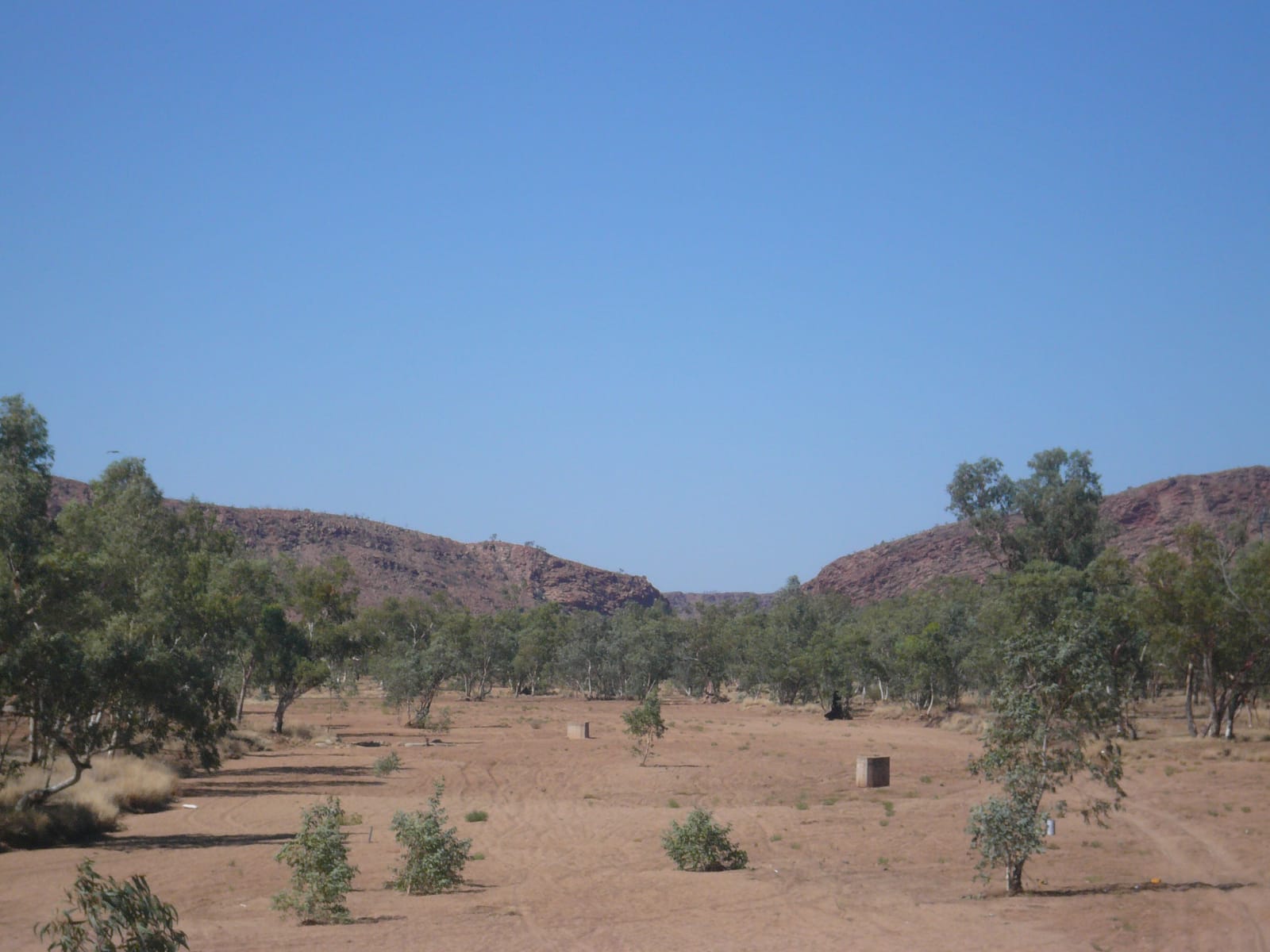
Extreme temperature swings affect material and design choices
Central Australia experiences some of the most extreme diurnal temperature ranges in the country — very high summer daytime temperatures alongside genuinely cold winter nights. This range affects material selection, thermal expansion allowances in tank and pipework design, and insulation considerations for potable water storage where temperature stability supports water quality, in ways a more temperate climate would not demand to the same degree.
Delivery logistics are a first-order design constraint
Materials, equipment and specialist crews for any Alice Springs or wider Central Australian project typically travel substantial distances, making route assessment, delivery scheduling and component sizing genuinely first-order considerations rather than logistics details resolved after design. Bolted, modular tank construction is often the more practical choice for this reason — components ship efficiently and erect with a smaller on-site crew and equipment footprint than field-welded alternatives.
Remote and Aboriginal community water infrastructure
Alice Springs serves as a logistics and service hub for numerous remote and Aboriginal communities across Central Australia, many of which depend on dedicated, often standalone water infrastructure with limited redundancy compared to a metropolitan network. Projects in these communities require the same specialist remote delivery capability as the town itself, often compounded by even greater distance and access constraints, and genuine engagement with the specific community's needs and circumstances.
Tourism and defence-adjacent demand
The region's tourism industry, centred on Uluru and the broader Red Centre, alongside a defence and support presence in the area, adds demand profiles distinct from a purely residential or purely industrial town — storage sized for visitor season peaks or specific institutional requirements needs planning that a simple population-based estimate would not capture accurately.
In Central Australia, the tank design is often the straightforward part of the project. Getting materials, equipment and the right construction method to a site this remote is where genuine project expertise matters most.
| Consideration | Why it matters locally |
|---|---|
| Extreme diurnal temperature range | Affects material selection and thermal design allowances |
| Long delivery distances | A first-order design constraint, not a logistics afterthought |
| Remote community infrastructure needs | Standalone systems with limited network redundancy |
| Bolted, modular construction preference | Reduces on-site crew, equipment and delivery footprint |
Does PC Water Infrastructure deliver projects in Alice Springs and Central Australia?
Yes. We deliver water storage infrastructure across the Northern Territory, including Alice Springs and remote Central Australian communities, with specialist experience in remote logistics and delivery for genuinely isolated sites.
Why does Alice Springs rely on groundwater rather than dam storage?
The town's water supply is drawn from the Roe Creek and Mereenie borefields, tapping ancient aquifer systems, which is a common and practical supply model for arid Central Australian conditions where reliable surface water is limited.
What construction method is typically best suited to remote Central Australian tank projects?
Bolted, modular panel tank construction is often the more practical choice for genuinely remote sites, since components can be transported efficiently and erected with a smaller crew and equipment footprint than field-welded alternatives require.
Planning water storage infrastructure in Alice Springs or Central Australia? PC Water Infrastructure has specialist experience delivering to genuinely remote sites.
Discuss a Central Australia Project