
Airport terminal buildings are high-occupancy public facilities in their own right, subject to standard fire protection compliance obligations - but many airports, particularly regional ones, also sit in locations without the same mains water infrastructure a metropolitan site would take for granted, which adds a resilience dimension to standard compliance planning.
Operational continuity carries particular weight at an airport given the broader economic and community reliance many regional centres place on their airport remaining functional - a water infrastructure problem that forces even a partial terminal closure has consequences well beyond the airport operator itself.
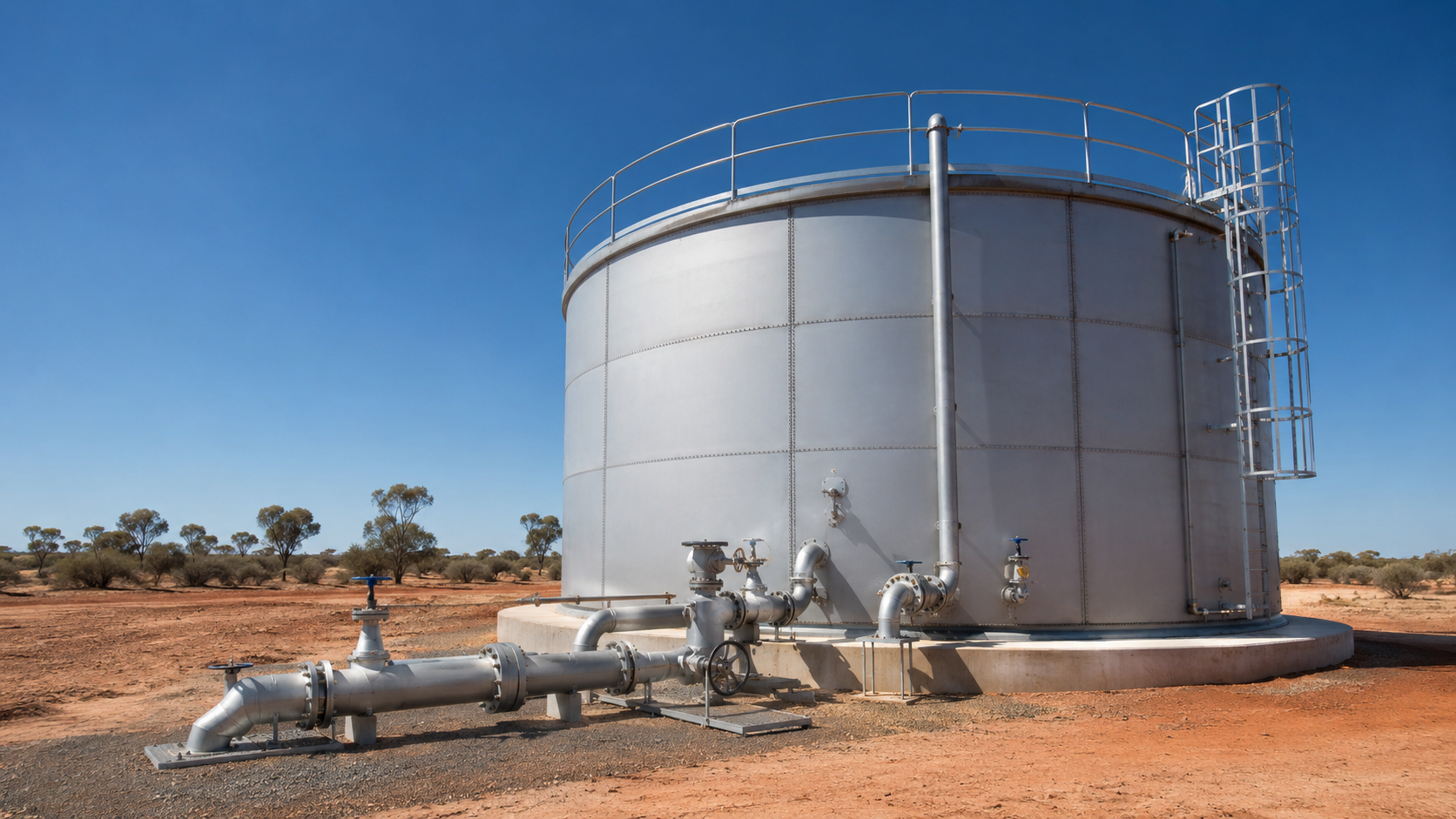
Fire protection storage for high-occupancy terminal buildings
Terminal buildings are subject to standard AS2304 and AS1851 fire protection requirements based on building classification and occupancy, with the practical complication that many terminals operate with extended or continuous hours, limiting straightforward shutdown windows for maintenance work.
Coordination with aviation security and operational protocols
Water infrastructure maintenance at an airport needs to work within aviation security requirements and operational protocols that would not apply at a typical commercial building - access approval processes for airside or security-restricted areas need to be planned well ahead of any physical work.
Storage as a resilience measure for regionally significant infrastructure
Regional airports without robust mains water infrastructure need storage capacity that reflects the airport genuine importance to the local community and economy - a resilience standard that goes beyond minimum compliance to reflect the facility actual operational significance.
Remote delivery logistics similar to other regional infrastructure
Water storage installation and maintenance at a regional airport can face similar remote delivery and access logistics challenges to other regional infrastructure projects, and this needs to be factored into project planning and program from the outset.
An airport water infrastructure problem rarely stays contained to the airport itself - the resilience standard should reflect how much a region actually depends on that airport staying open.
| Item | Why it matters |
|---|---|
| Terminal fire protection compliance | Standard AS2304 and AS1851 obligations for high-occupancy buildings |
| Aviation security and access coordination | Affects how maintenance work is planned and approved |
| Resilience storage reflecting community reliance | Particularly relevant for regional airports without robust mains supply |
| Remote delivery logistics planning | Similar considerations to other regional infrastructure projects |
Do airport terminal buildings have standard fire protection requirements?
Yes, terminal buildings are subject to the same AS2304 and AS1851 fire protection standards as other commercial buildings, based on classification and occupancy.
Why do regional airports need particular water infrastructure resilience?
Many regional communities have significant economic and community reliance on their local airport, which means a water infrastructure problem affecting operations can have consequences well beyond the airport operator itself.
Does aviation security affect water infrastructure maintenance planning?
Yes - access to airside or security-restricted areas requires approval processes that need to be planned into any maintenance project well ahead of the physical work itself.
Planning water infrastructure resilience or compliance for an airport or aviation facility? Talk to PC Water Infrastructure.
Discuss Airport Water Infrastructure