
/ Section
Fire Water Systems
Fire water storage is judged on a single question: can it deliver the required volume, at the required rate, at the moment it is needed. Everything in the compliance framework exists to answer that question with evidence rather than assumption.
These articles cover AS1851 service levels, usable volume and draw-down calculations, the most common causes of fire tank compliance failure, and static water supply requirements for bushfire-prone properties.

Fire Water Tank Compliance: The AS1851 Service Levels, Explained
AS1851 sets the routine service regime for fire protection water storage. Here is what the routine service intervals actually require — and the records building owners must keep to stay compliant.
More in this section
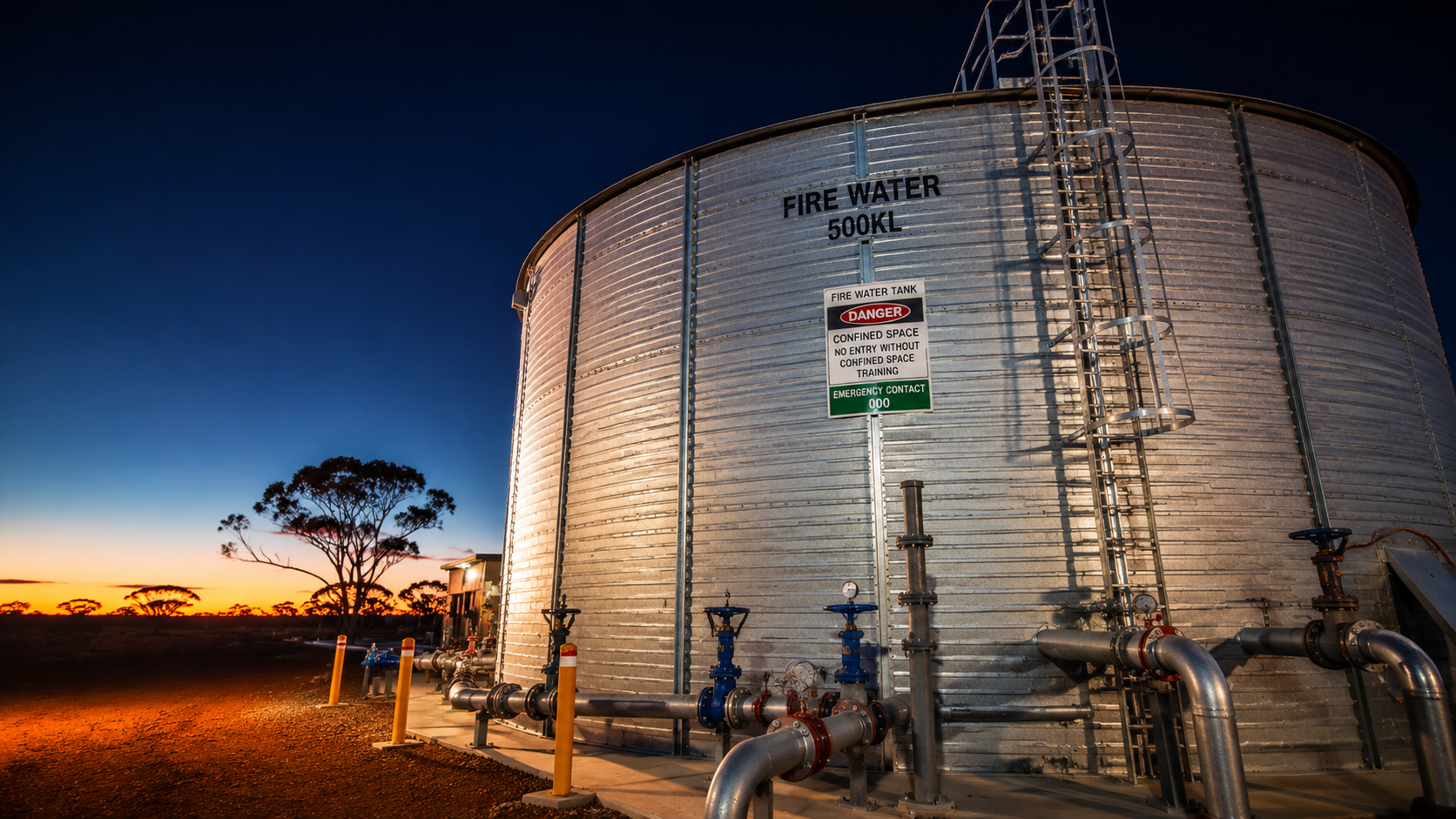
Sprinkler Water Supply Sizing: How Fire Storage Volume Is Calculated
7 min read

Timber and Forestry Processing Water Storage: Fire Protection for High Fuel Load Sites
6 min read
Fire Pump Systems Explained: Jockey Pumps, Diesel and Electric Duty Pumps
7 min read
Waste Management and Recycling Facility Water Storage: Dust Suppression and Fire Compliance
6 min read
Rail and Transport Depot Water Storage: Process and Fire Supply Requirements
6 min read
Airport and Aviation Facility Water Storage: Compliance and Resilience Requirements
6 min read
All Fire Water Systems
16 articles16 results
Sprinkler Water Supply Sizing: How Fire Storage Volume Is Calculated
Timber and Forestry Processing Water Storage: Fire Protection for High Fuel Load Sites
Fire Pump Systems Explained: Jockey Pumps, Diesel and Electric Duty Pumps
Waste Management and Recycling Facility Water Storage: Dust Suppression and Fire Compliance
Rail and Transport Depot Water Storage: Process and Fire Supply Requirements
Airport and Aviation Facility Water Storage: Compliance and Resilience Requirements
Apartment and High-Rise Residential Fire Water Storage: What Developers Need to Know
Commercial Office Precinct Water Storage: Fire and Amenity Supply Requirements
Emergency Services Precinct Water Storage: Fire and Operational Resilience Requirements
Self-Storage and Warehouse Facility Water Storage: Fire Compliance for Large-Footprint Sites
Sporting and Recreation Precinct Water Storage: Irrigation and Amenity Supply
Winery and Vineyard Water Storage: Irrigation, Wash-Down and Fire Protection
Water Storage for Bushfire-Prone Properties: Static Water Supply Requirements Explained
Fire Tank Volume and Draw-Down: Getting the Numbers Right for AS2419
Fire Water Tank Compliance: The AS1851 Service Levels, Explained
NEED THIS APPLIED TO YOUR ASSET?
Our engineers respond to technical and project enquiries within one business day.