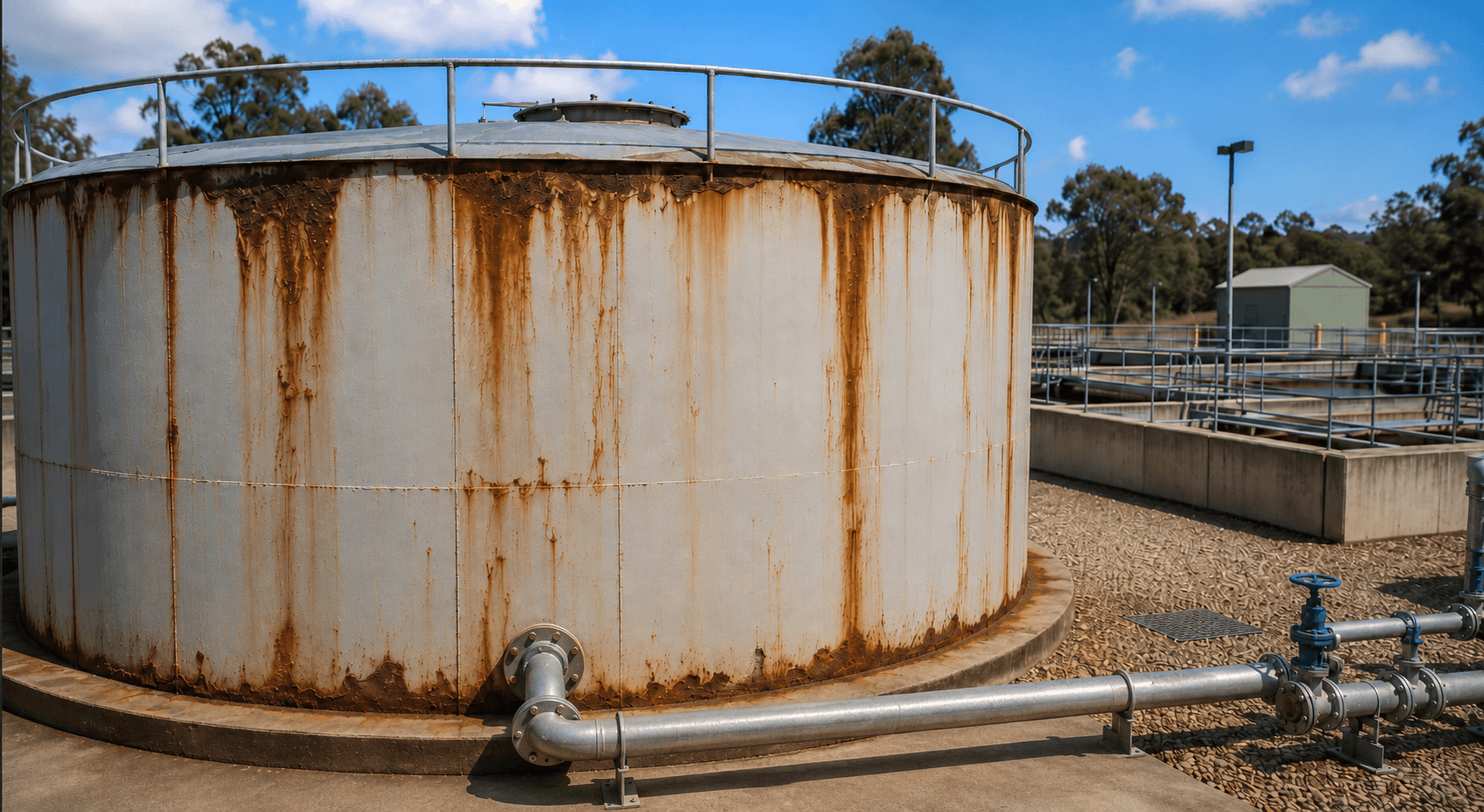
Corrosion is the single most preventable cause of water tank failure across mining, industrial, and government infrastructure in Australia. When oxygen, moisture, or aggressive water chemistry contacts unprotected steel, degradation starts immediately — and accelerates without intervention.
The good news: with the right inspection programme, protective coating system, and lining strategy, most tanks can be extended well beyond their original design life without full replacement.
Poor pH control, aggressive chlorination, and elevated chloride concentrations all accelerate internal corrosion. Tanks storing water with a pH below 7 are particularly at risk — acidic conditions strip protective oxide layers and attack base metal directly. A common but underappreciated source of localised corrosion is the interface between pipework and the tank structure. Ductile iron pipework passing through concrete walls creates a galvanic cell where dissimilar metals meet — accelerating corrosion at the contact point.
Certain bacteria — particularly sulphate-reducing bacteria — metabolise sulphur compounds and produce hydrogen sulphide as a byproduct. This attacks the tank substrate at the molecular level, creating pitting that is often invisible until significant material loss has occurred. A single pinhole in an otherwise intact epoxy coating can produce more corrosion damage than an equivalent area of completely bare steel, because electrochemical current concentrates at the defect.
A single pinhole in an otherwise intact epoxy coating can produce more corrosion damage than an equivalent area of completely bare steel, because electrochemical current concentrates at the defect. This is why coating holiday detection is critical at every inspection cycle.
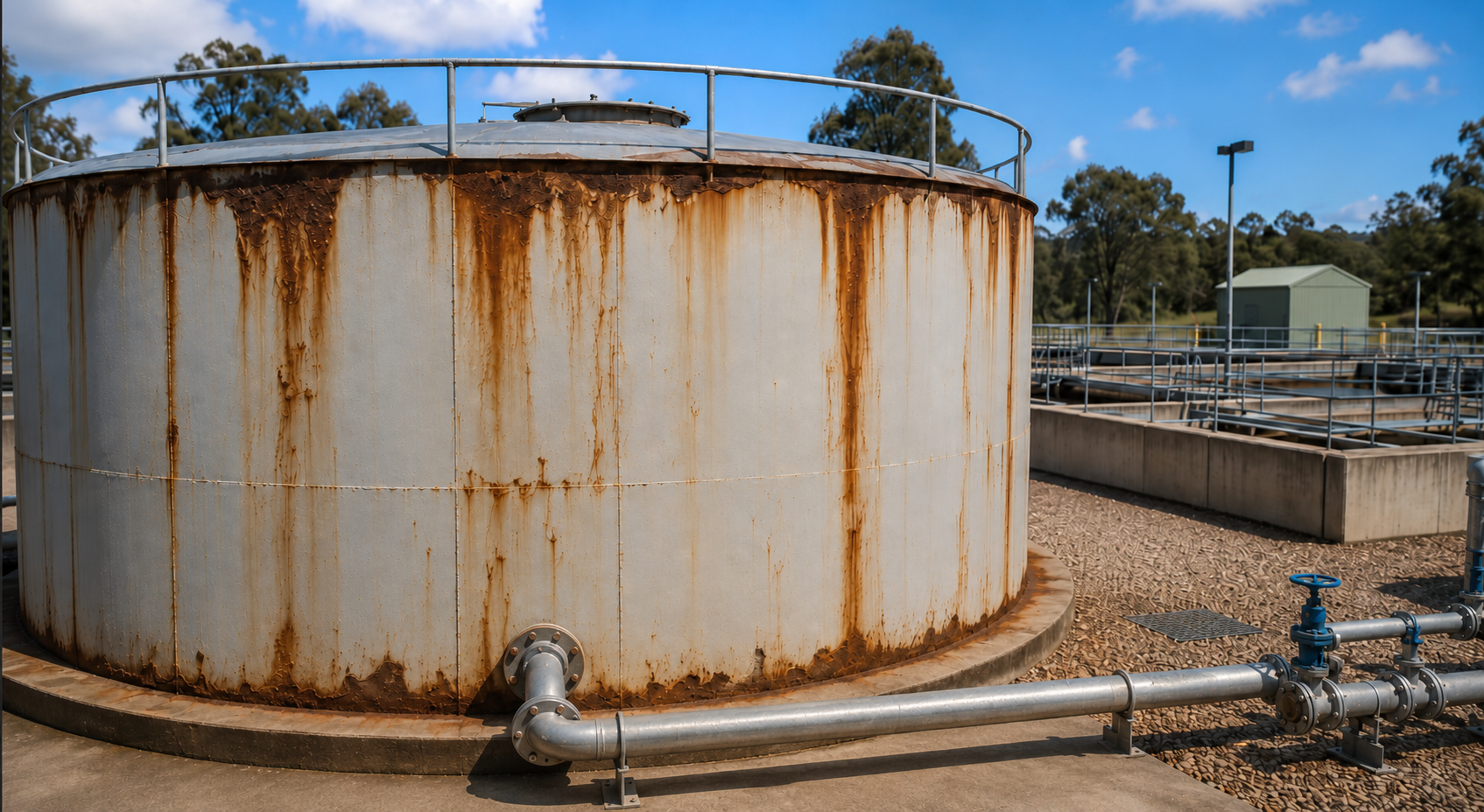
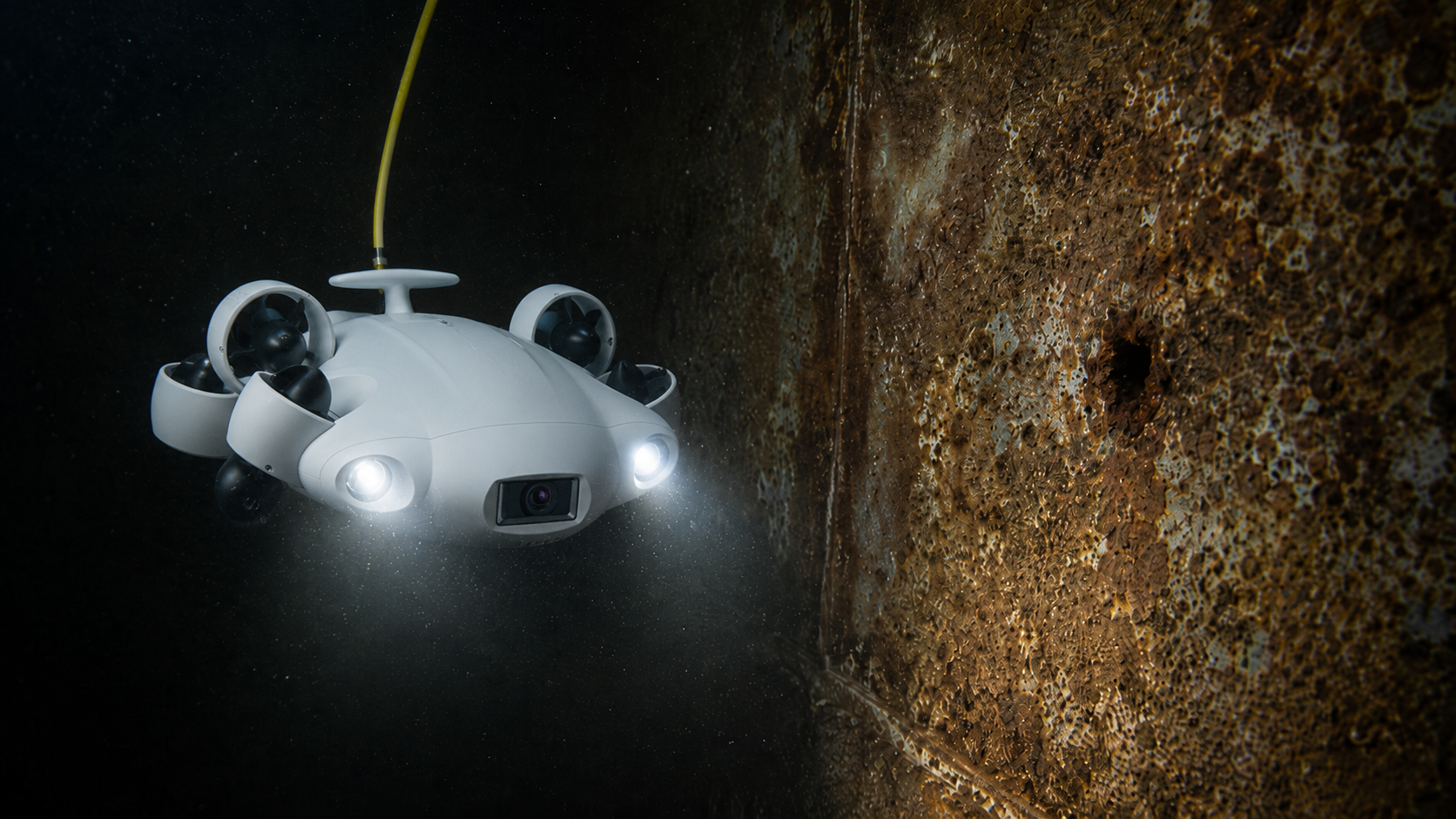
Rust streaks running down external walls, around fittings, or near overflow outlets signal surface corrosion. Inside the tank, brown, reddish, or cloudy water indicates internal steel components are breaking down. Blisters and bubbles beneath a coating are caused by sub-film corrosion — pitting that concentrates attack into small, deep zones that compromise structural integrity faster than surface rust.
Ultrasonic thickness gauging measures remaining wall steel. If measurements fall below original specification, corrosion is actively consuming material. Significant thinning reduces pressure capacity and collapse resistance — particularly critical for fire tanks operating under AS2304. Pair visual checks with professional inspections on a 1–4 year cycle, more frequently in coastal, mining, or high-chloride conditions.
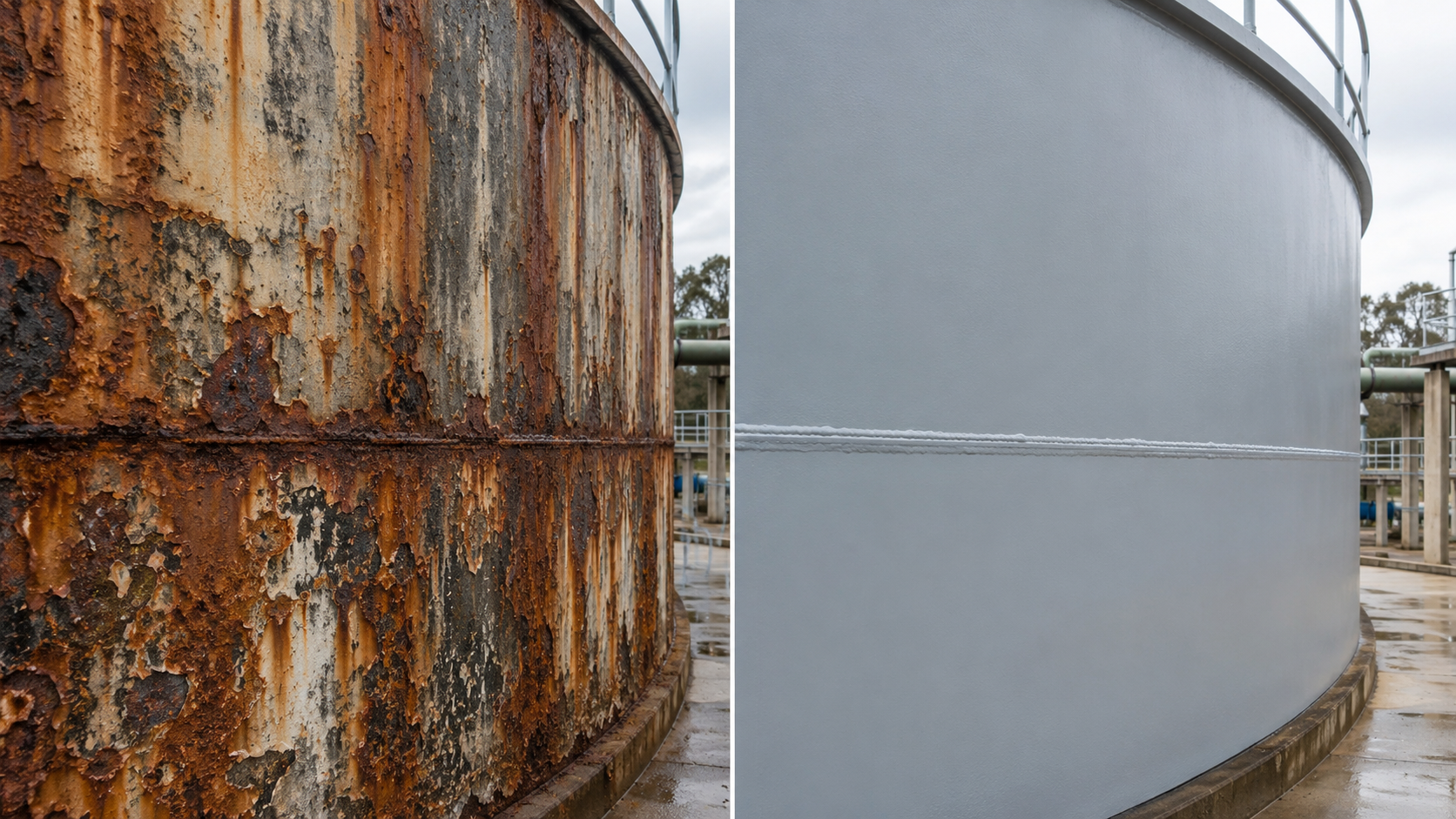
The single most important factor in coating system performance is not the coating — it is surface preparation. A high-quality epoxy system applied to a poorly prepared surface will fail within 2–3 years. A mid-grade epoxy applied over a correctly blasted, clean substrate will last 15 years or more. For immersed applications, coatings must be matched to the specific liquid stored. Potable water tanks require coatings compliant with AS4020, whilst wastewater or chemical storage tanks require chemical resistance data matched to the stored substance.
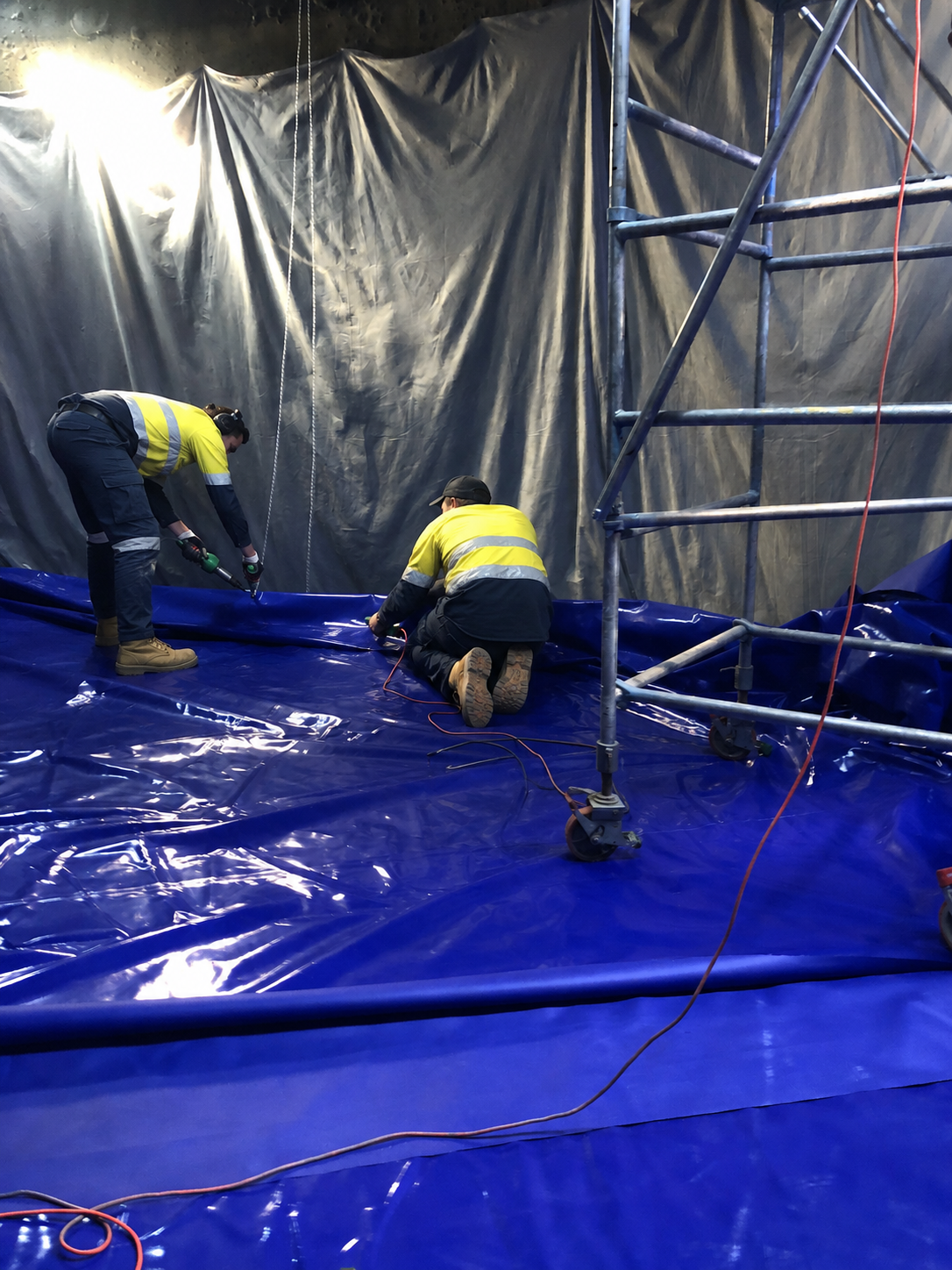
RPVC liners and Glass Reinforced Plastic liners are the most cost-effective life-extension solution for ageing steel and concrete tanks. The liner creates a physical barrier between the stored water and the tank substrate — eliminating direct contact and halting internal corrosion entirely. PC Water Infrastructure has installed RPVC liners across town reservoirs for the Northern Peninsula Area Regional Council, health facilities, and mine sites including projects for Rio Tinto, BHP, and Veolia.
Cathodic protection works by making the tank's steel structure the cathode in an electrochemical circuit, preventing oxidation. Timing is critical — installed too early it provides little benefit, installed too late it cannot recover lost material. The best outcomes occur when cathodic protection is incorporated into a maintenance programme alongside a quality coating system, deployed at the point where coating holiday density starts to increase during routine inspection cycles.
- Annual visual inspection of accessible external surfaces
- Professional internal inspection every 1–4 years calibrated to condition
- Ultrasonic wall thickness gauging at each inspection for steel tanks over 15 years
- Coating system renewal before holiday density exceeds 5% of surface area
- Cathodic protection anode replacement on schedule
- Outlet screen replacement from galvanised to HDPE at first internal renovation
What causes microbiologically influenced corrosion (MIC) in water tanks?
Sulphate-reducing bacteria metabolise sulphur compounds and produce hydrogen sulphide as a byproduct, attacking the tank substrate at the molecular level. MIC creates pitting that is often invisible until significant material loss has occurred, and is not detectable through visual inspection alone — ultrasonic wall thickness gauging is required.
How often should a steel water tank's internal coating be renewed?
Epoxy internal coatings on steel tanks have a service life of 10–15 years from application before recoating becomes necessary. The trigger for recoating should be coating condition data from professional inspection — not a fixed calendar date. Coating renewal before holiday density exceeds 5% of surface area is the standard benchmark.
Does corrosion automatically mean a tank needs to be replaced?
No. Corrosion does not automatically mean replacement. Refurbishment typically costs 30–60% of full replacement and can add 20–30 years to an asset's service life. RPVC liners, cathodic protection systems, and targeted steel repair are all alternatives to replacement for tanks where the structural shell remains sound.
PC Water Infrastructure deploys ROV and UAV underwater drones and diving inspection teams capable of assessing tanks without full dewatering, minimising operational disruption.
Request a corrosion assessment