
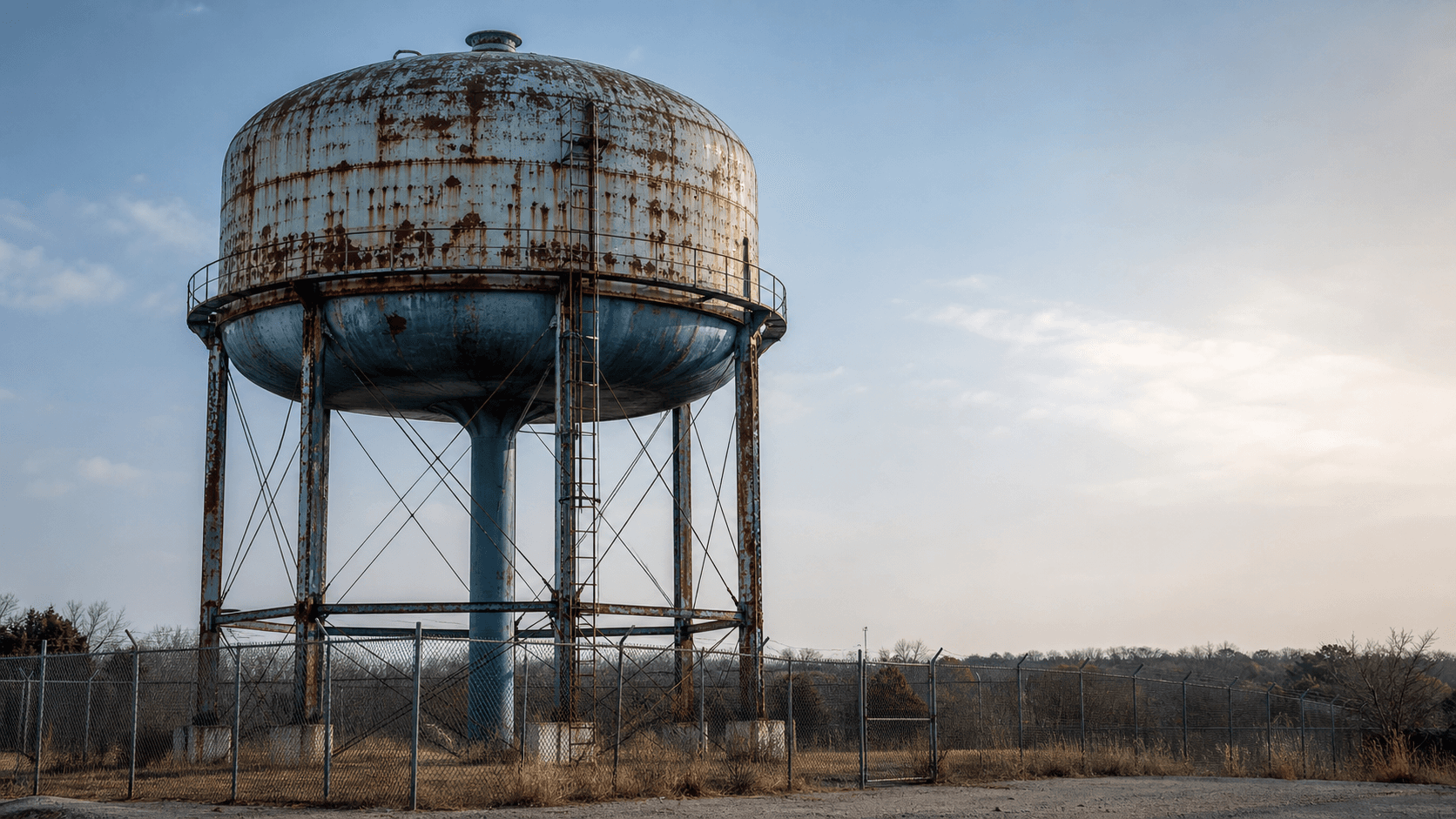
Water tanks are the unsung heroes of countless industries, homes, and facilities — quietly ensuring water is stored and ready whenever it's needed. Steel, concrete, and polyethylene tanks all face the same reality: they degrade over time, and when they fail, the consequences are costly, disruptive, and sometimes dangerous.
The Australian water industry has a useful benchmark for how stored water should be treated: like a food-grade product. You wouldn't leave an unlocked milk vat uninspected for a decade. Yet that is effectively what happens with thousands of water storage assets across the country. The warning signs are there — but only if you know what to look for.
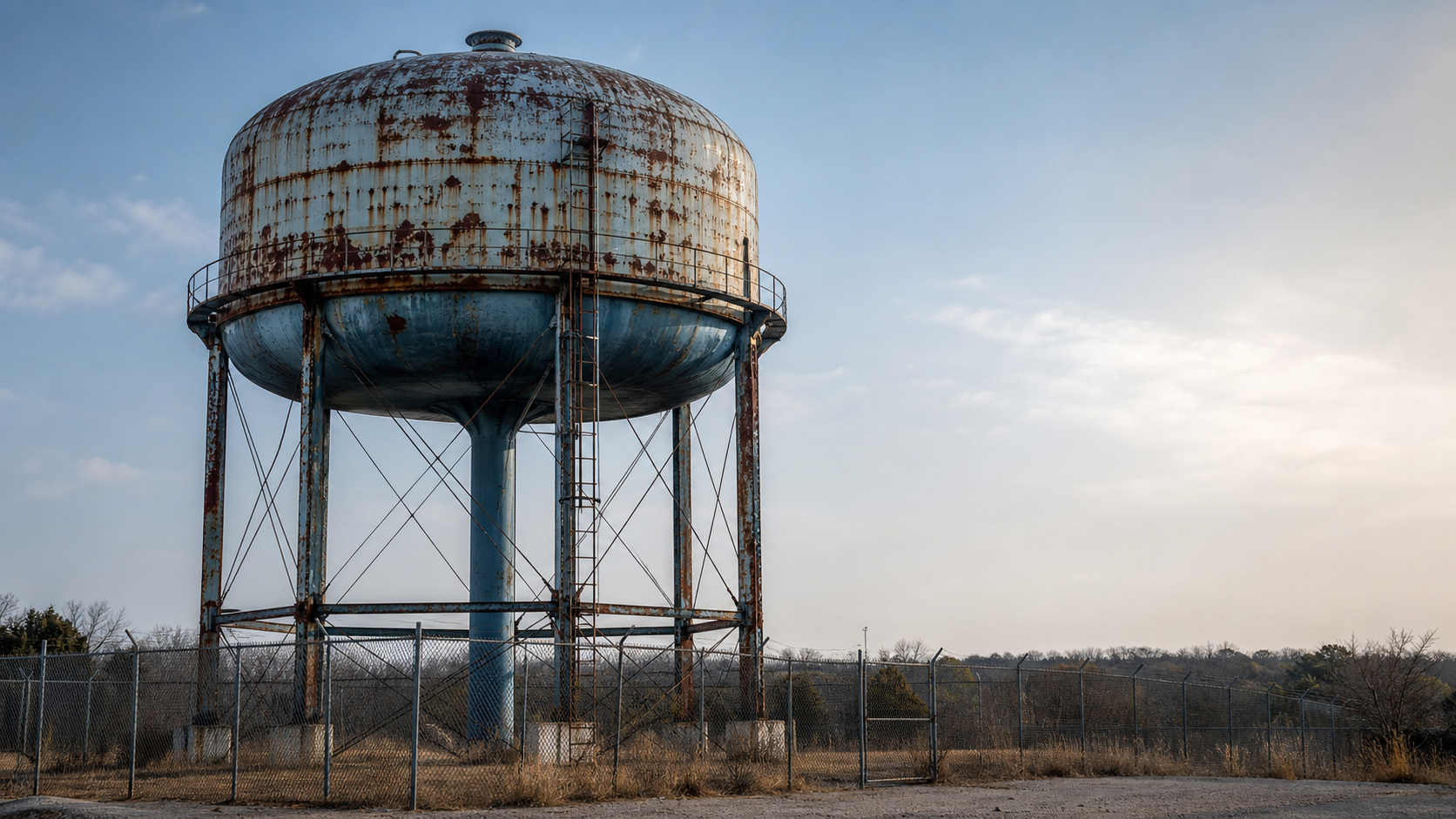
Visible corrosion is the most obvious sign — but it is rarely limited to what you can see on the surface. Rust streaks running down external walls, around fittings, or near overflow outlets signal surface corrosion. Inside the tank, brown, reddish, or cloudy water indicates internal steel components are breaking down. Blisters and bubbles beneath a coating are caused by sub-film corrosion — pitting that concentrates attack into small, deep zones that compromise structural integrity faster than surface rust.
Unusual odours or changes in water colour, taste, or clarity are direct indicators of contamination in the stored water. A tank with a damaged roof, corroded lining, or cracked access hatch can allow animal entry, sediment accumulation, and chemical leaching into treated drinking water. Hydrogen sulphide odour signals bacterial activity — particularly sulphate-reducing bacteria that attack the tank substrate at the molecular level, creating pitting that is often invisible until significant material loss has occurred.
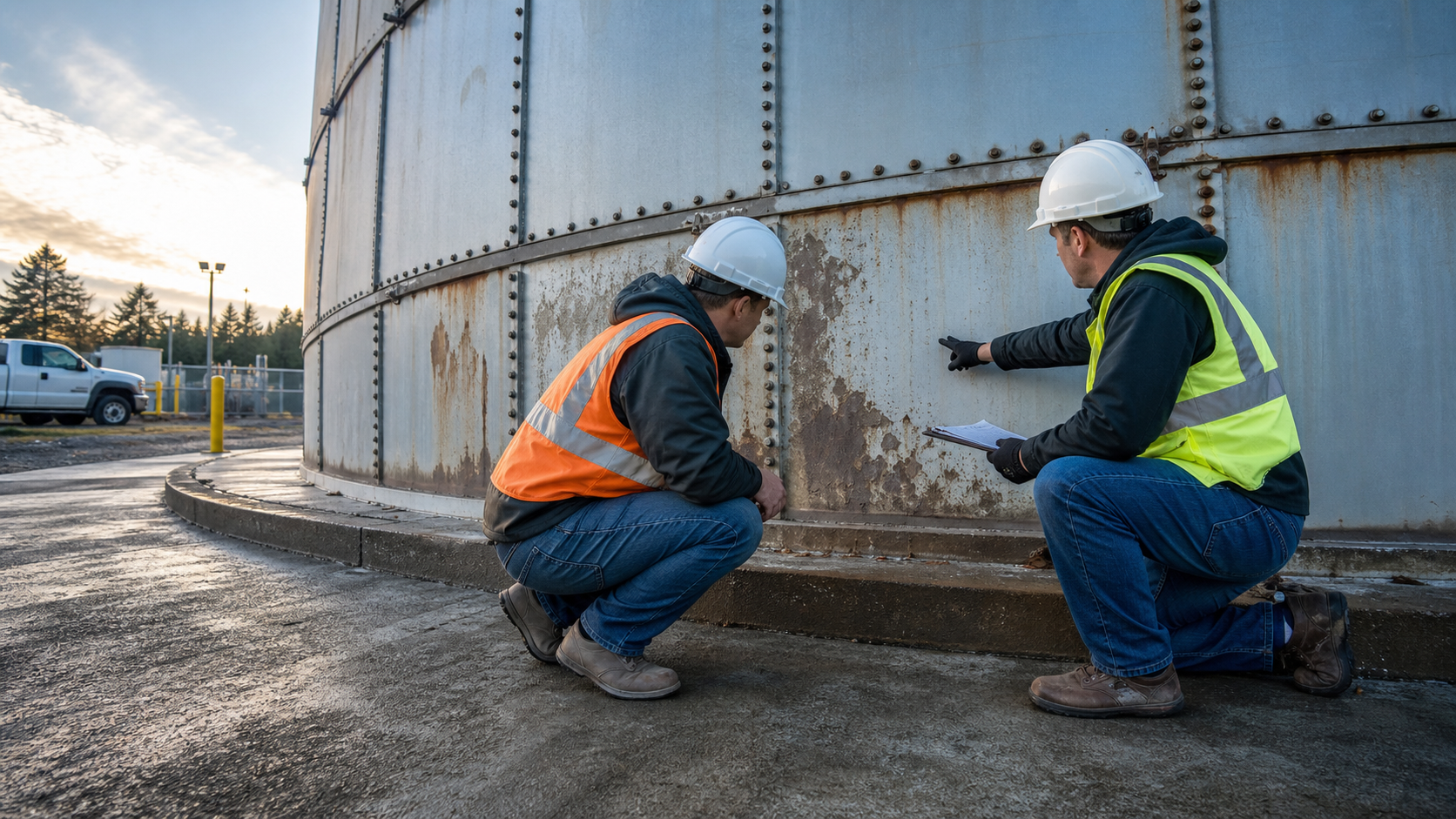
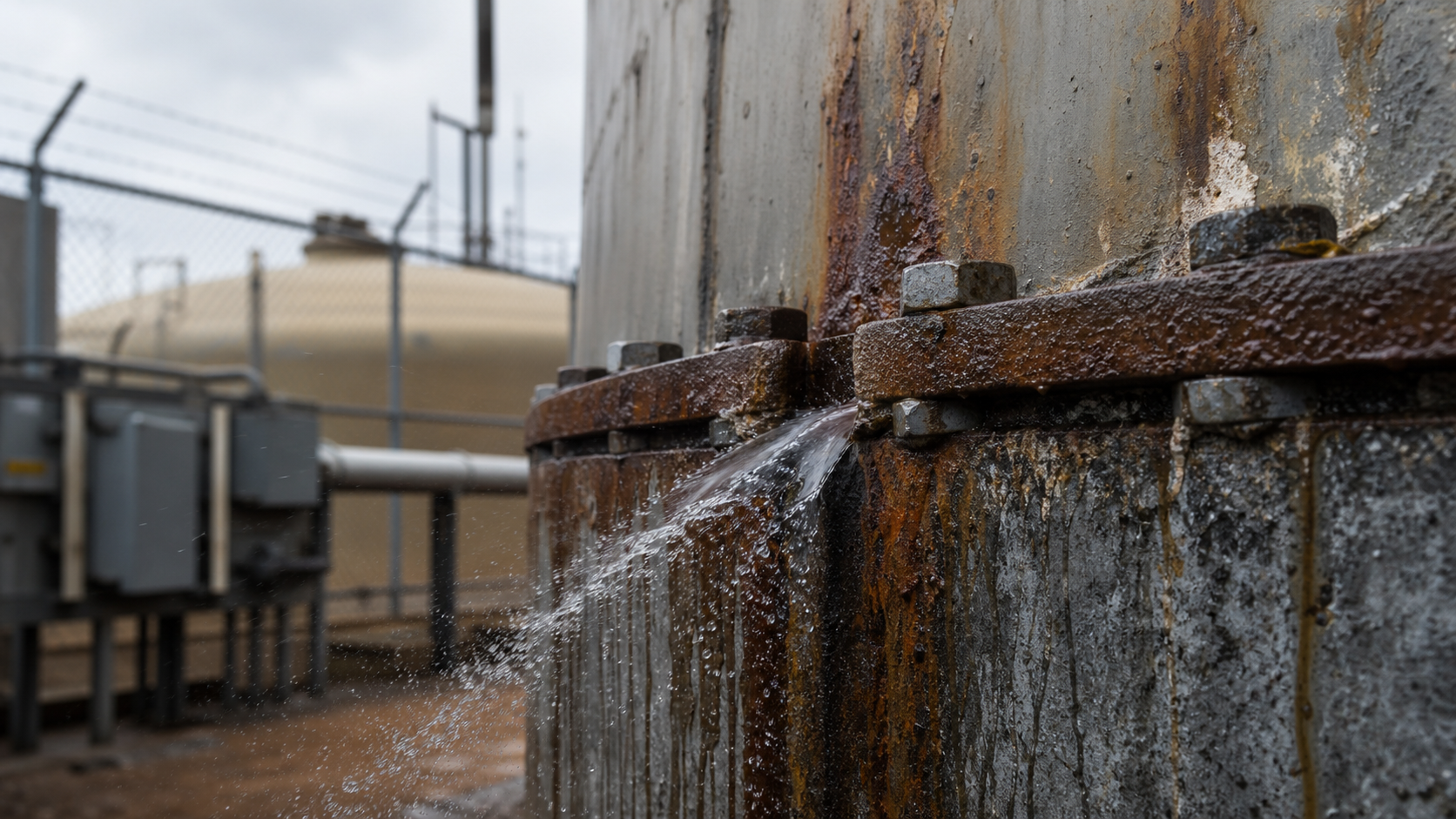
Leakage or damp patches around the tank base, at seams, or near foundation joints are a sign of structural compromise. If your tank is losing water without a visible external leak, internal corrosion may have created perforations. Even minor pitting can cause slow losses that go unnoticed for months. Moisture at the tank base — particularly near seams, welds, or where the tank meets the foundation slab — signals a potential breach.
Inconsistent water pressure or unexpected flow variations can indicate partial blockages, valve issues, or sediment accumulation reducing effective storage volume. In fire water tanks under AS2304, pressure capacity is a compliance parameter — unexplained pressure loss triggers mandatory inspection under AS1851. Sediment that has accumulated on the tank floor reduces the available volume, affecting both pressure performance and system reliability during peak demand events.
Tank age alone is a risk factor, not a guarantee of failure — but material degradation timelines are well understood. Epoxy internal coatings on steel tanks have a service life of 10–15 years from application before recoating becomes necessary. Polyethylene tanks under sustained UV exposure in Australian climates degrade faster than the same tanks in sheltered environments. RPVC liner seams under temperature cycling develop micro-tears at predictable rates. If your tank is approaching or past these thresholds without a condition assessment on record, the risk profile is material.
A tank inspection at the right point in the deterioration cycle typically identifies rectification options at a fraction of the cost of the same tank identified later — after pitting has penetrated the steel, after liner seams have opened, after the roof access has allowed sustained contamination. The difference is consistently 3–5 times the remediation cost.
What are the most common early warning signs of water tank failure?
The five key warning signs are visible corrosion (rust streaks, blistered coating), changes in water colour, taste or odour, moisture or leakage at the tank base or seams, unexplained pressure or flow variations, and age past major maintenance thresholds (typically 10–15 years for epoxy-coated steel, faster in harsh environments).
Can a water tank be inspected without taking it out of service?
Yes. PC Water Infrastructure deploys ROV and UAV inspection capability capable of assessing tanks without full dewatering, reducing operational disruption while providing the condition data needed to make informed maintenance decisions — wall thickness readings, coating condition mapping, and penetration seal assessment.
At what age should a steel water tank have a condition assessment?
Epoxy internal coatings on steel tanks have a service life of 10–15 years from application. An independent condition assessment should be completed before this threshold — and if the tank is past 15 years without a formal inspection on record, an assessment is a priority. Ultrasonic wall thickness gauging should be included for any steel tank over 15 years old.
PC Water Infrastructure deploys ROV and UAV inspection capability capable of assessing tanks without full dewatering. When you know exactly what condition your tank is in, every subsequent maintenance decision becomes commercial rather than speculative.
Request a tank inspection