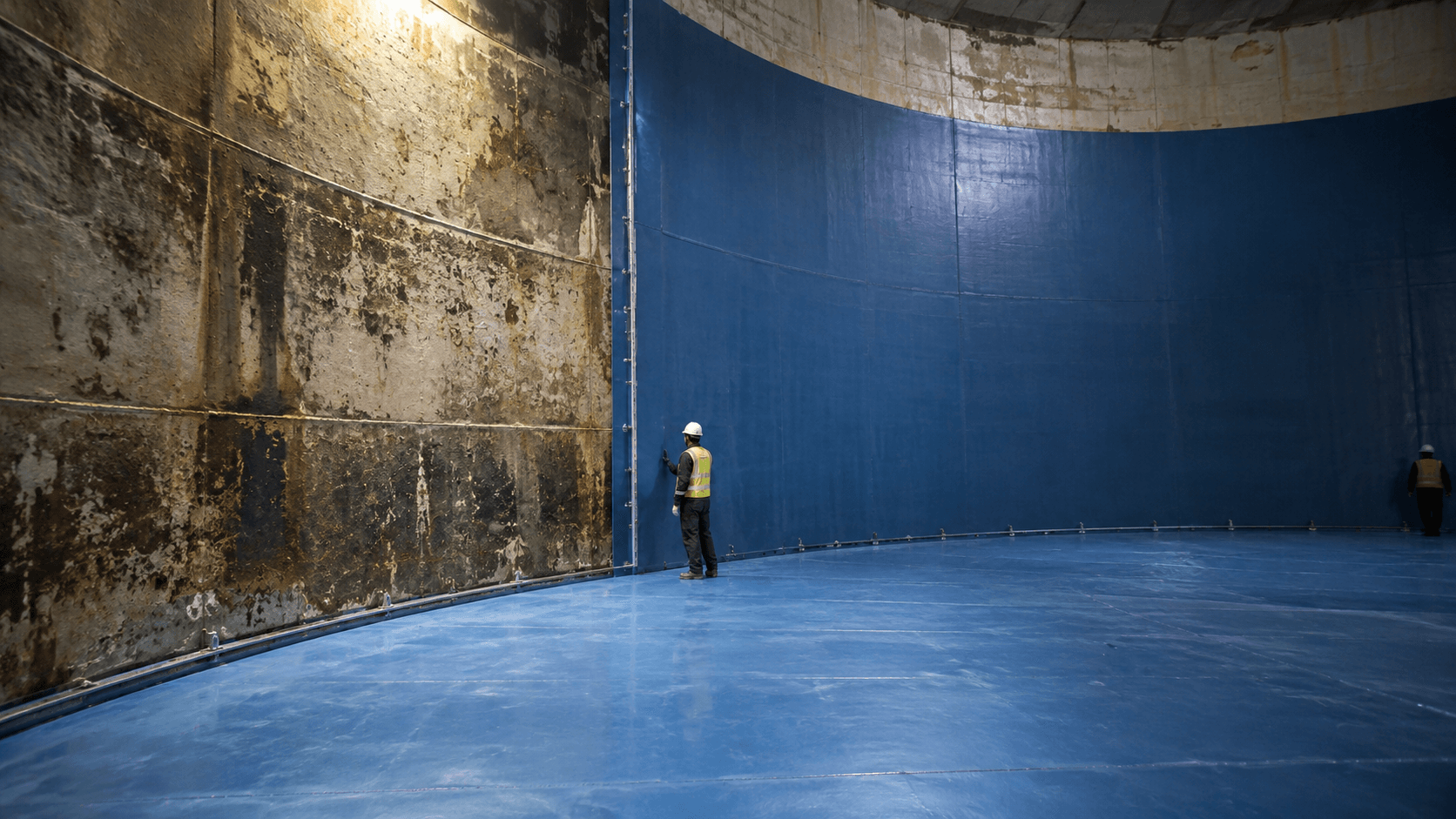
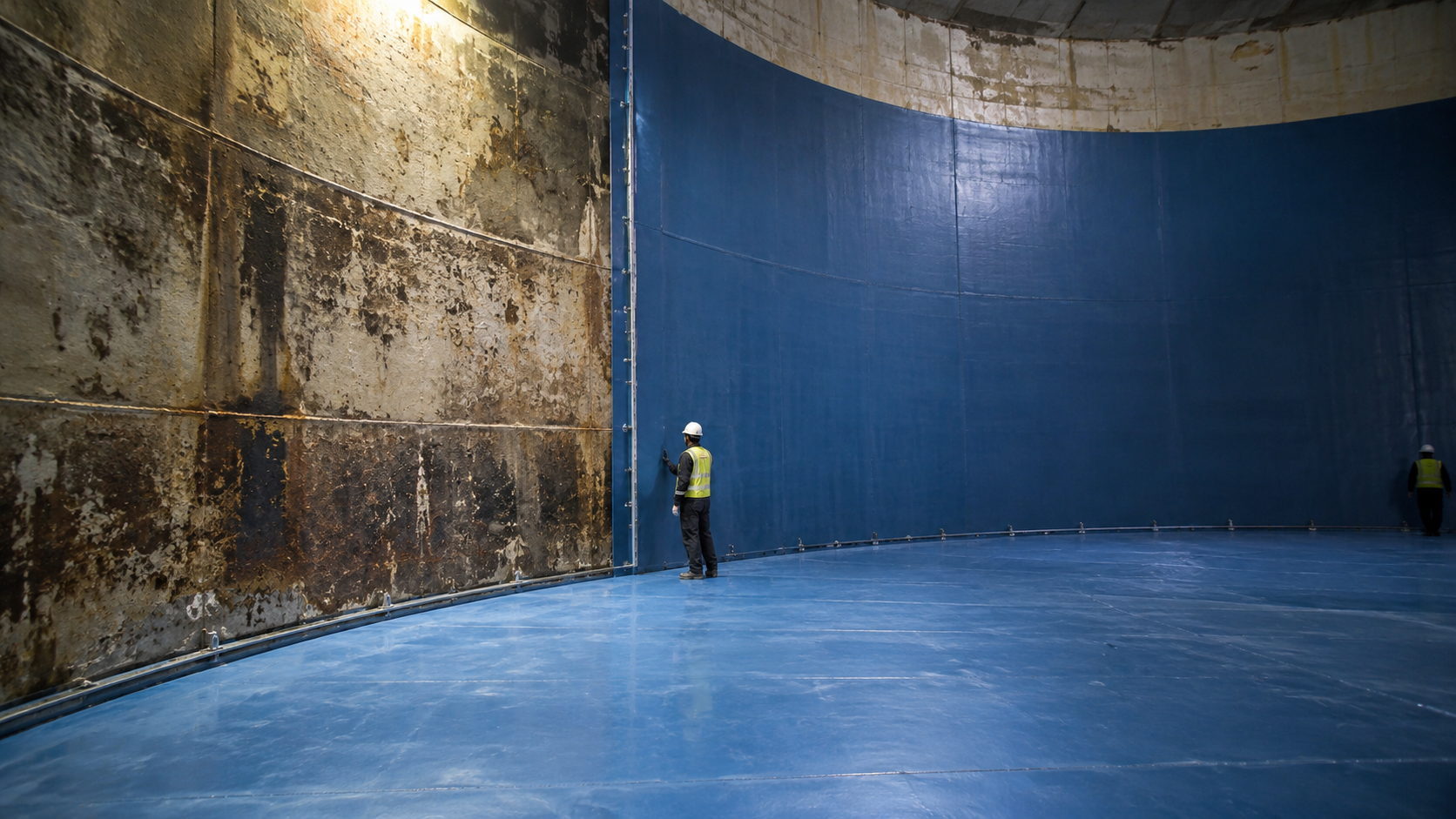
A water tank shutdown usually looks simple on a program: take the tank offline, complete the internal works, test it, and return it to service. In practice, that line item carries more risk than most asset owners expect.
The tank is not just a container. It is part of a live operating system. It may be feeding a potable network, a fire service, an industrial process, a remote community, or a commercial building that cannot tolerate extended disruption. If the shutdown is planned only around the contractor's site access, the project is already under-scoped.
Good shutdown planning starts with one question: what must remain true while this tank is unavailable? The answer determines temporary supply, staging, isolation points, cleaning method, testing requirements, documentation, and the final return-to-service decision.
Confirm what the tank actually supports
The first planning failure is assuming everyone knows what the tank feeds. In older facilities, drawings may be incomplete, valves may not match the plan, and pipework may have been modified over years of maintenance. Before any shutdown is approved, the project team should confirm whether the tank supports potable water, fire water, process water, irrigation, washdown, cooling, or more than one function.
This matters because each use has a different tolerance for downtime. A process water tank may affect production. A potable tank may trigger water quality requirements before recommissioning. A fire water tank may create a compliance gap the moment it is isolated. A dual-use asset can create several risks at once.
Check redundancy before relying on it
Many sites describe themselves as having backup storage because a second tank exists. That is not the same as proven redundancy. The second tank must have sufficient usable volume, confirmed valve positions, known pump capacity, and enough isolation flexibility to support the site while the primary asset is offline.
If the backup tank has not been inspected, cleaned, or verified recently, it can become the weak point in the shutdown. The maintenance project then depends on an asset whose condition is unknown. That is how a planned intervention becomes an unplanned operational problem.
Internal access is not only a safety issue
Tank access planning normally focuses on confined space rules, fall protection, ventilation and rescue. Those are non-negotiable, but they are only part of the program risk. Access also determines how quickly the crew can clean, inspect, remove waste, prepare surfaces, install liner panels, test welds and demobilise.
A small hatch can slow material handling. Poor laydown space can delay preparation. Restricted vehicle access can affect vacuum tanker setup, scaffold delivery, crane positioning or waste removal. These are not minor site details. They determine whether a three-day window stays three days.

Cleaning can reveal a different job
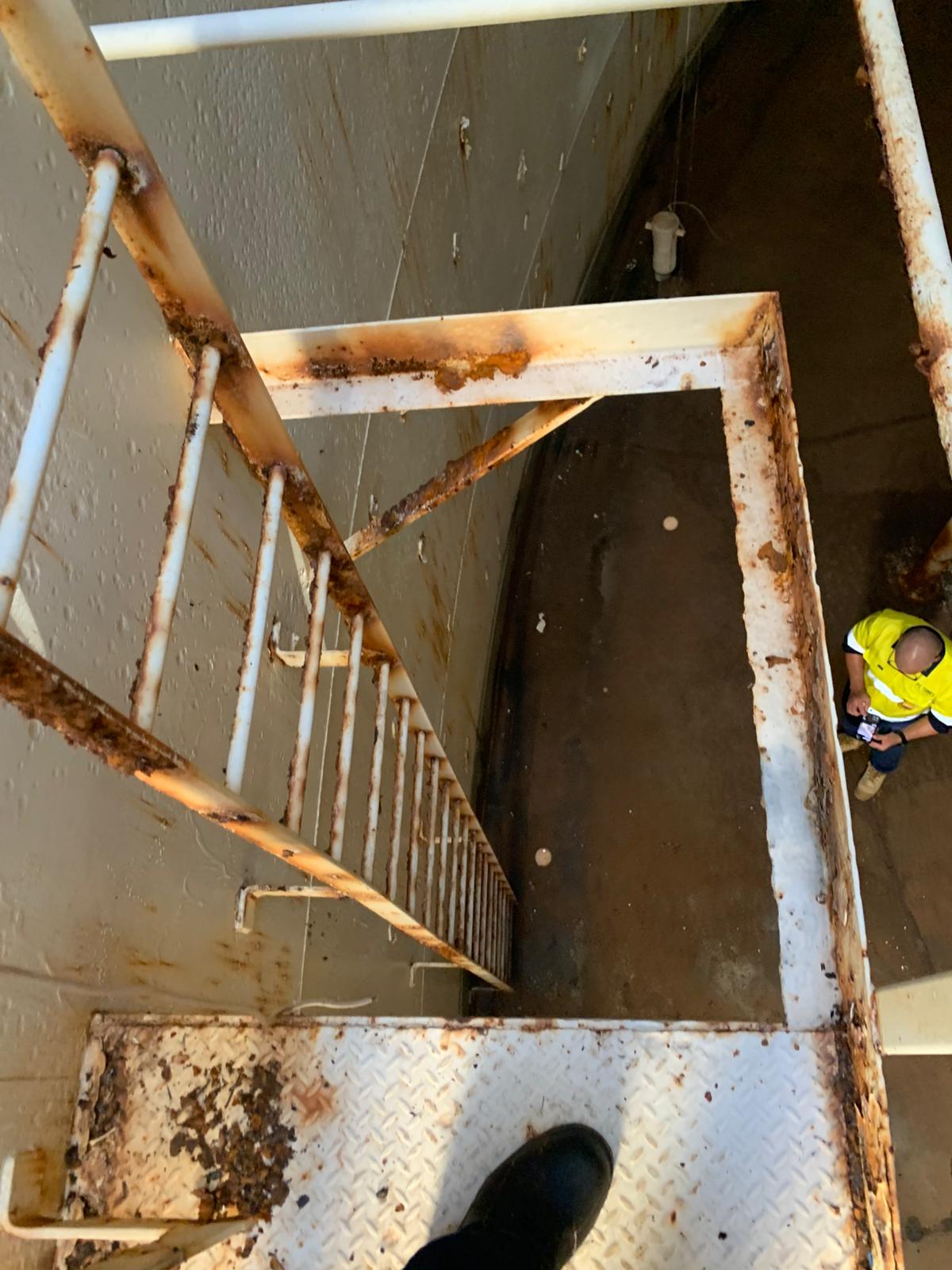
Shutdown scopes often begin with an assumed repair path: reline the tank, patch a section, replace a fitting, or refurbish the internal surface. But the real condition is confirmed only once the tank is accessed and cleaned. Sediment can hide corrosion. A failed coating can conceal pitting. A liner can look intact from above while failing at penetrations, corners or seam transitions.
The shutdown plan should include decision points. If the inspection reveals structural loss, failed substrate, unexpected contamination, or a non-compliant fitting arrangement, the team needs a defined pathway for engineering review, variation approval and revised return-to-service timing. Without that pathway, the crew finds the issue, everyone stops, and the program starts drifting.
A tank shutdown is not successful because the work finished quickly. It is successful when the asset returns to service with the right evidence behind it: condition confirmed, works completed, testing passed, and operational risk closed.
Testing must match the tank's purpose
After relining or refurbishment, return to service should not rely on visual completion alone. The testing path depends on the asset. A potable tank may require cleaning verification, disinfection, flushing, water quality testing and confirmation that materials in contact with drinking water are suitable. A fire water tank needs confidence that usable volume, fittings, suction arrangement and inspection records support the required compliance position. An industrial process tank may need chemical compatibility checks or site-specific acceptance criteria.
The mistake is treating testing as paperwork after completion. Testing is part of the program. If samples require lab turnaround, if the tank must hold water for leak verification, or if client witnessing is required, those dates belong in the shutdown plan from the beginning.
Documentation is what closes the risk
For an asset owner, the most valuable output is not only the repaired tank. It is the record that proves what was done, what was found, what was tested, and what assumptions remain. Good handover documentation should include pre-work condition notes, photos, cleaning records, material data, liner or coating details, test results, defect notes, and recommendations for future inspection intervals.
That documentation protects the next maintenance decision. It gives the site a baseline, helps insurers and auditors understand the asset condition, and prevents the same questions being reopened from memory two years later.
| Planning question | Why it matters |
|---|---|
| What systems does the tank support? | Potable, fire, process and dual-use tanks carry different shutdown risks |
| Is redundancy verified, not assumed? | Backup tanks and alternate supply paths must have confirmed usable capacity |
| Are access and laydown constraints known? | Hatches, cranes, vacuum equipment, waste removal and scaffold can drive the real schedule |
| What condition findings trigger a hold-point? | Structural loss, failed coatings or unexpected contamination may change the repair pathway |
| What evidence is needed before return to service? | Testing, photos, materials records and handover documentation close the compliance loop |
How long should a water tank shutdown be planned for?
The shutdown length depends on tank size, access, cleaning requirement, repair scope, liner or coating system, testing requirements and whether the tank needs laboratory water quality clearance before return to service. The safer approach is to plan around hold-points rather than assume a fixed duration from the first site walk.
Can a tank be relined without interrupting site water supply?
Sometimes, but only if the site has verified redundancy or an acceptable temporary supply arrangement. The tank being relined must usually be isolated, cleaned and accessed internally, so continuity depends on what other storage, pumping or supply options can safely support the site during that window.
What is the biggest cause of delay during tank refurbishment?
The common delay is not the liner or repair work itself. It is an unexpected condition finding after cleaning, unclear approval pathway for variations, poor access planning, delayed testing, or missing return-to-service documentation requirements. These can all be planned for before the tank comes offline.
Planning a relining or refurbishment window? PC Water Infrastructure can help scope the shutdown, confirm the condition risks and return the asset to service with the right evidence behind it.
Plan a tank shutdown