
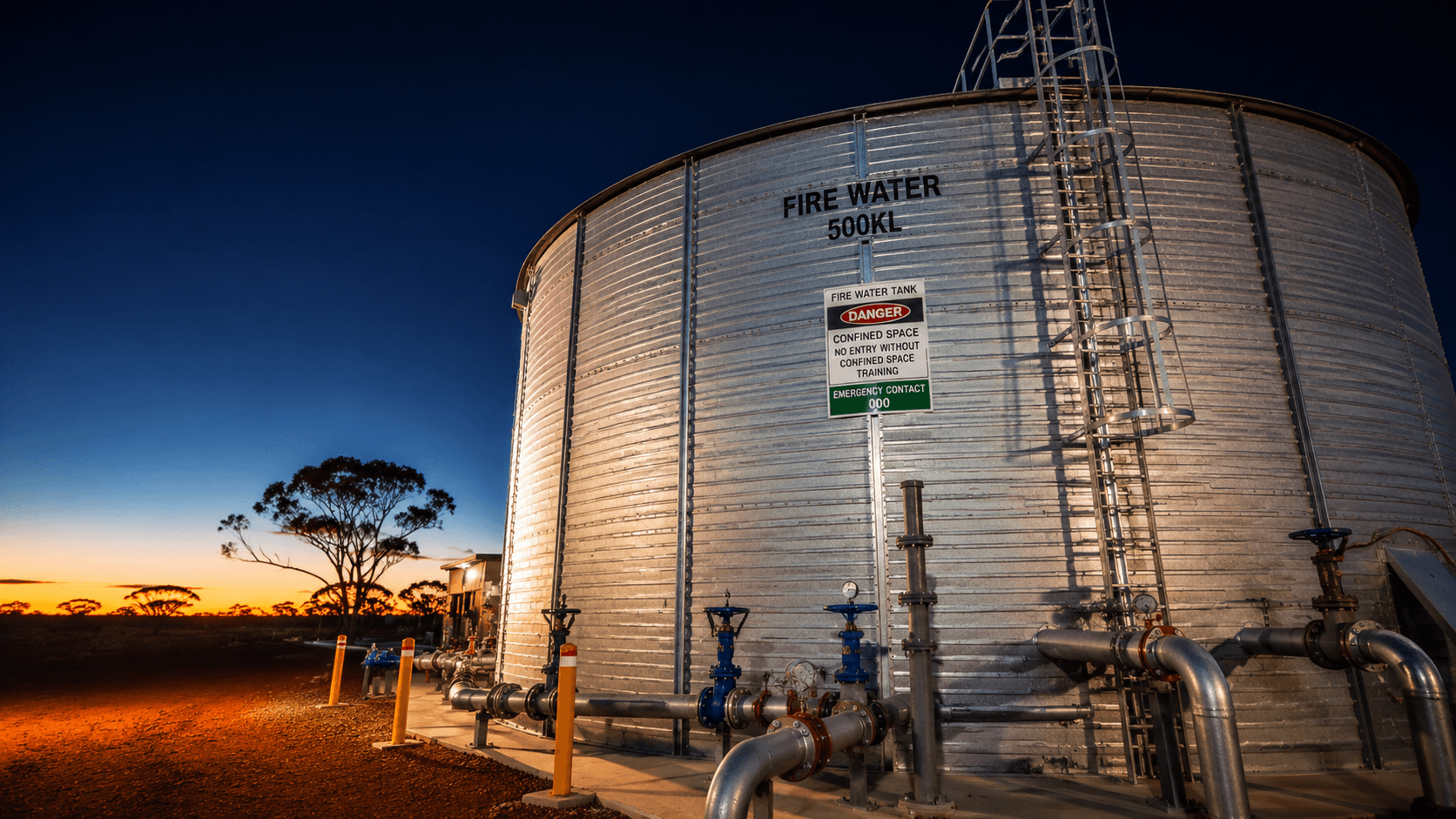
A school site typically carries several categories of water storage at once - fire protection tanks sized to AS2304 or local brigade requirements, potable supply for amenities and, in some cases, boarding facilities, and irrigation storage for sports fields and grounds. Each has a different maintenance obligation, and a different consequence if it is neglected.
Duty of care to students adds a dimension to school water infrastructure that a comparable commercial site does not carry in the same way - both in terms of water quality standards for anything students might drink or contact, and in terms of fire protection reliability, given the occupancy density and evacuation profile of a school campus.
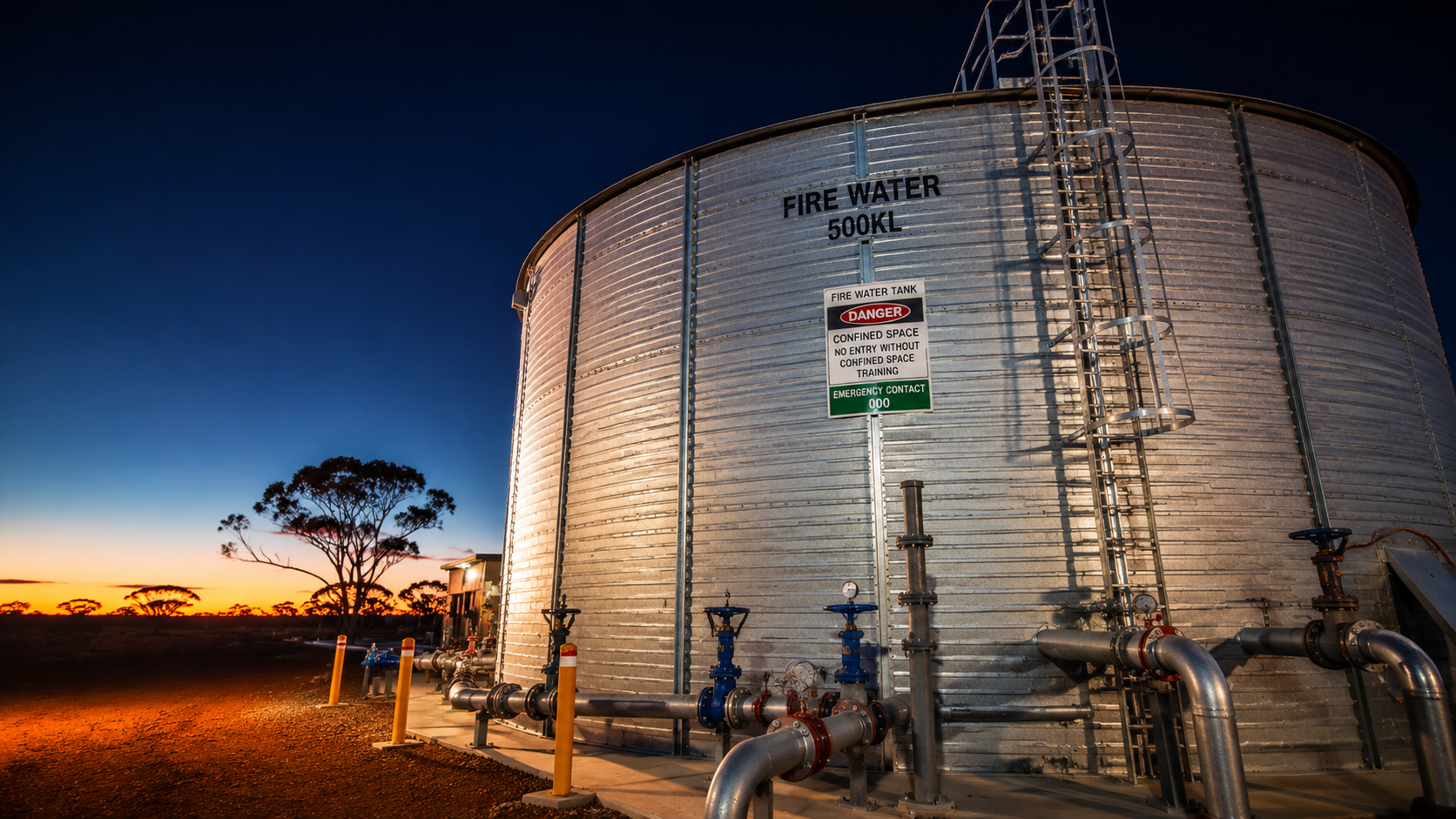
Fire water storage and AS1851 service obligations
Fire tanks on a school site are subject to the same AS1851 periodic service requirements as any other fire protection asset, and given the occupancy density of a school during term time, maintaining a defensible service record matters more here than on many lower-occupancy commercial sites.
Potable water storage where it exists on site
Where a school maintains its own potable storage - common in regional or remote schools not on a reticulated town supply, or boarding schools with on-site accommodation - the same AS4020 material certification and water quality monitoring obligations apply as for any potable tank, with the added consideration that the end users are children.
Term breaks as the natural maintenance window
School holiday periods offer a genuine opportunity to complete tank inspection, cleaning and maintenance work without disrupting classes, supervision requirements, or access arrangements that apply during term time - and most school facility managers plan major infrastructure work specifically around this calendar.
Access and safety considerations around students
Any tank maintenance work conducted while students are on site needs additional safety planning around access restriction and site security, beyond what a similar job would require on an unoccupied commercial site - this is worth factoring into program planning even during term-time emergency repairs.
The school calendar is not an obstacle to water infrastructure maintenance - it is the single most useful scheduling tool available, if maintenance planning is built around it rather than around it.
| Item | Consideration |
|---|---|
| Fire tank AS1851 service record | Critical given school occupancy density during term time |
| Potable storage certification | Applies where the school maintains its own supply |
| Maintenance scheduled to term breaks | Minimises disruption and access complications |
| Student safety planning for any term-time work | Additional access and security considerations apply |
When should tank maintenance be scheduled on a school site?
Term breaks are generally the preferred window, since they allow work to proceed without the access, supervision and safety considerations that apply while students are on site.
Do all schools need their own potable water storage?
No - many schools on reticulated town supply do not maintain dedicated potable storage. It is more common in regional, remote or boarding school settings not connected to mains supply.
Why is fire tank compliance particularly important on a school site?
Schools have high occupancy density during term time, which raises the stakes for fire protection reliability and makes a defensible AS1851 service record particularly important.
Managing water infrastructure across a school or education precinct? PC Water Infrastructure schedules maintenance around your term calendar.
Discuss School Water Infrastructure