
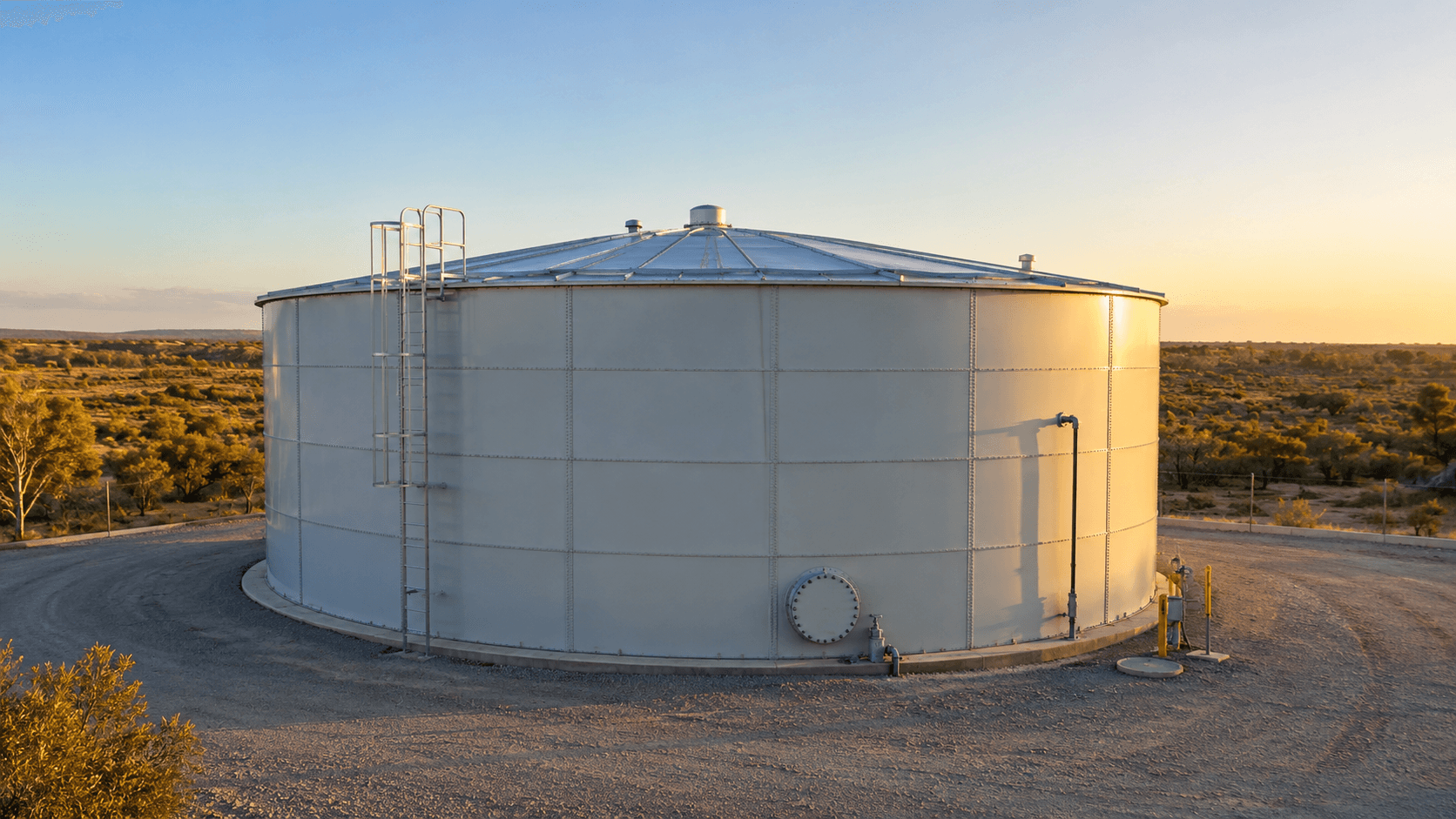
Freeboard and overflow sizing rarely get discussed until a storm event floods a site that "shouldn't" have flooded. Both numbers are set at design stage, largely invisible in day-to-day operation, and entirely dependent on getting the inflow assumptions right the first time.
What freeboard is actually for
Freeboard is the air gap maintained between a tank's normal maximum operating level and the top of its walls or roof structure — a deliberate margin that absorbs surge, wave action from seismic or wind-induced sloshing, and short-term inflow spikes without the tank overtopping. It is not wasted capacity; it is a safety margin built into the structure.
Why undersized freeboard is a quiet risk
A tank designed with minimal freeboard to maximise usable storage volume looks efficient on a drawing, but it removes the margin that protects against overtopping during exactly the events — storms, seismic activity, sudden inflow surges — that the tank most needs to handle safely. Freeboard is one of the design parameters most tempting to shave for extra capacity, and one of the least forgiving to get wrong.
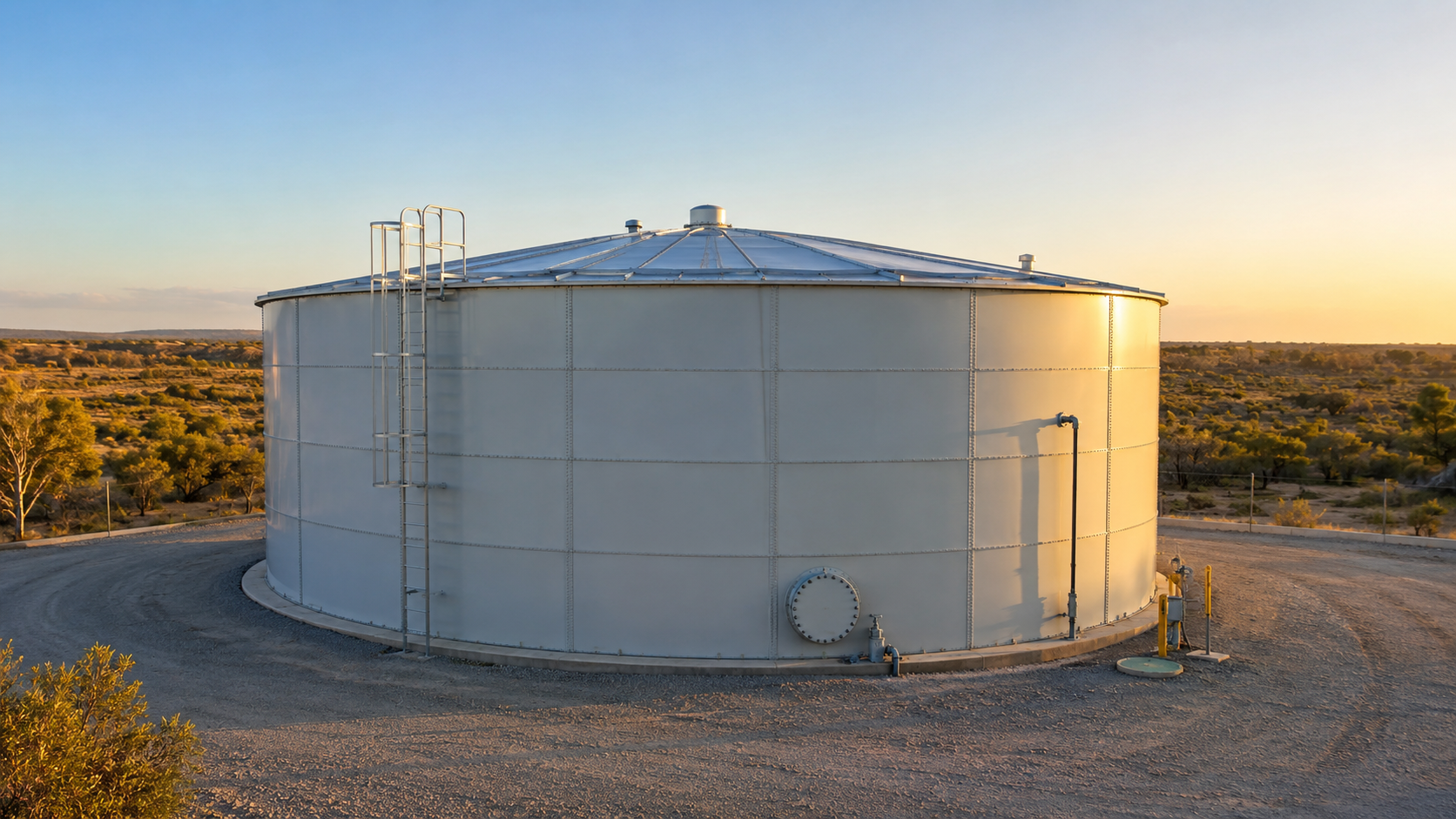
An overflow pipe needs to be sized against a realistic worst-case inflow scenario — not the tank's normal fill rate — because its entire purpose is to safely discharge water the tank cannot otherwise accommodate during an abnormal event. An undersized overflow can be overwhelmed by a genuine storm inflow spike, at which point the tank overtops uncontrolled, often at points not designed to handle that flow — roof edges, hatch seals, wall joints — with far more consequence than a properly sized, controlled overflow discharge.
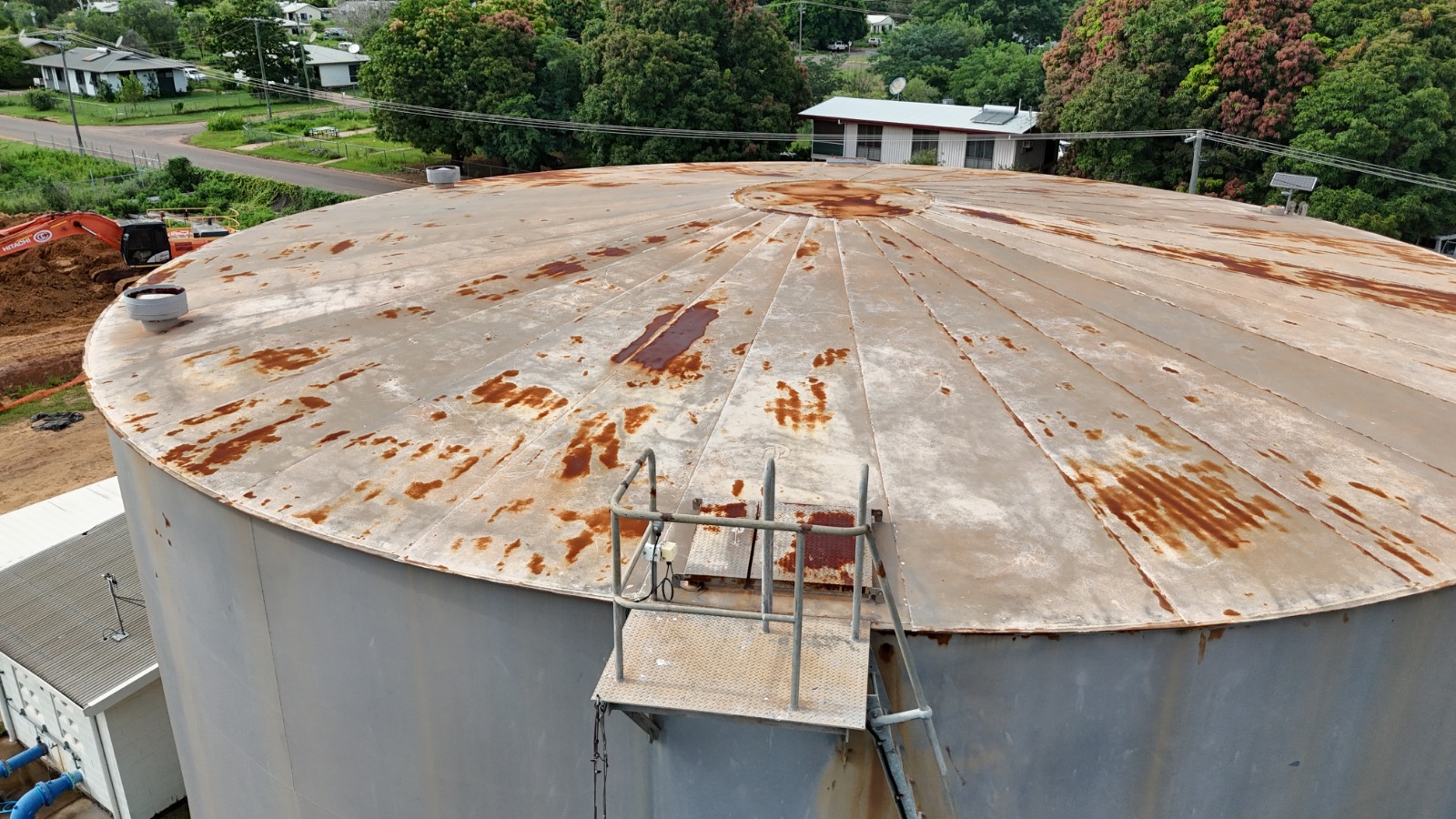
Freeboard and overflow sizing are both about planning for the event you hope never happens. Getting them right costs a small amount of theoretical capacity at design stage. Getting them wrong costs uncontrolled overtopping at exactly the moment the tank is under the most stress.
| Check | Why it matters |
|---|---|
| Freeboard margin against the applicable design standard | Confirms adequate allowance for surge and sloshing, not just static level |
| Overflow pipe sized against a realistic worst-case inflow | Ensures the overflow can actually handle a genuine storm event |
| Overflow discharge point and downstream capacity | Confirms the discharged water is directed safely, not creating a new hazard |
| Overflow screening intact and unobstructed | A blocked or damaged screen can defeat the overflow's function entirely |
| As-built freeboard confirmed against design intent | Verifies construction matched the design assumption, not just the drawing |
Is freeboard just wasted tank capacity?
No — it is a deliberate safety margin designed to absorb surge, sloshing and short-term inflow spikes without the tank overtopping. Reducing freeboard to maximise usable volume removes exactly the margin the tank needs during the events it is most important to handle safely.
How is an overflow pipe correctly sized?
Against a realistic worst-case inflow scenario for the specific site and inlet configuration, not the tank's normal operating fill rate. This calculation should be confirmed at design stage, and re-checked if the tank's inlet arrangement or supply source changes after commissioning.
Can an existing tank's overflow be checked for adequate sizing?
Yes — a review comparing the existing overflow capacity against a realistic worst-case inflow scenario for that specific site can confirm whether the original design remains adequate, particularly if supply conditions or inlet configuration have changed since the tank was commissioned.
Reviewing freeboard or overflow adequacy on an existing tank, or specifying a new one? Getting these numbers right protects the asset when a storm event actually tests it.
Discuss your tank design parameters