
On a metro site, a crane booking is a phone call and a haulage delay is an inconvenience. On a remote project, the same two variables can move a completion date by weeks and change the entire delivery cost. Crane and haulage planning deserves the same engineering rigour as the tank design itself.
The planning problem starts long before anything leaves the depot. Road classification, bridge weight limits, seasonal closures, permit lead times and site-specific lay-down constraints all shape what can physically arrive, when, and in what condition it needs to be assembled once it does.

Route assessment before design, not after
Panel size, plate dimensions and pre-assembled component weight should be checked against the actual delivery route before final design is locked in — not confirmed afterward and hoped for. Low bridges, weight-restricted culverts, unsealed sections that become impassable after rain, and permit requirements for oversize loads can all force a redesign if discovered late. A route assessment early in design avoids the far more expensive alternative: redesigning components after fabrication because they cannot physically reach the site.
Seasonal access windows
Many remote regions have a defined dry-season delivery window, after which unsealed roads become unreliable or fully impassable. Missing that window does not just delay the project by a few weeks — it can push delivery to the following season entirely. Program planning for remote projects should work backward from the access window, not forward from a desired start date.

Crane selection is a site-specific calculation
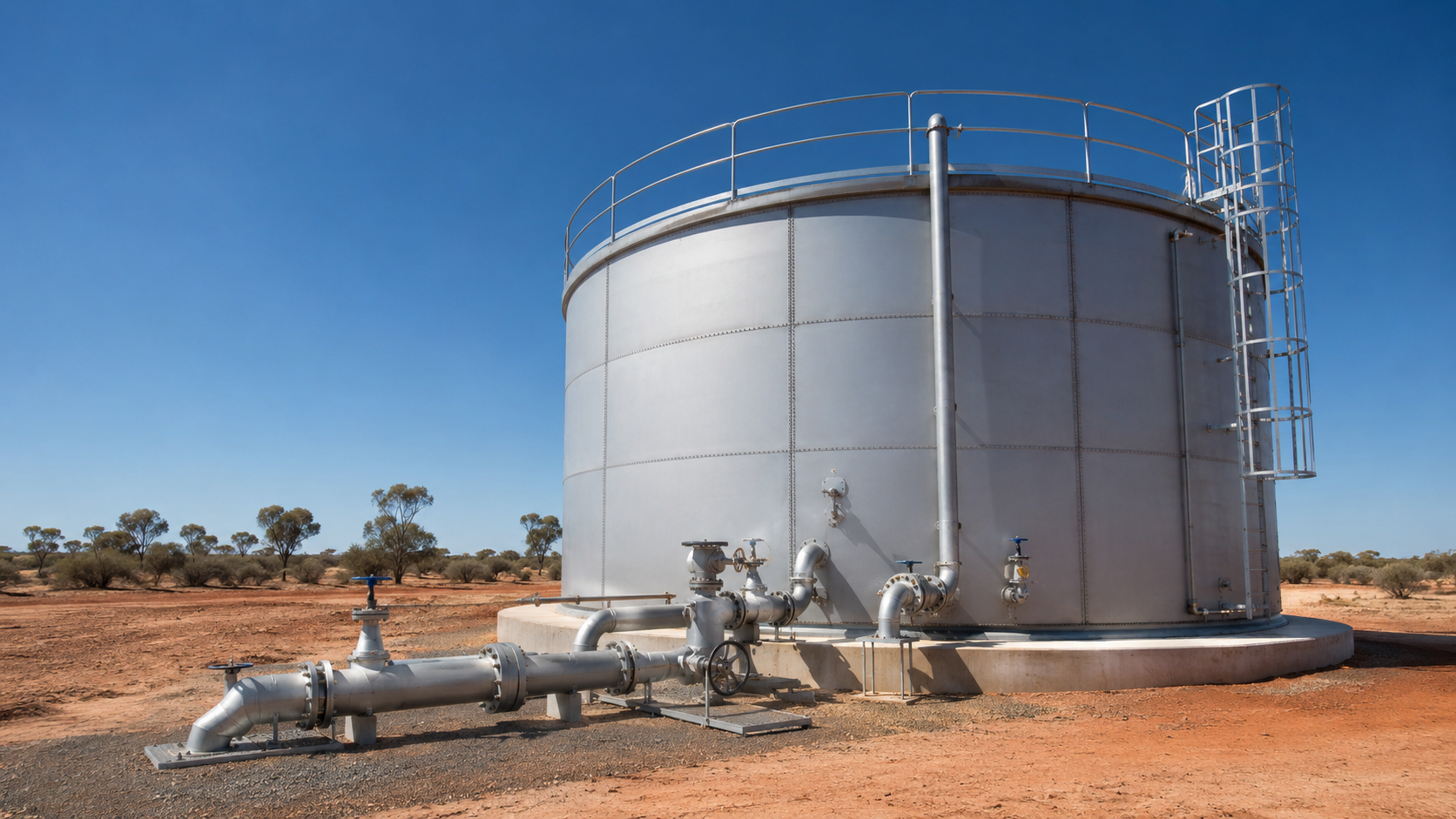
A crane rated for a given lift capacity on flat, prepared hardstand may not achieve the same capacity at the working radius a constrained remote site actually requires. Ground bearing capacity matters as much as the crane's rated chart — soft or uneven ground can force outrigger loads beyond what the site can safely support, regardless of what the load chart says under ideal conditions. A proper lift plan accounts for actual ground conditions, obstruction clearances, and the specific radius and height each component needs to travel.
Sourcing cranes in remote regions
In many remote areas, the nearest crane of sufficient capacity may itself need to travel a significant distance, adding its own transport lead time and cost to the program. Booking lead times for the right-capacity crane can be the longest single item on a remote delivery schedule, and should be locked in as early as the materials delivery plan — not treated as a booking that can be arranged once the tank components are already on site.
On a remote project, the tank design rarely fails. What fails, if it fails, is the assumption that materials, cranes and access would simply be available when the program said they would be.
| Planning item | Why it needs early confirmation |
|---|---|
| Route weight and dimension limits | Determines maximum practical component size before design is finalised |
| Seasonal access window | Missing it can push delivery an entire season |
| Crane availability and lead time | Often the longest lead item on a remote program |
| Ground bearing at the lift location | Rated crane capacity assumes ground conditions the site may not have |
| Contingency for delayed materials or weather | Remote programs have less slack to absorb unplanned delay |
Why does delivery route assessment need to happen before tank design?
Component size and weight are ultimately constrained by what can physically reach the site — bridge limits, road width and permit conditions. Confirming this before design is finalised avoids costly redesign after components have already been fabricated to a size the route cannot accommodate.
What happens if a remote project misses its seasonal access window?
In many regions, missing the dry-season window means delivery must wait for the next one, potentially delaying the project by many months rather than weeks. This is why remote program planning typically works backward from the access window rather than forward from a preferred start date.
Is a crane's rated lift capacity reliable at any site?
No. Rated capacity assumes specific ground conditions and working radius. Soft or uneven ground, obstructions, or a longer-than-expected reach can all reduce the crane's safe working capacity below its published chart value, which is why site-specific lift planning is necessary, not optional.
Planning a remote water infrastructure delivery? PC Water Infrastructure coordinates route assessment, crane planning and seasonal scheduling as part of project delivery.
Discuss Remote Delivery