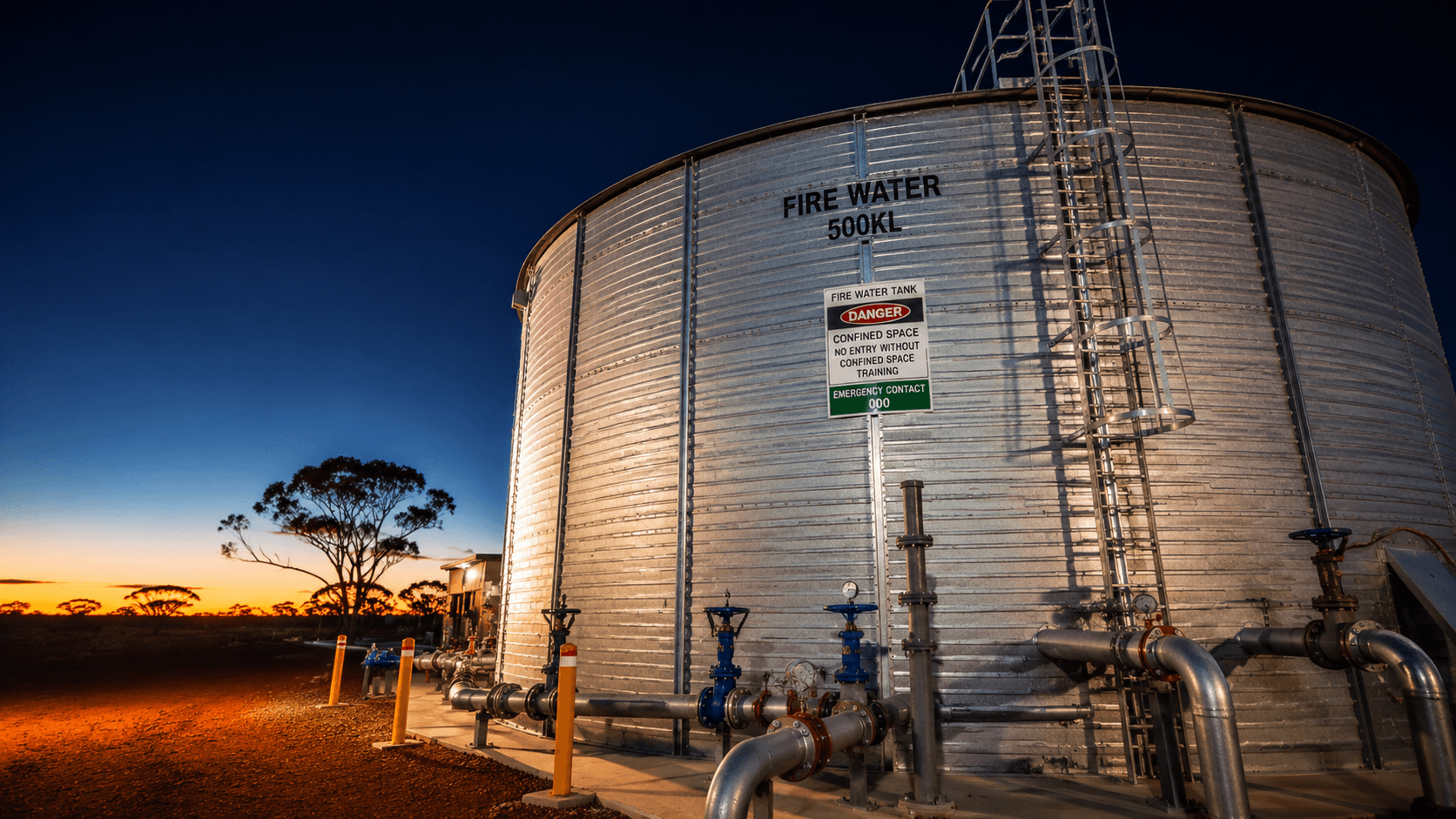
An AS2304-compliant fire water tank guarantees that a certain volume of water exists on site. It says nothing about whether that water can actually reach a sprinkler head or hydrant at the pressure and flow rate the fire system was designed for. That job belongs to the pump set — and it is a more layered system than most non-specialists expect.
A typical fixed fire pump installation is not one pump. It is a small system of pumps, each with a distinct job: a jockey pump to maintain line pressure during normal conditions, and one or more duty pumps — diesel, electric, or both — sized to deliver the full design flow the moment a fire event drops system pressure.
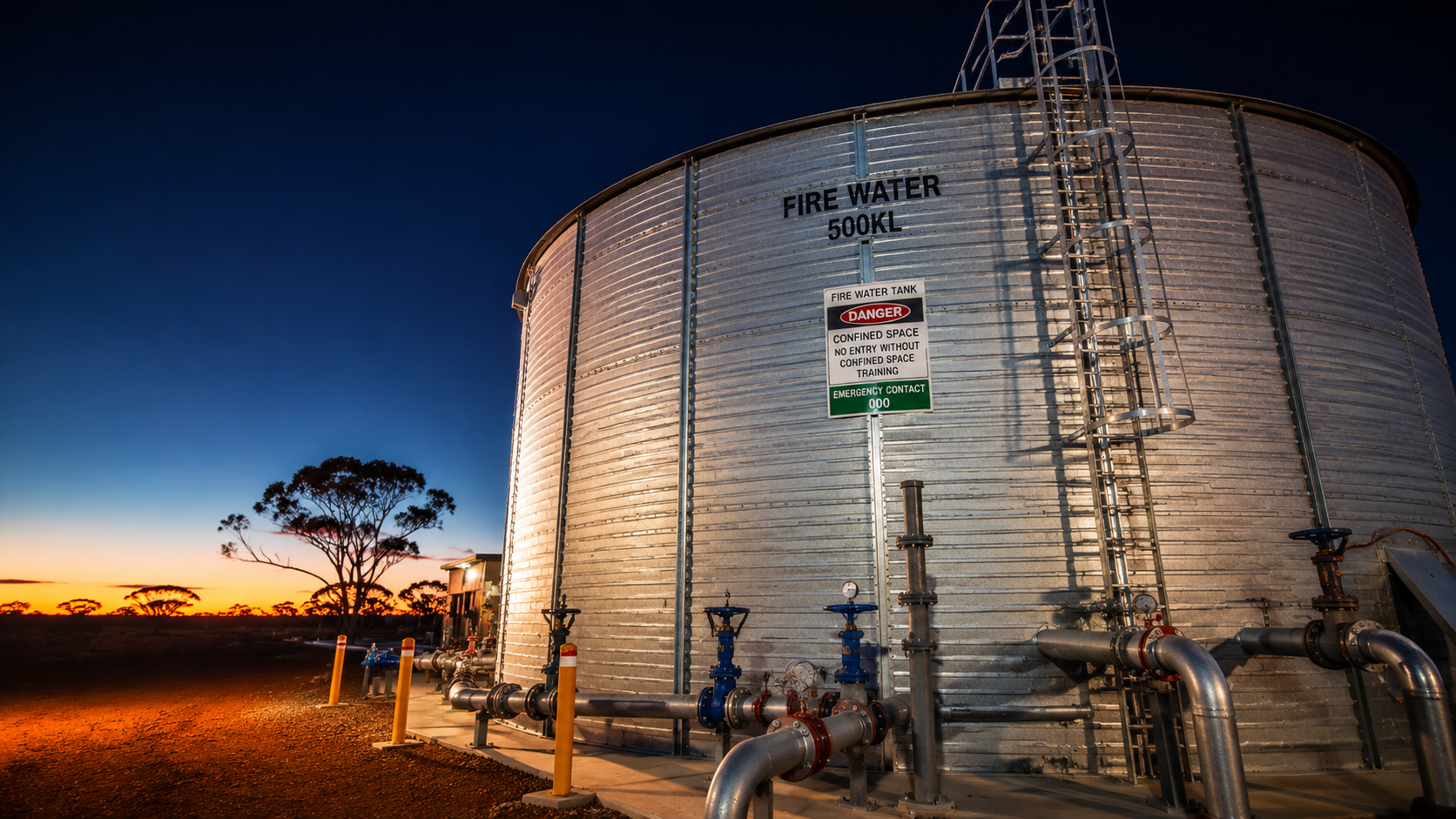
The jockey pump: keeping the system primed
Fire mains lose small amounts of pressure over time through minor leakage and thermal expansion. The jockey pump is a small-capacity pump that runs automatically to top up system pressure between fire events, so the much larger duty pump does not cycle on and off for trivial pressure drops. Without a properly sized jockey pump, a duty pump can start unnecessarily — accelerating wear and, in a diesel unit, burning through fuel and engine hours for no operational reason.
Electric duty pumps: fast, but dependent on power
An electric fire pump responds quickly and is simpler to maintain than a diesel unit, but it depends on a power supply that must itself be fire-rated or otherwise protected — because the fire event that demands the pump is also the event most likely to threaten normal site power. Where an electric pump is used as the sole duty pump, the electrical supply arrangement is scrutinised as closely as the pump itself.
Diesel duty pumps: independent of site power, but higher maintenance
A diesel fire pump runs independently of the site electrical supply — a genuine advantage when the fire scenario itself may have taken out power. The trade-off is a heavier maintenance regime: battery condition, fuel quality and quantity, cooling system integrity, and regular test runs are all required to have real confidence the unit will start on demand after sitting idle, sometimes for months.
Sizing has to be matched, not assumed
Pump flow and pressure requirements are derived from the fire system design — sprinkler density, hose reel demand, hydrant flow requirements — not from the tank size. A tank sized correctly to AS2304 storage volume can still sit behind an undersized or poorly matched pump set, in which case the stored water is functionally unusable at the rate the fire system needs it. Storage volume and pump duty need to be checked against each other, not designed in isolation.
Suction conditions matter just as much as pump selection. The pump needs a reliable, unobstructed supply from the tank under all expected water levels, including the lowest permitted operating level — poor suction pipework, inadequate submergence, or vortexing at low tank levels can starve even a correctly sized pump of the flow it is rated to deliver.
A fire water tank that meets its storage volume requirement is only doing half its job. The pump set determines whether that stored water is actually deliverable when it matters.
| Check | Frequency driver |
|---|---|
| Weekly diesel pump test run | Confirms starting reliability without waiting for an actual fire event |
| Jockey pump cycling behaviour | Excessive cycling signals a system leak or incorrect pressure setpoint |
| Suction pipework and tank connection | Blockage or low water level can starve the pump under demand |
| Battery and fuel condition (diesel units) | The pump must start reliably after long idle periods |
| Annual AS1851 flow and pressure test | Verifies the pump actually delivers rated performance, not just that it starts |
Do all fire water tanks need a dedicated pump set?
Most fixed fire protection systems — sprinklers, hydrants and hose reels supplied from a storage tank — require a purpose-designed pump set matched to the system's flow and pressure demand. The requirement depends on the fire system design and the town main supply available, which is a decision made at the fire engineering design stage.
Why use a diesel pump instead of an electric one?
A diesel pump operates independently of site power, which matters because the fire event most likely to require the pump is also the event most likely to disrupt normal electrical supply. The trade-off is a more involved maintenance regime to ensure reliable starting.
Can an undersized tank be compensated for with a bigger pump?
No. Pump capacity determines flow and pressure delivery, but storage volume is a separate compliance requirement under AS2304 that reflects how long the system must be able to run at design demand. A larger pump cannot substitute for insufficient stored volume.
Reviewing a fire water system and unsure whether storage and pump capacity are properly matched? PC Water Infrastructure can assess the full system together.
Discuss Fire Water Systems