
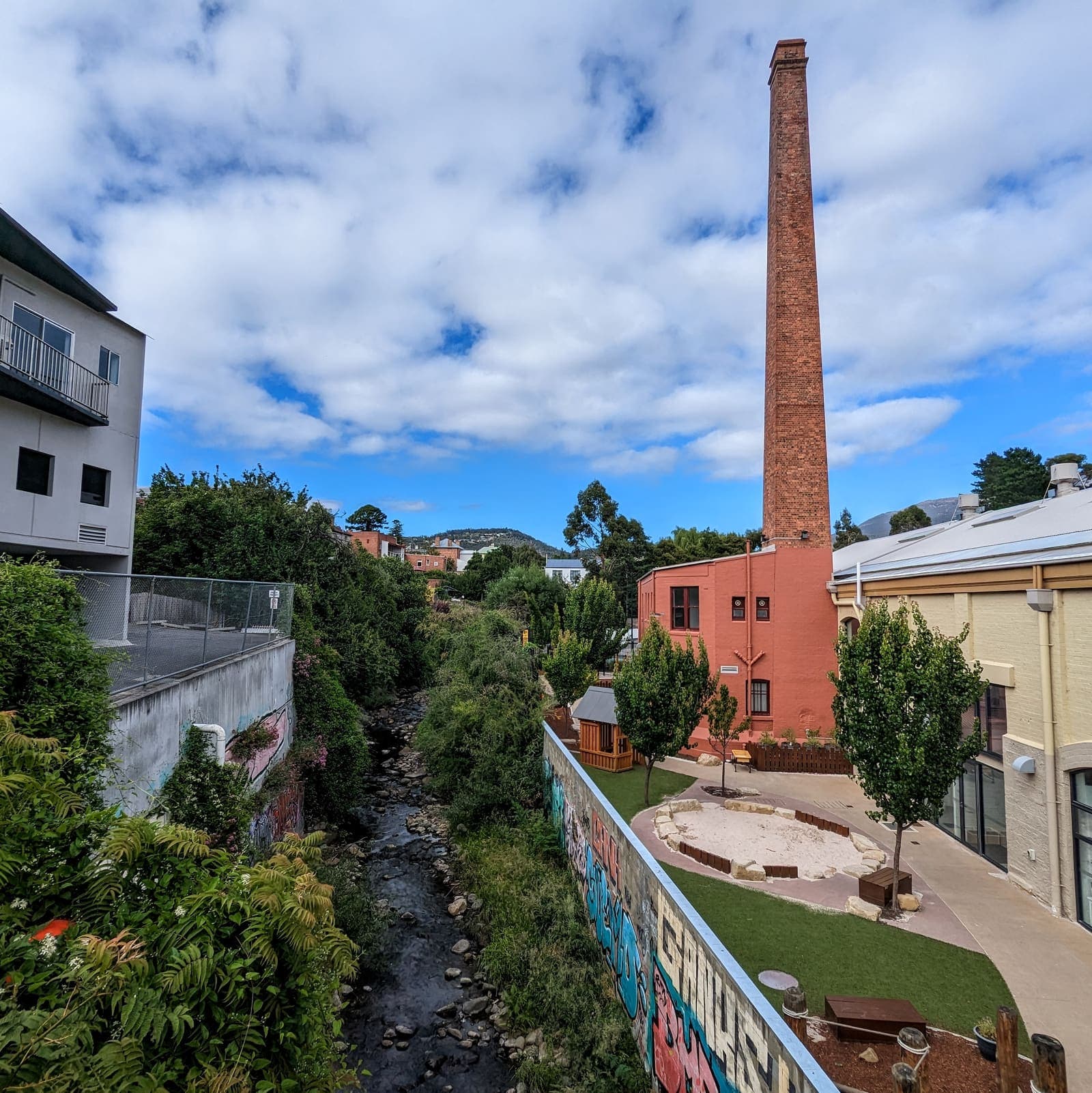
Hobart's early water supply relied on the Hobart Rivulet, which still runs through the city today, long since supplemented by the reservoir and catchment infrastructure that now supplies the greater Hobart area. The city compact geography and significant industrial precincts, including major heavy industry facilities in the wider metropolitan area, create a water storage demand profile distinct from mainland capitals of similar population.
Tasmania as a whole presents a different water security picture to much of mainland Australia - generally higher and more reliable rainfall, but a landscape and settlement pattern where many communities beyond Hobart itself rely on smaller, more localised supply systems with less built-in redundancy than a large mainland metropolitan network.
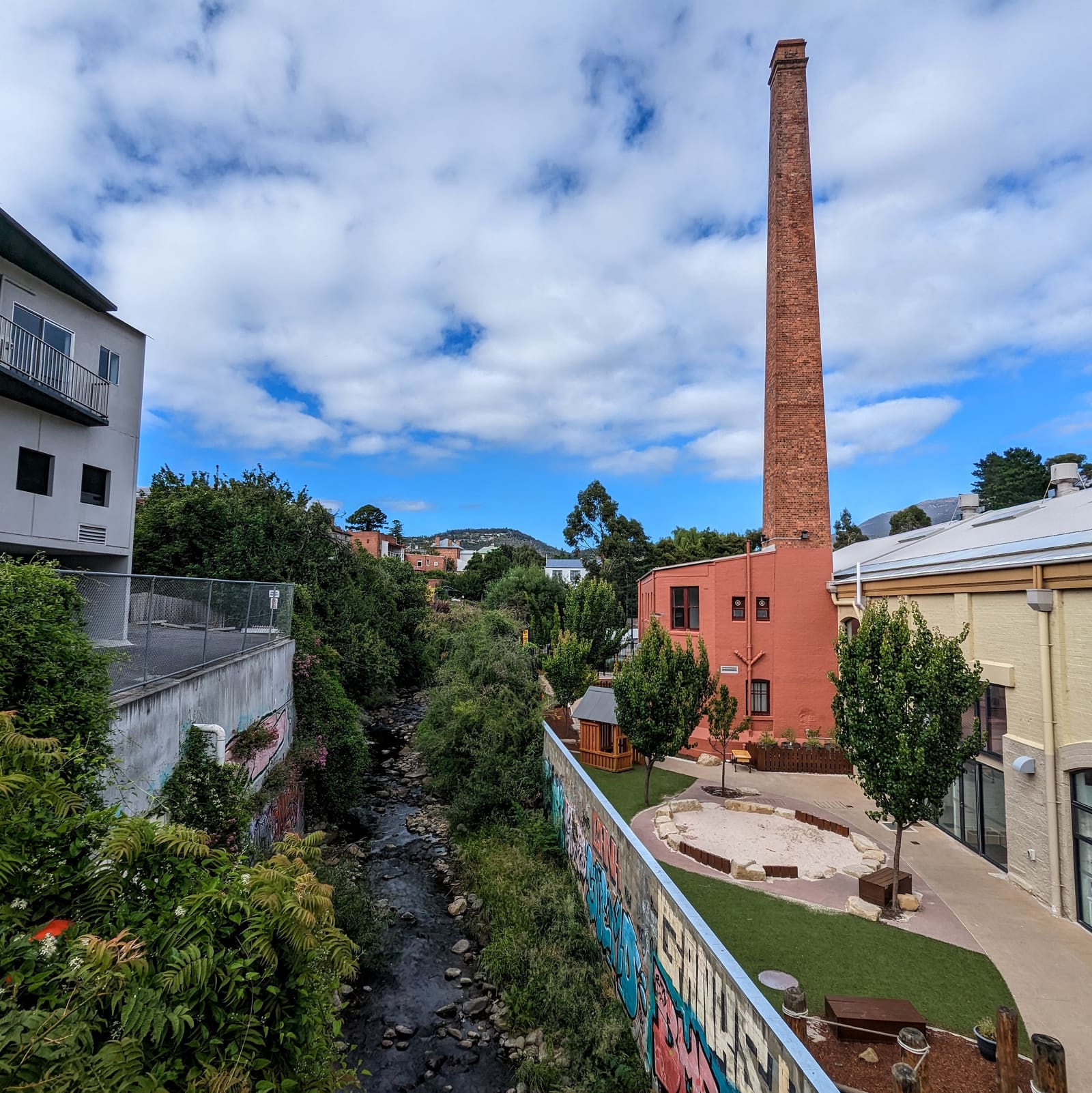
Significant industrial water demand in the wider metropolitan area
Hobart wider metropolitan area, including significant industrial precincts, carries substantial process and fire water storage demand from heavy industry operations - a demand profile that shapes local water infrastructure needs well beyond what the city relatively modest population might suggest on its own.
A compact capital with established and evolving precincts
Hobart combines established inner-city and industrial areas with newer development along the city's growth corridors, meaning water storage infrastructure work spans both condition assessment of ageing assets and correctly specified storage for newer development.
Regional Tasmanian communities and localised supply
Beyond greater Hobart, many Tasmanian regional communities rely on smaller, more localised water supply schemes, which changes both the resilience planning and the storage infrastructure requirements compared to a community connected to a larger integrated network.
Cool, wetter climate considerations for storage design
Tasmania cooler and generally wetter climate compared to much of mainland Australia is a relevant factor in tank design, material selection and, in some cases, freeboard and overflow sizing given the state different rainfall pattern and intensity profile.
Hobart's combination of significant industrial demand and a relatively compact metropolitan footprint means water storage infrastructure here has to work hard for a city its size.
| Consideration | Why it matters locally |
|---|---|
| Wider-metropolitan industrial demand | Significant process and fire water needs beyond the city population size alone |
| Established and growth-corridor infrastructure | Both ageing asset review and new development specification are active needs |
| Regional Tasmanian supply localisation | Less integrated redundancy than mainland metropolitan networks |
| Cool, wetter-climate design factors | Affects material selection and storm event sizing |
Does PC Water Infrastructure deliver projects in Hobart and across Tasmania?
Yes. We deliver water storage infrastructure across greater Hobart and regional Tasmania, spanning industrial, commercial and government sector projects.
Why does Hobart have significant industrial water storage demand for its size?
The wider Hobart metropolitan area includes significant heavy industry precincts with substantial process and fire water storage needs, which shapes local demand beyond what the city population alone would suggest.
Do regional Tasmanian communities have different water security to Hobart?
Generally yes - many regional communities rely on smaller, more localised supply schemes with less integrated redundancy than a larger connected network, which affects resilience planning for water storage.
Planning water storage infrastructure in Hobart or across Tasmania? PC Water Infrastructure delivers industrial, commercial and regional projects across the state.
Discuss a Hobart Project