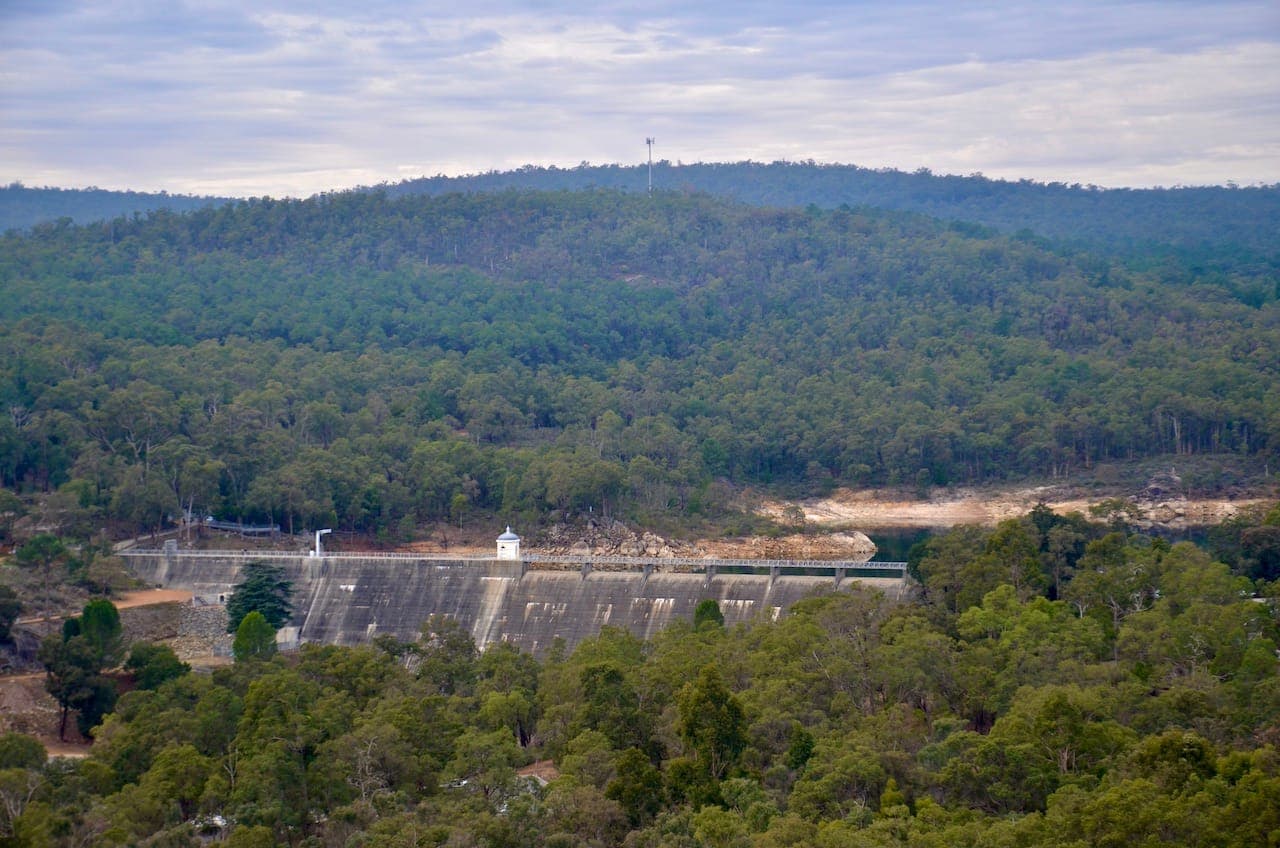
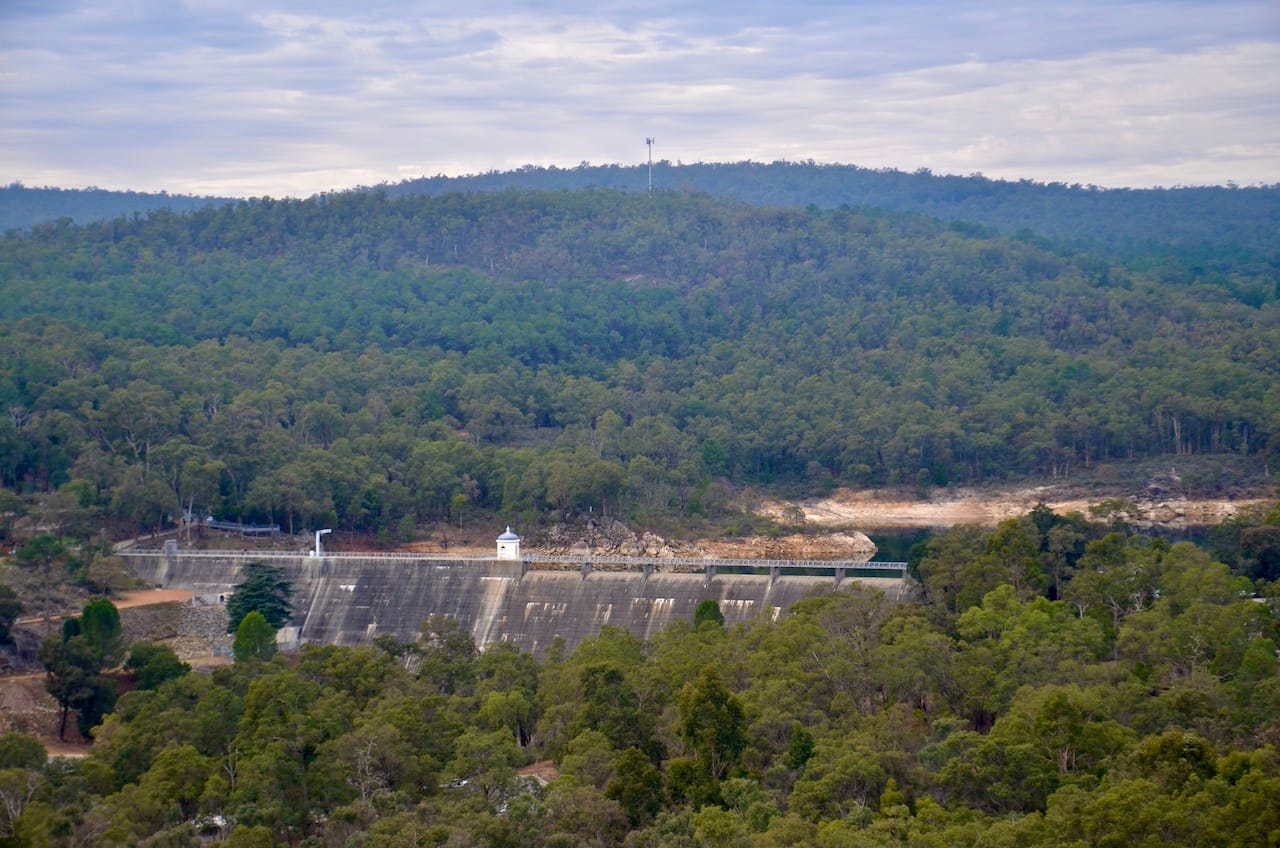
Perth has faced one of the most significant long-term rainfall declines of any Australian capital, with inflows into traditional dam storages like Mundaring Weir dropping substantially compared to last century's averages. The city's response — investing heavily in desalination — has fundamentally changed how Western Australia's water supply, and the storage infrastructure that supports it, is planned.
Perth's Integrated Water Supply Scheme now draws on a mix of groundwater, dam storage and desalinated seawater, with desalination supplying a substantial and growing share of total demand precisely because it is drought-independent in a way surface storage in a drying climate is not. This shift has broader implications for how storage infrastructure is planned across the state, not just within the metropolitan scheme itself.
Storage buffers a more complex, blended supply system
A supply system drawing from desalination, groundwater and dam storage together has different operational storage requirements than a single-source system — storage needs to buffer against the specific characteristics of each source, including planned desalination plant maintenance outages, seasonal groundwater management, and the more genuinely variable dam inflows that remain part of the mix. Storage infrastructure across the metropolitan area and connected regional systems needs to be planned with this blended supply reality in mind.
Mining and resources sector demand across WA
Western Australia's mining and resources sector, much of it well outside the Perth metropolitan area, represents a substantial and distinct water demand category with its own storage requirements — process water, dust suppression, potable supply for remote workforce accommodation, and often water sourced and managed independently of the metropolitan or regional town supply schemes entirely. This creates ongoing demand for remote-capable storage infrastructure delivery across the state, separate from and additional to metropolitan Perth requirements.
Regional WA towns face distinct supply challenges
Beyond Perth itself, regional Western Australian towns often rely on more localised supply schemes — groundwater, smaller dams, or in some cases connection to regional pipeline infrastructure — with less of the supply diversity the metropolitan scheme has built through desalination investment. Storage planning for these regional communities needs to account for this more constrained supply context rather than assuming the same resilience the metropolitan scheme now has.
Corrosion and material considerations across WA's climate range
Western Australia spans an enormous climate range, from Perth's Mediterranean coastal climate through to the genuinely harsh conditions of the Pilbara and Kimberley further north — material and coating specification for water storage needs to account for the specific regional climate and, for coastal sites, salt exposure, rather than a single specification applied uniformly across the state's very different environments.
Perth's shift toward desalination is a genuine model for climate-adapted water supply — and it illustrates why storage infrastructure planning has to keep pace with how the supply system itself is changing, not remain built around assumptions from a wetter past.
| Consideration | Why it matters locally |
|---|---|
| Blended supply system buffering | Desalination, groundwater and dam storage each need different operational buffering |
| Mining and resources sector demand | Substantial, often remote, storage needs independent of metropolitan supply |
| Regional town supply constraints | Less supply diversity than the metropolitan scheme now has |
| Climate-appropriate material specification | WA spans coastal, arid and tropical conditions across one state |
Does PC Water Infrastructure deliver projects in Perth and Western Australia?
Yes. We deliver water storage infrastructure across Western Australia, including Perth metropolitan projects and remote regional and mining-sector work across the state.
Why has Perth invested so heavily in desalination?
Perth has experienced a significant long-term decline in dam inflows due to reduced rainfall, making desalination an attractive drought-independent supply source compared to relying primarily on surface water storage in a drying climate.
Do mining sites in Western Australia need different water storage to metropolitan Perth?
Generally yes. Mining and resources sector sites often manage their own water supply independently of metropolitan or regional town schemes, with demand profiles — process water, dust suppression, remote workforce potable supply — and remote delivery requirements quite different from an urban context.
Planning water storage infrastructure in Perth or across Western Australia? PC Water Infrastructure delivers metropolitan, regional and remote mining-sector projects.
Discuss a WA Project