
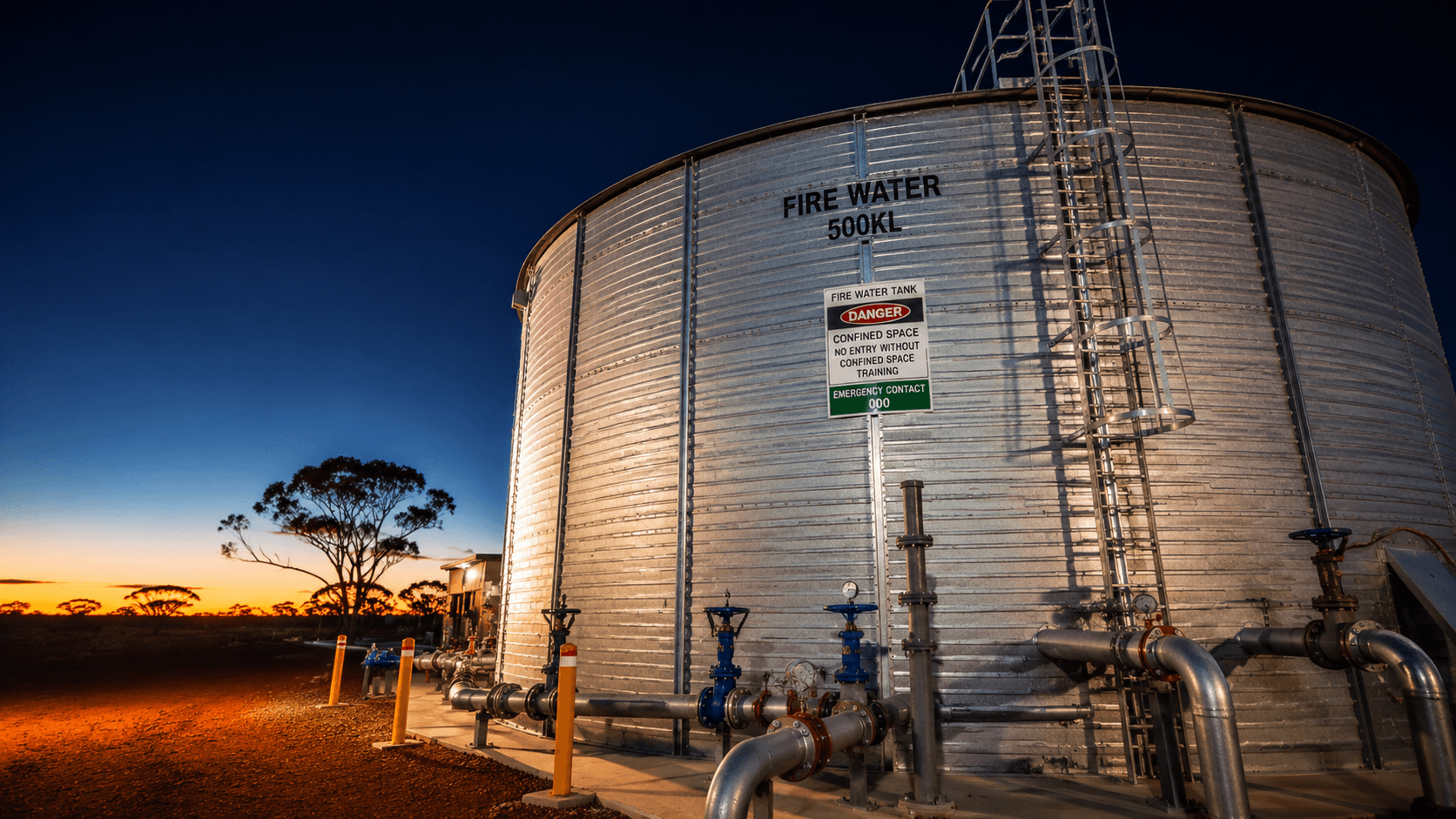
When it comes to fire safety, cutting corners is not an option. Yet across Australia, countless facilities are running fire protection systems that don't meet compliance standards — often without realising it.
Two standards govern fire water storage tanks in Australia. AS 2304 covers the design, fabrication, and installation of water storage tanks specifically for fire protection — including capacity, materials, fittings, and access. AS 1851 governs the routine service of fixed fire protection systems, mandating inspection intervals, testing requirements, and documented maintenance records. Together, these two standards define what a compliant fire tank looks like at installation, and what keeping it compliant requires throughout its operational life.
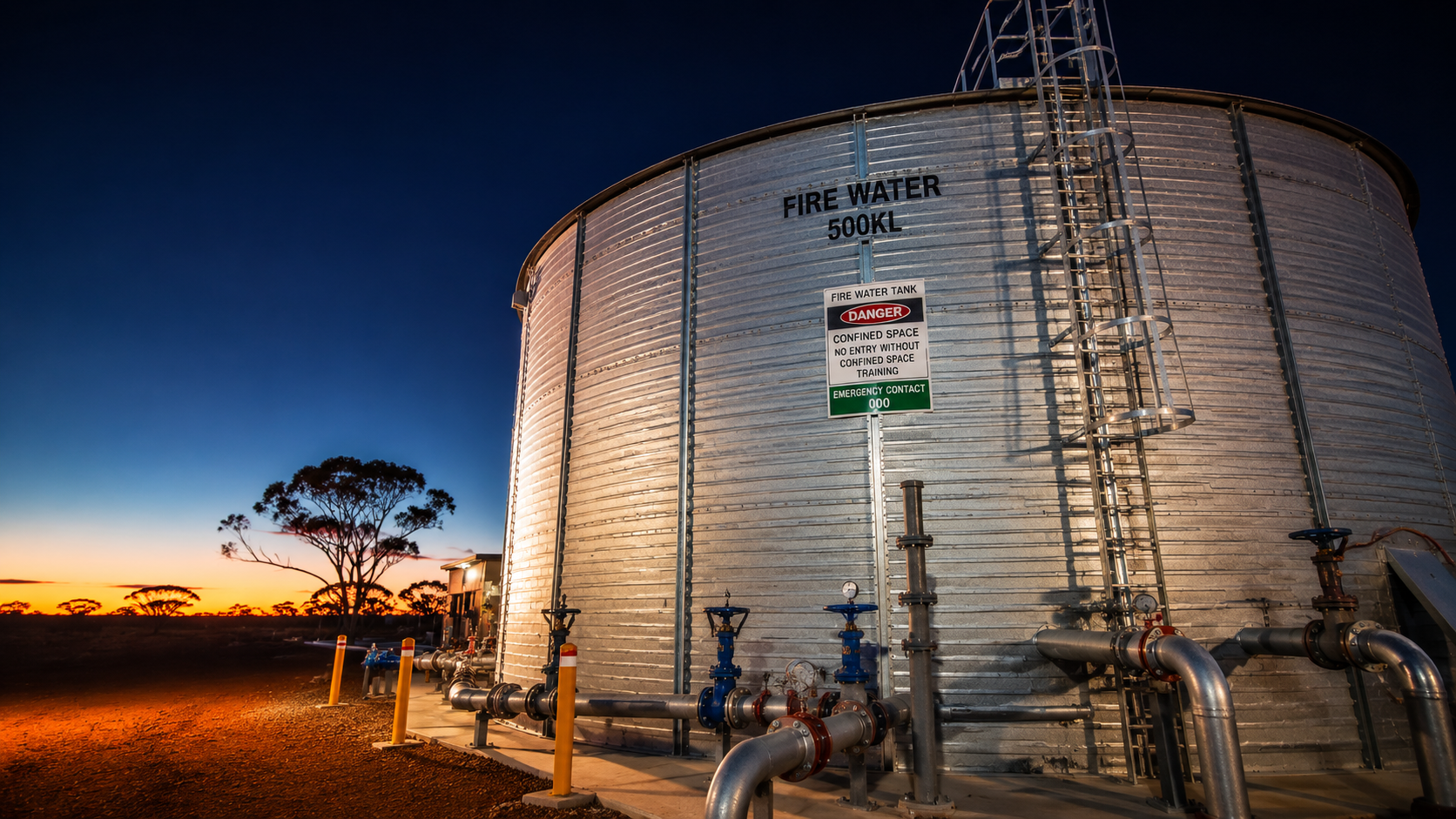
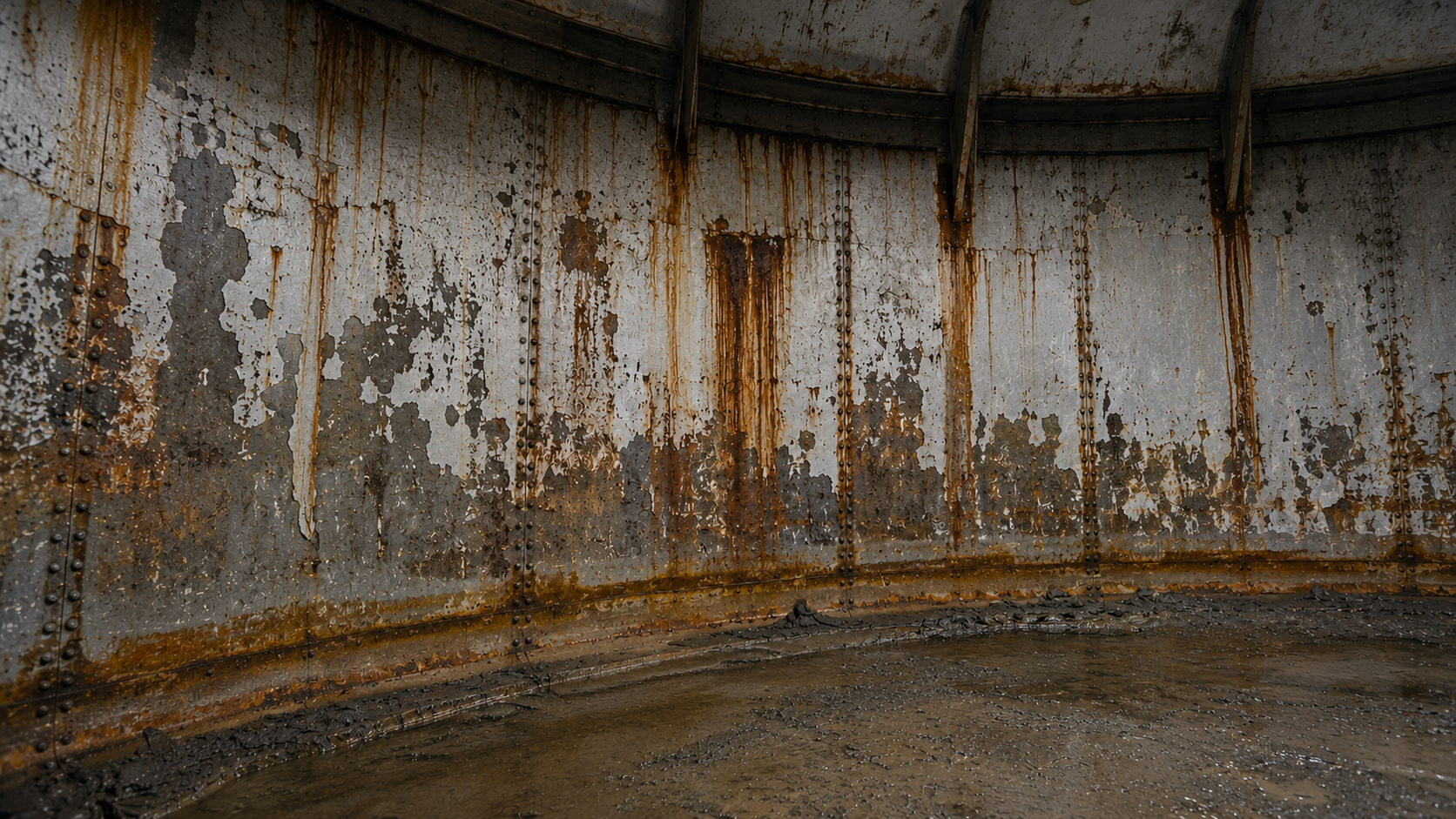
Fire tanks fail compliance for a consistent set of reasons. Tank capacity is insufficient for the calculated demand — particularly common where hazard classifications have changed since original installation. Fittings, pipework, and valves are degraded, corroded, or incompatible with current standards. Internal coatings and liners have deteriorated beyond the acceptable condition threshold for AS 2304 materials. Inspection and service records are incomplete, missing mandatory test results, or have lapsed beyond the required intervals under AS 1851.
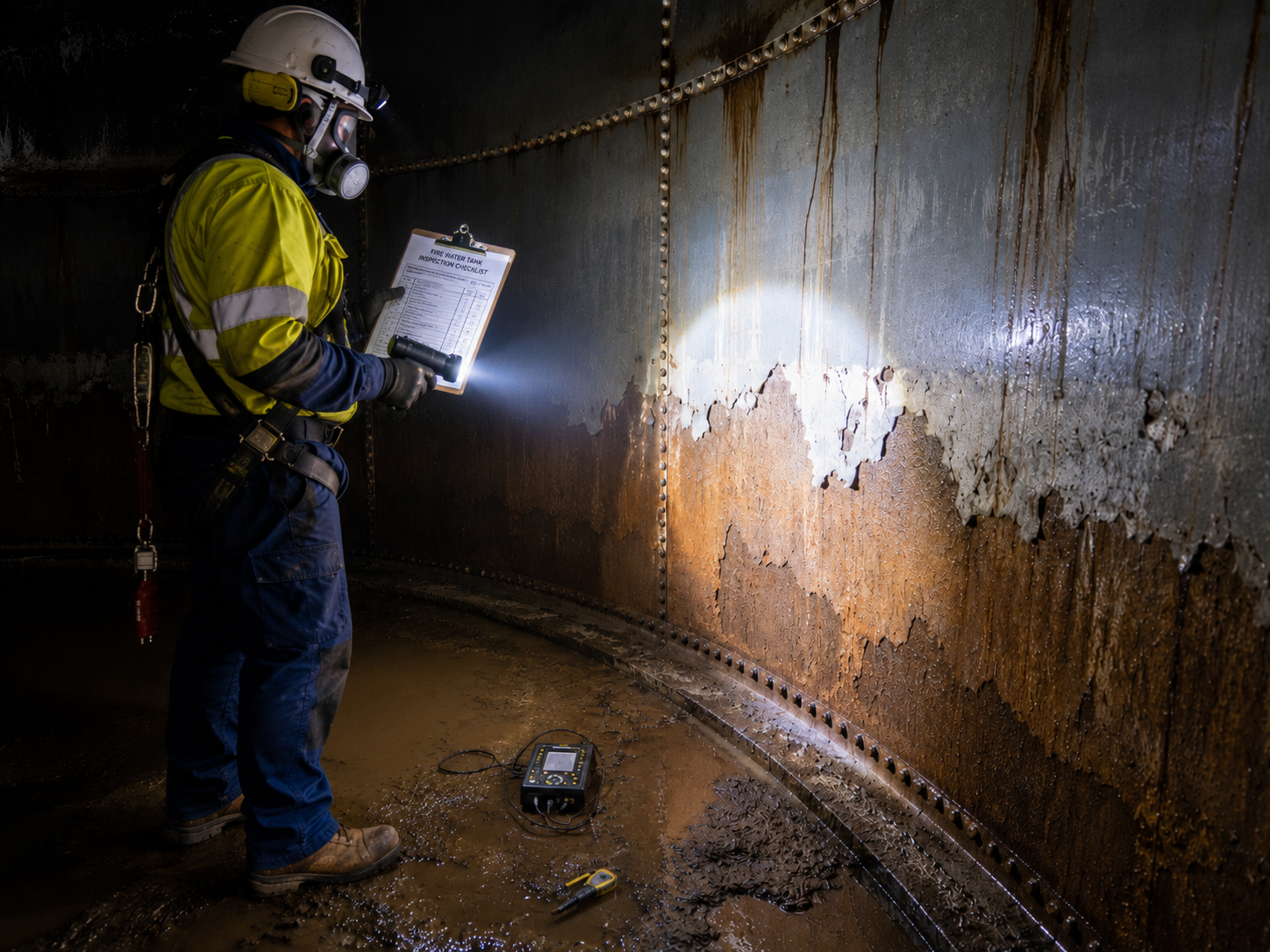
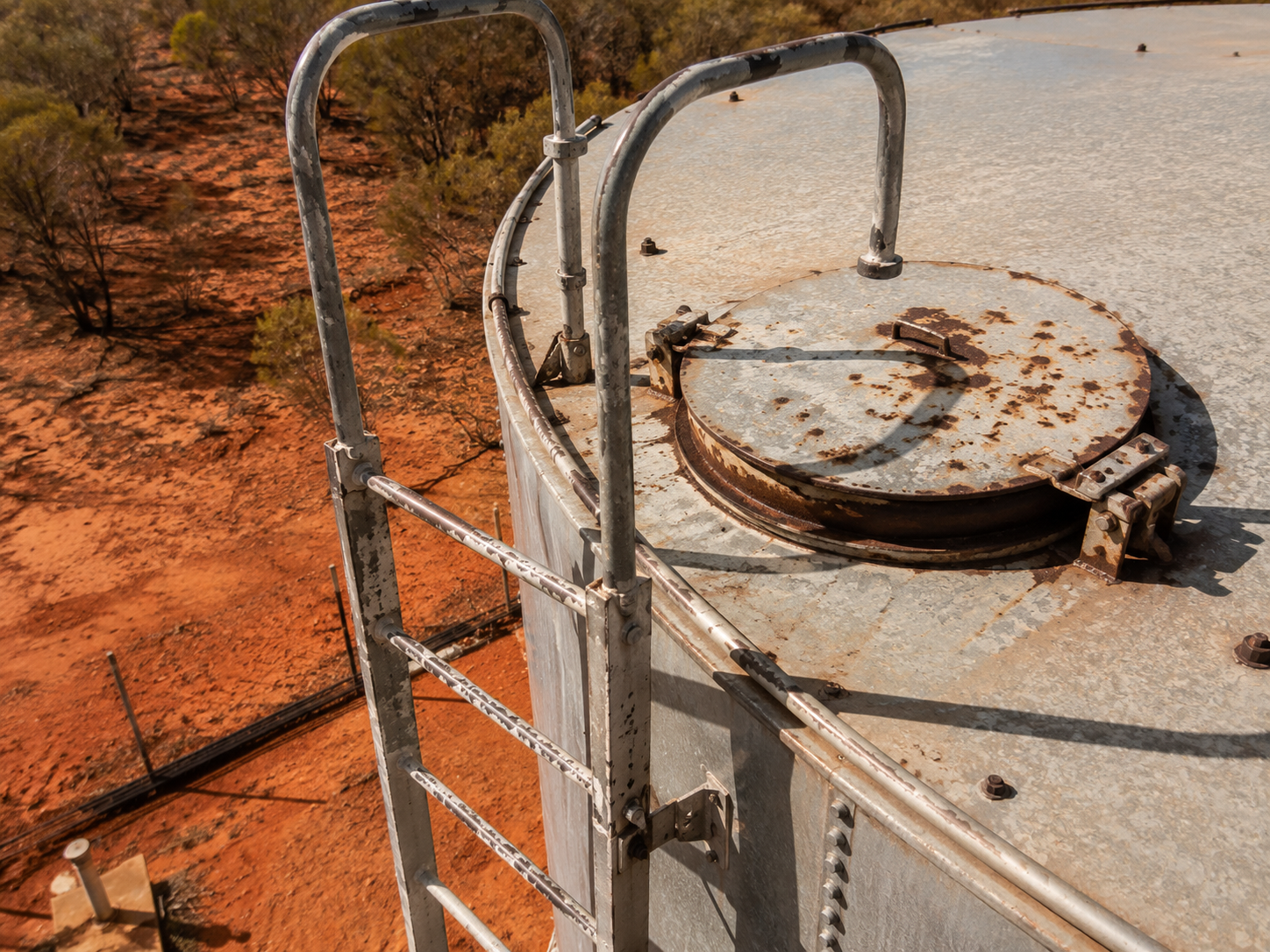
Physical failure modes include corrosion of inlet and outlet pipework, blocked strainers, seized valves, and damaged access hatches that compromise the integrity of stored water. In tanks that have been out of routine service for several cycles, sediment accumulation and biofilm growth add contamination risk to the structural concerns.
The cost of non-compliance extends beyond regulatory penalties. Insurance claims may be denied where fire protection systems are found non-compliant at the time of a loss event. Principal contractor liability under building and fire codes can attach where compliance documentation is absent.
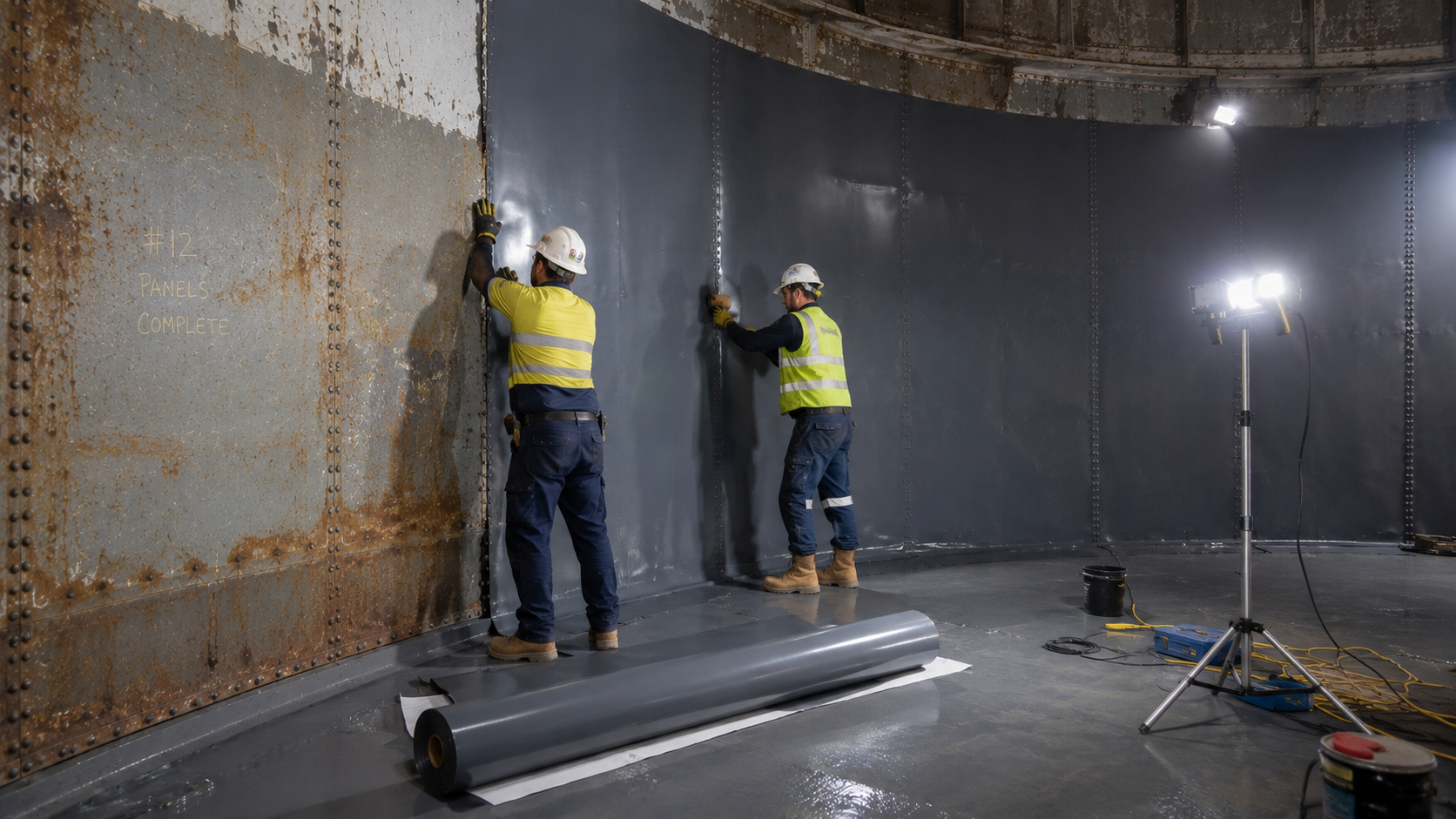
The fastest path back to compliance starts with an independent inspection and a documented deficiency register. Once the gaps are identified, the decision becomes commercial rather than speculative: repair, reline, upgrade, or replace. For tanks where the structure remains sound, internal relining under AS 2304-compliant materials is consistently the most cost-effective remediation pathway.
Prevention is simpler than remediation. A compliant maintenance program under AS 1851 — with documented inspection records, test results, and deficiency tracking — keeps fire tanks in the window where issues are addressable at routine maintenance cost, not emergency remediation cost.
What is AS 2304 and who does it apply to?
AS 2304 is the Australian Standard governing the design, construction, and installation of water tanks used for fire protection systems. It applies to any facility with a dedicated fire water tank — including commercial, industrial, mining, healthcare, and government sites.
How often does a fire tank need to be inspected under AS 1851?
AS 1851 requires monthly visual checks, annual internal inspections, and five-year structural integrity assessments. Independent specialist inspections should occur every 1–4 years depending on the tank's condition, operating environment, and risk profile. All inspections must be formally documented and records retained.
Can an existing non-compliant fire tank be upgraded, or does it need to be replaced?
Many non-compliant tanks can be brought up to standard through targeted retrofits — adding compliant access hatches, installing an RPVC liner, replacing corroded fittings, and upgrading outlet configurations. Full replacement is usually a last resort.
What documentation is required to prove fire tank compliance?
You need documented records of every inspection, test, and maintenance activity as required by AS 1851. This includes monthly visual check logs, annual internal inspection reports, five-year structural assessment reports, and records of any modifications or remedial works.
PC Water Infrastructure provides inspection, condition assessment, and remediation for fire water storage tanks across Australia — including RPVC relining, pipework replacement, valve servicing, and full compliance documentation.
Arrange a compliance inspection