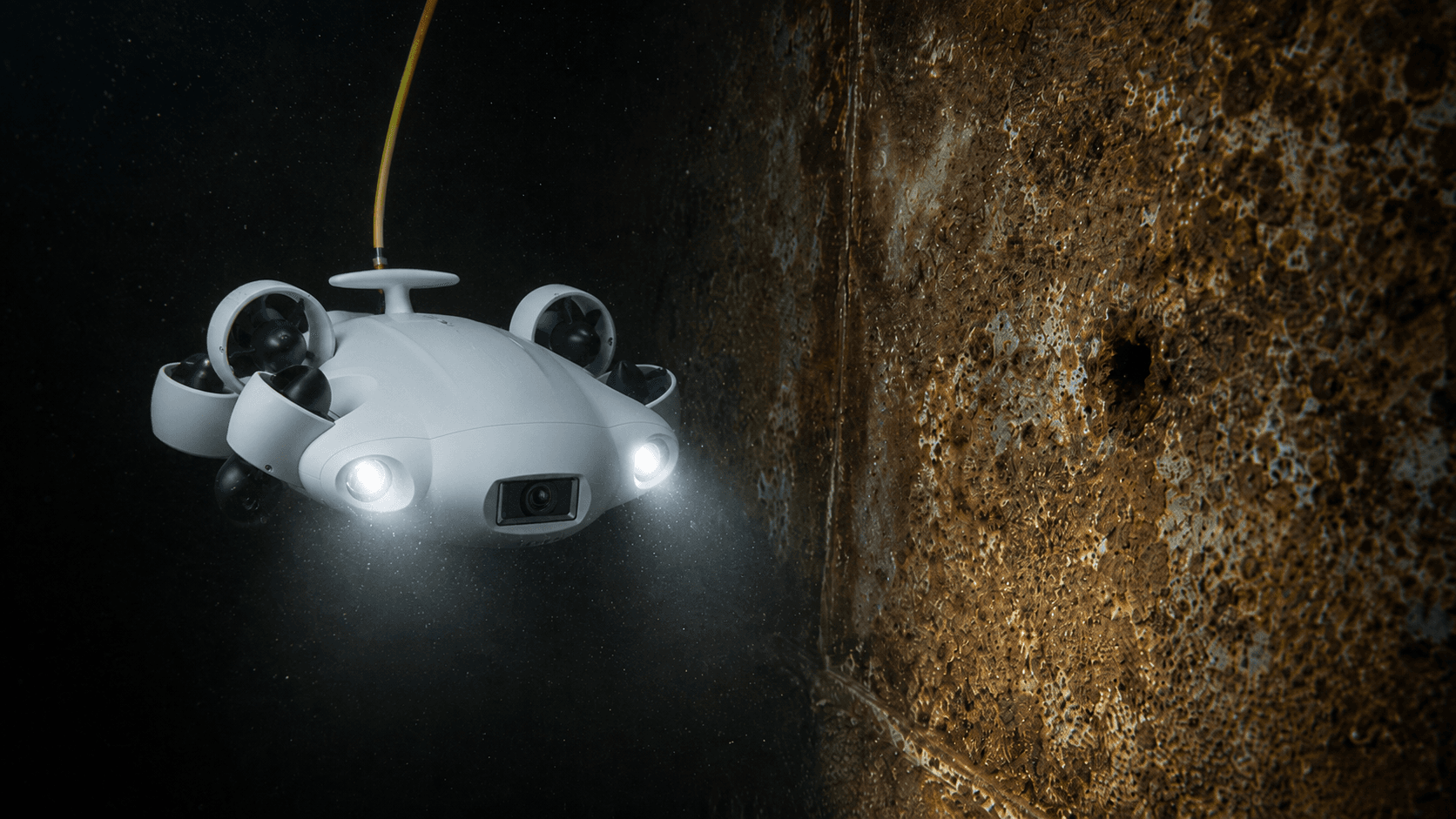
Most water quality failures get blamed on the treatment process or the source catchment. But when a diver goes in to investigate, the evidence trail almost always leads somewhere else — to the asset itself.
We've covered in a previous post that water is food and the tank is the crockery. It doesn't matter how carefully the water was treated at the plant if the vessel holding it after treatment is compromised. And the contamination doesn't announce itself at the tap until it's been building for some time.
A trained inspector doesn't start by testing the water. They start by reading what's inside the tank — the physical evidence left by each contamination pathway. The Aquasafe framework identifies ten distinct indicators that a tank interior reveals to an inspector who knows what to look for. We've taken those ten and grouped them into the five contamination risks that asset owners need to understand first.
Birds are the most common animal body found inside Australian water storage tanks. Snakes, frogs, rabbits, and feral cats follow. In almost all cases, they entered through one of three places: an open overflow drain point, a damaged access hatch, or deteriorated vent mesh.
Overflow events are rare, which means the drain pipe runs dry most of the time — and a dry pipe in a paddock is a sheltered habitat to Australian wildlife. Without a flapper valve fitted to the drain end, it is an open invitation. What makes this risk particularly insidious is that the entry point is often metres away from the tank and easy to forget about entirely.
When our divers descend, animal remains are one of the most consistent findings — particularly small birds near the roof structure and larger animals on the floor. The water shows no obvious signs of contamination above a certain threshold; by then, it's already in the distribution system.
Vandal activity is more common around water storage assets than most asset owners expect — particularly on inground tanks and tanks at the edge of urban areas. Rocks and rubbish found inside a tank during inspection are the most unambiguous indicator: they didn't fall in by accident.
Beyond deliberate contamination, vandalism to hatches and roof vents has secondary effects. A hatch left open after a vandal event exposes the tank to the full range of animal entry risks. A destroyed vent mesh leaves fine particulates, insects, and small birds with unimpeded access. Neither risk resolves itself — the exposure continues until a site visit identifies and rectifies the damage.
Leaf debris and grass litter found inside a tank tell two stories simultaneously. First, the vent mesh screen material is too coarse — it's admitting organic matter that should be filtered out. Second, the mowing or maintenance contractors working near the tank don't understand how close they are to a potable water asset.
In Australian conditions, the airborne contamination risk extends well beyond leaf litter. Dust accumulation inside tanks — particularly in agricultural regions, near unsealed roads, and in areas subject to land burning — can be significant. Unsealed roof ridge capping is a related pathway. Fine mesh that keeps out insects will also keep out fine particulates. Coarse mesh that merely keeps out birds is not adequate protection in environments with real airborne loads.
Sediment on the floor of a tank is an expected finding after years of service. The question is what type of sediment, how much, and where it's concentrated — because the answers point to different sources with different consequences.
Sediment on the walls — not the floor — indicates the tank has experienced fluctuating water levels over time, with settled material left behind as the level drops. This typically means the tank is not being cycled or mixed effectively. Water that stratifies and sits still allows suspended particles to settle and accumulate. Tanks that barely cycle don't clear this material naturally.
Black sediment or floc carry-over points to treatment plant operational issues where fine treatment chemicals weren't fully removed before the treated water entered storage. This is the one contamination risk on this list that does originate upstream — but the evidence of it lives in the tank, not the plant.
Roof construction debris is the last item in the Aquasafe evidence framework — and the one that most surprises asset owners when it's raised. Contractors performing legitimate work on or around a tank — roof repairs, vent upgrades, access hatch replacements — are working directly above the water stored below. Construction debris, fasteners, drilling swarf, and sealant residue all have a path into the tank if the work isn't managed correctly.
The common factor is induction. Contractors who haven't been briefed on potable water protocols for the asset they're working on don't understand that dust, debris, and uncapped openings are water quality risks. Any construction or maintenance work on a potable water storage tank should include contractor induction before work starts and a post-works internal inspection before the asset is returned to service.
Following the evidence trail will assist in determining the source of the contamination to ensure the consumers are not exposed to unsafe water. A lot of water quality issues can be identified — and often solved — by a fresh eyes approach to inspecting assets.
All five risks sit entirely within the storage asset. None of them are visible from the tap until the contamination load is significant. And none of them can be identified by testing the incoming source water — because the source water isn't the problem.
Under the Australian Drinking Water Guidelines (NHMRC), the obligation to protect water quality extends from treatment through storage to distribution. An asset that hasn't been internally inspected in several years is not a compliant asset — regardless of how clean the source water is.
Can water be contaminated if it comes from a clean treated source?
Yes. Treated water that enters storage in excellent condition can be re-contaminated by the vessel holding it. Animal entry, environmental debris, sediment accumulation, maintenance activity, and vandalism all represent contamination pathways that exist entirely within the storage asset — independent of source water quality.
How do animals get into water storage tanks?
The three most common animal entry points are open overflow drain pipes (which run dry most of the year and provide a sheltered habitat for wildlife), damaged access hatches, and deteriorated vent mesh on roof penetrations. Flapper valves on overflow drain ends and fine mesh on all vents prevent the majority of animal entry events.
What does sediment on the walls of a water tank indicate?
Sediment banding on tank walls — rather than the floor — typically indicates the tank has experienced inadequate cycling, with water levels fluctuating and material settling at historical waterlines. This points to operational mixing and turnover issues rather than a source water problem.
What should happen before contractors work on a potable water tank?
Any contractor performing work on or immediately adjacent to a potable water storage tank should be inducted on potable water asset protocols before work commences. A post-works internal inspection should be completed before the tank is returned to service. These two steps eliminate the majority of construction-related contamination events.
PC Water Infrastructure provides independent inspection and condition assessment for potable water storage assets across Australia — identifying contamination pathways before they become water quality events.
Request an inspection