
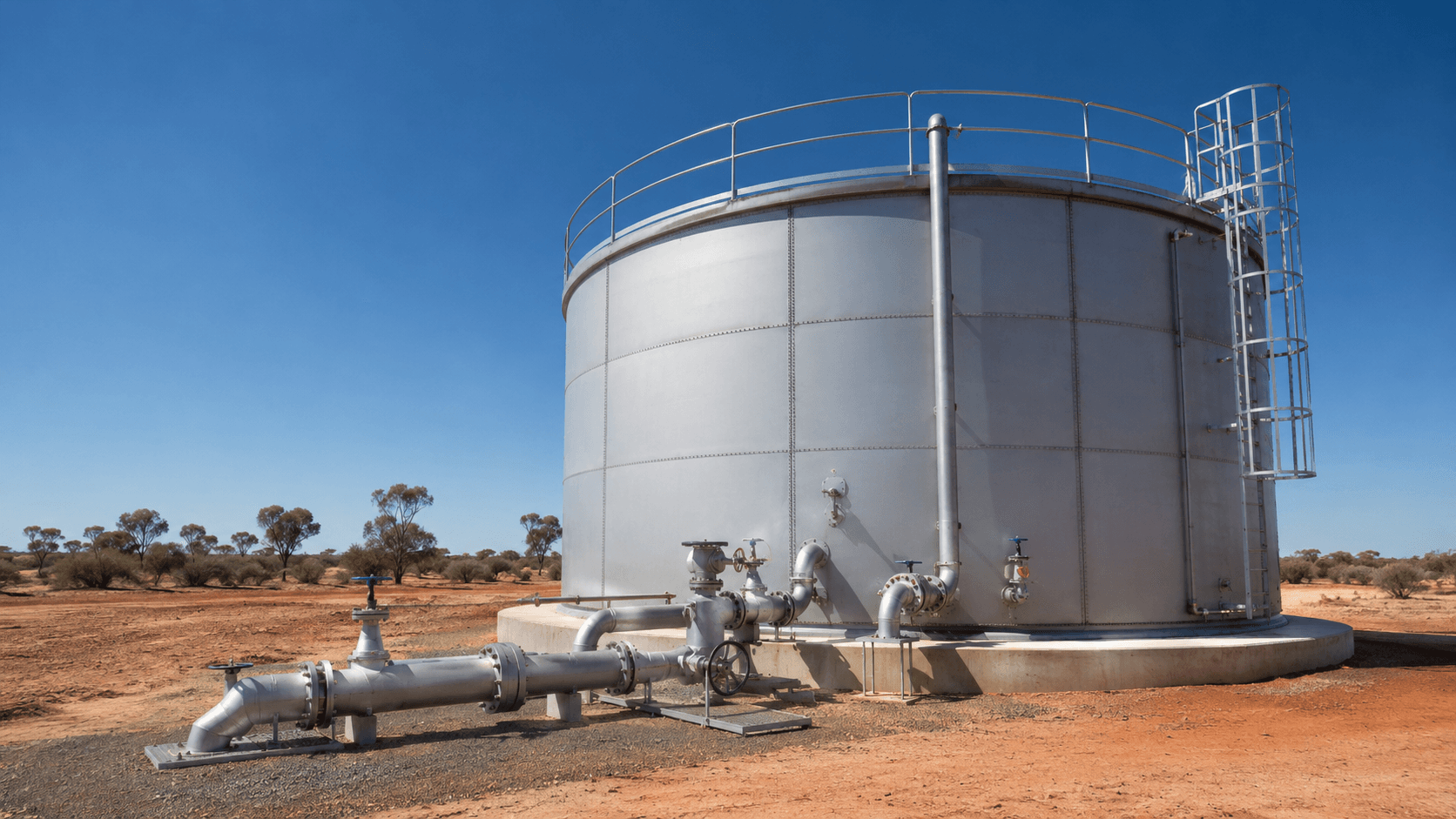
Water storage on a working farm rarely serves a single purpose. Irrigation demand, stock water supply, and household or worker accommodation potable needs can all draw from different parts of the same property, on different schedules, with different water quality requirements attached to each.
Irrigation storage is typically the largest-volume requirement by far, sized against crop water demand and seasonal availability of the primary supply source - a bore, dam, river allocation or a combination of these. Getting irrigation storage capacity wrong has a direct, visible cost: a crop that cannot be watered through a dry spell is a lost season, not just an inconvenience.
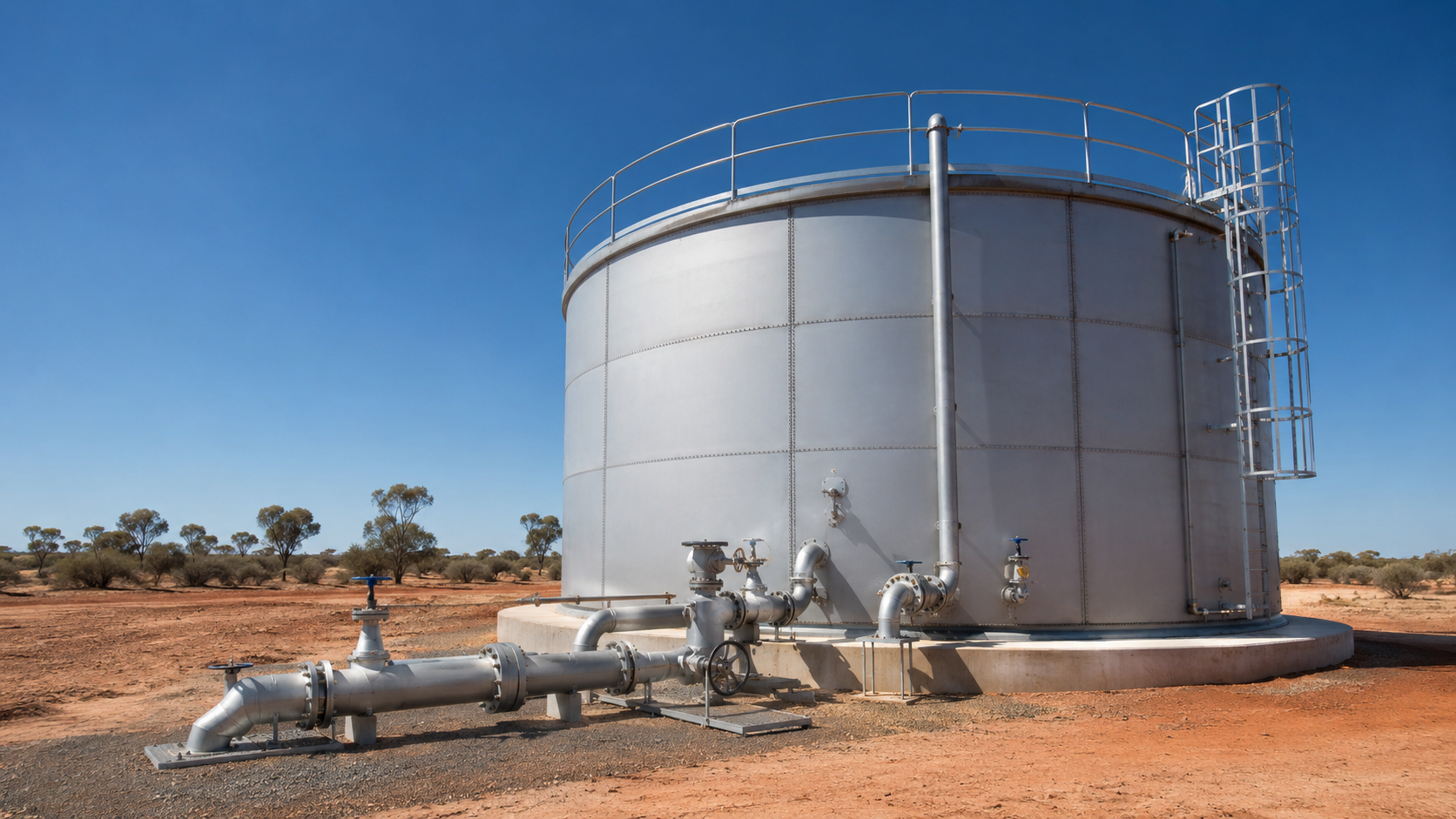
Irrigation storage sized against seasonal supply gaps
The right irrigation storage volume depends on how reliable the primary water source is through the growing season - a property with secure year-round bore or river access needs less buffer storage than one relying on seasonal rainfall capture or an allocation that can be restricted in dry years.
Stock water quality and access requirements
Stock water does not need potable-grade treatment, but does need to be free of contamination that could affect animal health, and storage and trough infrastructure needs to be designed for reliable access across paddocks that may be some distance from the main storage point.
Poly, steel or concrete - matched to the application
Polyethylene tanks suit smaller-volume potable and stock applications well, steel tanks scale more efficiently to larger irrigation volumes, and concrete or lined earthen storage often makes sense for the largest bulk irrigation reserves - the right choice depends on volume, budget and site access, not a single default material for all farm storage.
Remote property access and delivery logistics
Rural properties can face many of the same access and freight constraints as a genuinely remote mine site, just at a smaller scale - tank size and delivery method need to account for what can actually reach the installation point, particularly on properties with unsealed access roads or seasonal access limitations.
The most expensive mistake in farm water storage is treating irrigation, stock and potable needs as one undifferentiated requirement, rather than sizing and specifying each against what it actually needs to do.
| Consideration | What it determines |
|---|---|
| Primary supply source reliability | Sets the buffer storage volume needed through dry periods |
| Stock water quality and trough access | Different requirements to irrigation or potable storage |
| Tank material selection | Poly, steel and concrete each suit different volumes and budgets |
| Property access and delivery constraints | Affects tank size and installation method on rural sites |
Should irrigation and stock water share the same storage tank?
This depends on the property, but separating them is generally preferable where volume and budget allow, since each has different quality and access requirements and sharing storage means neither is optimally served.
How is irrigation storage volume calculated?
Primarily against how reliable the primary water source is through the growing season - properties with less secure or more seasonal supply generally need greater buffer storage capacity.
What tank material is best for a farm property?
There is no single answer - polyethylene generally suits smaller potable and stock applications, steel scales well to larger irrigation volumes, and concrete or lined storage often suits the largest bulk reserves. The right choice depends on volume, budget and site access.
Planning water storage for a farm or agricultural operation? PC Water Infrastructure specifies storage matched to irrigation, stock and potable needs separately.
Discuss Farm Water Storage