
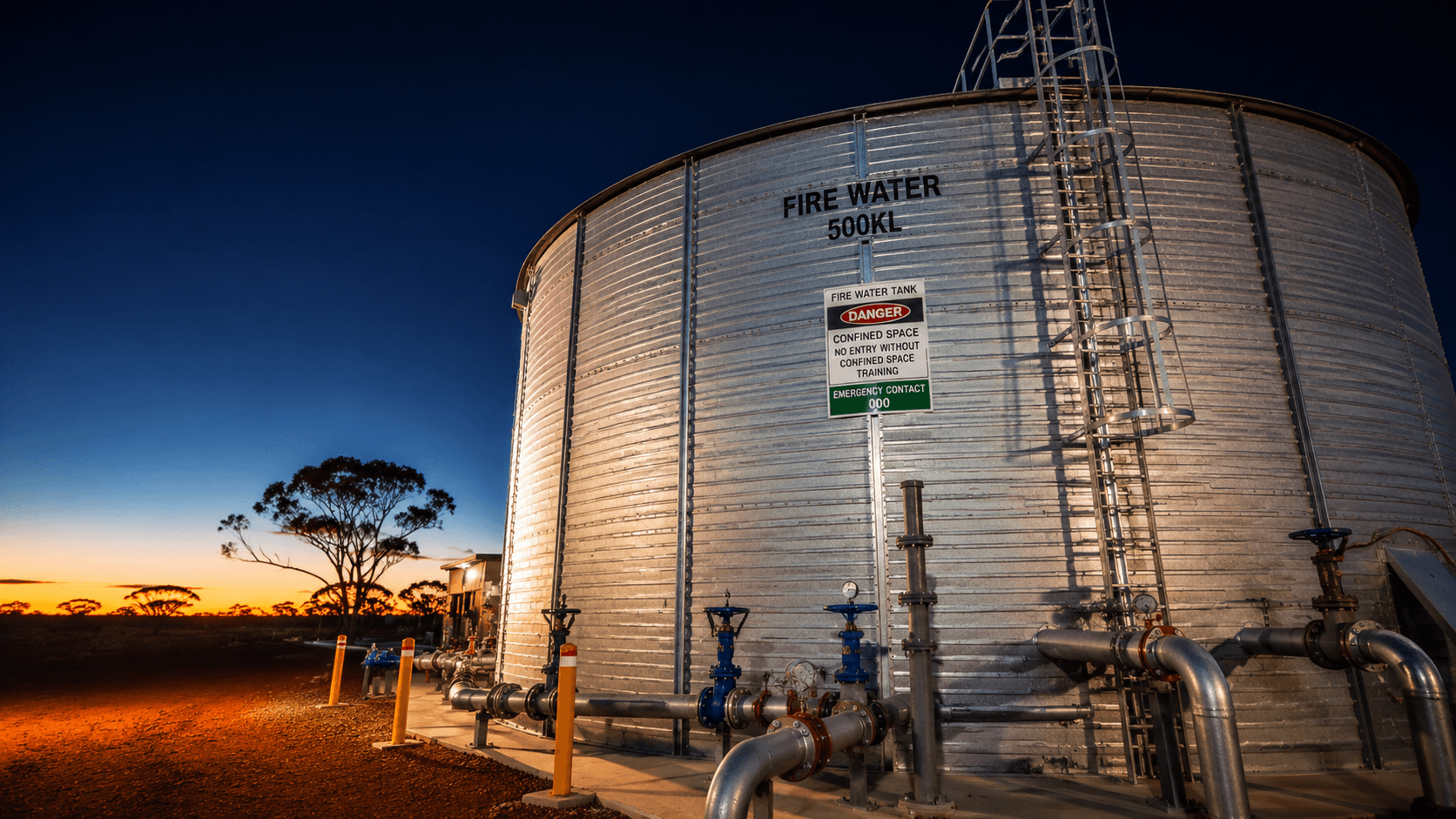
Correctional facilities operate with continuous, high-density occupancy around the clock, which places sustained demand on both potable water and fire protection storage. That demand profile does not let up for maintenance windows the way many other facility types do, and every aspect of infrastructure work needs to work within the facility security framework.
Fire protection compliance carries particular weight in a correctional setting given occupancy density and the specific evacuation and containment procedures that apply - a fire water system that cannot be relied on is a materially different risk in a facility where movement is controlled and evacuation options are constrained compared to a typical commercial building.
Secure access approval for all infrastructure work
Contractor access to a correctional facility typically requires security clearance and supervised access arrangements, which need to be planned into any maintenance or infrastructure project timeline well ahead of the physical work itself - a very different mobilisation process to a standard commercial or industrial site.
Continuous occupancy limits maintenance windows
Unlike a school or office building, a correctional facility does not have a period of full vacancy to plan maintenance around, which means tank inspection, cleaning and repair work needs to be scheduled and executed with the facility always occupied, requiring closer coordination with facility management than most maintenance programs need.
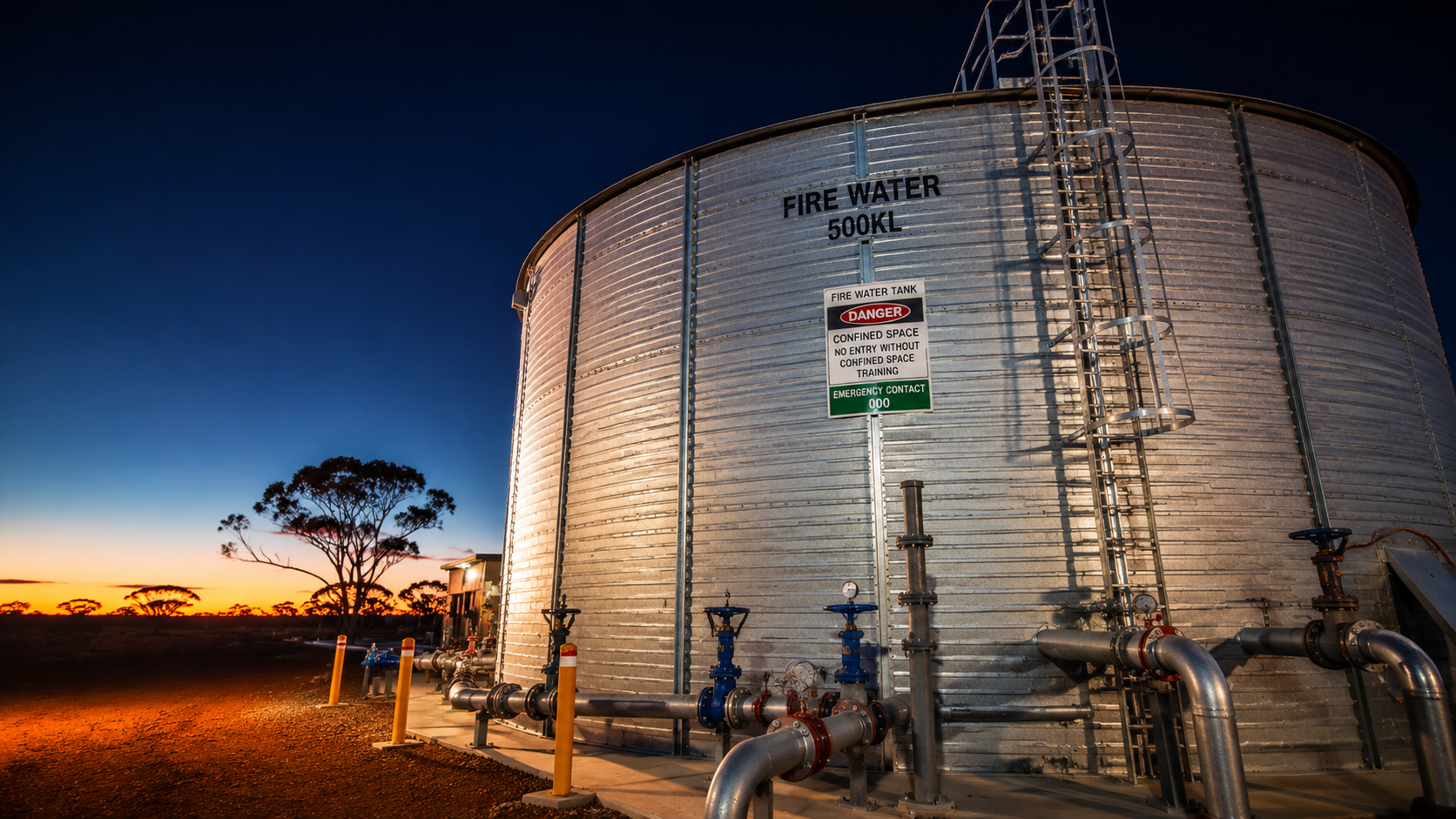
Fire water reliability given occupancy density and evacuation constraints
AS1851 service obligations for fire water storage apply at correctional facilities the same as anywhere else, but the consequence of a compliance gap carries more weight given the facility occupancy density and the more constrained evacuation and emergency response procedures that apply in a secure environment.
Potable water reliability for continuous, captive occupancy
Residents of a correctional facility have no alternative water source if on-site supply is interrupted, which places the same continuity emphasis on potable storage that would apply in a hospital or aged care setting - redundancy and reliability matter more here than in a typical commercial building.
Water infrastructure compliance at a correctional facility follows the same standards as anywhere else - what changes is that every step of planning and delivery has to work within a security framework that most projects never encounter.
| Item | Why it matters |
|---|---|
| Secure access and clearance planning | Needs to be arranged well ahead of the physical work |
| Maintenance scheduled around continuous occupancy | No full-vacancy window available, unlike schools or offices |
| Fire water AS1851 service compliance | Higher stakes given occupancy density and evacuation constraints |
| Potable water redundancy | Residents have no alternative supply if on-site storage is interrupted |
How does security clearance affect water infrastructure projects at a correctional facility?
Contractor access typically requires security clearance and supervised access arrangements, which need to be planned into the project timeline well ahead of any physical work on site.
Can maintenance be scheduled during a facility closure, similar to a school?
No - correctional facilities operate with continuous occupancy, so maintenance needs to be planned and executed while the facility remains fully occupied, requiring closer coordination with facility management.
Why is fire water reliability particularly important in a correctional setting?
Occupancy density combined with more constrained evacuation and emergency response procedures means a fire water compliance gap carries more weight than in a typical commercial building.
Delivering water infrastructure work for a correctional or justice facility within a secure environment? Talk to PC Water Infrastructure.
Discuss Correctional Facility Water Storage