
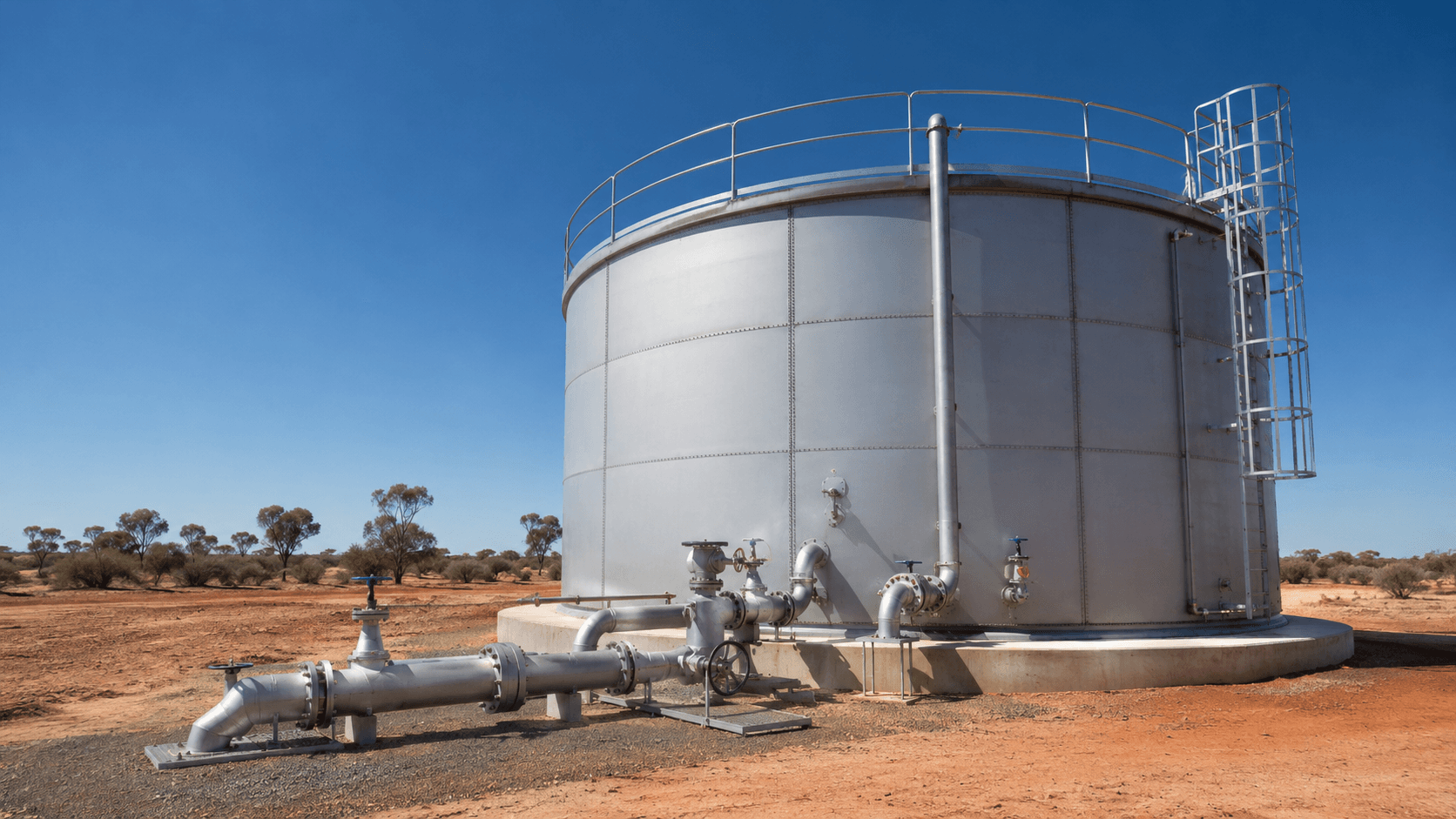
A council-managed sporting precinct or community recreation ground typically carries water demand across turf irrigation, amenity buildings serving players and spectators, and, where grandstand or clubhouse facilities exist, fire protection storage - three categories that scale on completely different logic.
Turf irrigation is usually the dominant demand by volume, driven by playing surface area, turf type, and the maintenance standard the facility is held to - a premier-level sporting ground maintains a materially higher irrigation standard, and therefore water demand, than a suburban community oval used for weekend club sport.
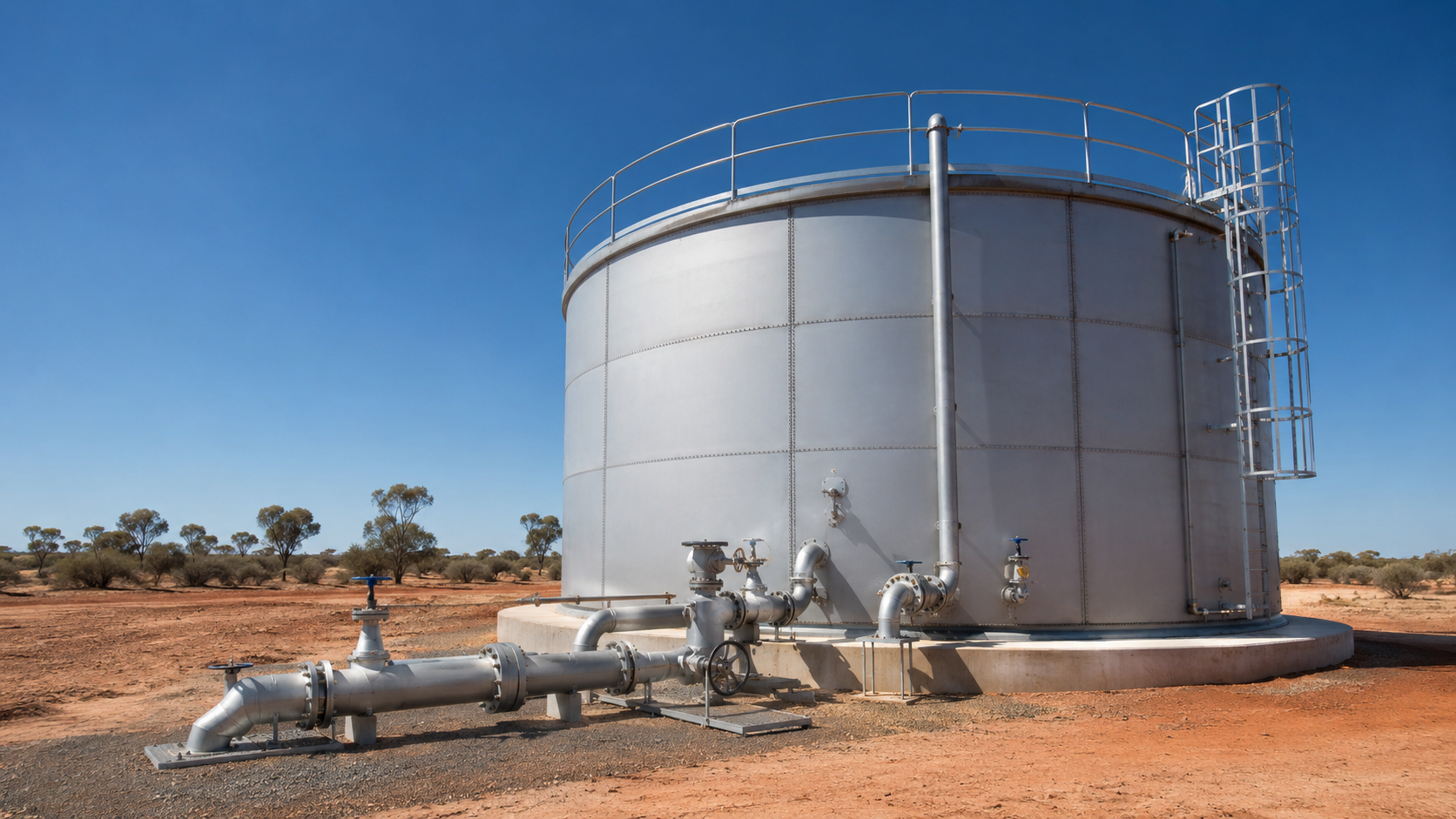
Playing surface area and turf maintenance standard
Irrigation storage should be sized against the actual playing surface area and the facility specific maintenance standard, rather than a generic per-hectare estimate - a facility hosting higher-level competition typically maintains turf to a standard that requires materially more water than a community-level ground of similar size.
Seasonal variation and supply source reliability
Irrigation demand varies significantly across the year, and storage buffer needs to account for the reliability of the primary supply source through the driest part of the growing season - a facility relying on a constrained bore allocation or seasonal dam supply needs more storage buffer than one on a secure mains or recycled water connection.
Amenity building potable supply for match-day peaks
Clubhouse and amenity building potable water demand can spike sharply on match days or during tournaments compared to routine weekday use, and storage or supply capacity needs to account for these peaks rather than being sized against average weekly demand.
Fire protection where grandstand or clubhouse facilities exist
Where a precinct includes a grandstand, clubhouse or other building requiring fire protection compliance, that storage is a genuinely separate requirement from irrigation and amenity supply, sized and maintained to AS2304 and AS1851 obligations independently of the rest of the site water infrastructure.
The irrigation number usually dominates a sporting precinct water budget, but it is not the only number that matters - amenity peaks and fire protection storage both need their own consideration, not an assumption that irrigation capacity covers everything.
| Item | What it covers |
|---|---|
| Irrigation sized to surface area and maintenance standard | The dominant demand category, varies by competition level |
| Seasonal supply source reliability | Determines buffer storage needed through dry periods |
| Amenity supply sized to match-day peaks | Different from routine weekday demand |
| Separate fire protection storage where applicable | Independent AS2304 and AS1851 compliance requirement |
What is the biggest water demand at a typical sporting precinct?
Turf irrigation is usually the dominant demand by volume, scaling with playing surface area and the maintenance standard the ground is held to.
Does amenity building water demand need separate consideration from irrigation?
Yes - amenity supply can spike sharply on match days or during tournaments, and needs to be sized against these peaks rather than assumed to be covered by irrigation storage capacity.
Is fire protection storage required at a sporting precinct?
Where the precinct includes a grandstand, clubhouse or other building subject to fire protection requirements, yes - this is a separate compliance obligation to irrigation and amenity water supply.
Planning water storage for a sporting precinct or recreation facility? PC Water Infrastructure sizes across irrigation, amenity and fire protection needs.
Discuss Sporting Precinct Water Storage