
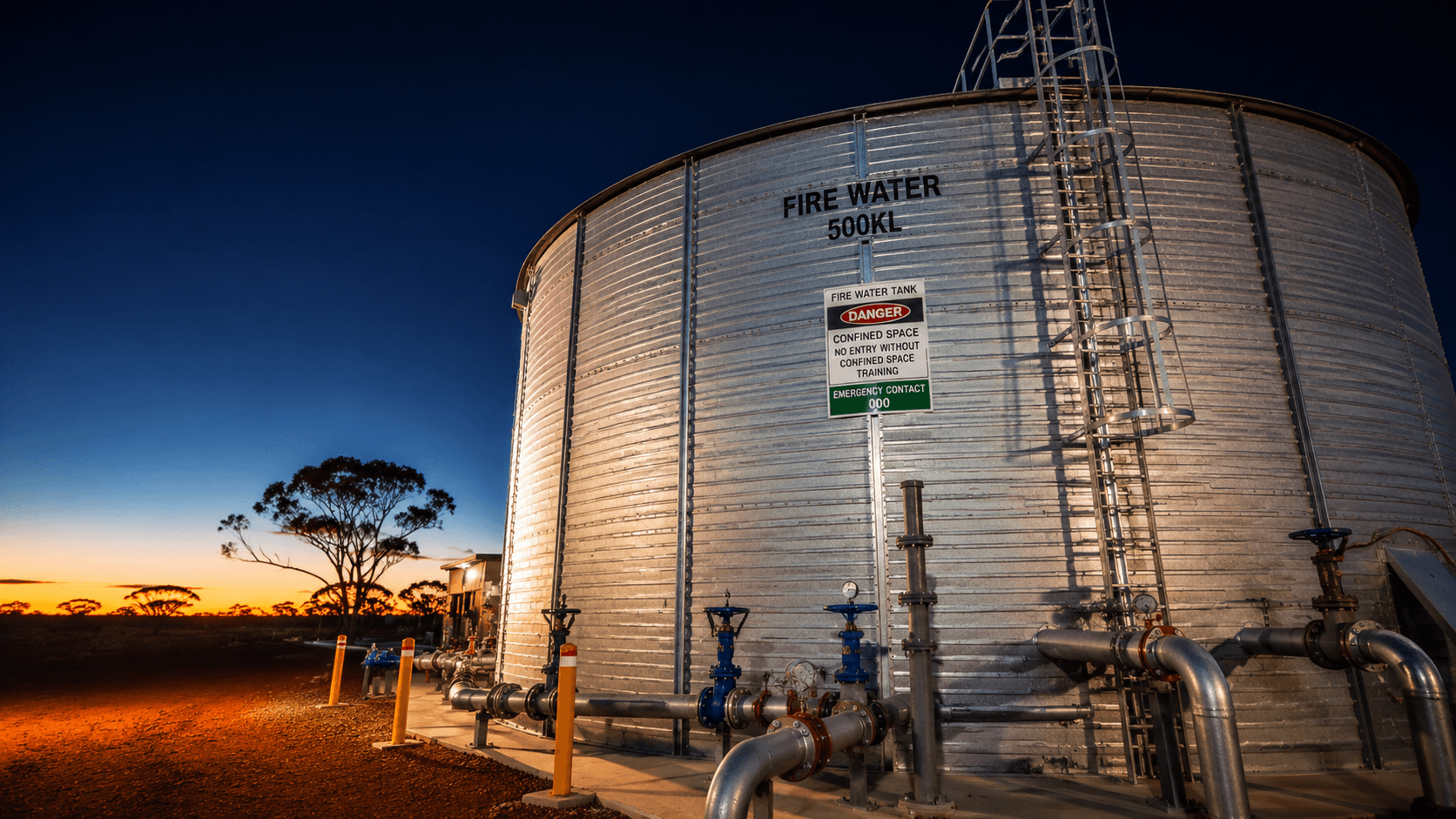
There is a particular irony in an emergency services facility having its own water infrastructure compliance gap - a fire station, police depot or ambulance base exists specifically to respond reliably when things go wrong, and its own building services need to reflect that same standard of reliability.
Fire stations in particular carry an operational as well as a compliance dimension to their water storage - beyond standard AS1851 fire protection for the building itself, many facilities also need reliable water supply for vehicle washdown, equipment maintenance, and in some cases training exercises that draw on site water resources.
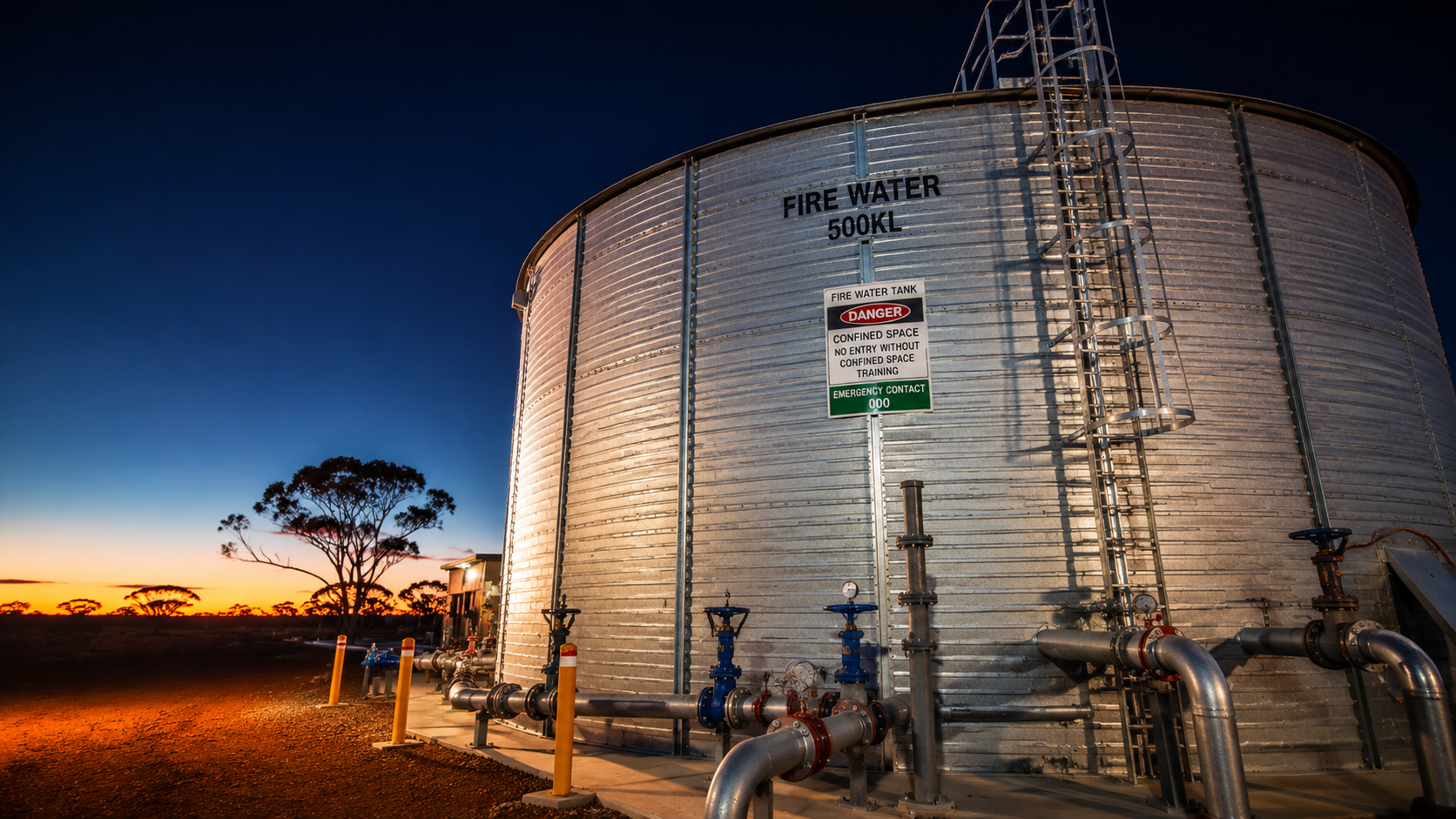
Fire protection compliance for the facility itself
An emergency services building is subject to the same AS2304 and AS1851 fire protection requirements as any other commercial building, but a compliance gap here carries a particular reputational and operational weight - the facility that the community expects to respond reliably in a fire needs its own fire protection systems demonstrably in order.
Operational water demand beyond standard building fire protection
Fire stations specifically often need water supply for vehicle and equipment washdown after operational use, which is a functional operational requirement separate from the building fire protection storage and needs its own consideration in site water planning.
Continuity of operations during infrastructure maintenance
Because an emergency services facility cannot simply go offline while water infrastructure is serviced, maintenance planning needs to account for continuity of operational readiness throughout any works - a similar principle to hospital or defence facility planning, reflecting the facility own critical operational role.
Documentation standards reflecting government asset management practice
Emergency services facilities are typically government-owned or -operated assets, and water infrastructure documentation and maintenance records need to meet the same asset management standards that apply across government infrastructure more broadly.
An emergency services facility asks the community to trust it will be ready when needed - its own water and fire protection infrastructure should be held to exactly that same standard.
| Item | Why it matters |
|---|---|
| Building fire protection compliance | Carries particular reputational weight for this facility type |
| Operational vehicle and equipment washdown supply | Separate functional requirement from building fire storage |
| Continuity of operations during maintenance | The facility cannot go offline the way many others can |
| Government asset management documentation standards | Reflects typical government ownership of these facilities |
Do fire stations have different water infrastructure needs to other government buildings?
Yes - beyond standard building fire protection compliance, many fire stations need reliable water supply for vehicle and equipment washdown, which is a distinct operational requirement.
Can water infrastructure maintenance be scheduled without disrupting emergency readiness?
This needs to be planned carefully, with continuity of operational readiness maintained throughout any works - similar in principle to how critical facilities like hospitals plan maintenance around continuous operation.
What documentation standards apply to emergency services water infrastructure?
These facilities are typically government-owned or -operated, and infrastructure documentation and maintenance records generally need to meet broader government asset management standards.
Managing water infrastructure for a fire, police or ambulance facility? PC Water Infrastructure delivers maintenance built around operational continuity.
Discuss Emergency Services Water Storage