

Launceston sits where the North and South Esk Rivers meet the Tamar, a confluence with a well-documented flood history, in a Tasmanian climate genuinely cooler than most of mainland Australia. Both factors are worth building into water tank siting and design decisions in the region.
Flood exposure at the river confluence
Launceston's low-lying areas near the river confluence have a documented flood history, which makes tank siting, foundation design and drainage genuine considerations for properties in flood-prone parts of the city and surrounding Tamar Valley — consistent with the broader principle that flood-exposed sites need foundation and siting decisions that account for saturation and inundation risk, not a standard dry-site assumption.
Tasmania's genuinely cooler climate
Tasmania's climate is measurably cooler than most of mainland Australia, and Launceston in particular can experience frost and occasional cold snaps that make exposed tank fittings and pipework worth checking for cold-weather vulnerability — a real, if moderate, consideration that most of the rest of the country does not need to weigh as carefully.

For a property in Launceston or the wider Tamar Valley, particularly in the region's agricultural sector including vineyards and other primary production, this generally means confirming tank siting and foundation account for realistic local flood exposure where relevant, and checking exposed fittings and pipework for cold-climate vulnerability ahead of the region's cooler months, rather than assuming mainland-standard conditions apply.
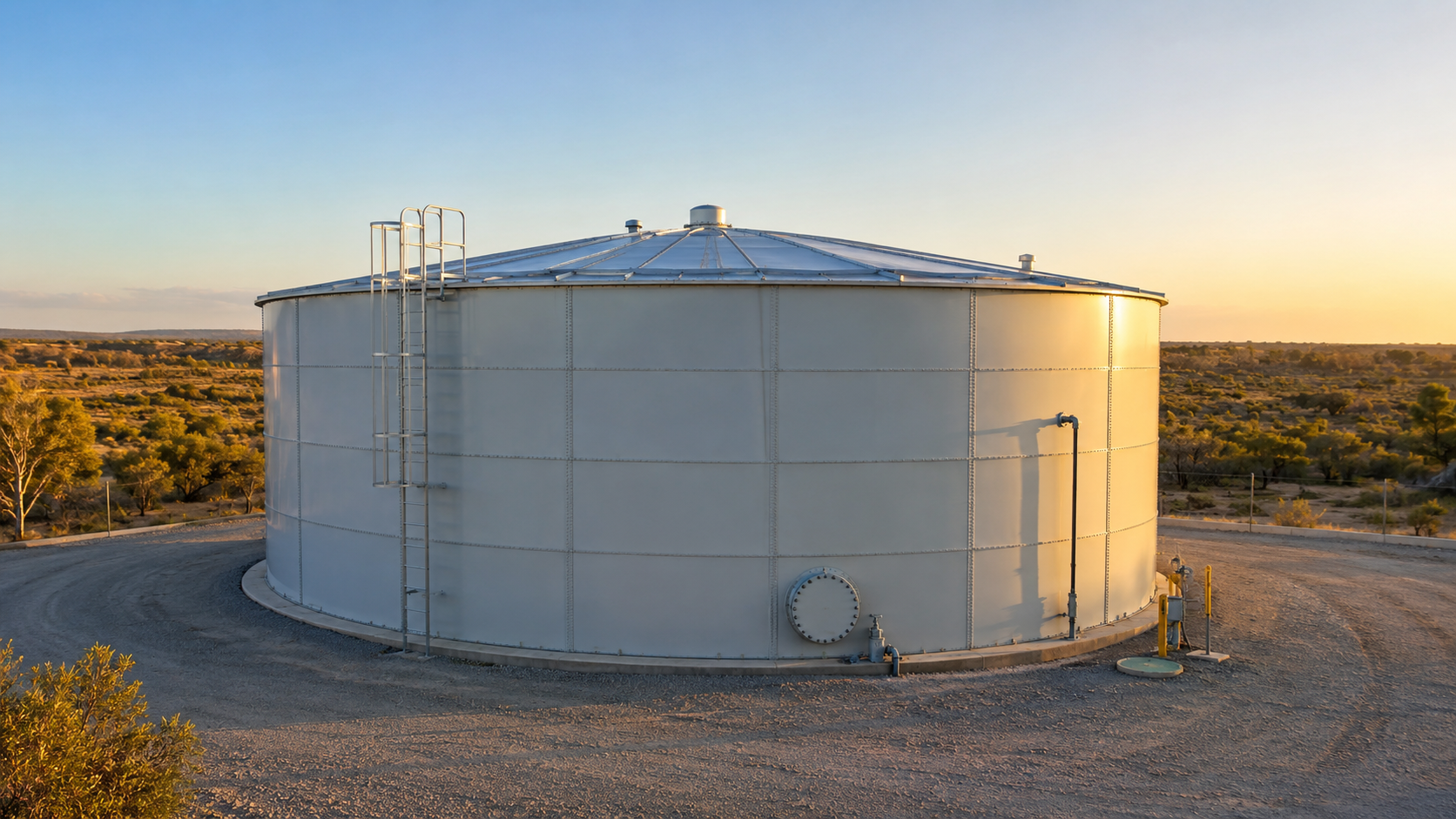
Launceston's river confluence and Tasmania's cooler climate are both well-documented regional realities, not edge cases. A tank specification that treats them as afterthoughts is missing two of the most locally relevant design inputs available.
| Check | Why it matters locally |
|---|---|
| Tank siting and foundation assessed for local flood exposure | Low-lying areas near the river confluence carry a documented flood history |
| Exposed fittings checked for cold-climate vulnerability | Tasmania's cooler climate makes this a genuine, if moderate, regional consideration |
| Agricultural water storage sized against actual vineyard or farm demand | Tamar Valley primary production has its own seasonal demand pattern |
| Drainage design directing floodwater away from flood-exposed foundations | Reduces settlement and undermining risk during a significant flood event |
Is flood risk a genuine concern for water tanks throughout Launceston, or just near the rivers?
The most significant documented flood exposure is around the low-lying areas near the North Esk, South Esk and Tamar confluence — properties in these areas should have siting and foundation design specifically assessed, while higher-elevation sites carry comparatively lower flood risk.
Does Launceston need the same cold-climate tank protection as an alpine region?
Not to the same degree — full freeze-protection insulation of the kind used in genuinely cold climates is not typically necessary, but checking exposed fittings and pipework for frost vulnerability ahead of the cooler months is a sensible, more targeted precaution.
Do Tamar Valley vineyards and farms have distinct water storage requirements?
Agricultural water storage in the region should be sized against the specific property's actual seasonal demand — irrigation timing for vineyards and other primary production differs from standard commercial or residential use and deserves its own sizing calculation.
Planning or reviewing water storage for a Launceston or Tamar Valley property? Flood exposure and Tasmania's cooler climate both deserve a proper site-specific check.
Discuss your Launceston region project