
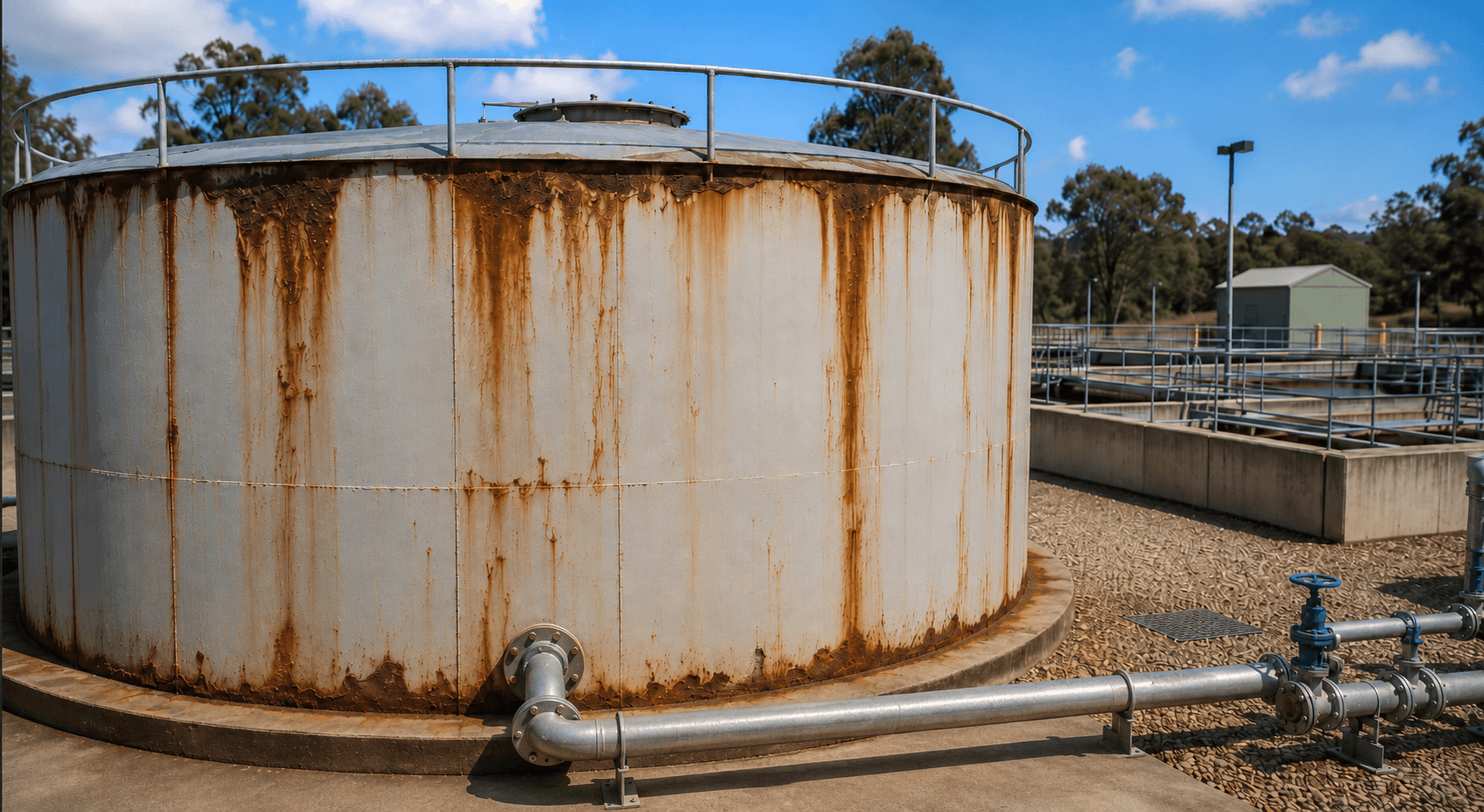
When a steel or concrete tank develops cracking, wall distortion or a leaking floor joint, the instinct is to inspect the tank. Often the real story is underneath it — in a foundation that was undersized, poorly drained, or never properly assessed for the ground it sits on.
A tank is only as sound as what it is standing on. Differential settlement, water trapped under a slab, and inadequate bearing capacity all place loads on a tank structure it was never designed to carry — and because the damage starts below ground, it is frequently well advanced before it becomes visible above it.
Differential settlement
Ground that settles unevenly beneath a tank pad twists and stresses the structure sitting on it. Steel tanks can develop wall distortion and joint stress; concrete tanks can crack at the points where settlement is most uneven. The tank is responding correctly to a foundation that moved — the defect is not really in the tank.
Drainage around and beneath the pad
Water that pools against a foundation or is not directed away from the pad softens the bearing ground over time, undermining the very support the tank depends on. Poor site drainage is one of the most common and most preventable causes of long-term foundation movement.
Bearing capacity that was never properly assessed
A pad sized on assumption rather than geotechnical assessment can be adequate for years before a wet season, nearby excavation, or simply accumulated settlement reveals it was marginal from the start. Getting this right at design stage is far cheaper than correcting it once a tank is in service.
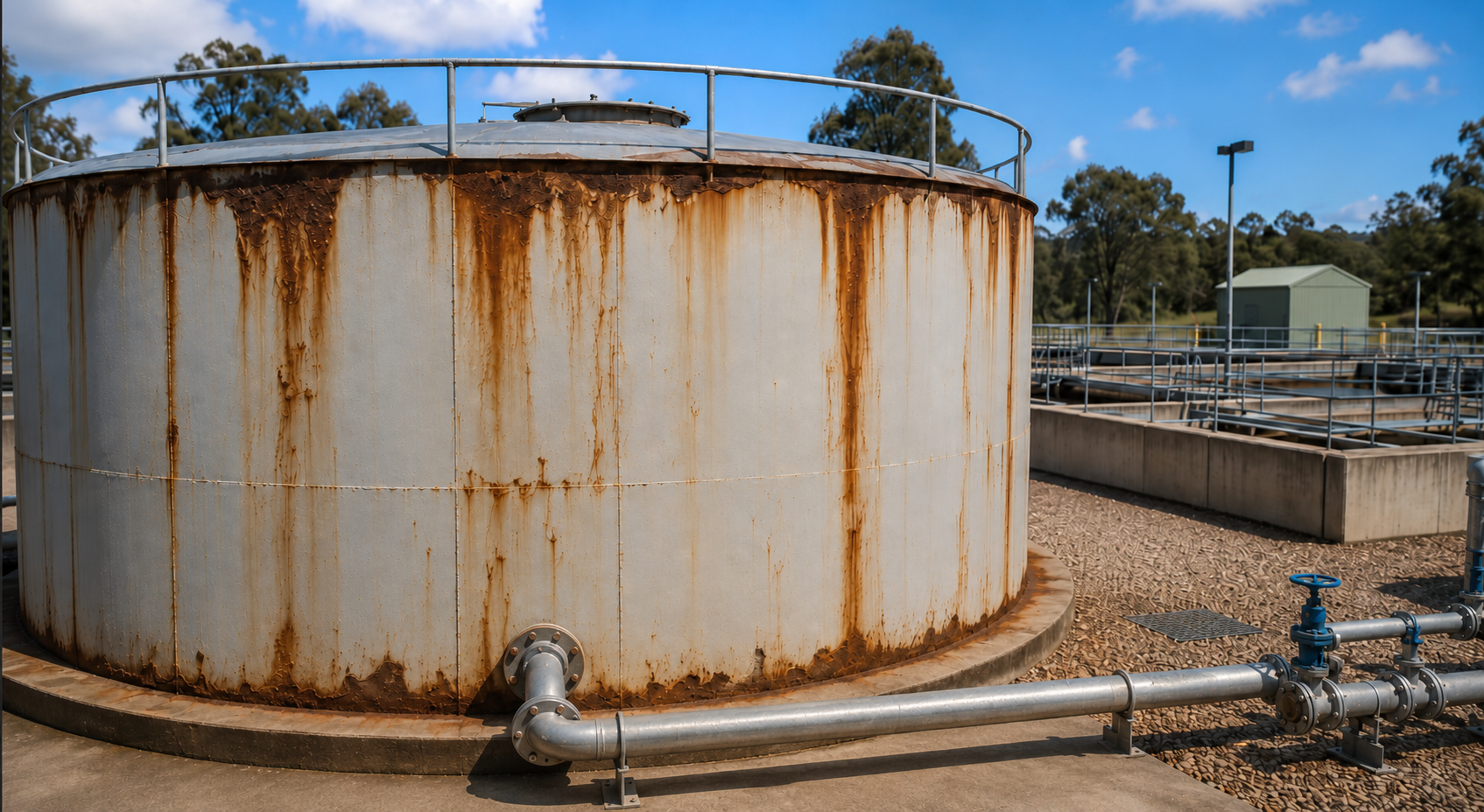
Foundation movement is usually slow, and a tank's structure can absorb a surprising amount of differential movement before visible symptoms appear — a hairline crack, a slightly out-of-level roofline, a joint that has started to weep. By the time those signs are obvious, the underlying settlement has typically been progressing for a long time.
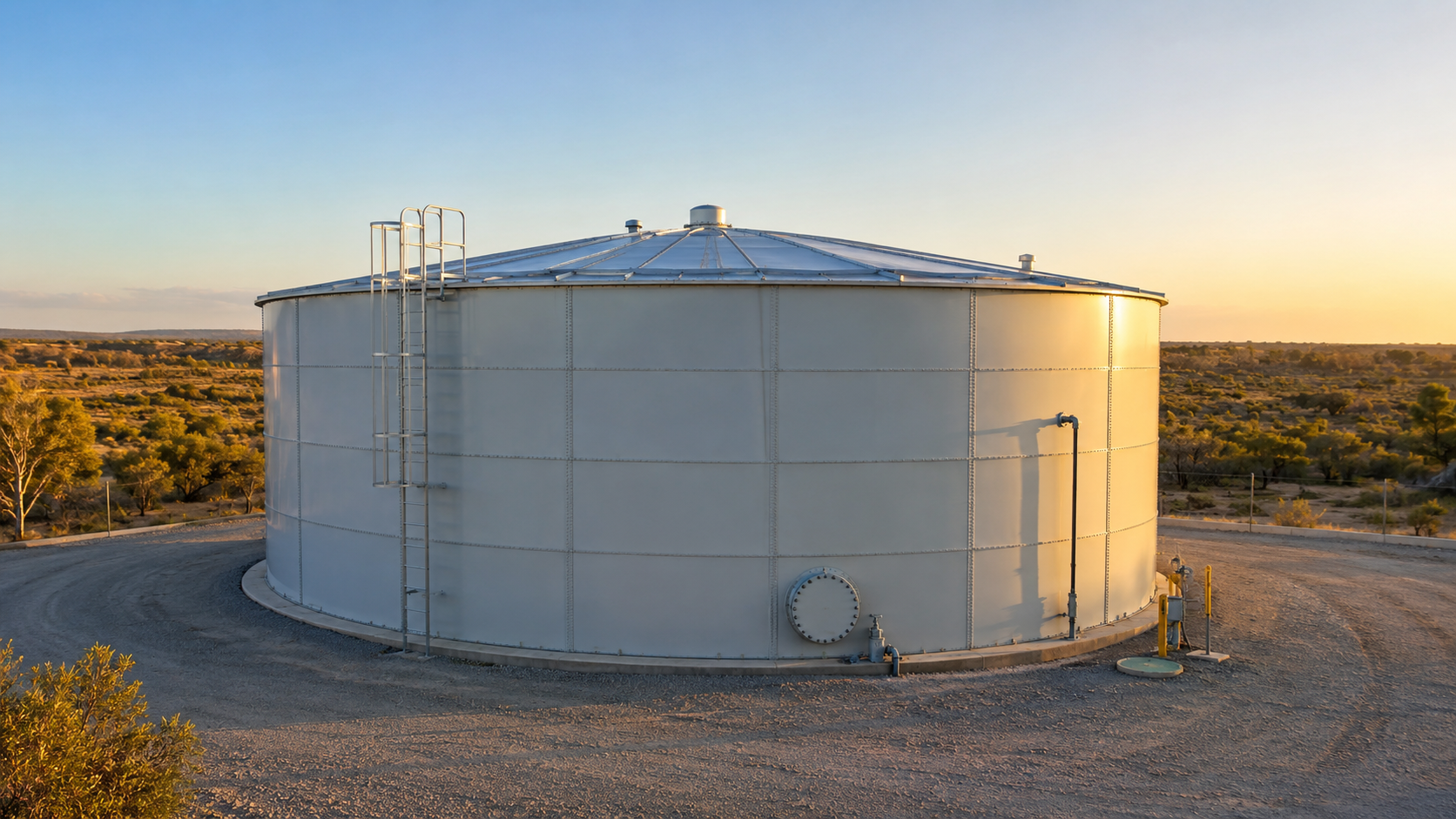
Nobody inspects a foundation for its own sake. They inspect it because the tank started telling them something was wrong — and by then, the ground has usually been moving for years.
| Check | What it can reveal |
|---|---|
| Level survey of the tank base or roofline | Detects uneven settlement before it is visible to the eye |
| Drainage pattern around the pad | Pooling or poor fall away from the tank accelerates ground softening |
| Crack pattern on concrete structures | Distribution and direction of cracking often points to settlement, not just age |
| Original geotechnical assessment, if available | Confirms whether the pad was designed for actual site conditions |
| Joint and seal condition at the tank base | Early sign of stress transferred from a moving foundation |
How do I know if a tank problem is actually a foundation problem?
Signs that point to the foundation rather than the tank itself include an uneven roofline, cracking that follows a settlement pattern rather than random ageing, or leaking specifically at the base joint. A level survey combined with a structural inspection is the reliable way to confirm it.
Can a foundation issue be fixed without replacing the tank?
In many cases, yes — remedial ground works, drainage correction, or underpinning can address the foundation without requiring a full tank replacement, provided the issue is caught before structural damage to the tank itself becomes severe. This is exactly why early assessment matters.
Is a geotechnical assessment necessary for every new tank installation?
For any tank of meaningful size or on a site with uncertain ground conditions, yes. A geotechnical assessment is a small fraction of a project's cost compared to the cost of remediating a foundation issue after a tank has already been installed and is in service.
Seeing movement, cracking or an uneven tank base? The cause is often below ground — and worth confirming before it is assumed to be a tank defect.
Request a structural assessment