
"We had it inspected" can mean two very different things. It can mean a trained assessor evaluated the structure, the coatings, the fittings and the water quality risk — or it can mean someone opened the hatch, looked in, and signed a form. Only one of those tells you the condition of your asset.
A professional tank inspection is a defined scope, not a look. Here is what that scope actually covers — and why each part exists.
A competent assessor reads the exterior and site first. A compromised perimeter, a damaged or unsecured hatch, bird activity around the roof or overflow, downpipes discharging onto the roof rather than to drainage — these are contamination and security findings that never require going inside the tank, and they are missed by anyone who skips straight to the interior.
Structure
The shell, floor, roof and supports — checked for corrosion, section loss, spalling (in concrete), cracking at load-bearing points, and the condition of roof support posts, which can corrode through at the waterline while appearing intact from above. Structural findings determine whether the asset is sound and which remediation pathways are even possible.
Coatings and linings
Internal coatings and liners assessed for blistering, disbondment, undercutting and holidays — the failure modes that decide whether the surface is still protecting the steel, or whether recoating or relining is due.
Cathodic protection
Where fitted, the CP system is evaluated — sacrificial anode depletion, continuity, and whether the substrate is actually being protected at coating defects. A depleted or disconnected CP system is a silent failure that accelerates corrosion everywhere the coating is imperfect.
Ventilation and screens
Vent mesh, screens and roof penetrations checked for integrity — the difference between a sealed potable environment and an open invitation to birds, vermin and airborne contamination.
Pipe configuration
Inlet and outlet arrangement assessed for short-circuiting (water entering and leaving without mixing, leaving stagnation zones), outlets drawing sediment, and overflow terminations that let contamination back in. These are design issues invisible without internal access.
Sediment
Depth and character of floor sediment — not just how much, but what it is, because sediment distribution is diagnostic of how the tank is actually operating.
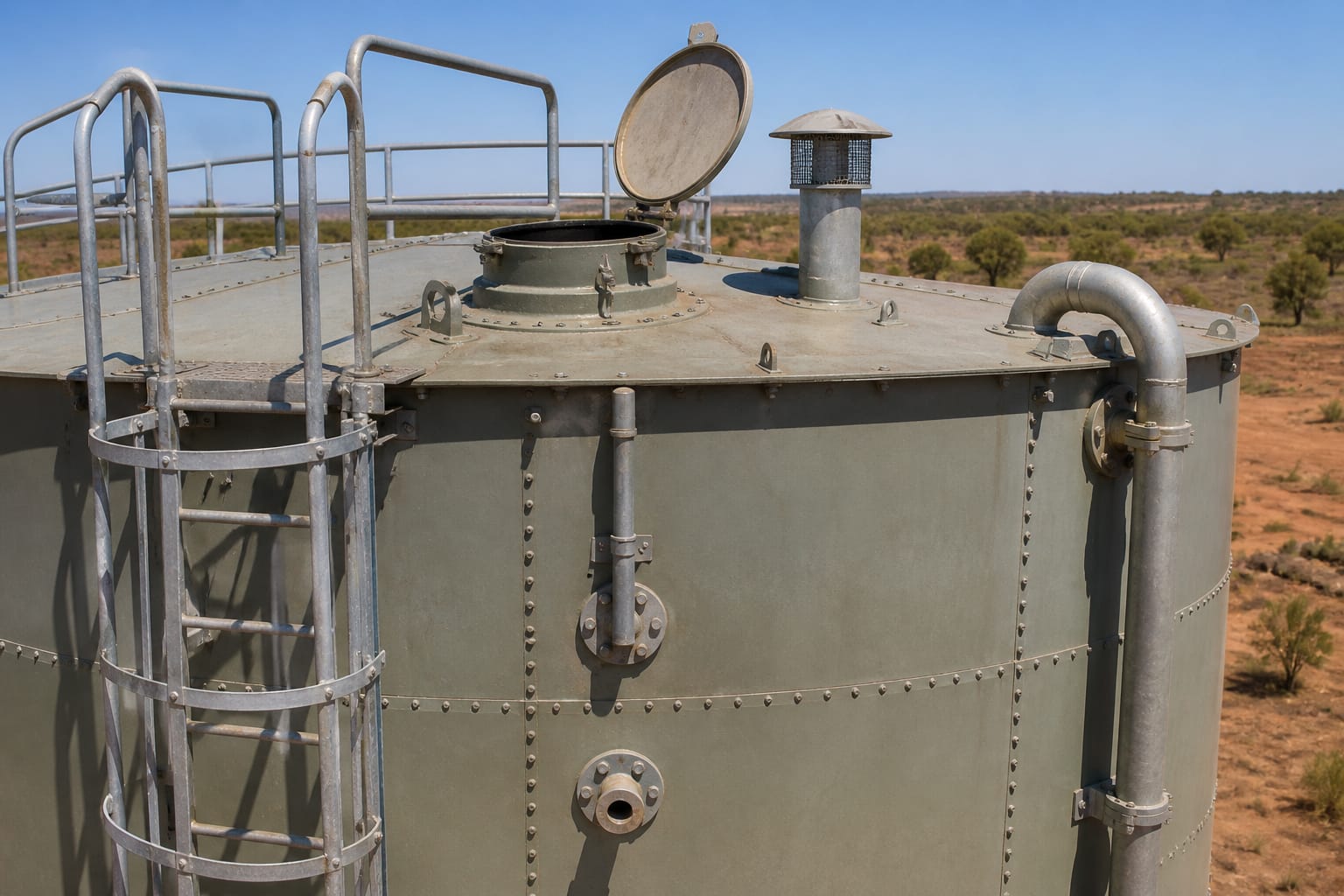
The reason many tanks go years without a real inspection is the assumption that it means dewatering and downtime. It does not. ROV (Remotely Operated Vehicle) inspection assesses the interior while the tank stays in service and at level, producing a photographic record at multiple floor and wall positions. UAV (drone) inspection triages roof and external conditions and hard-to-access areas before committing crew. Together they make a full condition assessment possible without draining a critical asset.
The value of an inspection is not the visit — it is the record. A dated, photographic condition report at defined positions is what lets you plan maintenance, defend compliance, and compare the asset against itself next cycle.
| Report element | Why it matters |
|---|---|
| Structural condition with photographic evidence | Establishes whether the asset is sound and what is possible |
| Coating / liner condition by failure mode | Decides recoat, reline or monitor |
| Cathodic protection status | Catches a silent accelerator of corrosion |
| Ventilation, screens and pipe configuration | Surfaces water-quality and contamination risks |
| Sediment depth and character | Reveals how the tank is operating, not just that it needs cleaning |
| Prioritised recommendations | Turns findings into a defensible maintenance plan |
Isn't a visual check enough for a water tank?
A visual walk-around catches only what is obvious from the outside. It cannot assess internal structure, coating failure modes, cathodic protection, pipe configuration or sediment — the findings that actually determine asset condition and water-quality risk. A professional inspection covers a defined scope and records the evidence.
Can a tank be inspected without draining it?
Yes. ROV inspection assesses the interior while the tank remains in service and at level, and produces a photographic record. Drone inspection triages roof and external conditions. Between them, a full condition assessment is possible without dewatering — which is why in-service assets can and should be inspected on a cycle.
How often should a water tank be professionally inspected?
It depends on the asset, its service and its history, but most storage tanks benefit from inspection on a defined cycle rather than only when a problem appears. Fire and potable assets in particular deteriorate quietly, so a scheduled inspection is the cheapest way to avoid discovering a failure at the worst time.
When was your tank last actually assessed — not just glanced at? A professional condition inspection, in service via ROV, gives you a photographic record and a defensible plan.
Book a professional tank inspection