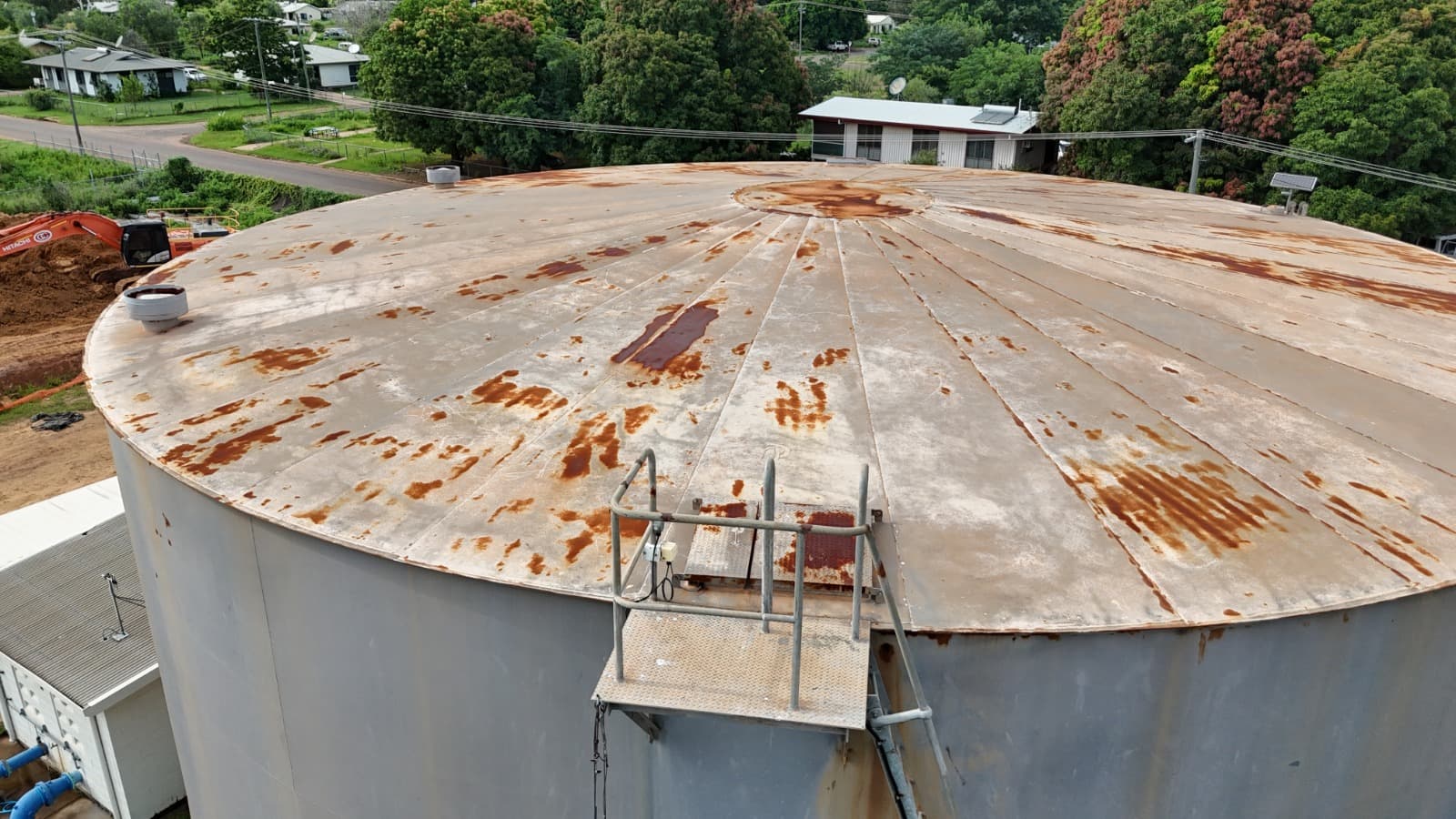
Disinfection residual is treated as a treatment-plant number, but it decays wherever the water sits — and a storage tank, by design, is where water sits longest. A tank in poor condition or with the wrong retention time can undo work the treatment process already did.
Chlorine or chloramine residual continues to react and decay for as long as water is in contact with pipe walls, tank surfaces, sediment and any organic material present — which means the storage tank is an active part of the disinfection story, not a passive holding vessel downstream of it. Longer retention time in storage means more decay before that water reaches a tap.
Sediment and biofilm consume residual
Sediment on a tank floor and biofilm on internal surfaces both exert a disinfectant demand — they consume residual chemically and biologically as water moves past them, faster than clean internal surfaces would. A tank with years of accumulated sediment is quietly working against the treatment process every day it goes uncleaned.
Short-circuiting and dead zones
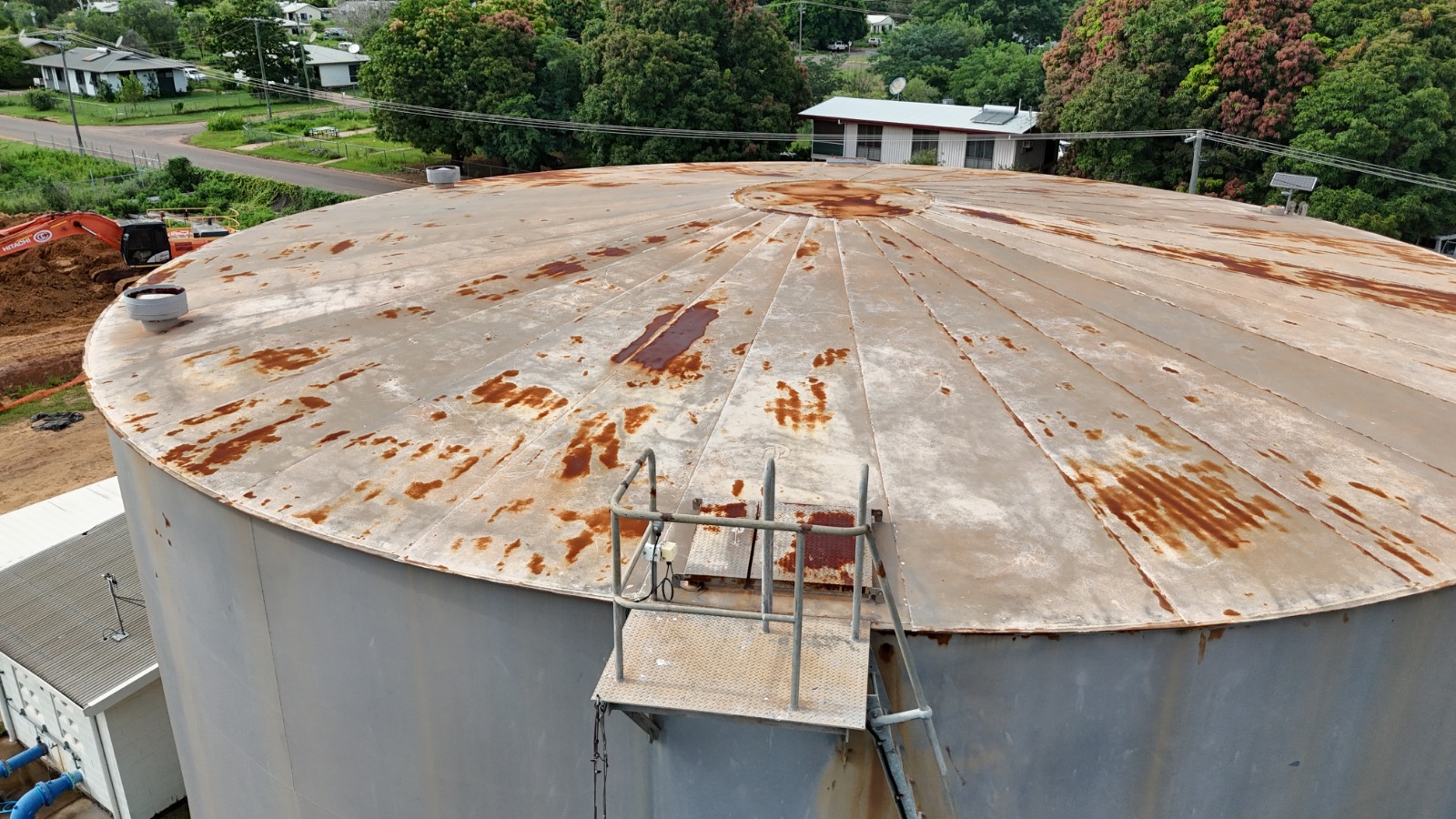
A tank's inlet and outlet positioning determines whether water moves through it evenly or "short-circuits" — taking a fast path from inlet to outlet while leaving pockets of older, more stagnant water elsewhere in the tank. Those stagnant zones lose residual faster and can develop water-quality issues even while the bulk of the tank tests within range.
Turnover versus tank sizing
A tank oversized for its demand holds water longer than necessary, giving residual more time to decay before use. Matching storage volume to actual demand — and understanding turnover rate, not just peak capacity — is as much a water-quality decision as it is a supply-planning one.
Treatment gets the water to standard. Storage decides how much of that standard survives to the tap. A tank's condition and hydraulics are a water-chemistry variable, whether or not anyone is tracking them as one.
| Check | What it tells you |
|---|---|
| Sediment depth on the tank floor | Accumulated sediment exerts disinfectant demand and consumes residual |
| Internal surface condition and biofilm presence | Biofilm on walls and fittings consumes residual continuously |
| Inlet/outlet configuration | Poor positioning causes short-circuiting and stagnant dead zones |
| Tank turnover rate versus demand | Oversized storage increases retention time and residual decay |
| Residual testing at multiple points, not just the outlet | Reveals stagnant zones an outlet-only sample would miss |
Why does my water test compliant at the treatment plant but show low residual downstream?
Residual decays continuously as water sits in storage and moves through the network — it is not a fixed value from the plant. Sediment, biofilm, long retention time or short-circuiting inside a storage tank are common causes of residual dropping further than expected before it reaches customers.
Can cleaning a tank actually improve water quality readings?
Yes. Removing sediment and biofilm reduces the disinfectant demand those deposits exert, which helps residual last longer through storage and distribution. It is one of the more direct, measurable water-quality improvements a maintenance program can deliver.
Is tank size itself a water-quality issue?
It can be. A tank sized well above actual demand increases retention time, giving disinfection residual more time to decay before the water is used. Matching storage sizing and inlet/outlet configuration to real demand is part of protecting water quality, not just a capacity decision.
Seeing residual or water-quality results you cannot explain from the treatment side? The answer is often inside the storage tank.
Talk to our water treatment team