
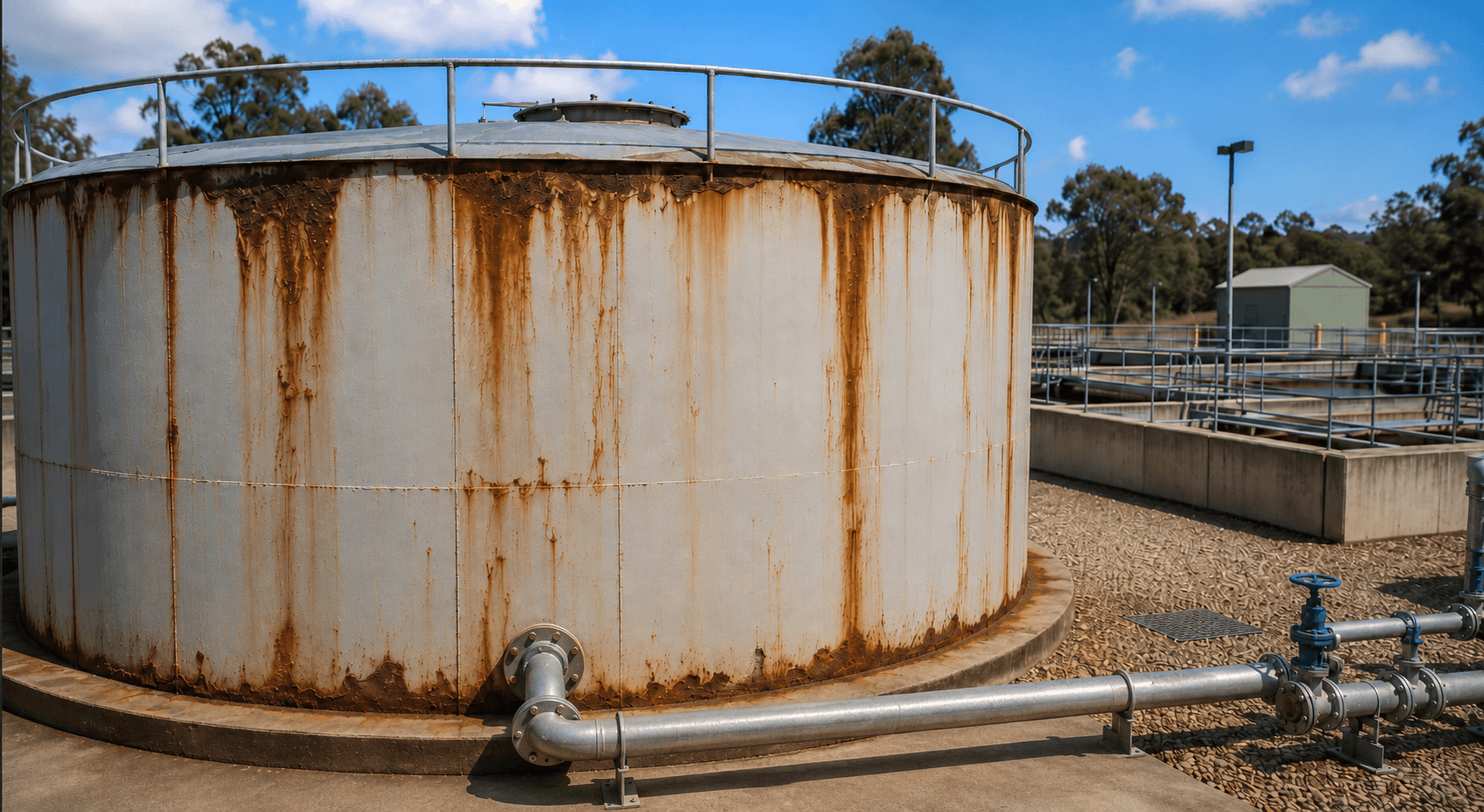
Bore water is a common supply source for mine sites, and in many parts of inland Australia it comes with a total dissolved solids level far higher than a municipal or standard coating specification anticipates. A tank coating system that would give decades of service life holding town water can fail in a fraction of that time holding water with significantly elevated salinity.
Chloride content is usually the specific driver behind accelerated corrosion in high-TDS water, since chloride ions are particularly effective at breaking down the passive protective layer that would otherwise slow corrosion on both bare and coated steel. A water source with elevated TDS does not automatically mean high chloride, but the two are correlated often enough that both need to be checked before a coating system is specified.
Water analysis before coating selection, not after installation
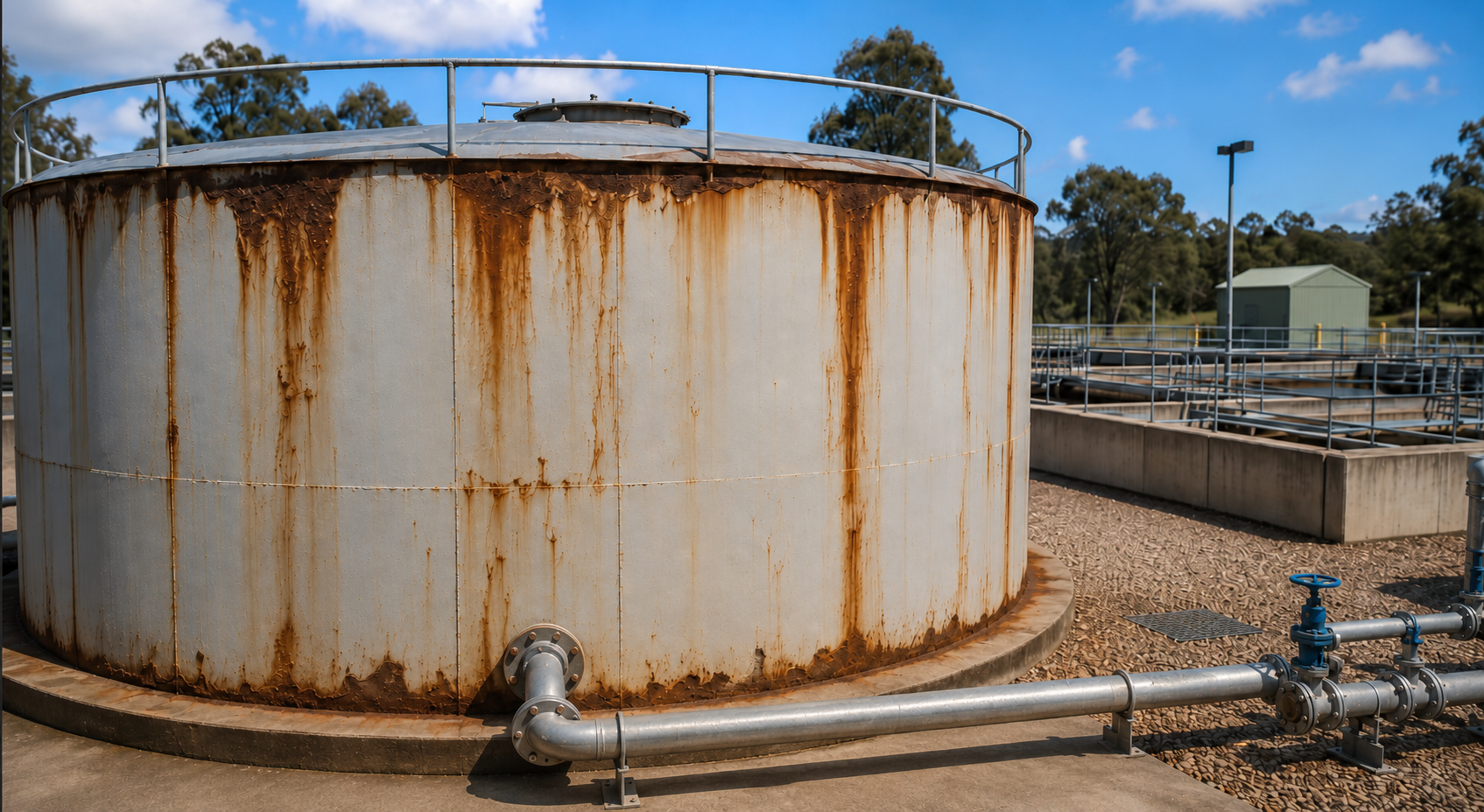
A full water analysis - TDS, chloride content, pH and any specific ions relevant to the site process - should inform the coating system specification at the design stage. Specifying a standard coating system and discovering after the tank is holding high-salinity water that it is failing early is a far more expensive way to learn the same lesson.
Coating systems rated for the actual chemistry
High-performance coating systems exist specifically for high-chloride and high-TDS immersion service, generally at a higher upfront cost than a standard system, but at a fraction of the cost of an early recoat or structural repair. The additional coating cost needs to be weighed against the water chemistry, not decided by a standard specification applied regardless of what the tank will actually hold.
Cathodic protection as a complementary measure
On tanks holding consistently high-salinity water, cathodic protection - either sacrificial anode or impressed current systems - is frequently specified alongside the coating system as a second line of defence, rather than relying on coating integrity alone over the tank service life.
Material selection for fittings and appurtenances
Standard-grade fasteners, fittings and internal components can corrode faster than the tank shell itself in high-chloride service, and material upgrades for these smaller components are often a cost-effective way to avoid localised failures that undermine an otherwise well-specified tank.
The single most cost-effective step in preventing early corrosion on a high-TDS tank is getting a water analysis done before the coating system is chosen, not after the first signs of failure appear.
| Step | Purpose |
|---|---|
| Full water chemistry analysis | Establishes actual TDS, chloride and pH before design |
| Chemistry-matched coating system | Standard coatings can fail early in high-chloride service |
| Cathodic protection assessment | Secondary protection for consistently high-salinity duty |
| Fitting and fastener material review | Prevents localised failure in smaller components |
How do I know if my bore water is corrosive enough to need special coating?
A water analysis covering TDS, chloride content and pH is the reliable way to know - visual clarity or general water quality perception does not indicate corrosivity to steel.
Is cathodic protection necessary if the coating system is already high-performance?
Not always, but on tanks in consistently high-salinity service it is frequently specified as a second line of defence, since it continues protecting the steel even if the coating develops a localised breach.
Do fittings and fasteners need upgrading separately to the tank shell?
Often yes. Standard-grade fittings can corrode faster than the shell itself in high-chloride water, and upgrading these smaller components is usually a cost-effective way to avoid localised failures.
Specifying or troubleshooting a tank in high-TDS or high-salinity mine-site service? PC Water Infrastructure matches coating and material selection to your actual water chemistry.
Discuss Corrosion-Resistant Tank Design