
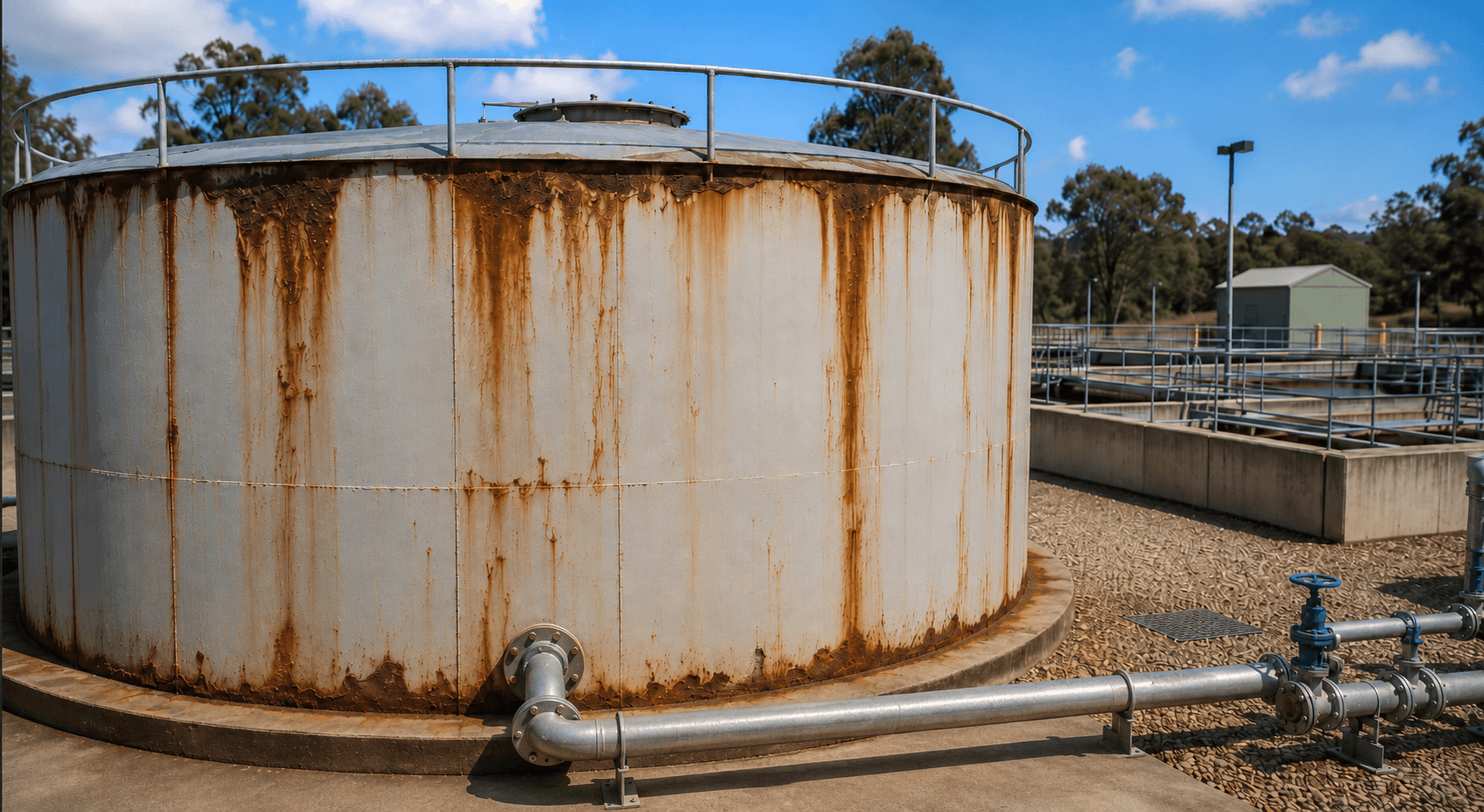
A tank wall designed to hold a static volume of water is solving a different structural problem to a tank wall designed to survive an earthquake or a design wind event. The dynamic forces involved — sloshing, base shear, overturning moment — require their own analysis, and skipping it is not automatically covered by a wall that is "thick enough."
Sloshing loads during seismic events
An earthquake does not just shake a tank — it sets the contained water in motion, and that sloshing water exerts dynamic pressure on the tank walls and roof structure that is entirely separate from the static hydrostatic pressure the walls hold under normal conditions. A tank designed only for static loading can be structurally inadequate for the additional dynamic forces sloshing introduces during a seismic event.
Base shear and overturning moment
Seismic and extreme wind loading both introduce lateral forces that a tank's anchorage and foundation need to resist — the tendency of the structure to slide (base shear) or tip (overturning moment). This is why anchorage and foundation design are inseparable from tank structural design in seismic or high-wind zones, not an afterthought bolted on once the tank shape is finalised.
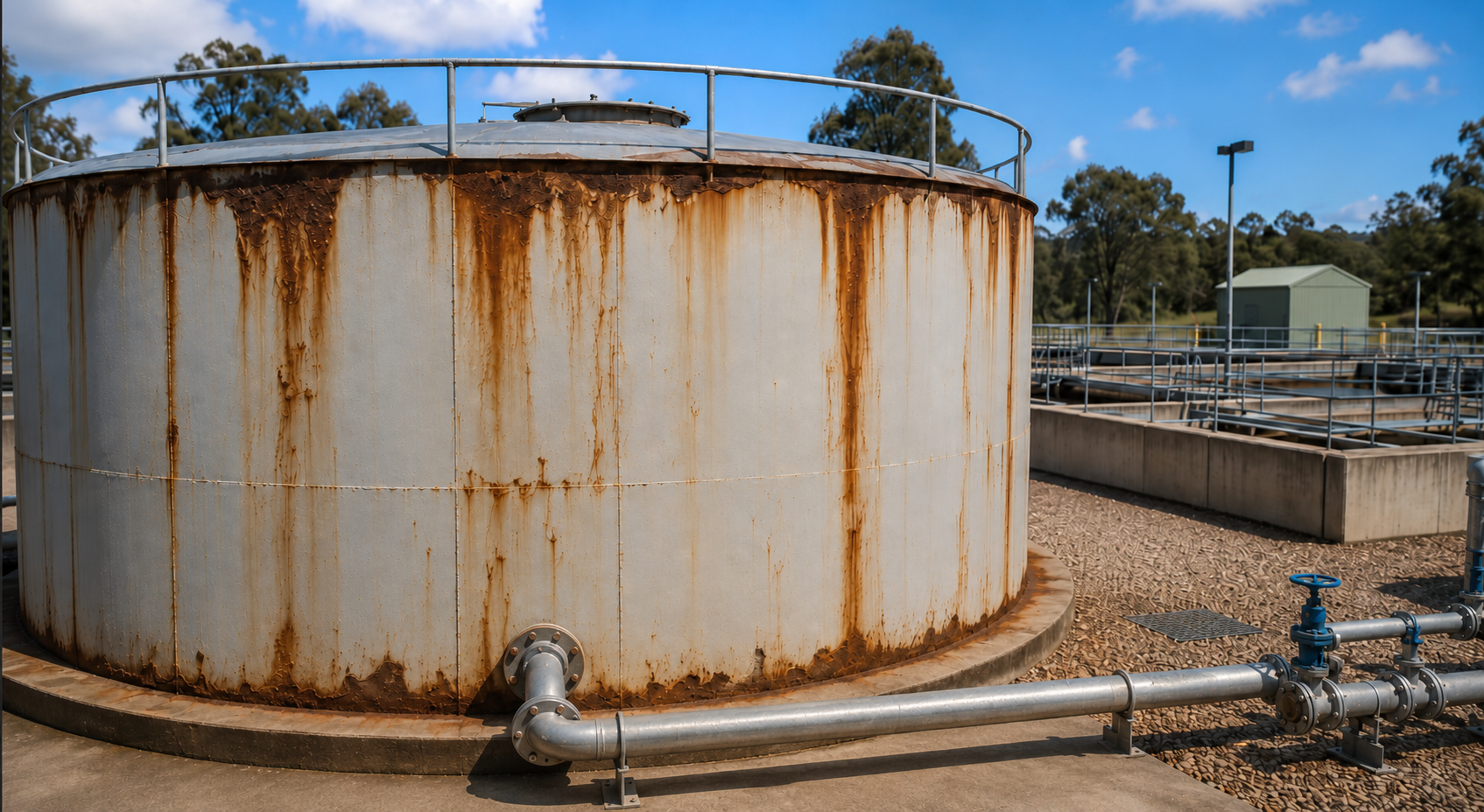
Standard tank products are typically engineered against a defined design load case that may or may not reflect the seismic or wind zone of a specific site. A tank that performs perfectly on a low-risk site can be genuinely under-designed if installed, without site-specific review, on a site with higher seismic activity or extreme wind exposure — a gap that is invisible until an actual event tests it.
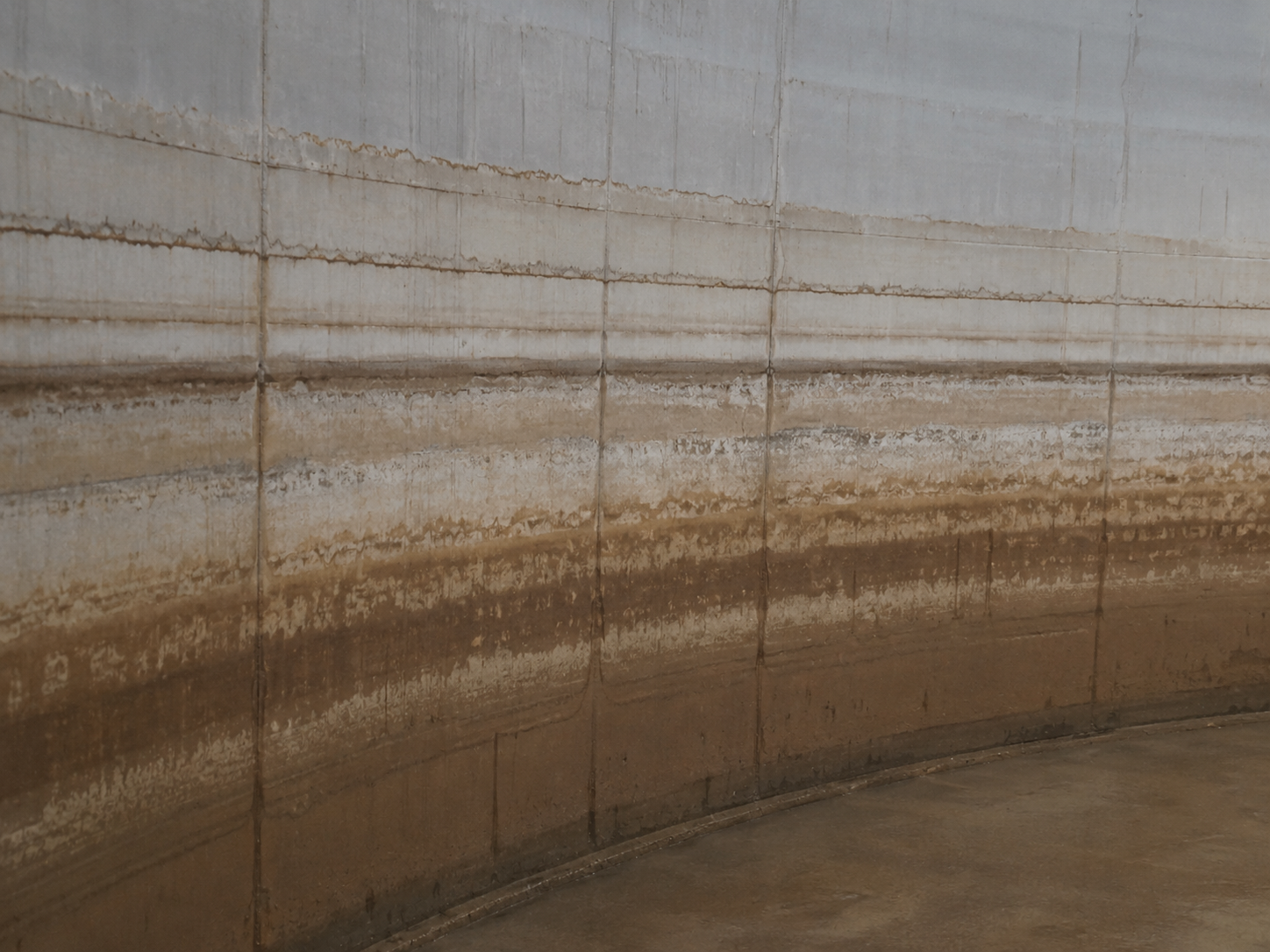
A tank that holds water perfectly well on a calm day tells you nothing about how it performs during the one event its structural design was actually meant to survive. That answer only comes from site-specific seismic and wind analysis, not from the tank's everyday performance.
| Check | Why it matters |
|---|---|
| Site-specific seismic and wind design category | Determines the actual loading the tank needs to be designed against |
| Sloshing load analysis for seismic-prone sites | A separate dynamic force not captured by static hydrostatic design |
| Anchorage and foundation connection design | Resists base shear and overturning forces during dynamic events |
| Standard product design case versus actual site conditions | Confirms whether a standard tank is genuinely adequate for the site |
Do all water tanks in Australia need seismic design consideration?
Requirements vary by location and the relevant design standard's seismic hazard classification for that site. Even in lower seismic hazard areas, it is worth confirming what design category applies rather than assuming a standard product's design case automatically covers the site.
Is wind loading only a concern for tall or exposed tanks?
Wind loading affects tanks of many sizes and configurations, particularly when empty or at low water levels, since an empty or partially full tank behaves differently under wind load than a full one. Site exposure and local wind design category both need to be factored into the structural design, not just tank height.
Can an existing tank be assessed for seismic and wind adequacy after installation?
Yes — a structural review against the site's actual seismic and wind design category can confirm whether an existing installation's anchorage and structural design are adequate, and identify remedial works if a gap is found. This is worth doing particularly for older tanks or sites where the original design basis is unclear.
Specifying a new tank or reviewing an existing one for a seismic or high-wind site? Structural adequacy needs to be confirmed against the actual site conditions.
Discuss structural design for your site