
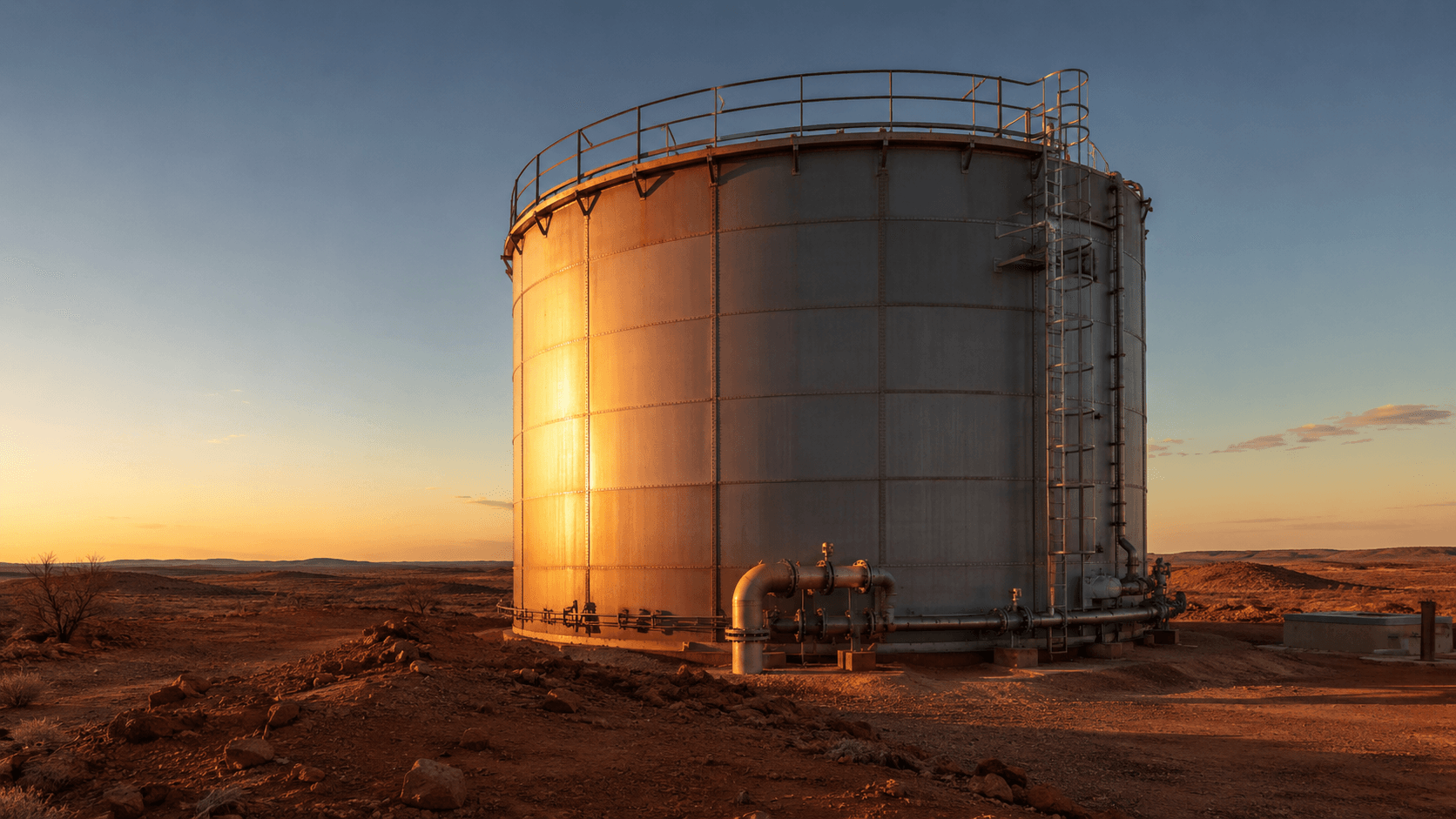
Defaulting every industrial water tank to potable-grade specification feels like the conservative choice. In practice, it can specify the wrong protection entirely — potable-grade materials are chosen for drinking water compatibility, not for resisting the specific chemical or thermal environment an industrial process actually presents.
Chemical compatibility is a different question
AS4020 certification confirms a material is safe in contact with drinking water — it says nothing about how that material performs against process chemicals, elevated temperatures, or high-solids process streams a potable specification was never tested against. A liner or coating chosen for potable compatibility can fail prematurely in a process application it was never designed to resist.
Process water sometimes needs less, not more
Not every process stream requires the corrosion and chemical resistance potable-grade materials provide — some process water storage (non-contact cooling water, for example) can be specified more simply and cost-effectively once it is clear the water quality requirements are genuinely lower than drinking water standards. Over-specifying every tank to potable grade is not a safety margin; it is an unnecessary cost with no corresponding benefit.
Correct specification starts with actual process water chemistry, temperature range, and solids content — not an assumption carried over from a potable water project. Where a process stream is genuinely more aggressive than drinking water (higher temperature, specific chemical exposure, high turbidity), the storage tank needs materials and coatings specified against that actual environment, which may mean a more resistant — and different — specification than a potable tank, not a lesser one.
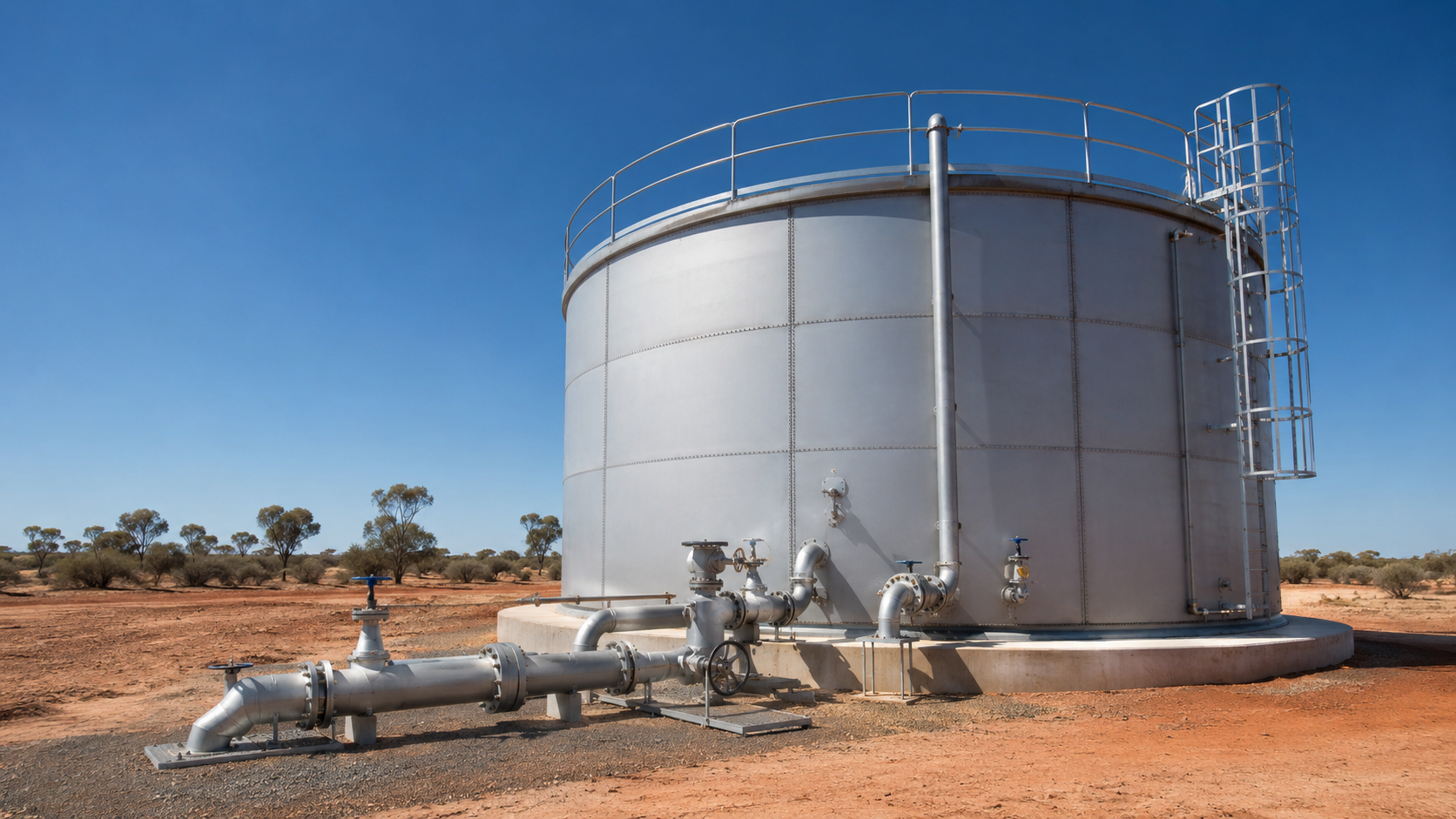
Potable-grade is not a synonym for "high quality" in every context. It is a specific specification for a specific purpose — drinking water compatibility. Process water needs its own specification, worked out from what the process actually demands.
| Consideration | Why it matters |
|---|---|
| Actual process water chemistry and temperature | Determines real material compatibility requirements, not a default assumption |
| Whether the stream needs potable-grade contact materials at all | Avoids unnecessary cost where drinking water compatibility is not required |
| Solids content and abrasion potential | Affects liner and coating wear resistance requirements |
| Compatibility testing against actual process fluid | Confirms material performance beyond generic chemical resistance charts |
| Separation from any adjacent potable systems | Prevents cross-connection risk between differently specified systems |
Is it ever wrong to over-specify a tank to potable-grade materials?
It is not unsafe, but it is often an unnecessary cost where the water quality requirement is genuinely lower than drinking water standards, and it can also be the wrong technical choice where the process environment is more chemically aggressive than a potable specification was designed to resist.
Can the same coating be used for both potable and process water tanks on one site?
Sometimes, but it should be confirmed rather than assumed. A coating certified for potable contact is not automatically validated against a specific process chemical environment, and each application should be specified against its own actual requirements.
What information is needed to specify a process water tank correctly?
The actual process fluid chemistry, expected temperature range, solids or particulate content, and any relevant regulatory or internal quality requirements for that specific stream — not a specification carried over from an unrelated potable water project on the same site.
Specifying process water storage for an industrial site? Getting the material specification right against the actual process saves both cost and premature failure risk.
Discuss your process water storage needs