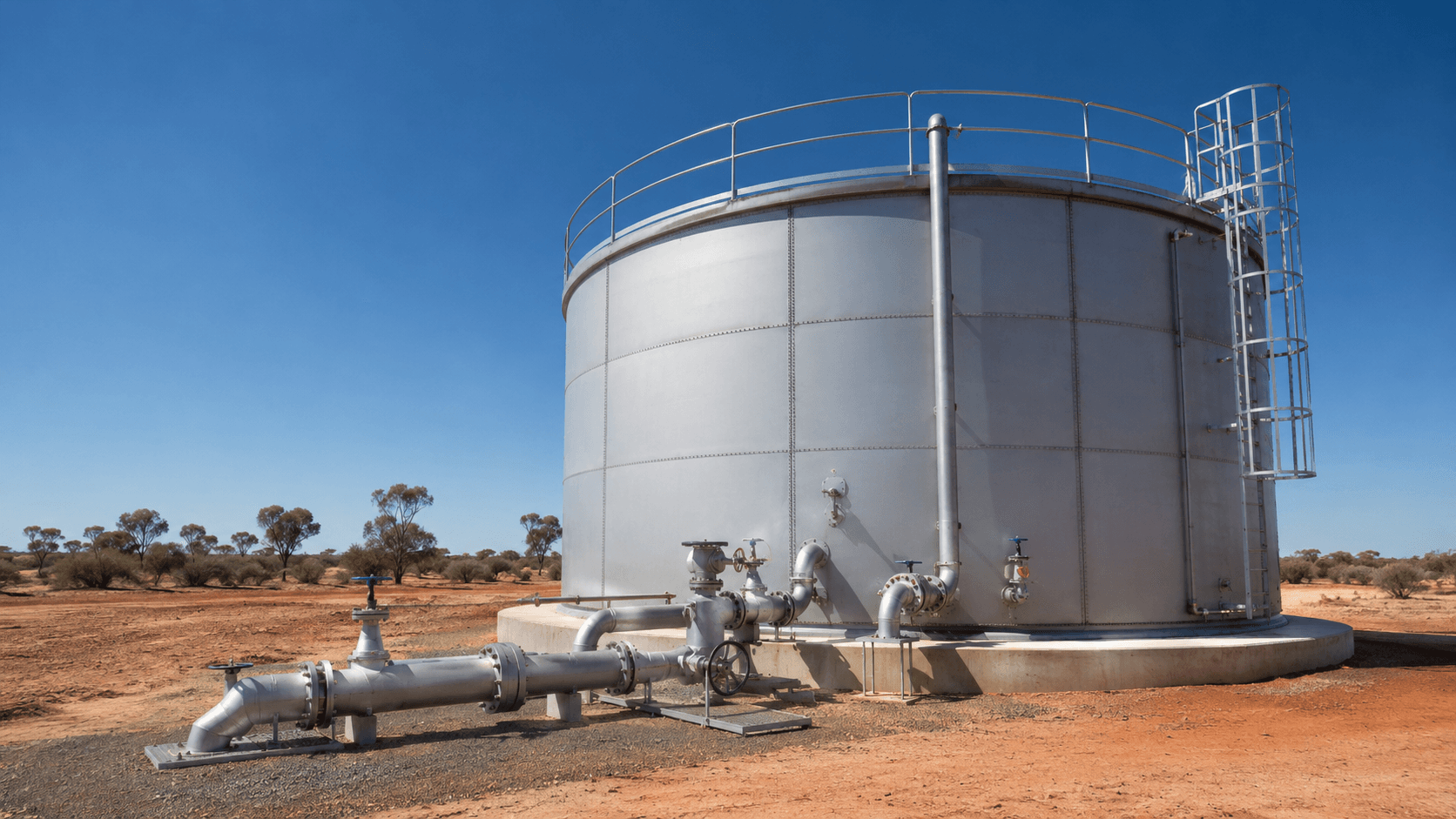
Ask a mine-site engineer how many water tanks are on their site, and the honest answer is often a rough estimate rather than a firm number. Water storage on a mine tends to accumulate over the life of the operation - added in stages as the plant expanded, as new pits opened, or as compliance requirements changed - and it rarely gets managed as a single coherent asset class.
That is a missed opportunity. Water storage tanks on a mine site are functionally the same category of asset whether they hold potable water, raw water, process water or fire protection reserve, and treating them as one managed fleet - rather than a scattered collection added ad hoc - makes both compliance and maintenance planning considerably more tractable.
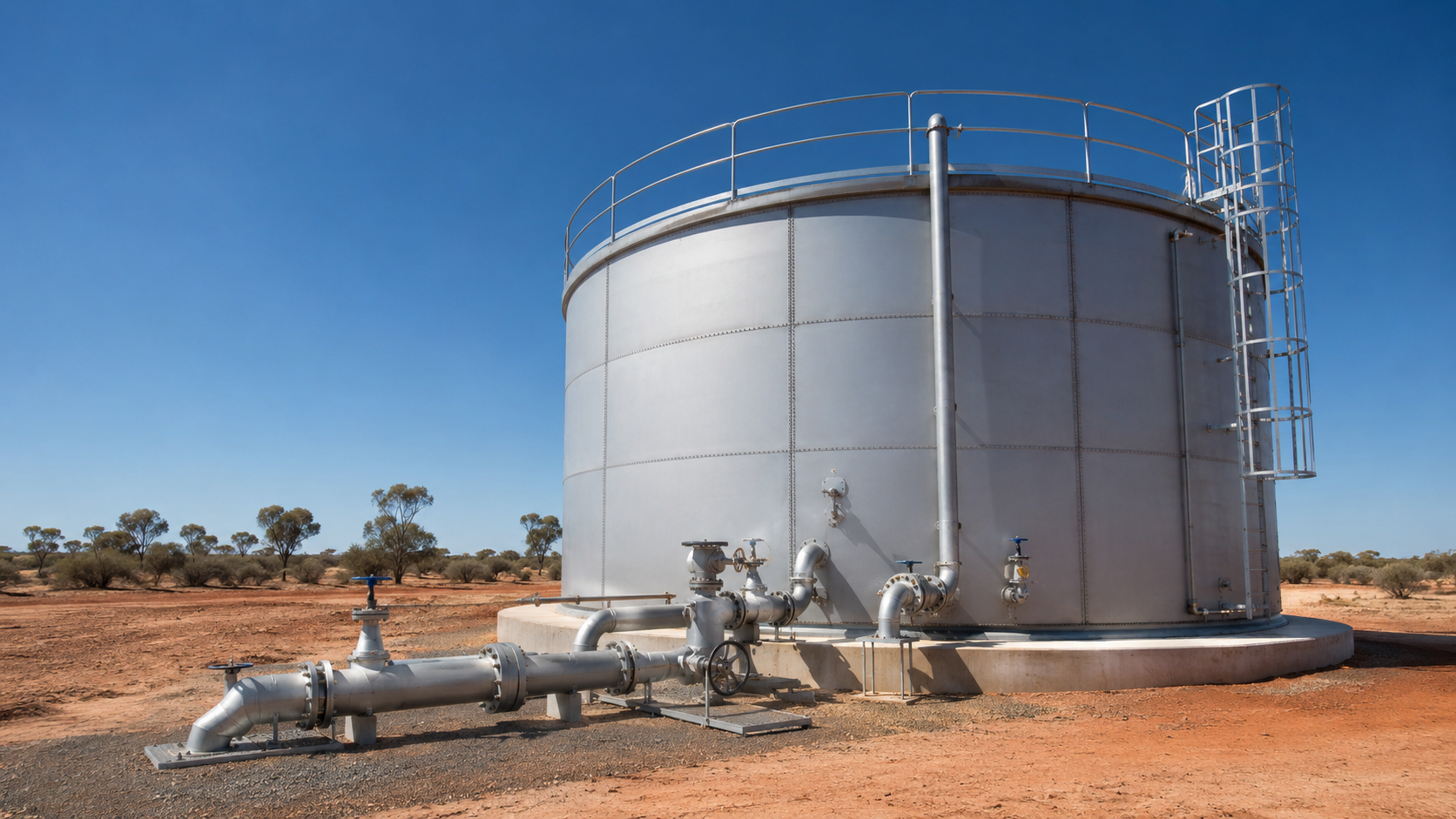
Potable water storage for workforce accommodation and amenities
Potable tanks need AS4020-certified materials in contact with the water, a defined disinfection and testing regime before commissioning, and periodic condition and water quality monitoring for the life of the asset - the same obligations that apply to any potable water tank, regardless of how remote the site is.
Process and raw water storage sized to plant demand
Process water tanks generally have less stringent water quality requirements than potable storage, but often face harder physical duty - higher flow rates, temperature extremes, and in some cases direct exposure to process chemistry depending on where in the circuit the tank sits.
Fire protection storage under AS2304 and AS1851
Fire water storage on a mine site is subject to the same compliance framework as fire tanks anywhere else in Australia, but often gets less routine attention than process-critical tanks simply because it is not part of day-to-day production. A fire tank that has quietly failed compliance is one of the more common findings on a first-time mine-site condition audit.
A single asset register across all tank categories
Building one asset register that captures every tank on site - regardless of what it holds - with condition rating, inspection history and compliance status in one place, is the single most useful step toward defensible, proactive tank management on a mine site.
Coordinating maintenance windows with the production calendar
Once the fleet is visible in one register, maintenance can be planned around planned production shutdowns rather than reactively, in the gaps between unplanned events - a shift that reduces both cost and risk over the life of the asset base.
The tanks that cause the most trouble on a mine site are rarely the ones with the most demanding compliance obligations - they are the ones nobody has looked at closely enough to know their real condition.
| Task | Why it matters |
|---|---|
| Consolidated asset register | Gives a single view of condition and compliance across the whole tank fleet |
| Fire tank compliance check | Often overlooked relative to process-critical tanks |
| Potable water certification review | Confirms materials and testing regime meet AS4020 requirements |
| Maintenance aligned to production calendar | Reduces cost and disruption compared to reactive scheduling |
Do all water tanks on a mine site need the same maintenance approach?
No. Potable, process, fire and environmental control tanks each have different compliance obligations and duty profiles, and are best managed as distinct categories within a single overall asset register.
Why do fire water tanks on mine sites often have compliance issues?
Fire tanks are not part of day-to-day production, so they tend to receive less routine attention than process-critical tanks, and compliance gaps can develop unnoticed for longer than on tanks that are actively monitored.
What is the first step in getting a mine-site tank fleet under control?
Building a single asset register covering every tank on site, with current condition, inspection history and compliance status recorded in one place, rather than managing each tank in isolation.
Managing a mine-site water tank fleet and need a structured condition and compliance review? PC Water Infrastructure supports asset registers across mining operations of any size.
Discuss Mining Water Storage