A bolted sectional tank is built from a large number of individual panels, and that construction method cuts both ways over the tank life. It is genuinely faster to install than a welded alternative on a remote site, and when panels start to reach end of life, the same modular construction means they do not all have to fail before something gets done about it.
Sectional refurbishment - replacing the specific panels that have failed or are close to it, rather than demolishing and rebuilding the whole structure - is one of the more cost-effective interventions available on a bolted mine-site tank, provided the assessment behind it is thorough enough to catch every panel that actually needs attention.
Base course and waterline panels wear first
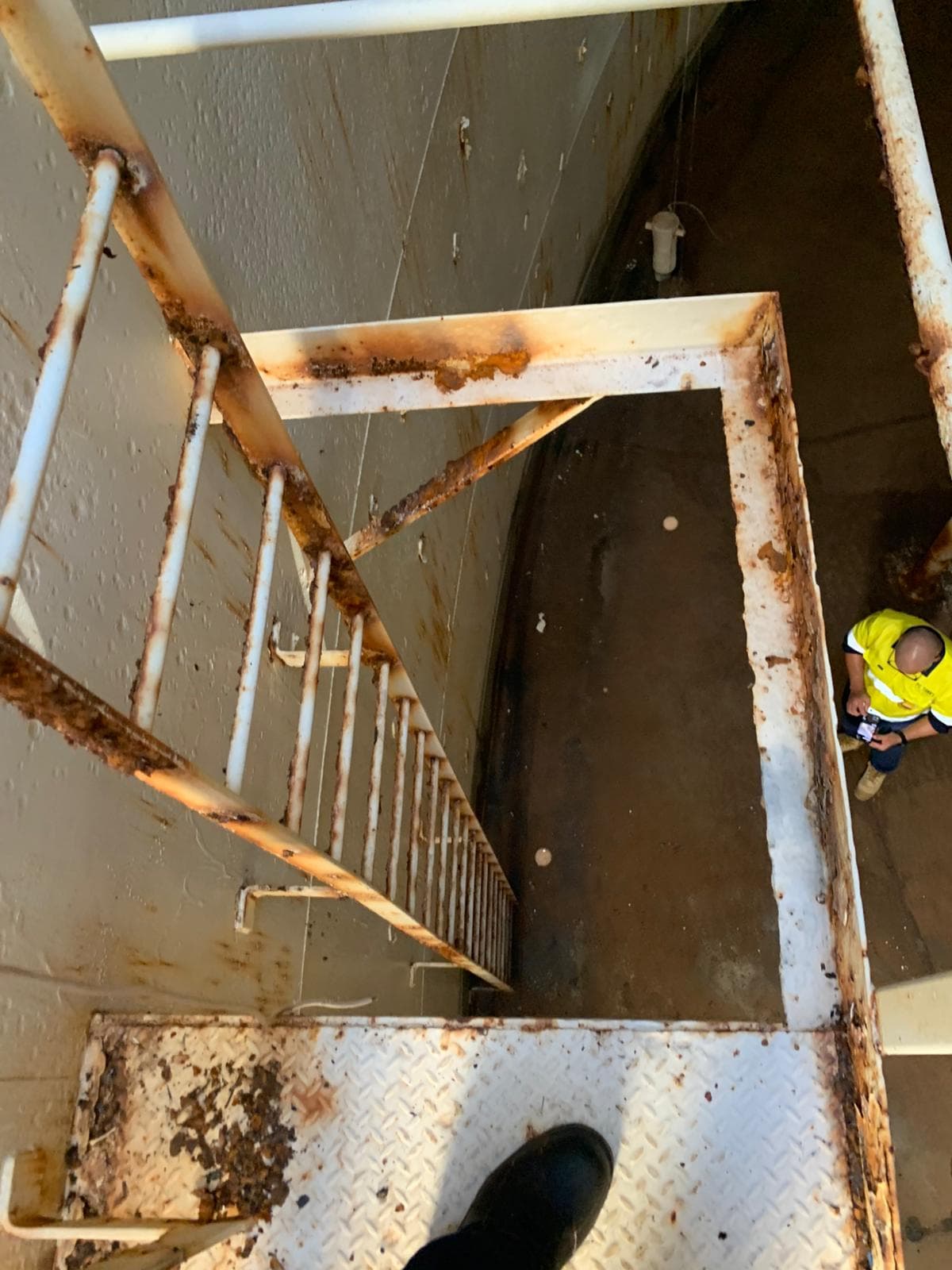
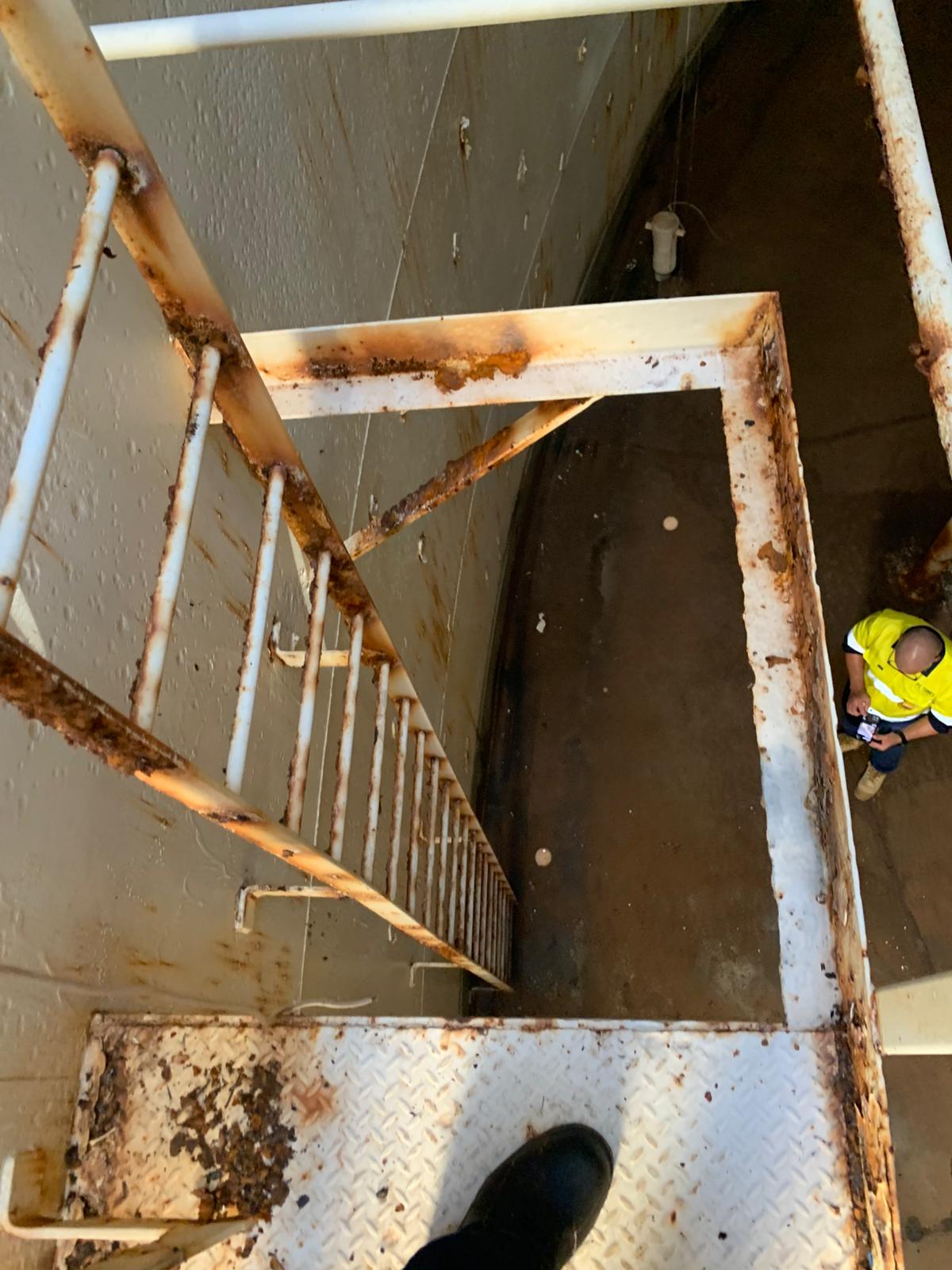
The lowest course of panels carries the greatest hydrostatic load and is most exposed to standing moisture at the foundation interface, while panels at the operating waterline see repeated wet-dry cycling that accelerates coating breakdown. These are the areas a sectional assessment should prioritise, rather than treating every panel on the tank as an equal risk.
Joint sealant condition drives the timeline
Internal and external sealant at panel joints typically degrades before the panel steel itself does, and a sealant failure at one joint can let moisture reach the bolt connections and accelerate corrosion in panels that would otherwise still have useful life left. Assessing joint condition alongside panel condition gives a more complete picture of what needs replacing now versus what can be monitored.
Partial drawdown rather than a full drain where possible
Depending on which panels need replacement and the tank geometry, it is sometimes possible to draw the tank down to a level below the affected panels and complete the replacement without taking the tank fully offline - a meaningful advantage on a site where the tank supports an active process or workforce supply.
When a full rebuild becomes the better option
If condition assessment finds panel degradation is widespread rather than localised - a significant proportion of panels across multiple courses - the labour and staged-outage cost of sectional replacement can approach or exceed the cost of a full rebuild, at which point a new tank is often the more sensible long-term decision.
Sectional refurbishment only pays off when the degradation is genuinely localised - the assessment has to be honest about whether that is actually the case before committing to the panel-by-panel approach.
| Check | What it tells you |
|---|---|
| Base course panel condition | Highest hydrostatic load, first area to show wear |
| Waterline panel condition | Repeated wet-dry cycling accelerates coating failure here |
| Joint sealant condition | Often fails before the panel steel itself |
| Proportion of panels affected | Determines whether sectional replacement or full rebuild is more cost-effective |
Can a bolted tank panel be replaced without draining the whole tank?
Often, yes - depending on which panels need replacement and the tank geometry, a partial drawdown below the affected panels can allow the work to proceed without a full shutdown.
How do you know if sectional refurbishment is still worthwhile versus a full rebuild?
A thorough condition assessment across every panel and joint. If degradation is localised to a small proportion of panels, sectional replacement is usually more cost-effective; if it is widespread, a full rebuild often becomes the better long-term option.
Why do joint sealants need to be assessed alongside the panels themselves?
A degraded sealant lets moisture reach bolt connections and can accelerate corrosion in panels that would otherwise still have useful service life, so joint condition materially affects the refurbishment scope.
Have a bolted sectional tank on a mine site showing panel or joint wear? PC Water Infrastructure assesses and refurbishes panel by panel where that is the right call.
Discuss Sectional Tank Refurbishment