
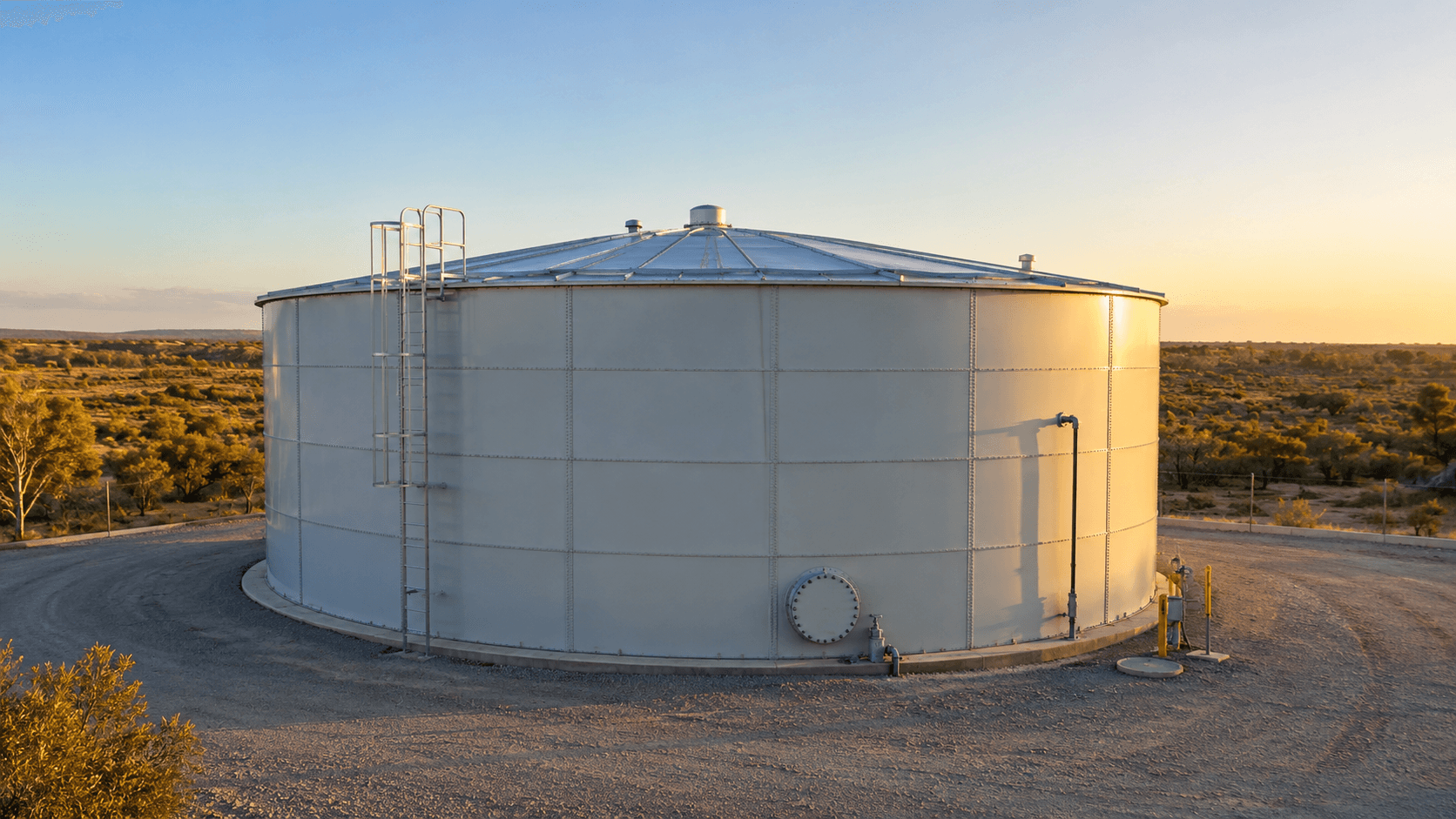
Sediment in a water storage tank is physical evidence that material is entering, forming, or settling inside the asset faster than the system is removing it.
Asset owners often treat sediment as a housekeeping issue. It is more useful to treat it as a diagnostic signal. The depth, colour, texture, and location of the deposit tell you whether the problem is poor turnover, upstream treatment carry-over, coating breakdown, airborne entry, corroding internals, or simply a cleaning interval that has drifted too far.
That is why this post sits naturally alongside our earlier guide to reading water quality evidence. Sediment is not just a symptom to remove. It is a record of how the tank has been operating.
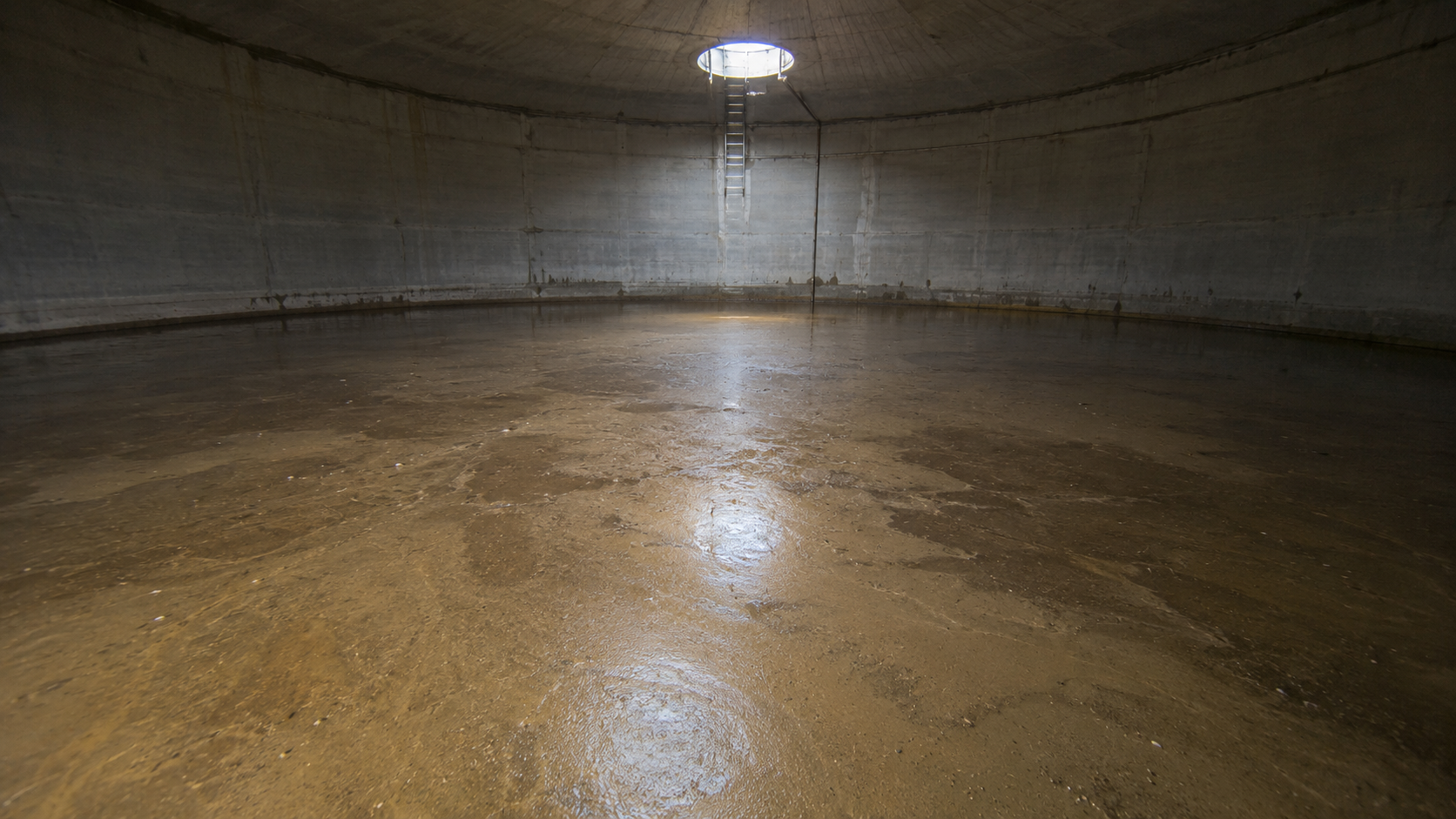
In potable storage, sediment can include fine dust and silt, corrosion product, floc carry-over, iron and manganese precipitate, and organic debris such as leaves, insect material, and algae residue. All of those may settle on the tank floor, around the outlet zone, along the wall-floor junction, or as banding at repeated operating levels.
Not all sediment means the same thing. A thin stable dusting in a low-risk system is very different from soft black sludge in a low-chlorine dead zone or orange-brown deposits developing beside corroding fittings. The correct maintenance response depends on what the deposit is telling you.
Airborne entry and external debris
If vent mesh is too coarse, ridge capping is poorly sealed, hatches are compromised, or overflows are left exposed, wind-borne dust, leaf fragments, and other debris can enter the vessel. In arid and remote parts of Australia, that external load can be significant even when the tank looks acceptable from ground level.
Source-water and treatment carry-over
Some sediment begins upstream. Fine treatment solids can settle once flow velocity drops inside the tank. Bore supplies with elevated iron or manganese can also leave deposits, particularly where water age is high and turnover is poor.
Internal corrosion and material breakdown
The tank can manufacture its own sediment. Failing coatings, corroding steel, permanently immersed components that were poorly selected, and deteriorating fixtures all shed material into the stored water. In potable systems, materials in contact with drinking water should comply with AS 4020 requirements, and maintenance choices should align with local hygiene obligations — not just what was convenient during a past repair.
Hydraulic stagnation
Sediment is not only about what enters the tank. It is also about what stays there. An oversized or poorly cycled tank allows fine particles to settle, stratify, and build up. That same behaviour also supports disinfectant loss and localised biological activity.
| Finding | What it usually suggests | Why it matters |
|---|---|---|
| Fine light silt across the floor | Dust ingress, low flow velocity, or long interval between cleans | Usually points to exclusion details and operating history |
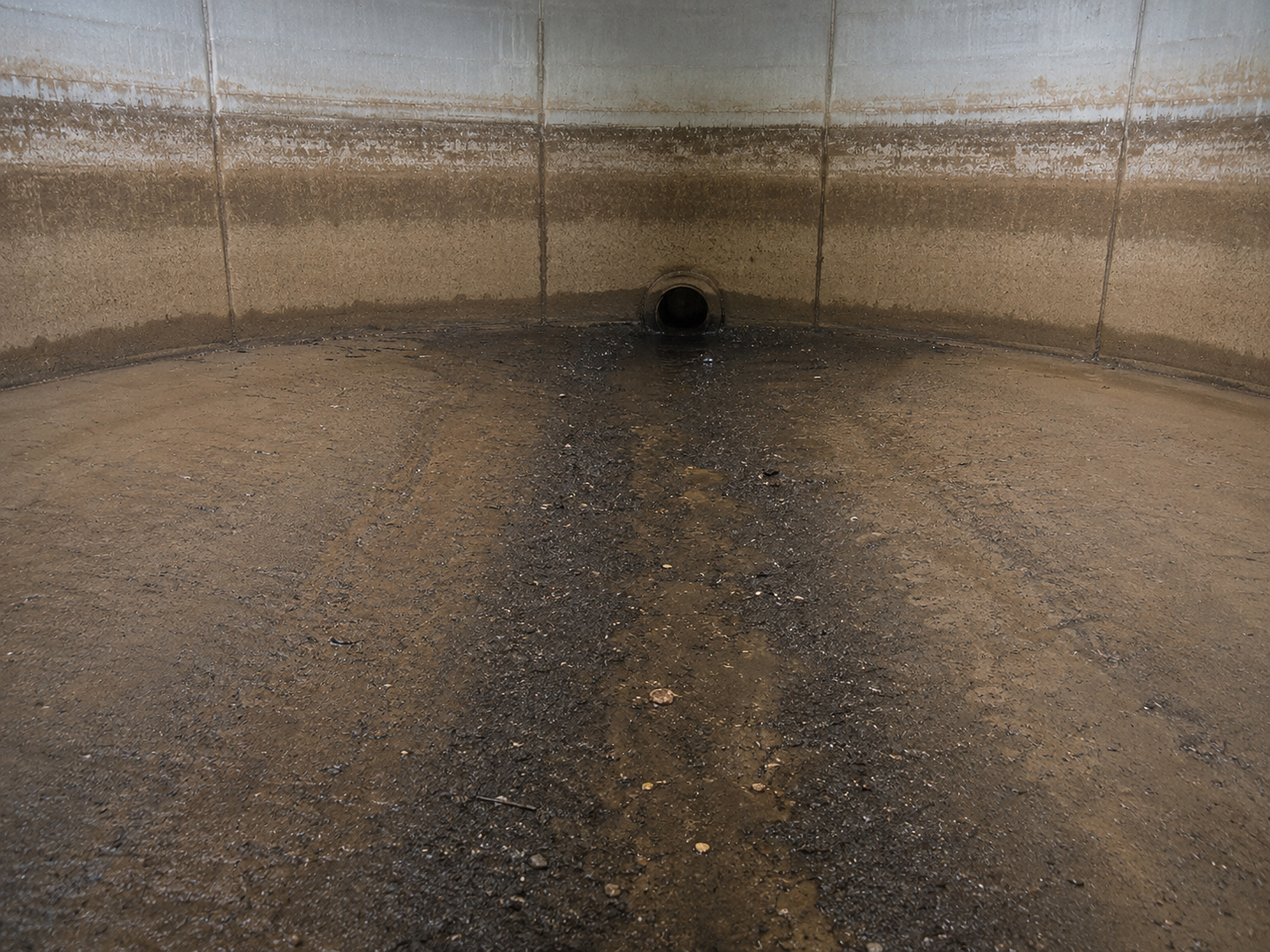
| Black sludge or dark floc | Treatment carry-over, stagnant zones, or biological activity | May indicate a water quality problem, not just a cleaning one |
| Orange-brown deposits | Iron precipitation, internal corrosion, or corroding fittings | Often means the tank is generating contamination internally |
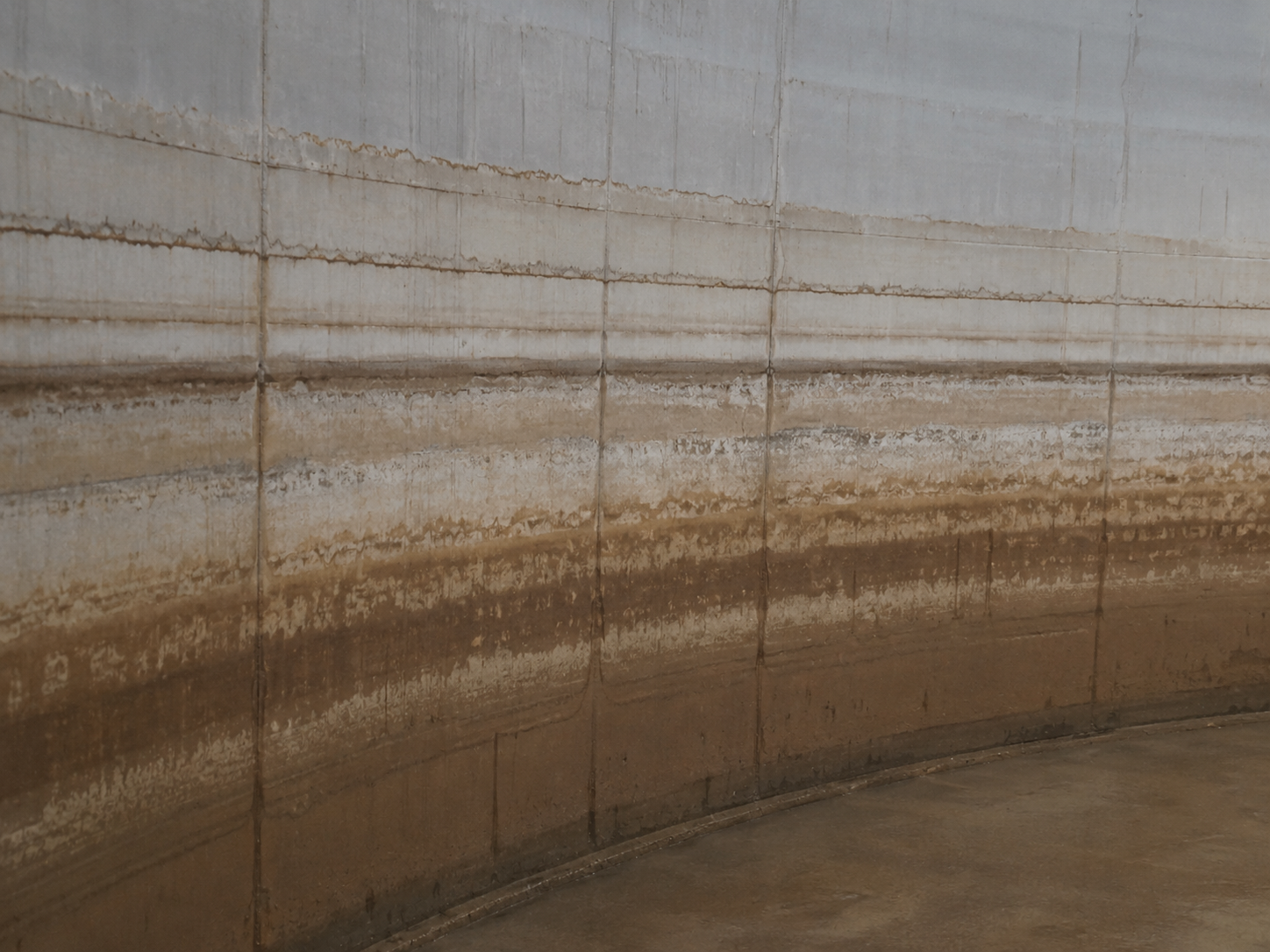
| Sediment banding on walls | Repeated standing levels and poor turnover | Indicates a hydraulic management issue |
| Build-up near the outlet or scour | Dead spots, poor cleaning history, or weak screen design | Increases the chance of mobilisation into supply |
There is no single universal millimetre depth that makes one tank safe and another unsafe. The real question is whether the sediment load has started affecting inspection clarity, outlet performance, disinfection confidence, or cleaning complexity.
Heavy deposits make condition assessment harder because they cover the floor, mask early defects, and hide what is happening at the wall-floor junction. They can also obstruct scour drains, sit unnoticed until demand changes disturb them, and suddenly appear as a discolouration complaint even though the build-up has been present for years.
A thin layer of sediment is a maintenance task. A heavy layer of sediment is usually evidence that the tank has been left unobserved for too long.
Characterise the deposit
Record depth, colour, texture, smell, and location. "Sediment present" is not enough to support a useful maintenance decision.
Check entry and generation points
Inspect hatches, vents, roof details, overflows, submerged fittings, outlet screens, and any internal metalwork. If the tank is creating the sediment itself, a clean alone will not solve the problem.
Review the tank's operating history
Wall staining, persistent low chlorine, and repeated standing levels are observable clues that conditions inside the tank are contributing to sediment accumulation. Note what you find and pass it to the inspector — it shapes the diagnosis.
Combine cleaning with inspection
Cleaning removes the material. Inspection explains the cause. Done together, the tank becomes visible again and the next maintenance decision is based on evidence rather than guesswork.
How much sediment in a water tank is too much?
There is no single universal threshold, because risk depends on tank type, water source, deposit type, and where the material has accumulated. In practice, once sediment begins affecting outlet zones, inspection clarity, or cleaning complexity, it has moved beyond routine background build-up and should be addressed.
Can sediment in a potable water tank affect water quality even if the water looks clear?
Yes. Settled deposits can remain unnoticed until demand changes or tank levels move enough to disturb them. At that point the sediment can contribute to discolouration, turbidity, taste and odour issues, or carry other contaminants into supply.
Does sediment always come from the source water?
No. Sediment may come from external dust ingress, internal corrosion, degraded coatings, organic entry through compromised exclusion points, or hydraulic stagnation inside the tank itself. One of the most common mistakes is assuming every deposit originated upstream.
How often should a water storage tank be cleaned?
That depends on the source water, the tank's operating regime, and what previous inspections have found. As a general guide, standard distribution tanks often sit in the 4 to 6 year range, while higher-risk supplies such as bore water with iron or manganese may require shorter intervals around 2 to 4 years. Always check your scheme's approval conditions — some supplies have mandatory cleaning intervals set by their regulator.
Should cleaning and inspection be done together?
Usually yes. Cleaning removes the physical load, but inspection explains why that load formed and whether it has been masking corrosion, coating failure, hydraulic issues, or exclusion defects. Combining the two gives a much stronger maintenance decision than either task alone.
If sediment is building in your tank, do not wait for it to become an outlet problem or a complaint trigger. Read the evidence while it is still cheap to fix.
Book a tank clean and inspection