When a bird turns up inside a potable water tank, the finding is not random wildlife. It is evidence that a roof-level exclusion barrier has failed.
In our earlier post on reading contamination evidence, we made the point that the tank records what has been happening long before a complaint reaches the operator. Bird remains are one of the clearest examples. They tell you the problem is not at the treatment plant and not out in the reticulation. The problem is the tank itself.
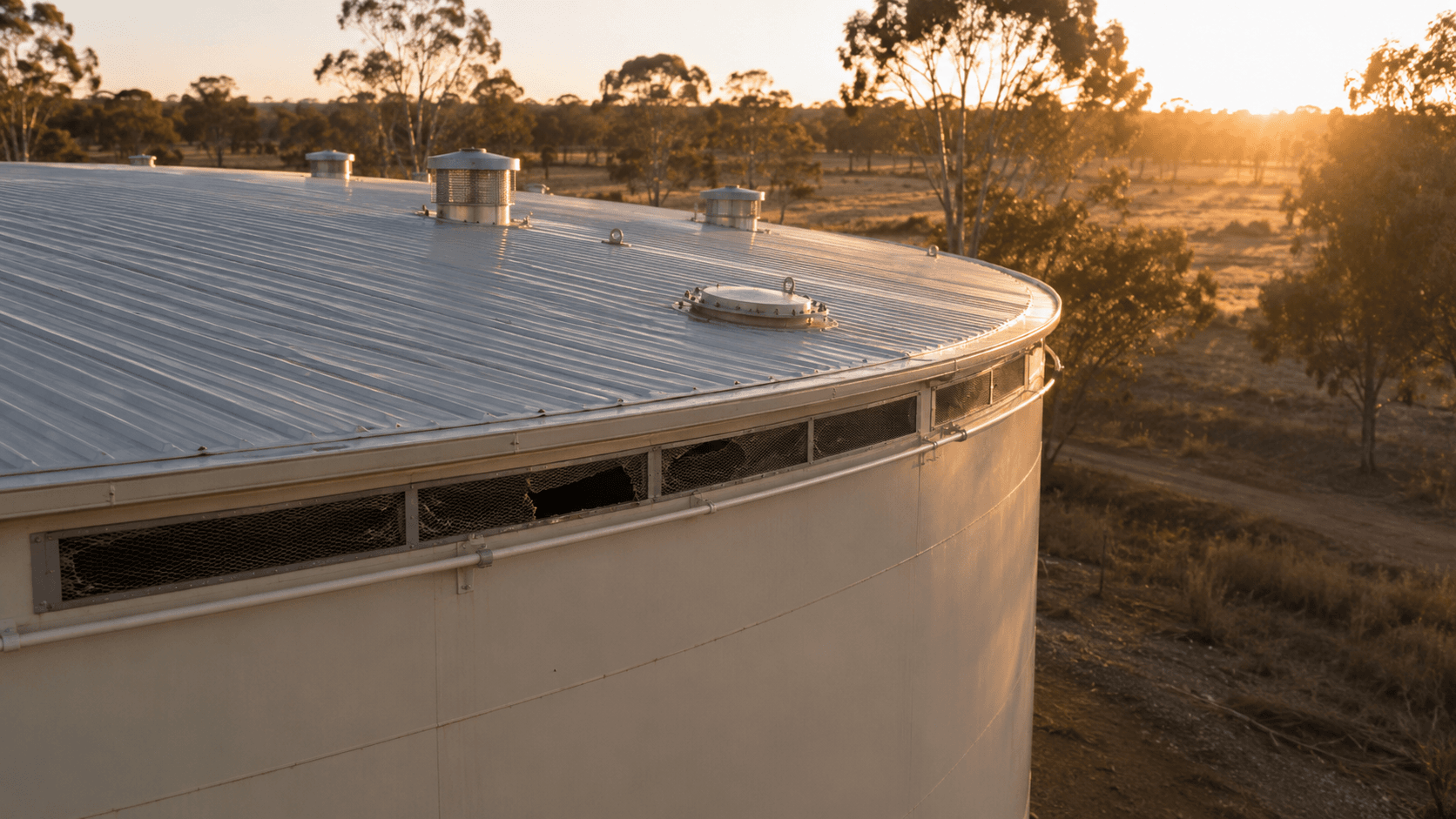
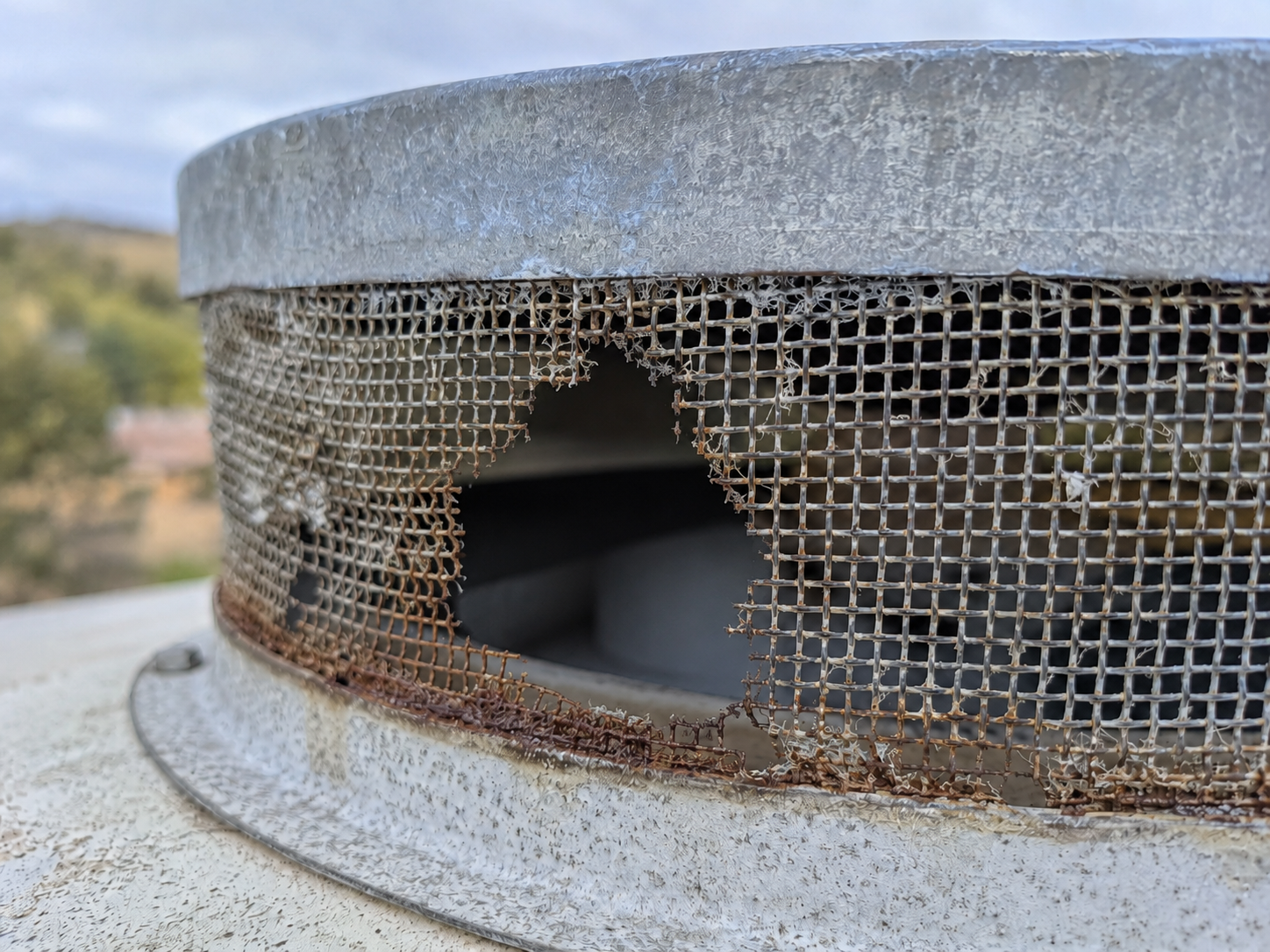
We've also covered the ground-level wildlife pathway in The Open Overflow. Birds are different. They usually enter from above — through damaged vent mesh, unsealed roof edge flashings, ridge gaps, or a hatch that was left insecure after inspection, maintenance, or vandal activity.
Birds do not need a large breach. A small opening near a vent, roof seam, or hatch perimeter is enough. Potable water tanks also offer what birds seek: shade, shelter from weather, and a quiet perch point away from predators. Once they enter the roof space or tank interior, many cannot orient themselves to escape. Smooth internal walls and dark confined spaces work against them.
That is why birds are the most common animal remains found inside Australian tanks. Not because they are the only animals trying to get in, but because small roof-level failures are common and birds can exploit them quickly.
A bird inside the tank is not just a contamination finding. It is a structural clue. The type of evidence narrows the likely pathway:
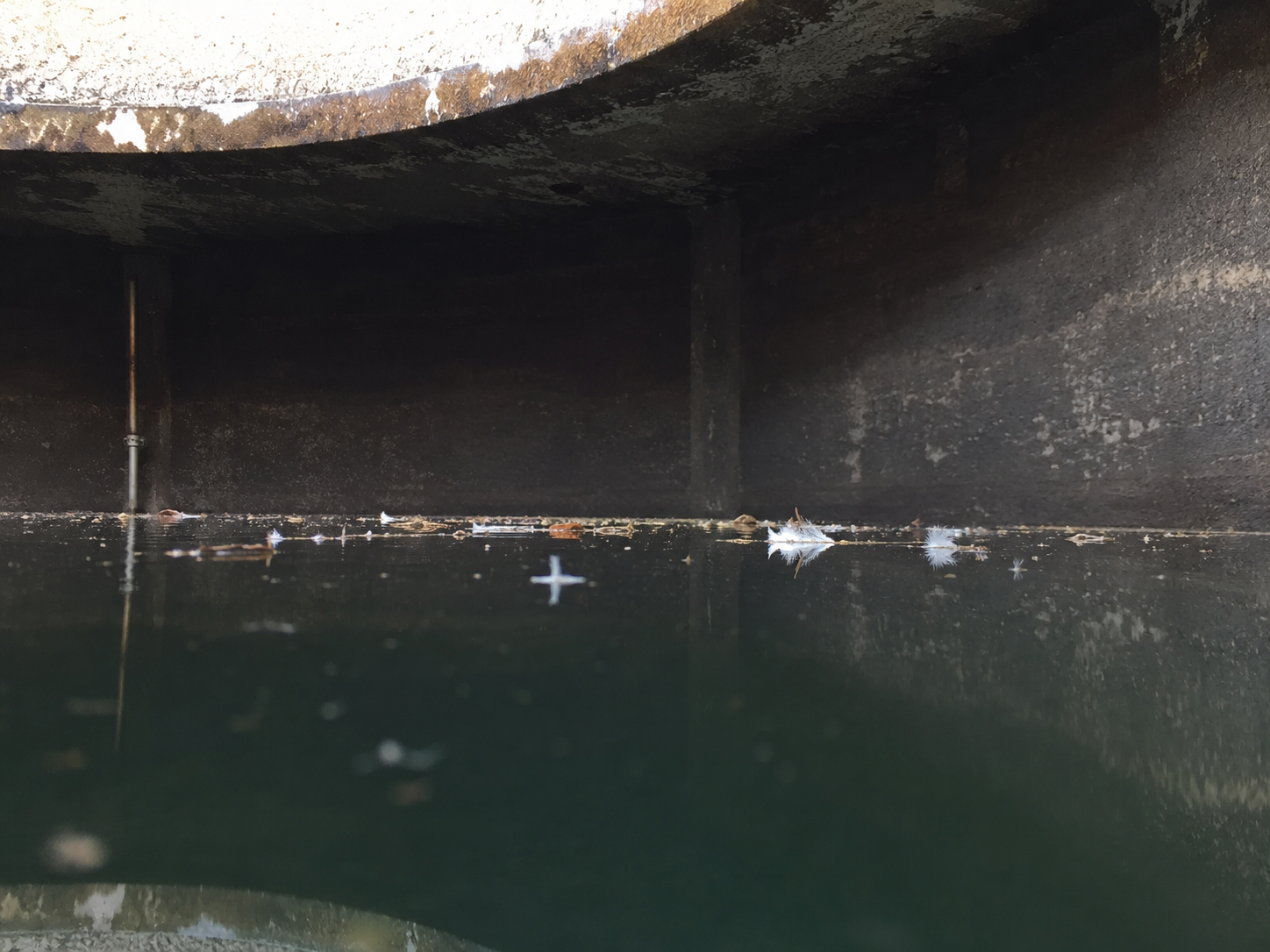
Feathers at the waterline — Feathers floating at the top water line indicate active or recent entry. An inspector should move immediately to the vent openings, roof edge flashings, ridge capping, and hatch seals.
Nesting material on roof framing — Twigs, grass, and down near roof members indicate birds are not just getting in, they are attempting to occupy the space. That usually means the opening has existed for some time.
Droppings around hatches or vent zones — Bird fouling concentrated near a hatch cover or vent screen often shows the exact perch point being used. It can also indicate a hatch that is not draining or sealing correctly, allowing both biological matter and stormwater to track inward.
A carcass on the floor — At that point the issue has progressed from exclusion failure to confirmed contamination event. The response needs to deal with both: remove the contamination and close the pathway that allowed it.
A bird in a water tank is never just a bird. It is proof that the roof, hatch, or vent barrier stopped being a barrier.
Asset owners sometimes think the problem begins and ends with the body itself. It does not. Feathers, faeces, nesting material, microbial load, and the likelihood of repeat entry all matter. If one bird got in, the pathway is still open for the next one.
That is why the response should not be limited to clean-up. It should include a roof-level exclusion audit, repair of all damaged screens and seals, and confirmation that the hatch and surrounding platform area remain weather-tight. The practical expectation from the Australian Drinking Water Guidelines (NHMRC), supported by AS/NZS 4766 where relevant, is simple: the stored water must be protected from external contamination.
| Finding | Most likely pathway | First action |
|---|---|---|
| Feathers at waterline | Vent screen failure or roof gap | Inspect all vents, ridge capping, and flashings |
| Nesting material on roof members | Longstanding roof-level opening | Identify opening, remove material, reseal entry point |
| Droppings near hatch perimeter | Hatch perch point or poor hatch drainage | Check hatch seal, drainage path, and cover seating |
| Bird carcass on floor | Confirmed active entry | Treat as contamination event and complete exclusion audit |
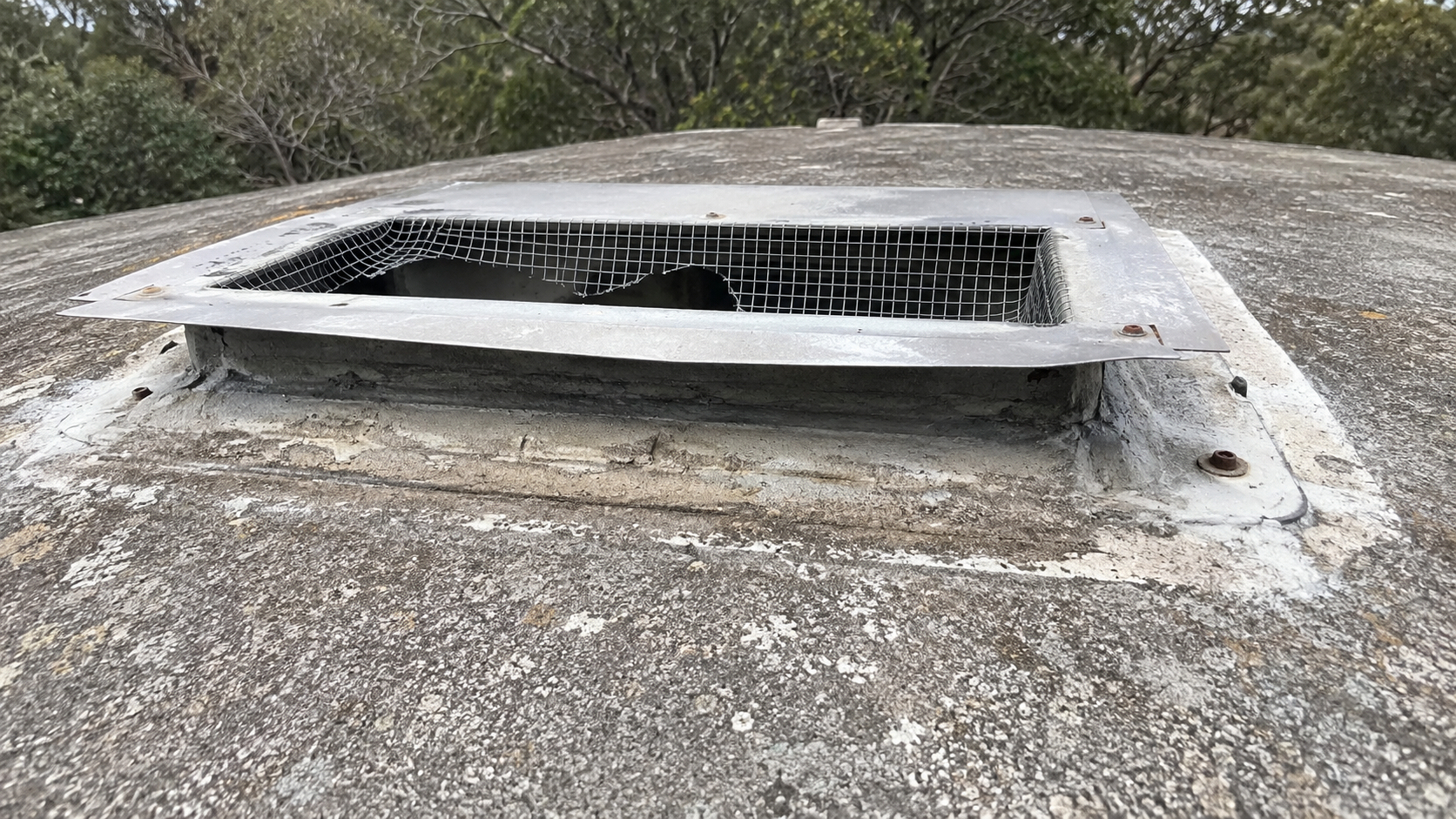
| Damaged vent mesh visible from outside | Direct roof-level ingress route | Replace with correctly fixed fine mesh immediately |
The fix is usually straightforward. Replace damaged vent mesh. Seal roof edge flashings and ridge gaps. Confirm hatches close squarely and drain correctly. Review any recent contractor work that involved opening the tank. And if the site has a history of tampering, inspect for vandal damage as well. One unresolved access point can keep reintroducing the same problem.
This is also why bird findings sit so high on the priority list in our broader contamination risk framework. They are direct evidence of storage-side failure, not an abstract possibility.
Why are birds the most common bodies found inside Australian water tanks?
Birds only need a very small roof-level opening to gain entry. Damaged vent mesh, unsealed roof edge flashings, ridge gaps, and poorly secured hatches give them access to sheltered spaces inside the tank. Once inside, smooth walls, darkness, and limited orientation cues mean many birds cannot find their way back out. That is why bird remains are such a common internal finding.
What does a bird found inside a potable water tank tell an inspector?
It tells the inspector there has been a roof, hatch, or ventilation barrier failure. A bird in the tank is not random bad luck. It is structural evidence. Feathers at the waterline, nesting material on roof framing, droppings near hatches, and damaged vent screens all narrow the investigation to specific entry pathways.
Is the contamination risk only the bird carcass itself?
No. The carcass is only one part of the risk. Feathers, faeces, nesting material, and ongoing access by additional birds all represent contamination pathways. Any confirmed bird entry should be treated as a water quality event under the Australian Drinking Water Guidelines (NHMRC), with the structural access point identified and rectified.
What standards apply when birds are entering a water tank?
The duty to maintain sanitary integrity from storage to tap is established by the Australian Drinking Water Guidelines (NHMRC) and supported by AS/NZS 4766 where applicable. The practical requirement is straightforward: if birds can get in, the tank exclusion barrier is not performing and the defect needs rectification.
If feathers, nesting material, or bird remains have ever been found in your tank, the question is not whether the barrier failed. The question is where.
Request a tank inspection