
Gladstone concentrates LNG processing, alumina refining and power generation in one relatively compact port precinct — a heavy industry density that makes generic, potable-grade default specification a poor fit for much of the region's water storage needs.
Process water diversity across a single precinct
Different heavy industries on the same port precinct can have meaningfully different process water chemistry, temperature and volume requirements — alumina refining, LNG processing and power generation are not interchangeable water users, and storage specified for one process is not automatically appropriate for another, even on adjacent sites.
Fire compliance at industrial scale
Heavy industrial sites of this scale typically carry fire compliance obligations well beyond a standard commercial building, with correspondingly larger and more critically important fire water storage — where usable volume, draw-down capability and condition inspection frequency all need to match the genuine scale of risk on site, not a generic minimum.

For a facility in the Gladstone industrial precinct, the practical approach starts with clearly defining what each storage tank actually needs to serve — a specific process stream, general potable use, or fire compliance — and specifying materials, volume and monitoring against that actual requirement rather than a blended, generic industrial default. Given the scale and consequence involved, project-managed delivery that coordinates civil, tank supply and commissioning as one accountable program is often the more reliable approach than managing multiple separate contracts for a single facility's water infrastructure.
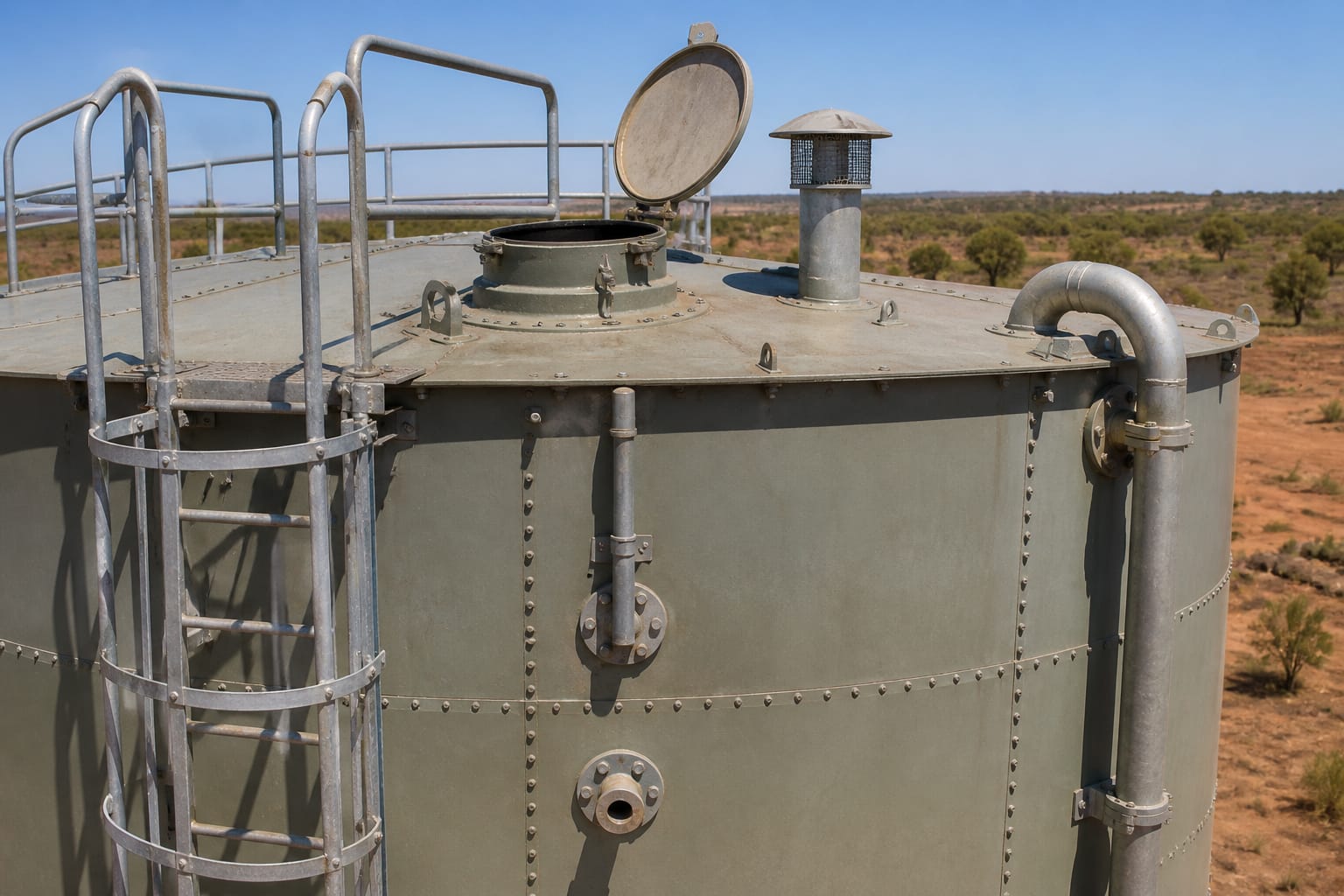
Gladstone's industrial density means water storage decisions here are rarely simple — but they are answerable, provided each tank's actual purpose is defined clearly before the specification is written, not assumed from a generic industrial template.
| Check | Why it matters locally |
|---|---|
| Process water specification matched to the specific industrial use | Different processes on the same precinct can have very different requirements |
| Fire compliance volume and draw-down sized to actual industrial risk | Heavy industry sites often carry consequence well beyond standard commercial minimums |
| Coordinated, project-managed delivery for multi-trade installations | Reduces interface risk across civil, tank supply and commissioning |
| Inspection frequency proportional to facility criticality | Higher-consequence industrial sites justify more frequent condition checks |
Can one water storage specification serve multiple industrial processes on the same Gladstone site?
Generally not reliably — different processes typically have different chemistry, temperature and volume requirements, and each storage need should be specified against its own actual process data rather than a single blended specification.
Is fire compliance storage at Gladstone-scale industrial sites different from a standard commercial building?
Often yes — the scale and consequence of a fire event at a major industrial facility typically justifies fire water storage sized and inspected well beyond a standard commercial minimum, reflecting the facility's actual risk profile.
Why would project-managed delivery matter more for a Gladstone industrial facility than a smaller commercial site?
The complexity and consequence of getting water infrastructure wrong at industrial scale makes the interface risk between separately contracted trades — civil, tank supply, commissioning — more significant, which is where a single accountable delivery model adds the most value.
Specifying or reviewing water storage for a Gladstone industrial facility? Getting each tank's actual purpose and specification right matters at this scale.
Discuss your Gladstone region project