

Turbidity readings climbing right after a tank has just been cleaned feels backwards — the tank should be cleaner, not murkier. In the short term, that is exactly what a properly performed clean often looks like, and it is worth understanding why before assuming something has gone wrong.
Disturbed fine sediment
Cleaning methods that agitate the tank floor — even careful diver vacuuming — inevitably stir fine particulate that has settled into corners, around fittings and along wall-floor junctions. That fine material takes some time to be drawn out through the outlet or to settle again, and in the interim it reads as elevated turbidity.
Refill and mixing dynamics
As a tank refills after cleaning, incoming water mixes with any remaining fine sediment and can temporarily increase turbidity at the outlet before the tank re-stratifies and stabilises. This is a normal hydraulic effect of the refill process, not necessarily a sign of a cleaning failure.
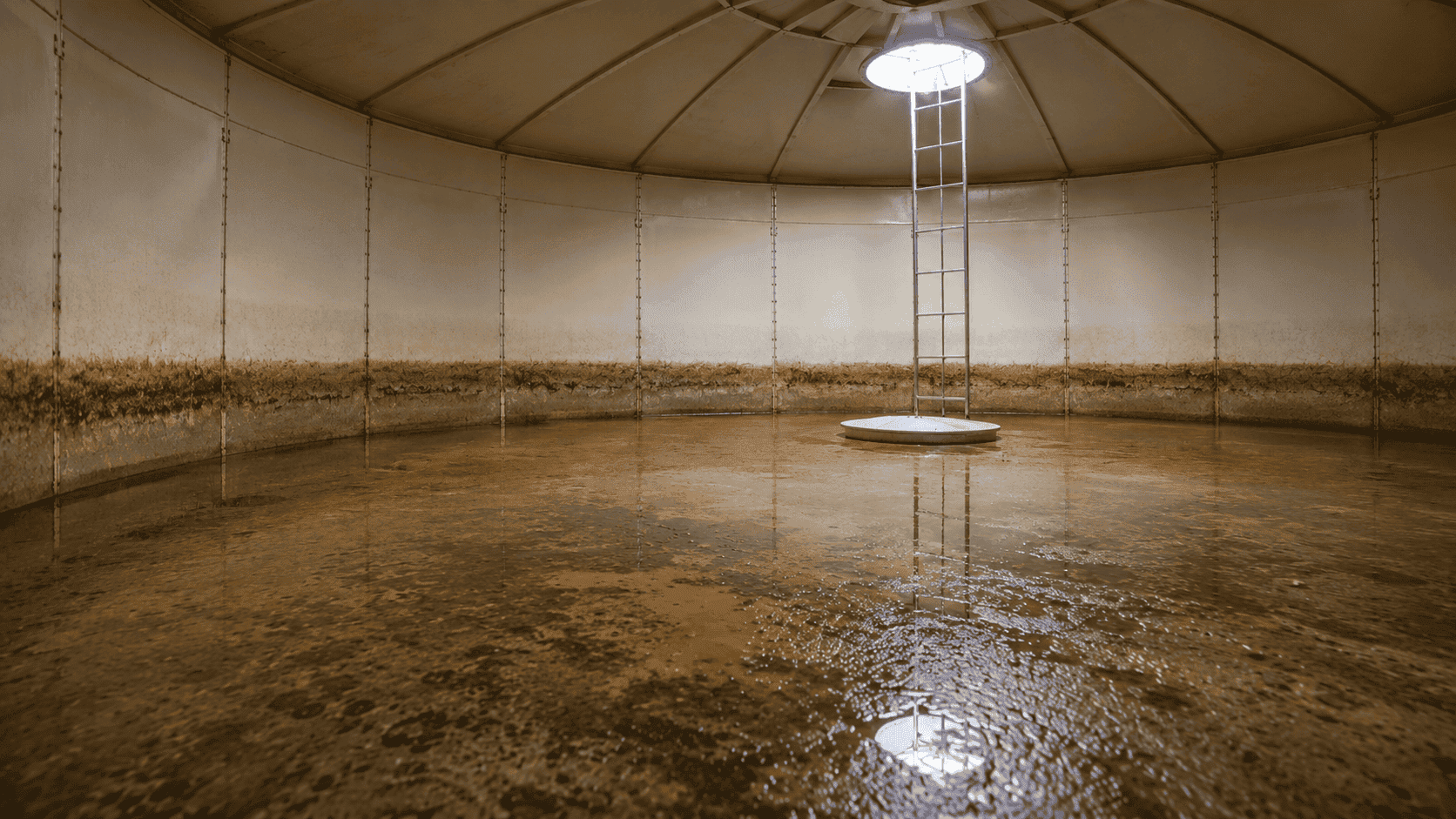
A well-performed clean followed by a properly managed refill typically sees turbidity settle back to baseline within a short, defined period — the exact duration depends on tank size, refill rate and the cleaning method used, and a competent cleaning provider should be able to tell you what to expect for your specific tank before the work begins. What is not normal is turbidity that remains elevated well beyond that expected window, or that spikes again without an obvious refill or disturbance event.
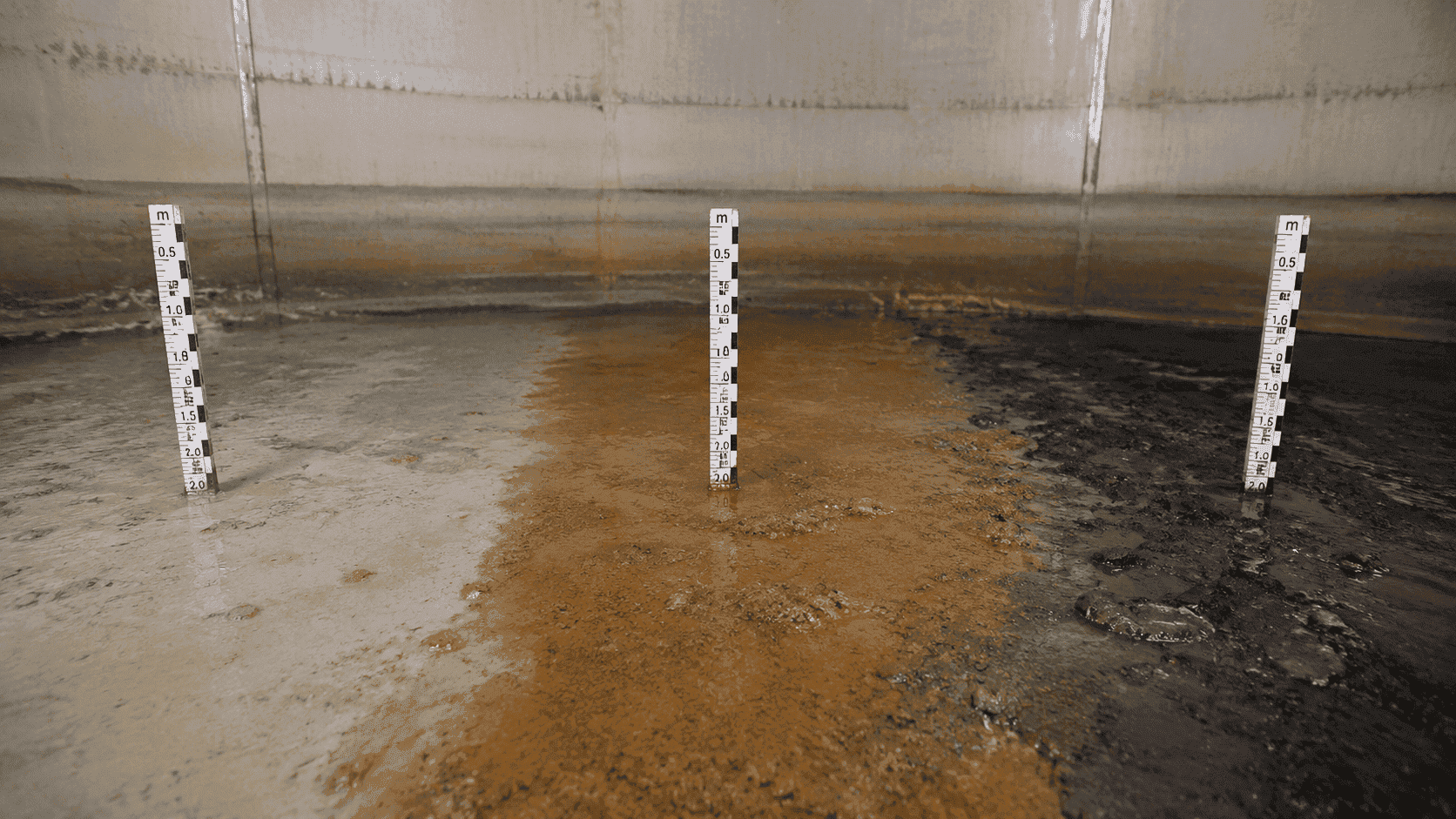
A brief turbidity spike after cleaning is the sediment leaving the system, not entering it. The red flag is not the spike itself — it is a spike that does not resolve within the expected window, or one that has no obvious cleaning-related cause.
| Observation | Likely normal or worth investigating |
|---|---|
| Turbidity rises during and immediately after cleaning | Normal — expected disturbance from the cleaning process |
| Turbidity settles to baseline within the expected timeframe | Normal — confirms the sediment has cleared as expected |
| Turbidity remains elevated well past the expected window | Worth investigating — may indicate incomplete removal or an outlet issue |
| A new turbidity spike with no refill or disturbance event | Worth investigating — may indicate an unrelated contamination event |
| Turbidity accompanied by discolouration or odour | Worth investigating promptly — may indicate a water quality issue beyond sediment |
How long should turbidity stay elevated after a tank is cleaned?
It varies by tank size, cleaning method and refill rate, but a competent cleaning provider should give you an expected timeframe before the work begins. Turbidity that has not returned to baseline within that stated window is worth investigating rather than assumed to still be settling.
Does a turbidity spike after cleaning mean the clean was done poorly?
Not necessarily — a brief spike is often a sign the cleaning process successfully disturbed and is removing sediment that was previously settled and undetected. A poorly performed clean is more likely to show as turbidity that does not resolve, or sediment that is later found to still be present on re-inspection.
Should water be tested after a tank cleaning event?
Yes — turbidity and, where relevant, disinfection residual should be monitored following a clean until readings stabilise at baseline. This confirms the clean has achieved its intended result and provides an early warning if something other than expected sediment disturbance is occurring.
Seeing turbidity readings that are not settling as expected after a clean? Worth a follow-up inspection to confirm what is actually happening inside the tank.
Request a follow-up inspection