There is no single correct interval. Any contractor or maintenance guide that gives you a flat "every two years" answer without knowing your source water, tank type, or inspection history is giving you a compliance liability dressed up as a schedule. The honest answer is this: cleaning frequency should be driven by condition, not a calendar.
This guide gives asset owners - councils, water authorities, property managers, and remote community operators - a practical framework for setting defensible, risk-appropriate cleaning intervals.
Fixed-calendar cleaning is administratively convenient but technically flawed. It causes two predictable failure modes: over-cleaning assets that do not need it, which wastes budget and forces unnecessary service disruptions, and under-cleaning assets that do, which leads to water quality failures, regulatory non-compliance, and accelerated structural degradation.
The Australian Drinking Water Guidelines (ADWG) do not prescribe a universal cleaning frequency. Neither does AS 4020, which governs products in contact with drinking water, set a cleaning interval - it sets compliance thresholds for materials and water quality outcomes. What this means in practice is that the obligation sits with the asset owner to demonstrate that water quality is maintained. Cleaning frequency is one lever; inspection-informed decision-making is the framework.
The question is not how often you clean - it is how you know when cleaning is needed. Inspection findings, not elapsed time, should drive that decision.
These are evidence-based starting ranges, not hard rules. Treat them as default positions that inspection findings will adjust.
Potable water distribution tanks (municipal / council-operated)
Typical interval: 4 to 6 years when source water is treated reticulated supply, turnover is regular, and prior inspections show clean interiors. Councils operating these assets under state water authority oversight should confirm any jurisdiction-specific requirements - some Queensland and WA water authorities have their own guidance that narrows this range.
Bore water tanks (iron, manganese, high TDS source water)
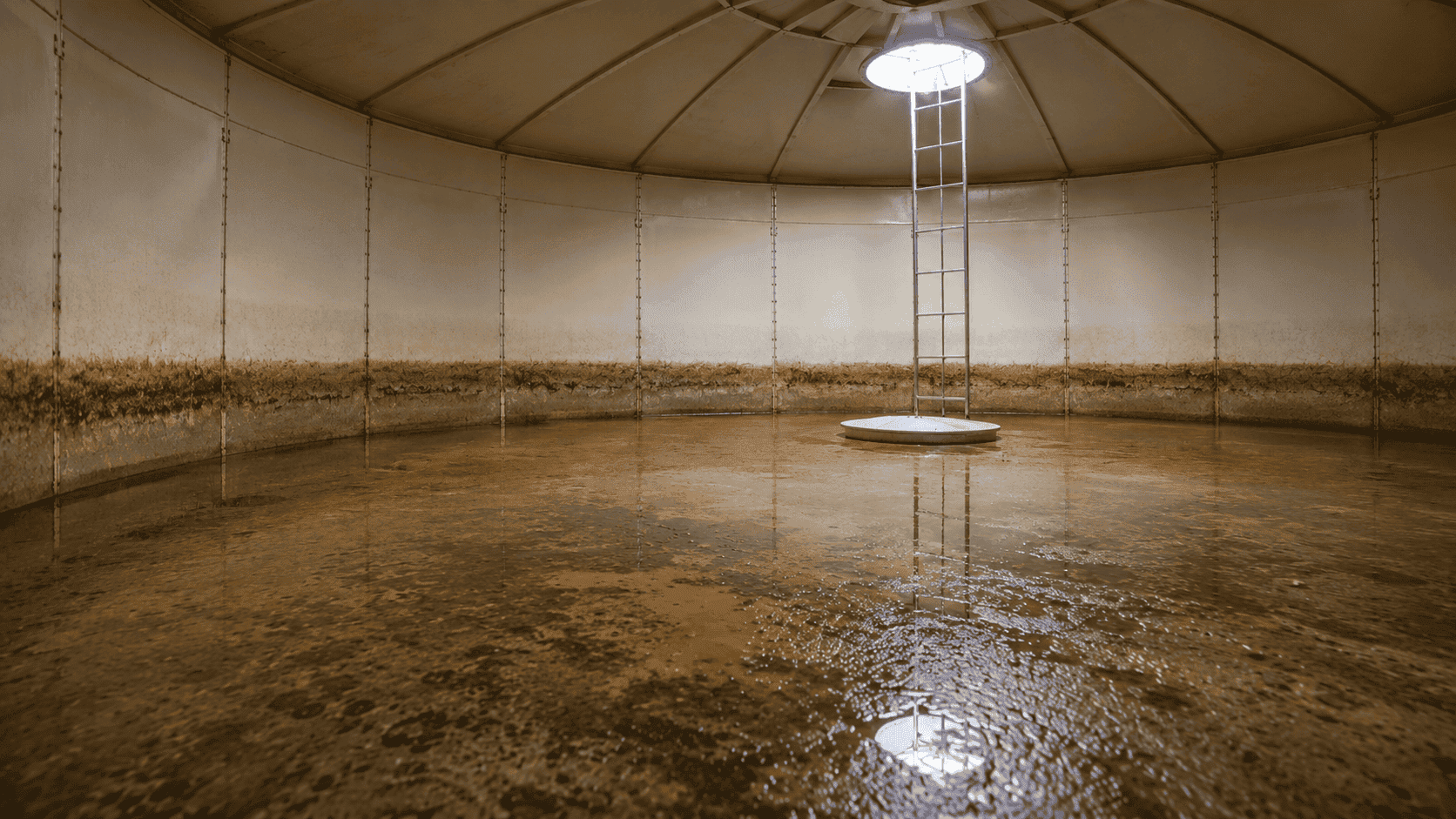
Typical interval: 2 to 4 years, often shorter. Iron and manganese accumulate as sediment rapidly, and biological fouling such as iron bacteria can establish within 18 months in warm climates. Remote communities drawing from bores should plan inspections at 18 to 24 months minimum, regardless of cleaning cycle.
Rainwater harvesting tanks
Highly variable - driven by catchment contamination risk (bird activity, leaf litter, first-flush bypass function), tank capacity relative to demand, and climate. In high-rainfall tropical regions, tanks that cycle frequently stay cleaner. In dry inland areas with infrequent rainfall, stagnation accelerates biological growth and sediment accumulation. Inspect at 2 to 3 years; clean based on findings.
Fire water storage tanks (AS 2304-compliant systems)
Fire tank cleaning is governed by the service regime under AS 1851. Routine service inspections are required annually (Level 1) with more comprehensive inspections at five-year intervals (Level 5). Cleaning is triggered by inspection findings - sediment accumulation, biological growth, degraded coatings, or any condition that could impair system performance. A fire tank that is never drawn down (common in low-demand facilities) accumulates stagnation risk faster than one that cycles regularly. Do not assume a tank is clean because it has not been used.
Steel tanks with protective coatings (epoxy or RPVC-lined)
Coating condition drives cleaning decisions as much as water quality. A tank with an epoxy system showing disbondment, blistering, or holiday defects needs to be taken offline, inspected, cleaned, and recoated - irrespective of when it was last cleaned. Attempting to clean around a failing coating is a short-term measure that accelerates substrate corrosion.
If any of the following apply, your default interval should be compressed - not extended to the upper range:
| Risk factor | Why it shortens the interval |
|---|---|
| High biological oxygen demand source water | Bores, surface water, or harvested water carry organic load that fuels biofilm and sludge formation |
| Tropical or warm ambient temperatures | Biofilm and algae establish faster above 25°C - particularly relevant for Queensland and NT assets |
| Low or intermittent demand | Tanks sitting near full lose residual disinfection, enabling bacterial growth and taste/odour issues |
| Known coating defects or corrosion history | Structural deterioration accelerates in the presence of sediment and biological fouling |
| Prior finding of sediment, biofilm, or discolouration | The clearest trigger - findings from one cycle directly set the timeline for the next |
| Ventilation issues or rooftop tanks | Inadequate ventilation creates condensation and temperature differentials that promote biological activity |
| Remote sites with infrequent monitoring | Where water quality is not tested regularly, intervals should be tighter, not looser |
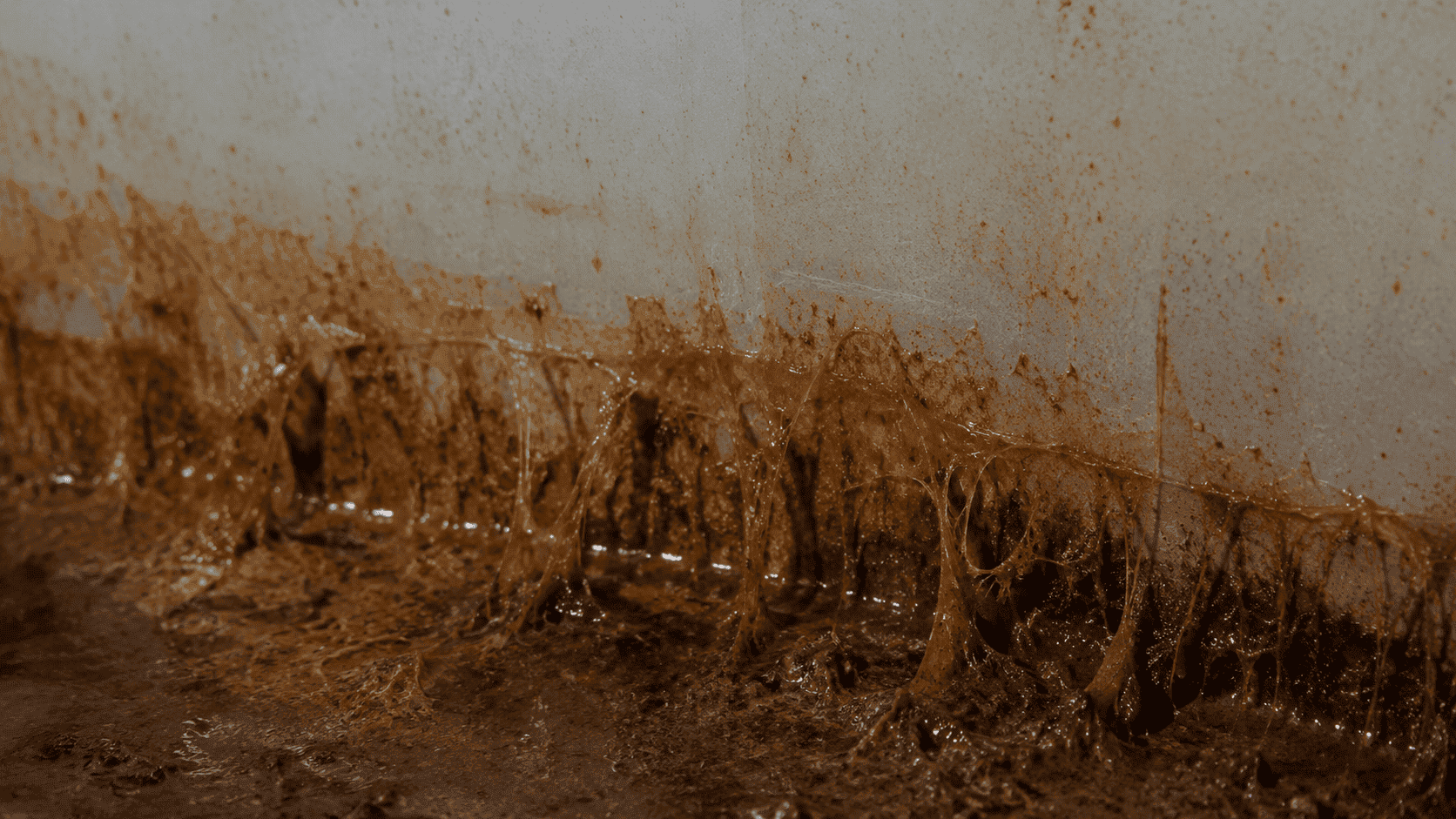
This is the point most fixed-schedule programs miss. Inspection without cleaning is incomplete - you identify the problem but leave it in place. Cleaning without prior inspection is inefficient - you do not know what you are dealing with, and you may miss structural or coating issues that the cleaning process itself could exacerbate.
Best practice is to treat them as paired activities in a single mobilisation:
1. Pre-clean inspection
Establish the internal condition, identify coating defects, check sediment depth and character, and look for structural concerns before disturbing anything.
2. Cleaning
Apply the method appropriate to the findings - vacuum sediment removal, pressure washing, or ROV-assisted cleaning for tanks that cannot be taken offline.
3. Post-clean inspection
Confirm the interior is clean, document residual defects requiring follow-up, and establish the baseline for the next cycle.
4. Condition report
The output that sets the next cleaning interval - not the calendar.
Under AS 4020, any materials introduced during the cleaning process - products, tools, any surface treatments - must themselves be suitable for use in contact with drinking water. This is not a tick-box; using non-compliant products in a potable system is a water quality event.
Councils and water authorities operating large asset portfolios should be building cleaning intervals into their Asset Management Plans based on inspection findings and risk-tier classification - not applying a uniform schedule across all tanks. A 2 ML concrete reservoir on treated reticulated supply in a temperate climate is a different risk profile from a 50 kL GRP tank on a bore supply in Far North Queensland.
For facilities managers operating a single fire water tank or a building's potable supply tank, the principle is simpler: inspect first, then clean on findings. If you have no inspection history, the conservative default is to inspect now and use those findings to set your interval.
PC Water Infrastructure's inspection teams use ROV (Remotely Operated Vehicle) technology for tanks that cannot be taken offline and UAV drone triage for hard-to-access assets - both allow a condition assessment without the cost and disruption of a full dewatering. For tanks where inspection findings are ambiguous or where structural assessment is needed, a combined ROV and diver inspection delivers the highest confidence.
With 20+ years delivering water storage inspection, maintenance, and lining programs across Queensland, WA, and remote Northern Australia - including bore-water community supply and fire protection systems - the answer we consistently give asset owners is the same: let the tank tell you when it needs cleaning.
How often does a potable water tank need to be cleaned in Australia?
There is no mandatory universal interval under Australian standards, but the evidence-based default for a treated reticulated supply tank in good condition is 4 to 6 years, confirmed by inspection findings. Tanks on bore or untreated surface water should be inspected at 2 to 3 years and cleaned based on what is found. Your water authority may have jurisdiction-specific requirements that override this range.
Do fire water storage tanks need to be cleaned?
Yes. Fire tanks serviced under AS 1851 require annual routine inspections (Level 1) and comprehensive inspections at five-year intervals (Level 5). Cleaning is triggered by inspection findings such as sediment, biological fouling, or coating degradation - not a fixed calendar. A tank that rarely turns over water accumulates water quality and structural risks faster than active supply tanks.
What are the signs a water tank needs cleaning sooner than scheduled?
Visible sediment or discolouration in the water, reduced water pressure from sediment blocking the outlet, taste or odour complaints, biological fouling identified at a prior inspection, coating defects or corrosion identified visually or by ROV, or a change in source water quality. Any of these should trigger an unscheduled inspection before the next cleaning.
Can a water tank be inspected without emptying it?
Yes. ROV (Remotely Operated Vehicle) inspection allows a full internal condition assessment while the tank remains in service and at operating level. This is particularly valuable for fire tanks, which cannot be taken offline for extended periods, and for large potable tanks where dewatering would disrupt supply. Drone inspection can also triage external and roof-level conditions before committing to a full internal inspection program.
What standard governs cleaning products used in potable water tanks?
AS 4020 governs the suitability of any product that contacts a potable supply, including cleaning agents and surface treatments. Using non-compliant products in a potable tank constitutes a water quality event. Always confirm the compliance status of any product with your cleaning contractor before proceeding.
Stop guessing your cleaning interval. A condition-based inspection tells you exactly when each tank needs servicing - and gives you a defensible record for your asset management plan.
Set up a condition-based cleaning schedule