
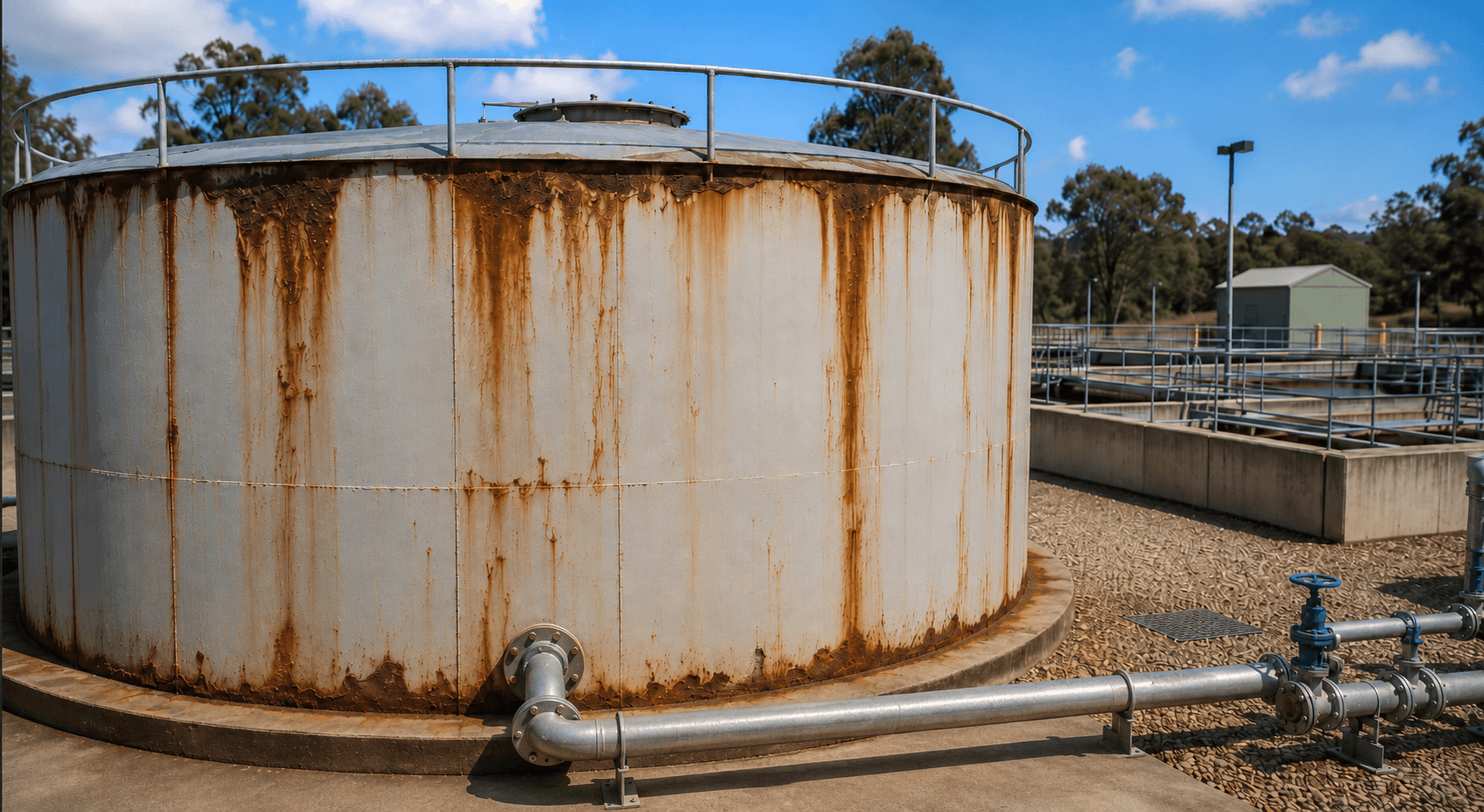
A leach tank spends its working life holding a chemically aggressive slurry at volume, under continuous agitation, often for years between planned shutdowns. When a structural repair is finally needed, the question is rarely whether the tank has corroded - it is how far the corrosion has progressed below the surface, and whether a coating renewal is enough or a plate section needs to come out.
Leaching processes - whether cyanide leaching for gold, acid leaching for base metals, or another process chemistry entirely - all share the same basic risk profile for the tank holding them: an aggressive liquid phase, suspended solids adding abrasion, and long continuous run times that give any coating defect years to develop into genuine structural loss rather than a surface blemish.
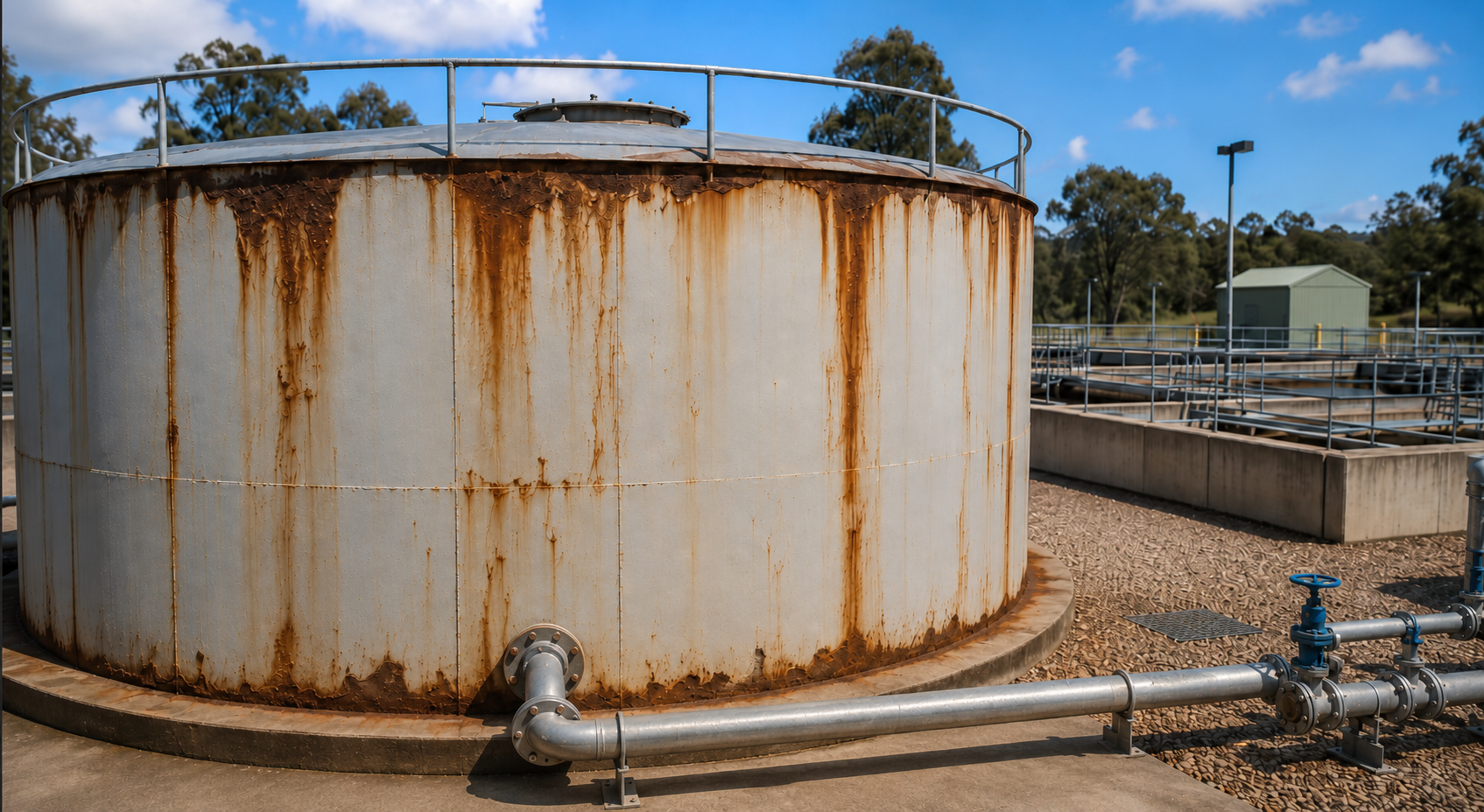
Ultrasonic thickness testing before scoping the repair
A visual inspection can identify where a coating has broken down, but it cannot tell you how much base metal is left underneath. Ultrasonic thickness testing at a grid of points across the affected area - and at a set of unaffected reference points for comparison - is standard practice before any leach tank repair is scoped, because it is the only reliable way to distinguish a coating job from a plate replacement job.
Reading the corrosion pattern, not just the corrosion depth
Localised pitting corrosion is a more serious structural concern than the same average metal loss spread evenly across a plate, because pits concentrate stress and can progress faster once established. Distinguishing general corrosion from pitting is part of what the thickness survey and visual assessment together are looking for.
Coating renewal on plate that still has adequate section
Where thickness testing confirms the remaining plate is still within an acceptable structural margin, a full surface preparation and recoat can restore corrosion protection and extend service life significantly, without the cost and downtime of plate replacement.
Plate section replacement where structural margin is gone
Where testing shows plate thickness has dropped below what the original design or a re-rated structural assessment allows, the affected section needs to be cut out and replaced rather than coated over. This is a more involved repair requiring engineering sign-off, but it is the only option that actually restores structural capacity rather than just slowing further loss.
The decision between recoating and plate replacement should be made from thickness data, not from how the surface looks - the two can tell very different stories on the same tank.
| Step | Purpose |
|---|---|
| Ultrasonic thickness grid survey | Establishes actual remaining plate thickness against design allowance |
| Pitting vs general corrosion assessment | Localised pitting is a higher structural risk than even metal loss |
| Process chemistry review | Confirms the coating system specified matches the actual leach chemistry |
| Engineering sign-off on repair method | Required before plate replacement on a structural process vessel |
How is the condition of a leach tank actually assessed?
Through a combination of visual inspection and ultrasonic thickness testing at multiple points, comparing corroded areas against unaffected reference points to establish actual remaining plate thickness.
Can a leach tank always be repaired instead of replaced?
Not always. Where thickness testing shows remaining plate has dropped below an acceptable structural margin in a significant area, plate replacement or, in severe cases, full tank replacement may be the safer and more cost-effective path.
Why do leach tanks corrode faster than typical water storage tanks?
The combination of aggressive process chemistry, suspended solids abrasion and long continuous run times between shutdowns creates conditions most standard water storage coating systems are not designed to withstand.
Need a condition assessment or structural repair on a leach tank or other mine-site process vessel? PC Water Infrastructure delivers ultrasonic surveys through to full plate replacement.
Discuss Leach Tank Repair