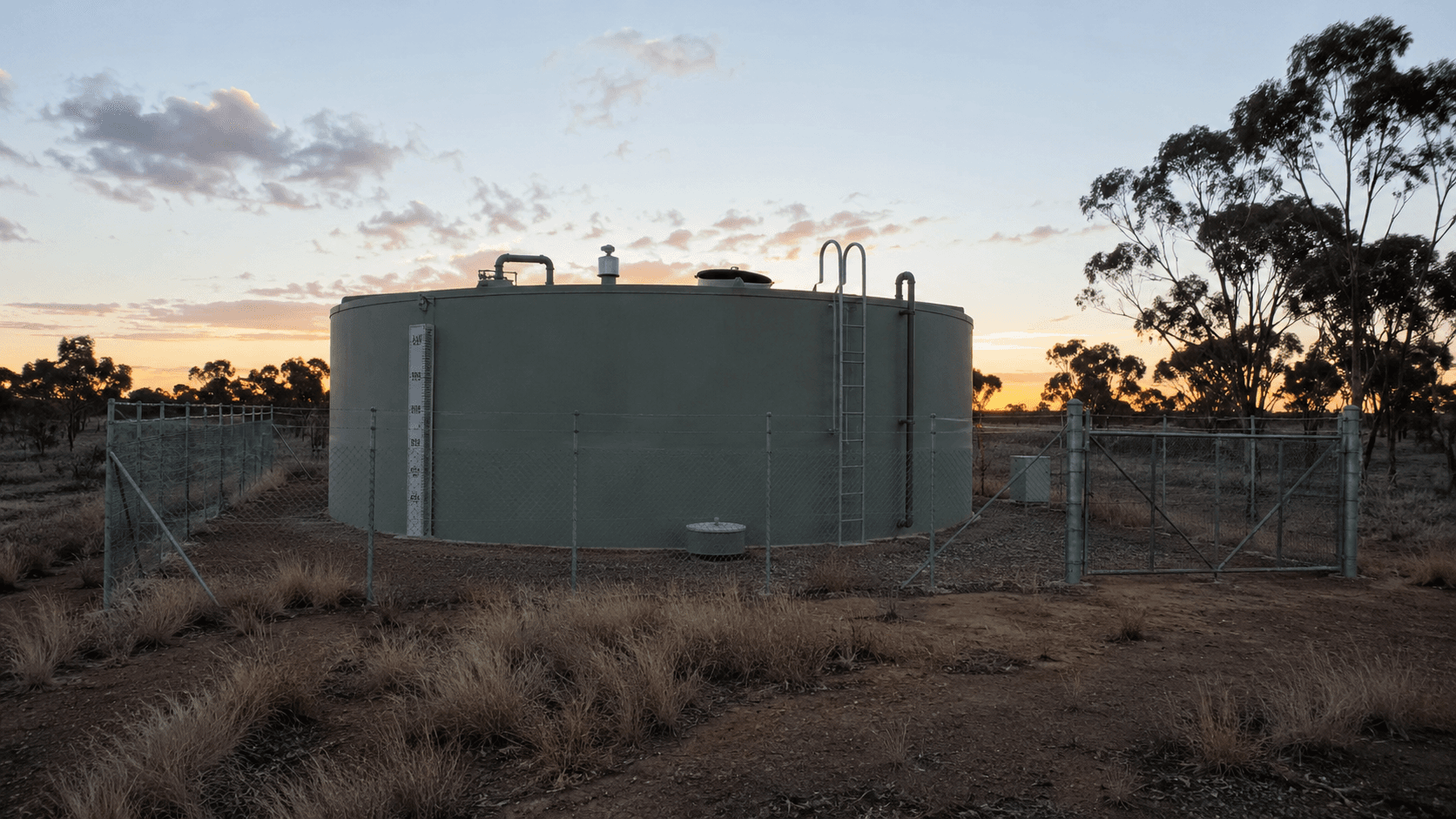
The most expensive part of a vandal event is usually not the damage you can see. It is the contamination pathway left open after no one realises the sanitary barrier has been broken.
In our earlier contamination post, we listed vandalism as one of the five major risks that come from the storage asset itself, not the source water. That point matters because vandalism rarely ends when the person leaves site. A forced hatch, torn vent screen, or broken lock can leave a tank exposed for days or weeks before the next visit.
By the time water quality symptoms appear, the visible act of vandalism may already be over. What remains is the secondary damage: dust, leaf litter, insects, birds, stormwater, or rubbish entering a vessel that was previously sealed.
Most people imagine spray paint, graffiti, or obvious impact damage. Those things happen. But the more serious findings are often smaller and easier to miss:
Forced hatch dogs, hinges, or lock points — If a hatch has been levered, twisted, or slammed closed after being forced open, it may still appear shut while no longer sealing properly. A hatch that looks closed is not necessarily secure.
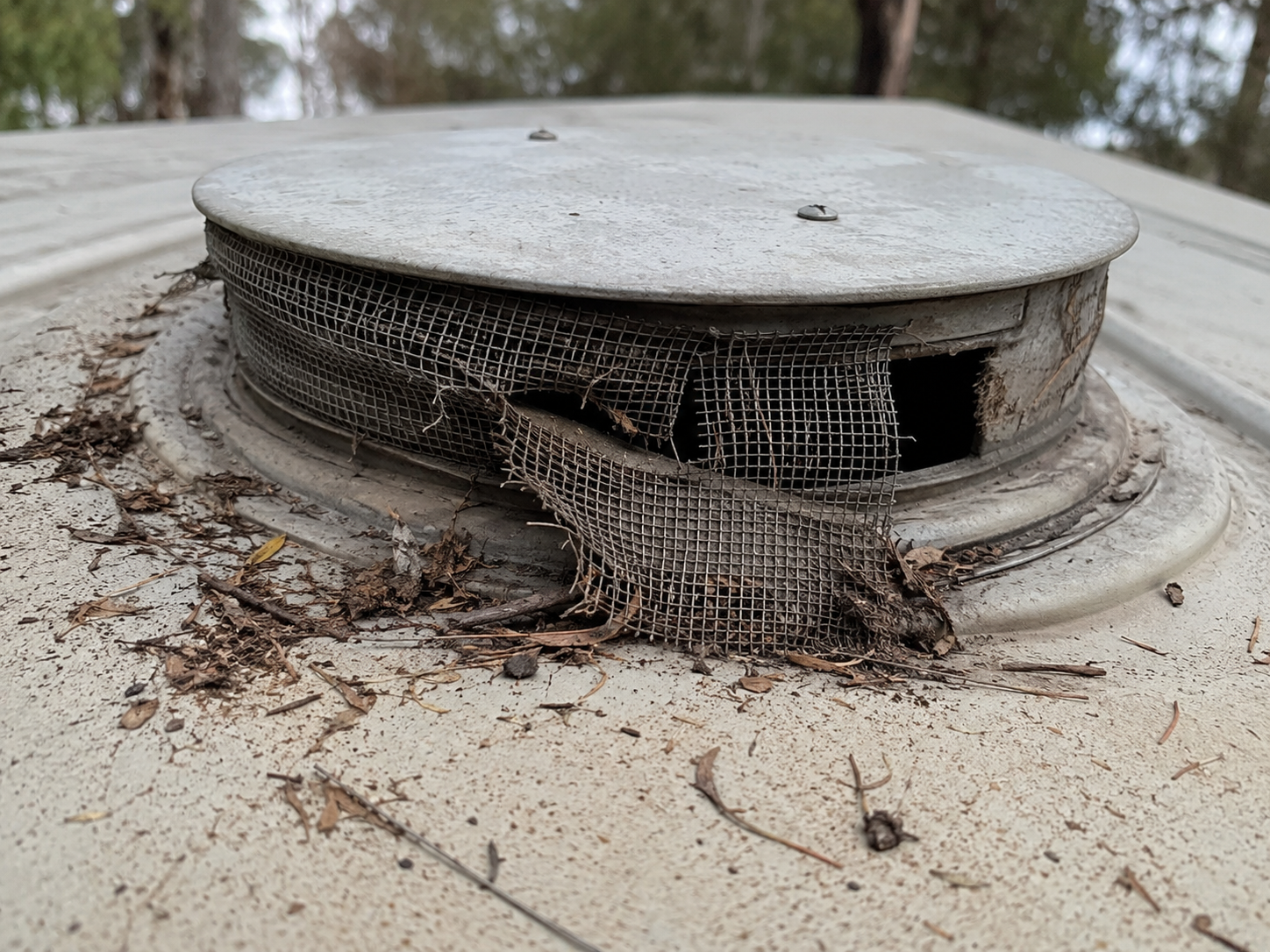
Torn or peeled-back vent mesh — Once the screen is broken, the tank no longer has an effective exclusion barrier. Dust, insects, and small birds can continue entering long after the vandal event. This applies equally to ventilation mesh in fascia walls — a distinct entry point from roof vents that is easily overlooked during a cursory external check.
Foreign material on the roof or inside the tank — Rocks, rubbish, drink containers, and loose debris are direct evidence of interference. They also tell you the event was not limited to external damage. Something or someone reached the tank opening.
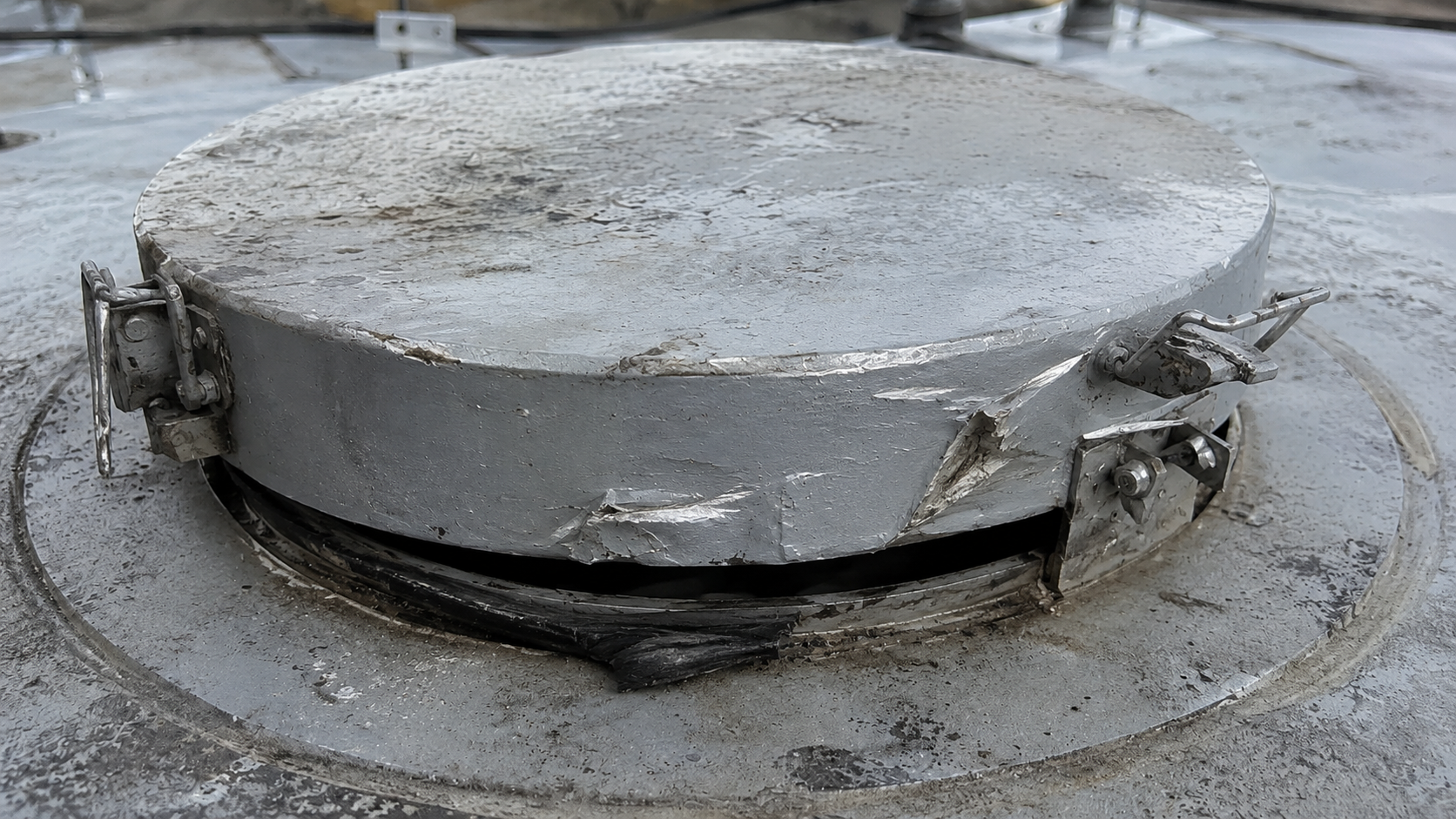
The visible damage is rarely the full story. What matters is whether the hatch, vent, roof, or access system still performs the function it was meant to perform after the event.
On remote sites, the lag between event and discovery can be long — a security event can quickly become the same kind of animal-entry problem described in The Open Overflow, only arriving through a different route. That is why a vandal-prone tank should never be managed on the same inspection assumptions as a low-risk urban asset with regular operator presence.
Proactive measures — alarmed hatches, CCTV, or a defined minimum inspection frequency — materially reduce the exposure window on remote sites. The shorter the time to detection, the lower the contamination consequence.
There is also a worker safety dimension. If ladders, cages, handrails, or hatch surrounds have been tampered with, the next person climbing onto the tank could be stepping onto damaged access hardware. Safe access components need repair consistent with AS 1657 — while hatches, vents, and closures need restoration of the sanitary barrier expected for potable water storage.
Secure the sanitary barrier first — Check hatch seating, locking points, gaskets, vent screens, flashings, and any roof penetrations. If any closure is compromised, treat it as an active contamination pathway until proven otherwise.
Inspect for internal evidence — If there are signs the tank was opened, look for rocks, rubbish, feathers, fresh debris, or waterline contamination indicators. Depending on the tank and the breach, an internal inspection may be warranted to confirm what entered the stored water.
Check access hardware and approach areas — Look at ladders, cages, platforms, handrails, and hatch approach areas, not just the tank opening itself. A vandalised tank can be both a hygiene failure and a fall hazard. Handrails, aerials, and telemetry cabinets around the hatch area are also faecal accumulation surfaces — bird perching on damaged or disturbed hardware can introduce contamination to the hatch surround even without direct tank entry.
Check overflow drain ends and roof penetrations — Overflow drain openings and roof penetrations can become secondary entry routes when the tank is left unsecured after a vandal event. Inspect all open overflow drain ends and fit a flapper valve if one is not already in place. Check all flashings and penetrations for displacement or damage.
| Damage found | Hidden consequence | Response now |
|---|---|---|
| Forced or bent hatch | Closure may no longer seal, even if shut | Verify seating, gasket condition, and locking integrity |
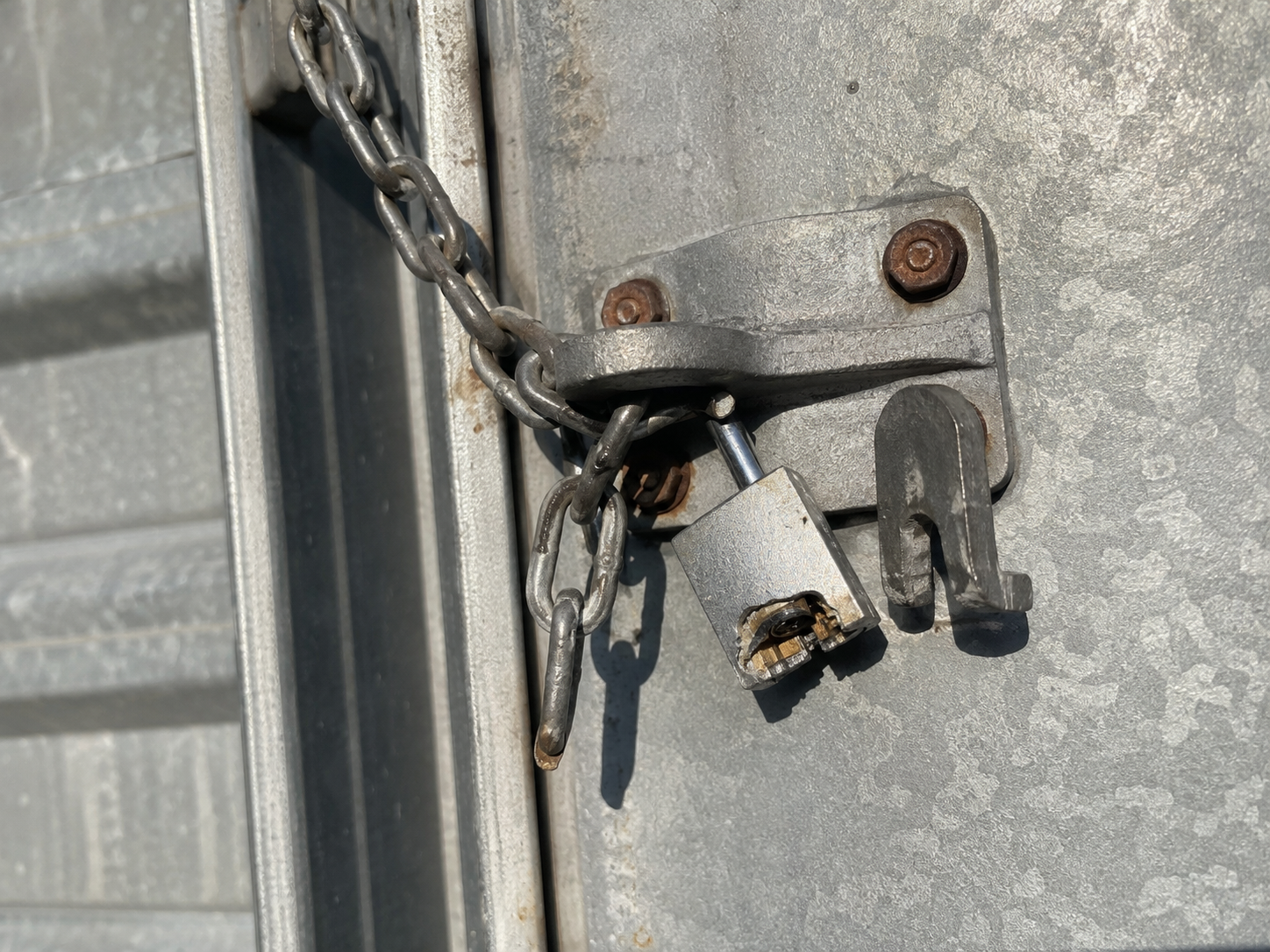
| Broken or missing lock | Repeat unauthorised access risk | Replace lock and inspect for evidence of opening |
| Damaged vent mesh | Ongoing dust, insect, and bird ingress | Replace screen and inspect surrounding framing |
| Rocks or rubbish inside tank area | Likely direct internal interference | Escalate to an internal inspection |
| Damaged ladder, cage, or handrail | Worker fall risk at next attendance | Repair safe access elements consistent with AS 1657 |
| Evidence of roof traffic or displaced flashings | Stormwater and debris entry pathway | Inspect all penetrations and reseal as required |
The objective after vandalism is not cosmetic restoration. It is to re-establish the two functions the asset must provide: sanitary protection of the stored water and safe access for the people who maintain it. The ADWG sets the water quality expectation. Practical asset management means treating every suspected breach as a potential contamination pathway until inspection proves otherwise.
Does a vandalism event trigger formal notification to the water authority or regulator?
It depends on the nature of the breach and the applicable drinking water framework. If there is evidence the sanitary barrier was compromised, many state and territory frameworks — including conditions under local water service licences — require operators to notify the relevant authority within a specified timeframe. The ADWG provides guidance on when a contamination event should be reported. Check your service contract, operating licence, or drinking water quality management plan for the obligations that apply to your supply.
How long can a vandalised tank remain exposed before contamination occurs?
There is no fixed timeframe — it depends on the nature of the breach, the local environment, and site activity. A forced hatch in a remote location with active wildlife can result in animal entry within days. The practical approach is to treat any confirmed or suspected breach as an active contamination pathway and attend the site as quickly as the risk assessment demands.
What is the difference between a contamination response and a routine post-vandalism inspection?
A routine post-vandalism inspection confirms that the sanitary barrier is intact and re-establishes the asset's baseline condition. A contamination response is triggered when there is evidence the stored water has been directly affected — a confirmed open hatch, foreign material inside the tank, or water quality indicators in the distribution system. Contamination responses typically require sampling, possible water withdrawal, and formal reporting to the water authority.
If a tank has been tampered with, the right question is not how bad it looks from the fence line. It is what the damage has left open.
Book a tank security and contamination audit