
Treated water enters your tank clean. Whether it leaves that way depends less on the treatment plant than on the top of the tank — the hatch, the vent and the roof penetrations that most asset owners never inspect. The source water is rarely the problem. The lid usually is.
Once water has been treated to standard, the storage tank is the last barrier before the tap. And the most common way that barrier is breached is not through the walls or the floor — it is through the openings on top.
The access hatch
An access hatch that does not seal — a warped lid, a failed gasket, a missing lock — is a direct opening into the potable environment. Rain runoff, insects, vermin and airborne debris all enter through a hatch that no longer closes properly. A compromised hatch combined with a compromised perimeter is a contamination event waiting to happen, not a maintenance nicety.
The vent and its mesh
Tanks breathe as levels rise and fall, and the vent is where that air exchanges. Its mesh screen is the barrier that lets air in but keeps insects, birds and vermin out. A torn, corroded or missing vent screen turns a necessary opening into an unguarded one — and vents are exactly the kind of small fitting that gets overlooked for years.
Roof penetrations
Every pipe, fitting and cable that passes through the roof is a potential path if it is not sealed. Unsealed penetrations admit water and contamination directly into the stored supply.
Overflow and downpipes
An overflow pipe without a screened, sealed termination is an open door for vermin — and downpipes that discharge onto the roof rather than to external drainage wash roof contamination straight back toward the tank's openings.

It is counterintuitive: water that met every standard leaving the plant can fail at the tap because the storage asset re-introduced contamination downstream of treatment. Bird activity around an unscreened vent or open overflow is a documented contamination source in Australian water storage. Biological matter entering through a failed opening does not just add contaminants — it consumes the disinfection residual that was supposed to protect the water, compounding the problem.
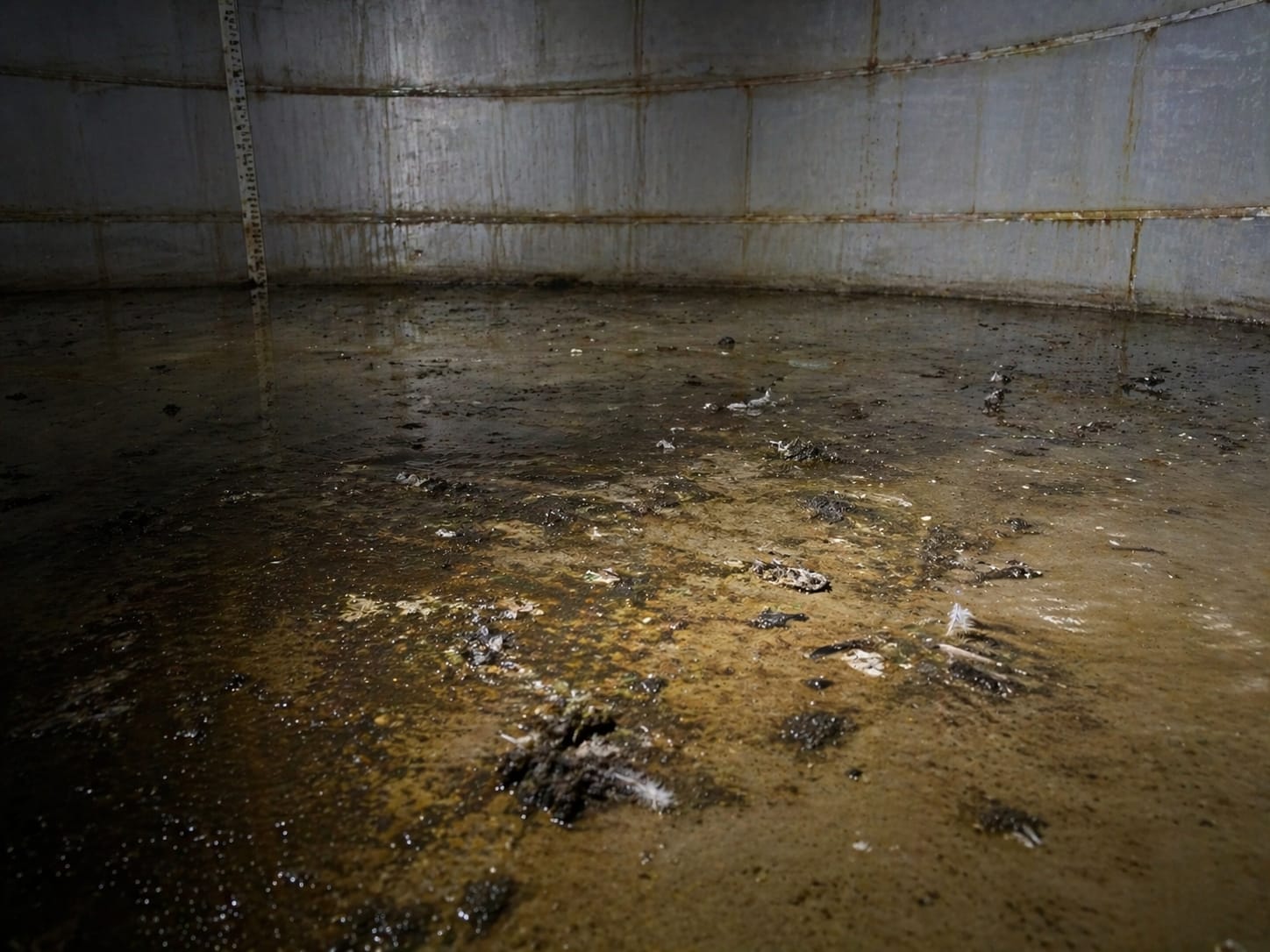
The treatment plant is the kitchen; the storage tank is the plate the water is served on. A spotless kitchen still makes people sick if the plate is dirty — and the plate is dirtied through the lid.
| Check | What a failure means |
|---|---|
| Access hatch seals and locks | An unsealed hatch is a direct opening for runoff, insects and vermin |
| Vent mesh intact | A torn or missing screen admits birds, insects and airborne debris |
| Roof penetrations sealed | Unsealed fittings let water and contamination straight in |
| Overflow screened and terminated | An open overflow is a documented vermin entry point |
| Downpipes drain away from the tank | Roof runoff should never be directed toward the tank's openings |
If my water is treated, how can it be contaminated in the tank?
Because the tank sits between treatment and the tap, and its openings — hatch, vent, roof penetrations and overflow — can admit contamination downstream of treatment. Water that met every standard leaving the plant can fail at the tap because a failed opening let birds, vermin, insects or runoff into the stored supply and consumed the disinfection residual.
What is the most common tank contamination entry point?
The openings on top of the tank — most often an access hatch that no longer seals, a torn or missing vent screen, or an unscreened overflow. These small, overlooked fittings are a far more common contamination pathway than the walls, the floor or the source water.
How often should the roof and fittings be checked?
Roof, hatch, vent and overflow condition should be part of every routine tank inspection, because these are the fittings most exposed to weather and wildlife and the ones most likely to fail quietly. A scheduled inspection is the reliable way to catch a failed seal or torn screen before it becomes a water-quality event.
When did anyone last check the top of your tank? A condition inspection covers the hatch, vent, roof and overflow — the openings where contamination actually gets in.
Request a tank inspection