Most water tanks get cleaned every few years. A smaller number get properly inspected at the same time. Without a trained assessor present, structural issues, coating failures, and pipe configuration errors get loaded onto the truck with the waste.
A cleaning intervention is the best access opportunity most asset owners will ever have. The tank is dewatered, the floor is visible, and the internal surfaces are exposed for the first time since the last clean. Here is what a trained assessor looks for during that window - and how to know when findings point beyond cleaning to something more significant.
A trained assessor starts before entering the tank. A compromised perimeter fence combined with a damaged or unlocked hatch is a potential contamination event, not a maintenance oversight. Bird nesting concentrated around the roof or overflow pipe often signals a damaged ventilation screen - birds entering the potable water environment bring biological contamination with them. Roof downpipes terminating on the roof surface rather than connecting to external drainage allow rain runoff and contamination to re-enter the tank directly. Each of these is fixable - but only if someone looks.
Concrete reservoirs
Concrete spalling - surface material detaching and falling to the floor - is the most common structural finding in older reservoirs. The cause is nearly always shallow reinforcement cover combined with concrete carbonation: moisture reaches the steel, it rusts, and the expanding corrosion products fracture the surrounding concrete. Cracking at load-bearing headstocks or beam junctions is more serious and requires engineering assessment before the tank returns to full operating level.
Roof support posts
Galvanised posts corrode at the waterline in tanks held at consistently high operating levels. They can corrode through entirely while appearing intact from above. A single failed central post has caused full roof subsidence in documented cases - a failure mode only visible from inside during dewatering.
Coatings and linings
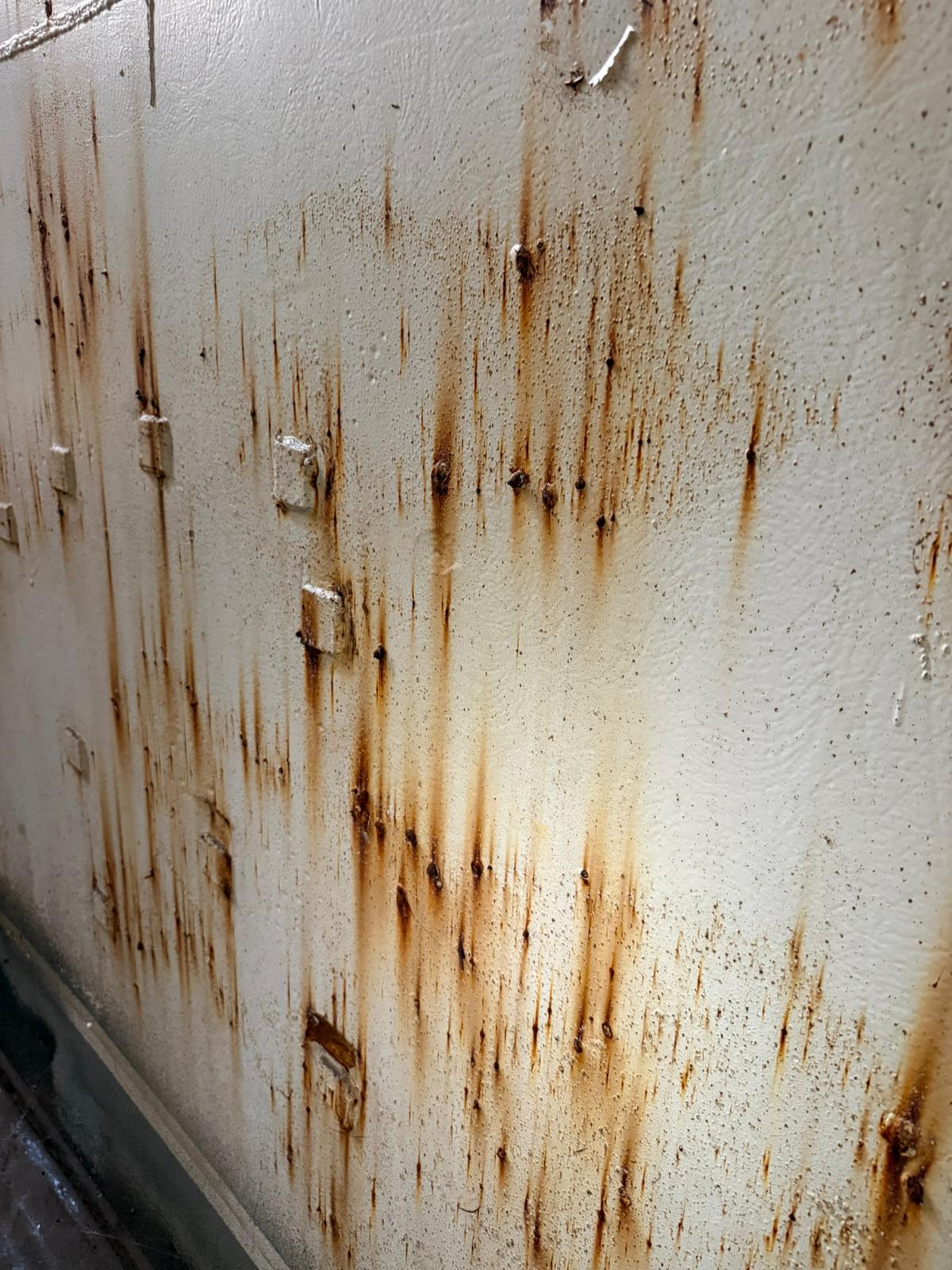
Coating failures initiate first at sharp edges, corners, bolted joints, and seams - the locations hardest to coat properly. Disbonded or blistered coatings in bolted steel tanks should be remediated at the current access event; substrate corrosion accelerates once the coating fails, and the next opportunity requires another full dewatering cycle.
Sediment distribution reveals how the tank is operating, not just that it needs cleaning. Sand under the inlet of a bore-fed tank points to bore casing failure. Heavy organic debris in a reticulated supply tank indicates an unsealed entry point - defective ventilation screen, unsealed roof penetration, or damaged overflow termination. Sediment concentrated on one side with a clean floor elsewhere suggests short-circuiting flow: water entering and leaving without adequate mixing, leaving a stagnation zone where biological fouling establishes unchecked. Cleaning removes the evidence - but not the cause.
| Finding category | Typical indicators | Recommended response |
|---|---|---|
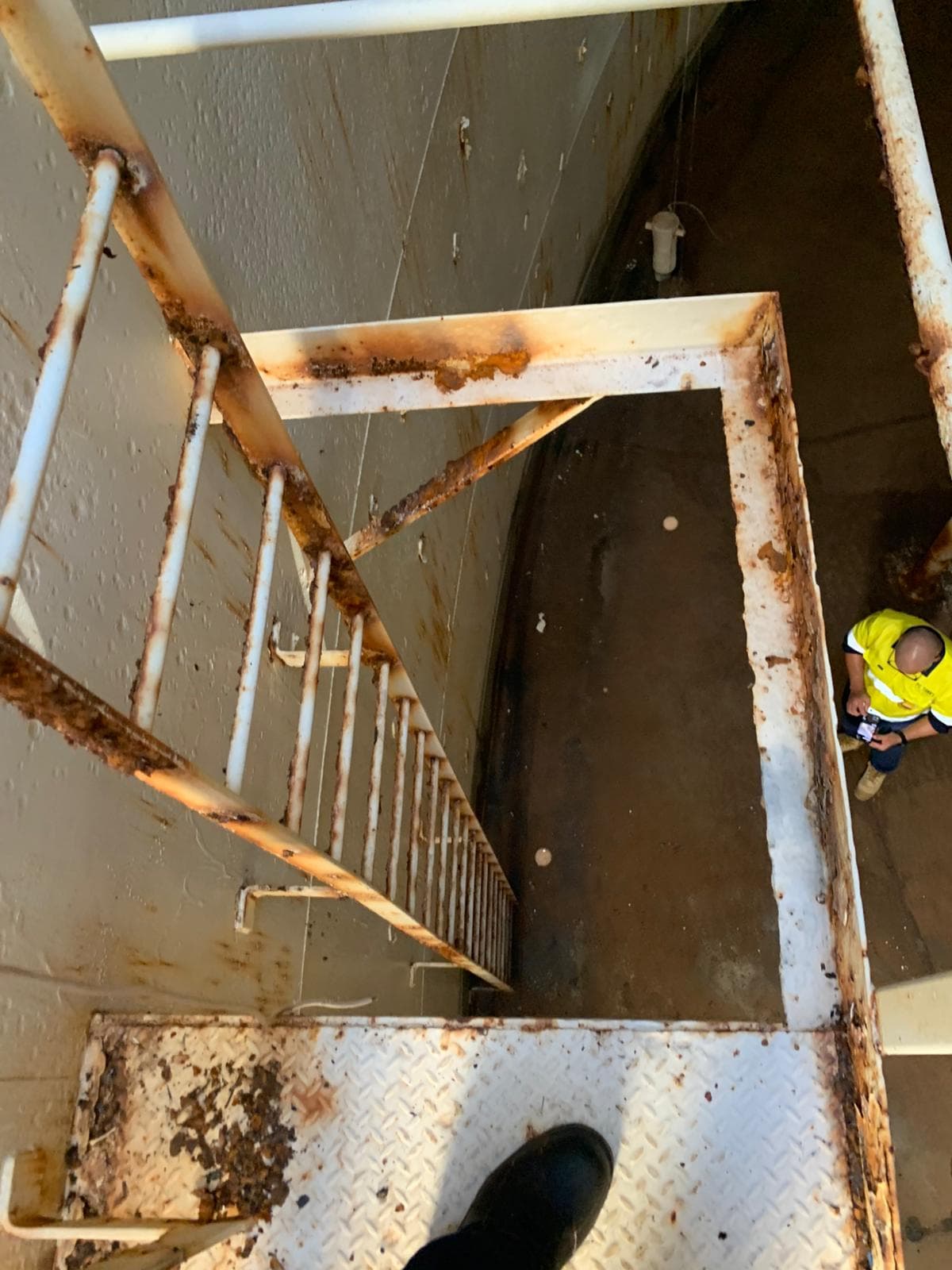
| OH&S risk | Unsecured access ladders, failed platform decking, unsealed or unsecured hatches | Rectify before the tank returns to service |
| Structural risk | Corroded or failed roof support posts, concrete spalling with exposed reinforcement, cracking at headstocks | Engineering assessment and remediation planning - do not defer |
| Coating and lining failure | Disbonded or blistered epoxy, failed adhesion at joints and edges, RPVC lining delamination | Remediate at current access event - substrate corrosion accelerates once coating fails |
| Cathodic protection failure | Depleted sacrificial anodes, continuity failure, unprotected substrate at coating defects | Anode replacement and CP system assessment |
| Pipe configuration | Inlet directing flow at roof framing, outlet too close to inlet, missing or collapsed outlet screens | Rectify during or following cleaning access |
| Water quality risk | Defective ventilation screens, unsealed roof penetrations, incorrect valve configuration | Prompt rectification and documentation - may be a reportable event under state drinking water legislation |
What is the difference between a tank clean and a tank inspection?
A tank clean removes accumulated sediment, biological matter, and wastewater from the interior. A tank inspection - conducted by a trained assessor - evaluates the condition of the asset: structural integrity, coating condition, pipe configuration, cathodic protection performance, ventilation adequacy, and operational settings. Cleaning and inspection can be performed simultaneously during a dewatering event, but they require different expertise. Relying on the cleaning crew alone to flag condition issues means accepting that anything outside their scope - which is often most of what matters - goes unrecorded and unfixed.
What structural problems are commonly found during tank access?
Concrete reservoirs frequently reveal spalling on floors and walls, most often caused by shallow steel reinforcement cover combined with concrete carbonation - moisture reaches the steel, initiates corrosion, and the expanding rust fractures the surrounding concrete. Roof support posts corroded through at the waterline can cause progressive roof subsidence across the entire structure. In bolted steel tanks, internal coatings may show disbondment, blistering, or failed adhesion - particularly in areas prone to thermal cycling or humidity accumulation. Any of these conditions, left undetected, significantly shortens asset life and creates escalating repair costs.
How can sediment patterns reveal problems beyond contamination?
Sediment distribution provides diagnostic evidence of how the tank is operating. Sand accumulating under the inlet of a bore-fed tank often indicates bore casing failure - fine formation material is entering the groundwater feed. Heavy organic debris in a reticulated supply tank points to a defective ventilation mesh or an unsealed entry point. Sediment concentrated on one side of a large tank, with a relatively clean floor elsewhere, suggests inlet short-circuiting - water entering and leaving without effective mixing, leaving stagnation zones where biological fouling establishes unchecked.
What pipe configuration issues are discovered during tank inspection?
Common findings include top-fill inlets positioned to direct water across roof framing rather than downward, accelerating corrosion in the roof structure from constant spray. Outlets located too close to inlets allow short-circuiting, reducing effective water residence time. Outlets without a sealed or raised base draw sediment directly into the distribution system during drawdown. Roof overflow pipes that are not connected to external drainage allow contaminated roof runoff to re-enter the tank. These are design and installation issues - invisible without access to the tank interior, and missed entirely if the cleaning crew is the only team on site.
When should findings from a tank inspection trigger work beyond cleaning?
The threshold depends on the finding. OH&S risks - unsecured access ladders, failed platforms, unsealed hatches - should be rectified before the tank returns to service. Structural risks - corroded roof support posts, concrete cracking around load-bearing headstocks - require engineering assessment and a remediation plan. Failing internal coatings, disbonded linings, or cathodic protection deficiencies need remediation before the next cleaning cycle. Water quality risks from incorrect pipe configurations or defective ventilation should be addressed promptly and documented. Deferring structural and coating issues beyond the current access event typically doubles the remediation cost.
If your next tank clean is also your next inspection opportunity, make the most of it. PC Water Infrastructure provides professional condition assessment, RPVC lining, and structural refurbishment - delivered alongside any cleaning intervention, so you only dewater once.
Talk to us about your tank condition