
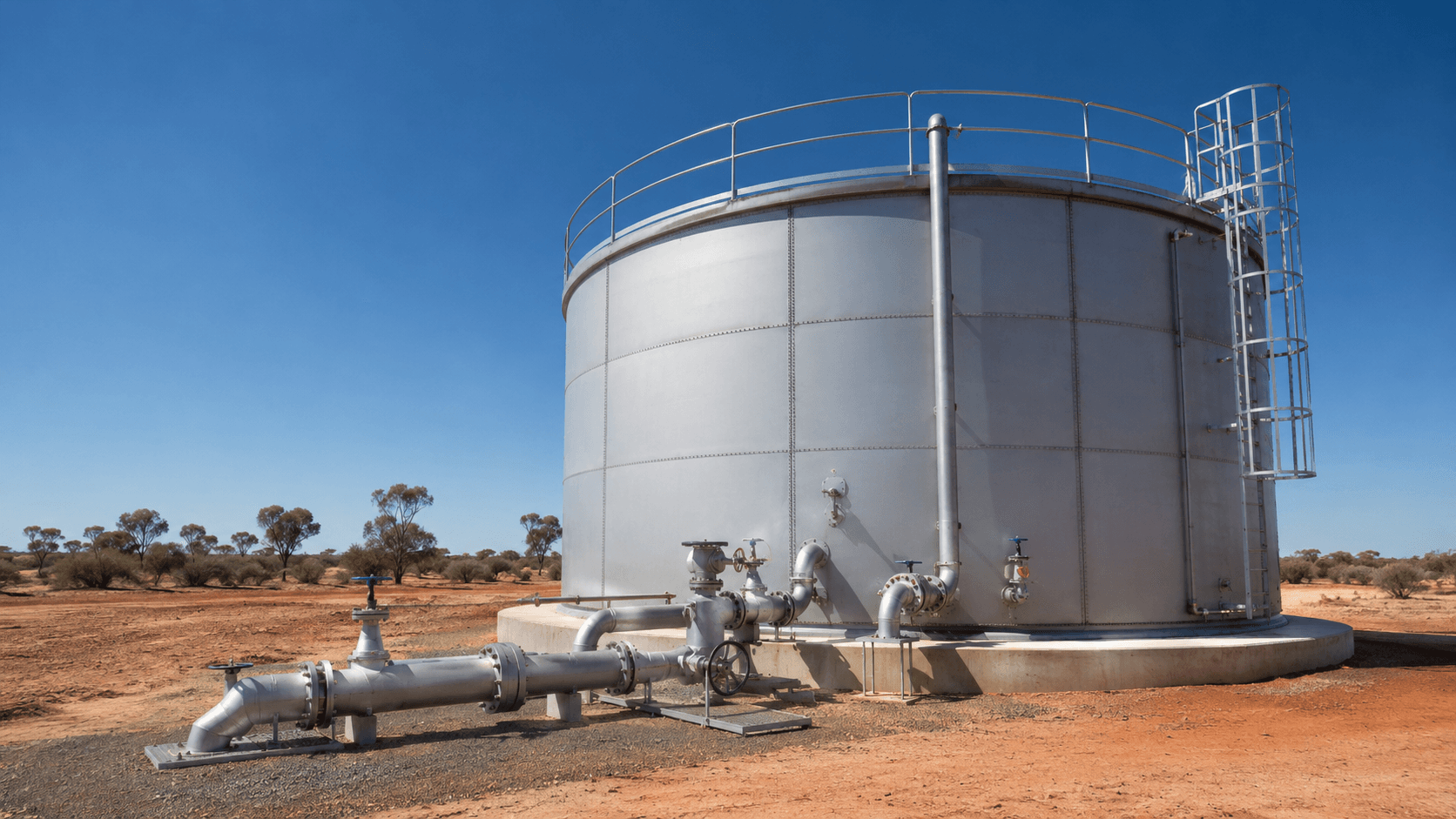
A winery property typically runs three distinct water demands side by side - vineyard irrigation, cellar and winemaking wash-down water, and fire protection storage - and many are sited in rural or semi-rural locations that carry genuine bushfire exposure, which puts extra weight on that third category.
Irrigation demand for vineyards is generally seasonal and closely tied to vintage timing, while cellar wash-down water - for tanks, barrels, presses and general winemaking equipment - follows the production calendar rather than the growing season, creating two different demand profiles that a single storage strategy needs to account for.
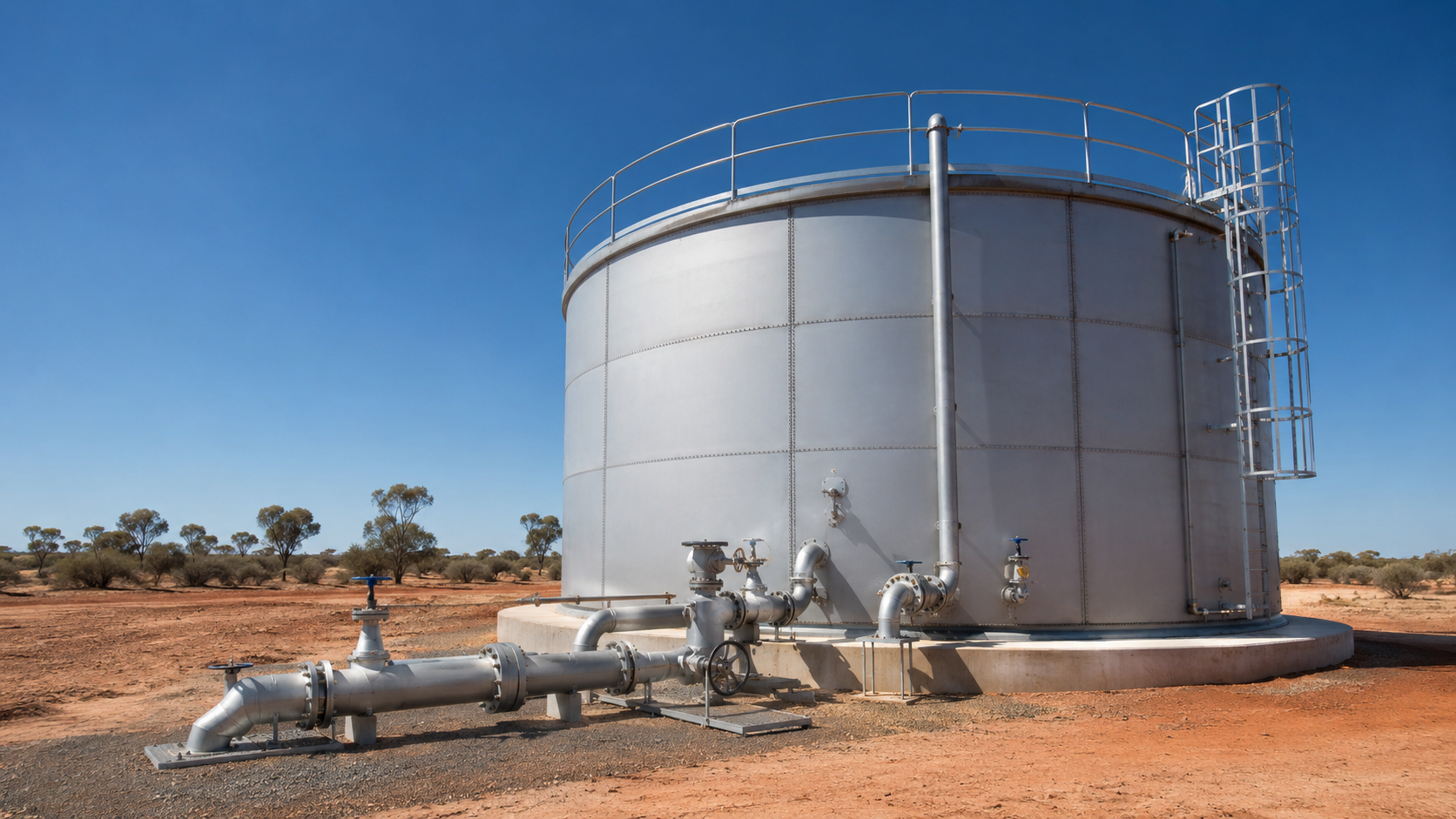
Vineyard irrigation tracking the growing season
Irrigation storage should be sized against the property specific irrigation strategy and the reliability of its water source through the growing season - properties relying on dam or rainwater capture generally need more storage buffer than those with secure bore or river allocation access.
Cellar and production wash-down water tracking vintage
Winemaking wash-down demand peaks sharply during vintage, when tanks, presses and equipment are cycled repeatedly across a compressed period - this creates a short, intense demand spike that storage needs to be able to cover, separate from the more gradually varying irrigation demand across the rest of the year.
Static water supply requirements for rural fire risk
Many winery properties, given their rural setting, fall under bushfire-prone property planning requirements that specify a minimum static water supply for fire brigade access, separate from and in addition to any operational irrigation or process water storage on site.
Access and hydrant provision for fire crew use
Fire water storage on a rural property needs appropriate access and fitting provisions for fire brigade appliances to draw from it effectively during an actual bushfire event - a consideration that is sometimes overlooked when storage is planned primarily around operational winery needs.
A winery water storage strategy that only accounts for irrigation and cellar operations is missing a category that, on a bushfire-exposed rural property, can matter more than either of the other two.
| Item | What it covers |
|---|---|
| Irrigation storage sized to source reliability | Buffers against seasonal supply variability |
| Wash-down storage sized to vintage peak | Covers the compressed, intense demand during harvest |
| Static water supply for bushfire compliance | Often a distinct planning requirement on rural properties |
| Fire brigade access and hydrant provision | Ensures fire storage is actually usable in an emergency |
Do wineries need separate storage for irrigation and winemaking water?
This is generally advisable given the two draw at different times of year and in different patterns - vineyard irrigation across the growing season, cellar wash-down peaking sharply during vintage.
Is fire water storage a separate requirement to operational winery water?
Often yes. Bushfire-prone property requirements typically specify a minimum static water supply for fire brigade use, distinct from and in addition to irrigation or process water storage on site.
What should be considered for fire water access on a rural winery property?
The storage needs appropriate fittings and access for fire brigade appliances to draw from it effectively during an emergency, not just adequate volume.
Planning water storage for a winery or vineyard property, including bushfire compliance? PC Water Infrastructure designs for all three demand categories.
Discuss Winery Water Storage