
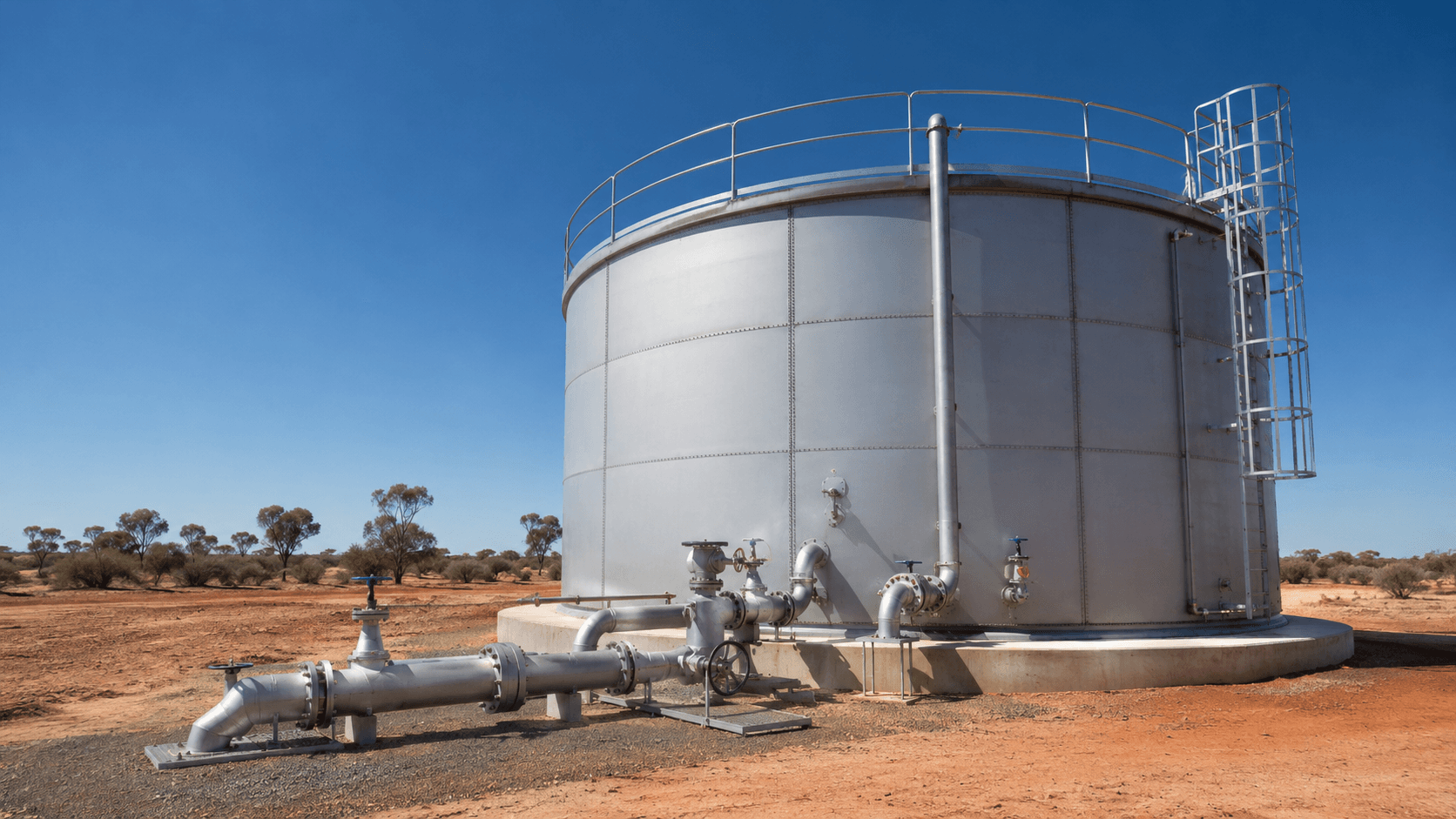
A given storage volume does not dictate a single tank shape — the same capacity can be achieved wide and short, or narrow and tall, and the choice between those proportions has real structural, footprint and cost consequences that go well beyond aesthetics.
Hydrostatic pressure increases with height, not volume
Hydrostatic pressure at the base of a tank wall is a function of water depth, not total volume — a taller, narrower tank experiences greater base wall pressure than a wider, shorter tank of the same total capacity. This directly affects wall thickness and structural design requirements at the tank's base.
Wind and seismic loading favour a lower profile
A taller tank presents more surface area to wind loading and a higher centre of gravity relevant to overturning moment under seismic loading, both of which typically require more robust foundation and anchorage design than a shorter, wider tank of equivalent volume.
Footprint favours the taller option
Where site footprint is genuinely constrained, a taller, narrower tank achieves the required volume within a smaller ground area — directly trading the structural and wind-loading penalty of height for a reduced land requirement.
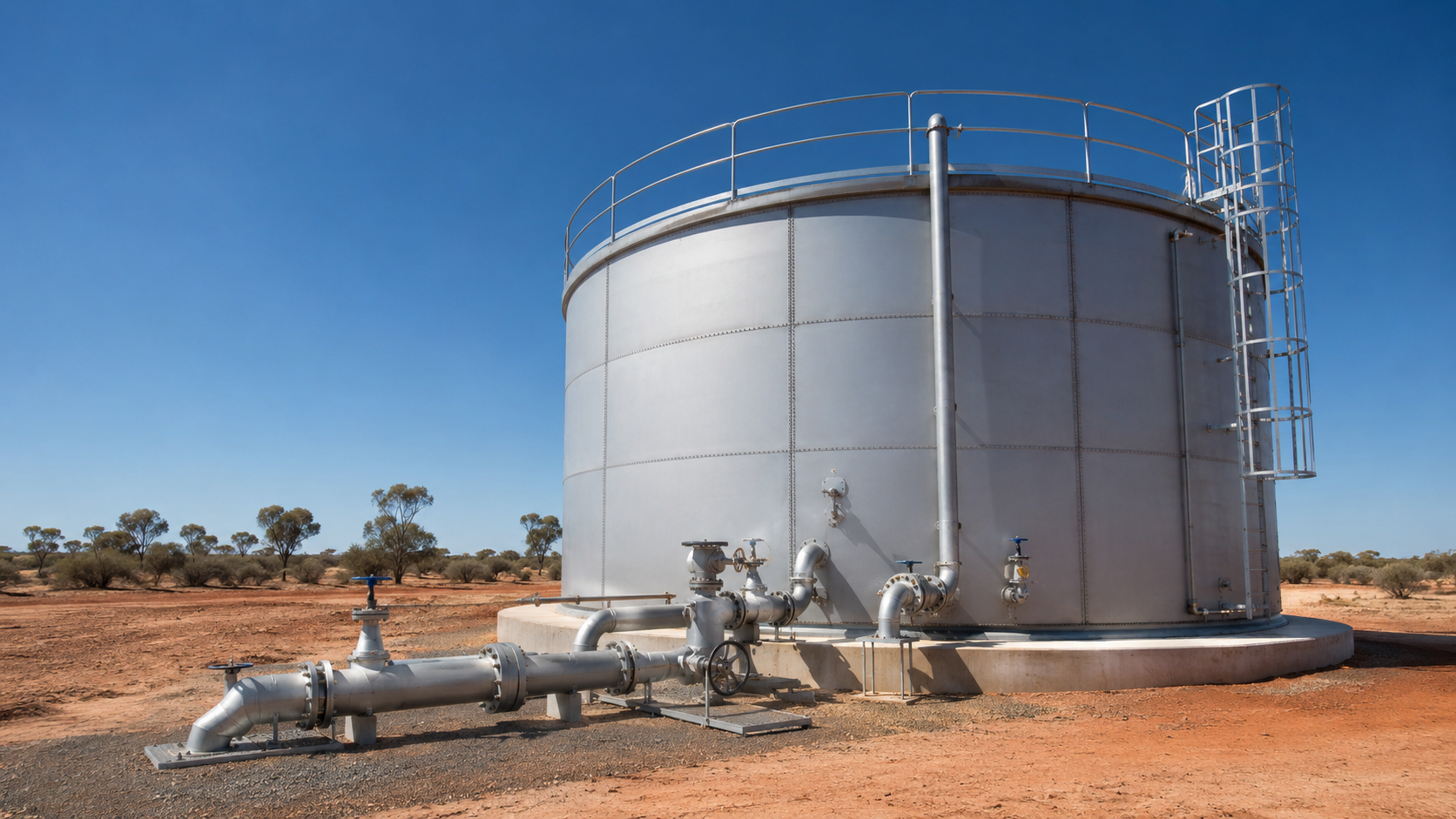
On an unconstrained site, a wider, shorter tank is often the more cost-effective and structurally straightforward choice — lower base wall pressure, lower wind and seismic exposure, and generally simpler foundation design. On a footprint-constrained site, that calculus reverses, and the land savings from a taller profile can outweigh the additional structural cost — provided the foundation and anchorage design properly account for the increased wind and seismic demand a taller structure introduces.
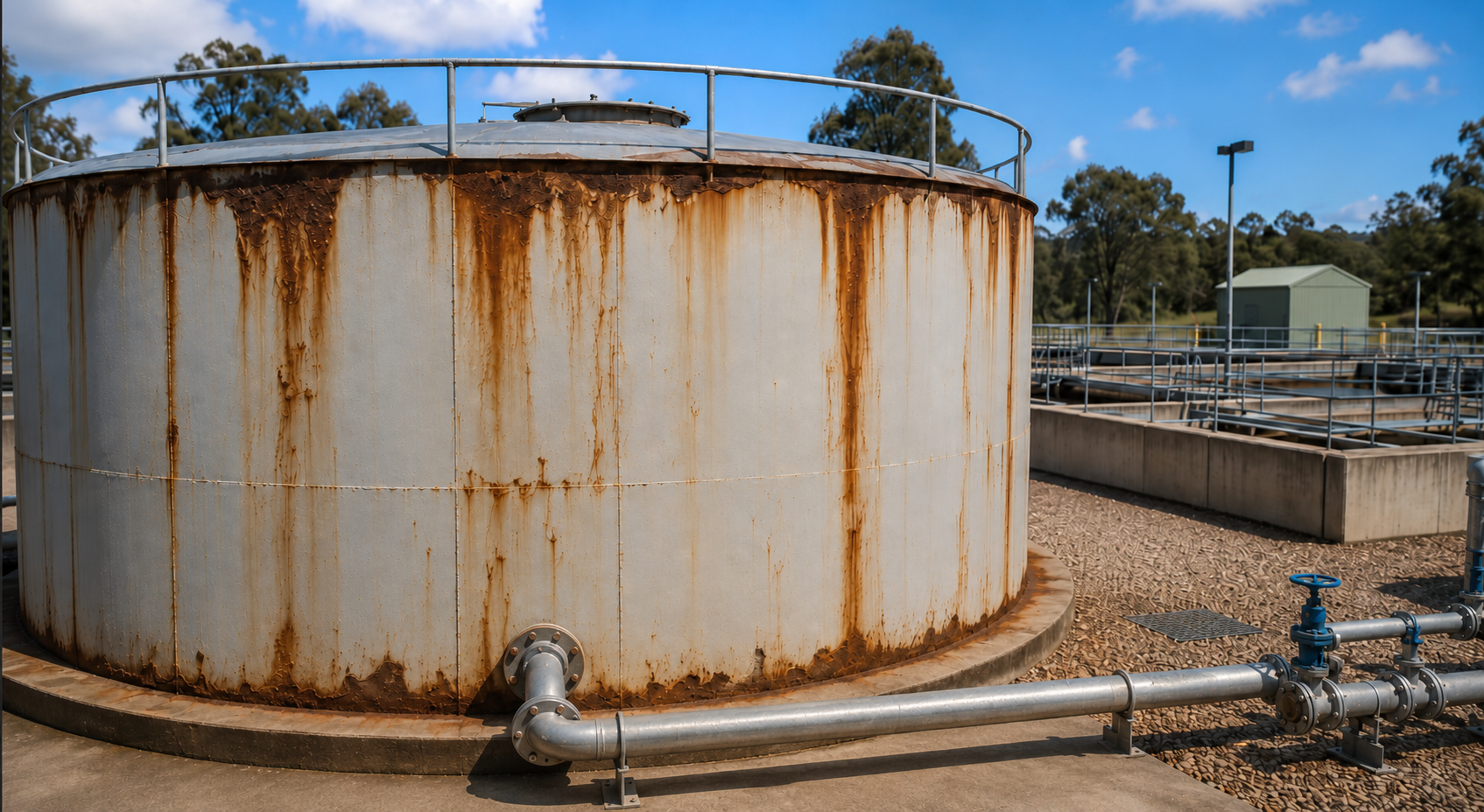
Tank shape is not a cosmetic decision made after the engineering — it is one of the engineering decisions. Height and diameter should be chosen deliberately against site footprint, wind and seismic exposure, and cost, not defaulted to a standard proportion.
| Site condition | Likely favoured shape |
|---|---|
| Unconstrained footprint, standard wind/seismic zone | Wider, shorter tank — lower base pressure, simpler structure |
| Constrained or expensive footprint | Narrower, taller tank — trades structural demand for land savings |
| High wind or seismic hazard zone | Wider, shorter tank generally preferred where footprint allows |
| Poor bearing capacity ground | Wider tank spreads load over a larger footing area |
Does a taller tank always cost more than a shorter one of the same volume?
Generally the structural and foundation costs are higher for a taller, narrower configuration due to increased base wall pressure and wind/seismic exposure, but this needs to be weighed against any land cost or footprint constraint savings a taller profile provides — the answer depends on the specific site.
How does tank shape affect foundation design?
A wider tank spreads its total load over a larger footing area, which can be an advantage on ground with limited bearing capacity. A taller, narrower tank concentrates load over a smaller footprint and typically requires more attention to overturning and sliding resistance under wind or seismic loading.
Is there an ideal height-to-diameter ratio for a water tank?
There is no universal ideal ratio — the right proportion depends on the specific site's footprint constraints, wind and seismic hazard classification, ground bearing capacity, and cost considerations, which is why tank shape should be assessed for each project rather than assumed from a standard convention.
Working through tank shape options for a new project? The right diameter-to-height balance depends on your specific site constraints, not a standard default.
Discuss your tank design options