
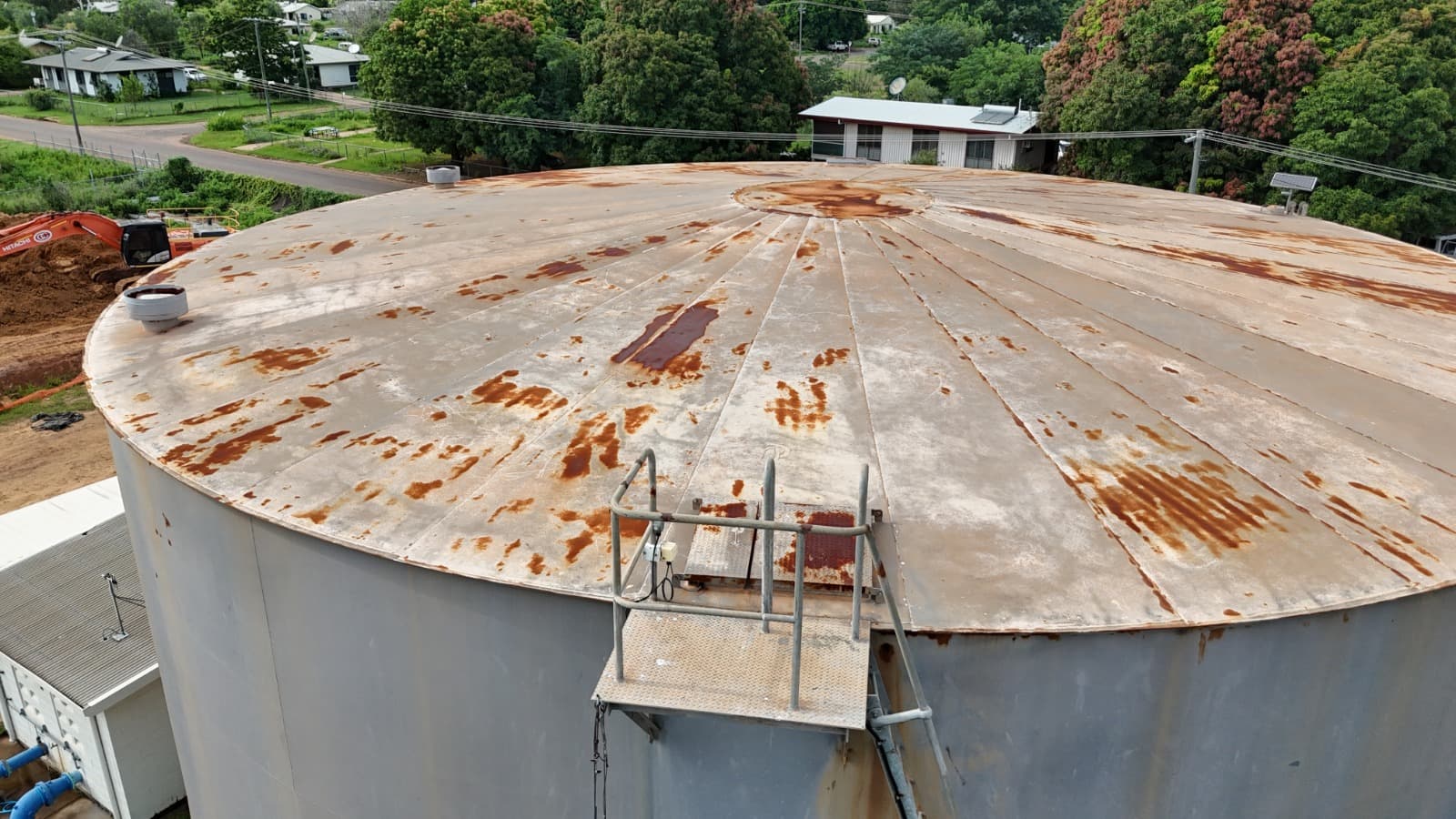
A tank sized generously for future demand feels like good planning. But a tank that is too large for how much water actually moves through it can quietly undermine the water quality it was built to protect — because disinfectant residual does not last indefinitely, and time in storage is exactly what erodes it.
Chlorine residual is added at treatment to protect water through distribution and storage, guarding against microbial regrowth until the water reaches the tap. That protection is not permanent. Residual decays continuously from the moment it is dosed, driven by temperature, organic demand, pipe and tank surface reactions, and simple time. The longer water sits, the less protection remains by the time it is drawn.
Water age is the number that actually matters
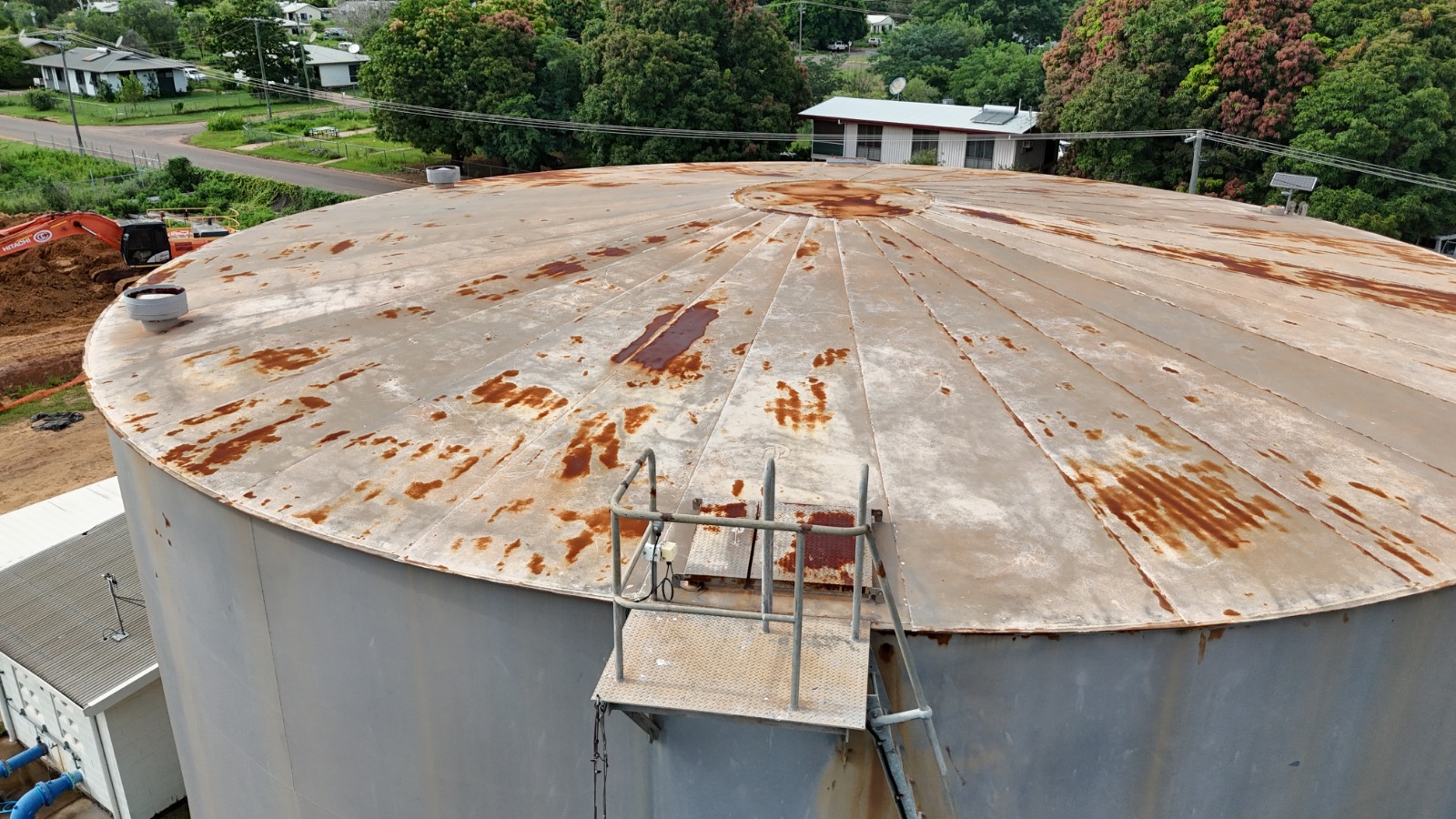
Two tanks of identical capacity can have completely different water quality outcomes depending on turnover. A tank sized for peak demand that rarely sees peak demand can hold water for days or weeks longer than the design intended — and that extended residence time, not the tank's volume, is what drives residual loss. Water age — the average time water spends in the tank before leaving it — is the metric that actually predicts water quality risk, and it is frequently not calculated at all during initial sizing.
Oversizing "for growth" has a real cost
Storage is commonly sized with headroom for future demand growth that may be years away. That headroom is defensible from a supply-security standpoint, but it comes with a water quality cost that needs to be actively managed, not ignored. A tank sized for demand that has not yet arrived will, in the interim, turn over water more slowly than its design intent assumed.
Temperature and tank surface reactions
Chlorine decay accelerates with temperature — a tank exposed to direct sun or operating in a hot climate will lose residual faster than an equivalent shaded or buried tank. Internal tank surfaces also consume residual through wall demand, particularly where biofilm, sediment or corrosion products are present, which is one of several reasons routine cleaning and inspection directly support water quality outcomes, not just structural condition.
Stratification hides the real picture
Without adequate mixing, a tank can stratify thermally, creating pockets of older, warmer water near the top that lose residual faster than the bulk volume — while a single sample point near the outlet may show an acceptable result that does not represent the whole tank. Tank geometry, inlet and outlet placement, and mixing all influence whether stored water behaves uniformly or hides pockets of degraded residual that routine sampling can miss.
A water quality complaint traced back to a storage tank is rarely explained by a single bad day. It is usually the end result of water sitting longer than the system was designed to tolerate.
| Action | What it addresses |
|---|---|
| Calculate actual water age, not just design demand | Reveals whether real-world turnover matches the design assumption |
| Review tank sizing against current, not projected, demand | Oversized-for-growth tanks may need interim operational adjustment |
| Confirm inlet/outlet configuration supports mixing | Poor mixing hides pockets of degraded residual from routine sampling |
| Sample at multiple points and depths periodically | A single sample point may not represent the whole tank volume |
| Maintain internal cleanliness on a routine cycle | Sediment and biofilm accelerate residual demand at tank surfaces |
Is a bigger water storage tank always safer?
Not necessarily. Larger storage improves supply security but can increase water age if turnover does not keep pace with volume. Beyond a certain residence time, disinfectant residual decays enough that oversized or under-utilised storage can become a water quality concern rather than a safeguard.
How is water age in a storage tank actually calculated?
Water age is typically estimated from average inflow and outflow rates relative to tank volume, though real behaviour depends on mixing, stratification and operational patterns. A proper assessment looks at actual demand data over time, not just the tank's rated capacity.
Can poor mixing in a tank hide a water quality problem?
Yes. Without adequate mixing, tanks can stratify, creating zones of older, warmer water with lower residual that a single sample point near the outlet may not detect. Tank geometry and inlet/outlet placement both influence how uniformly stored water behaves.
Concerned about water age or residual decay in an existing storage tank? PC Water Infrastructure can assess sizing, turnover and internal condition together.
Discuss Water Quality