
When people say "panel tank," they usually mean a bolted modular structure — but the panels themselves can be one of several materials, each with a different corrosion story, cost profile and maintenance commitment. Two of the most common: glass-reinforced plastic (GRP) and glass-fused-to-steel (GFS).
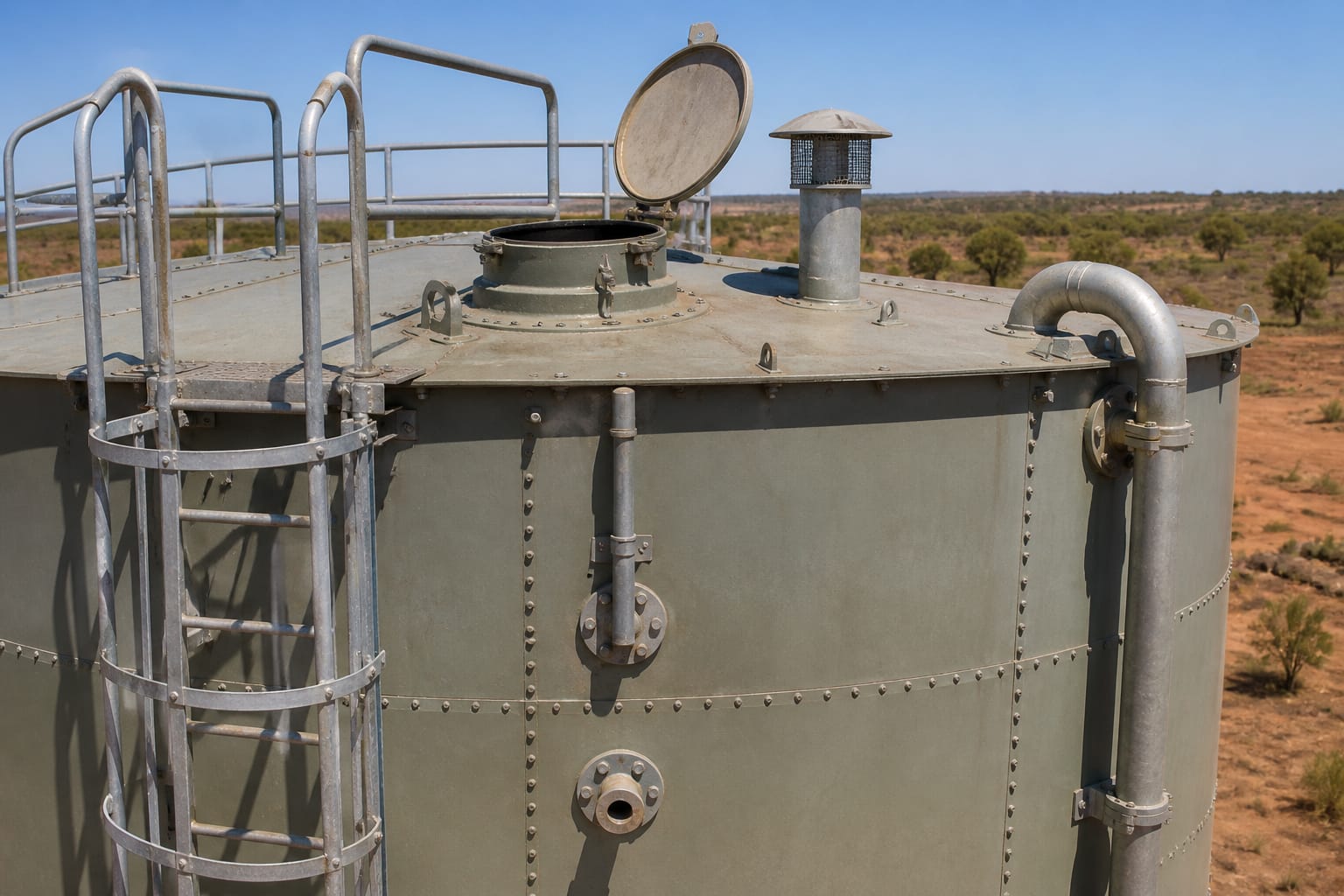
GRP panels are moulded from resin reinforced with glass fibre, producing a panel that is inherently corrosion-resistant because there is no exposed metal for water or atmosphere to attack. GFS panels are steel panels with a fused glass (vitreous enamel) coating bonded to both surfaces at high temperature, combining steel's structural strength with a glass layer that resists corrosion far more effectively than paint or standard galvanising.
GRP: no metal, no corrosion in the conventional sense
Because GRP has no exposed steel, it does not corrode the way metal tanks do. Its long-term risk profile is different — UV degradation of exposed resin, potential fibre exposure if the gel coat is damaged, and chemical compatibility limits depending on what is stored. For potable water and many general storage applications, GRP offers a genuinely low-maintenance corrosion profile over the tank's service life.
GFS: steel strength with a glass barrier
GFS panels rely on the fused glass coating remaining intact. Where the coating is damaged — during transport, installation, or an internal impact — the underlying steel becomes exposed and vulnerable at that specific point, though the fusion-bonded coating is significantly more robust than a conventional applied coating. GFS tanks are widely used because they combine steel's structural performance and larger achievable panel sizes with corrosion protection that substantially outperforms standard coated steel.
Cost and panel size
GFS panels can generally be manufactured in larger formats than GRP, which can mean fewer joints for a given capacity — a structural and maintenance advantage. Material and manufacturing costs differ between the two systems and shift with steel and resin pricing, so a genuine like-for-like cost comparison needs to be run at the time of quoting rather than assumed from general reputation.
Application and chemical compatibility
GRP's inertness makes it a strong fit for potable water and many general storage duties. GFS is widely used across potable, fire and process water applications and brings genuine structural robustness from the steel substrate. Neither material is universally "better" — chemical compatibility with what is actually being stored, required panel size, budget and expected service life should all be checked against the specific application before committing to a material.
The choice between GRP and glass-fused-to-steel is a material engineering decision, not a brand preference — it depends on what the tank will store, how large it needs to be, and how much steel-versus-composite risk the asset owner is comfortable managing over the tank's life.
| Consideration | GRP | GFS |
|---|---|---|
| Corrosion mechanism | No exposed metal | Coating-dependent |
| Structural strength | Moderate | High (steel substrate) |
| Typical panel size | Smaller modules | Larger modules available |
| Key maintenance focus | Gel coat and joint condition | Coating damage inspection |
Is GRP or glass-fused-to-steel better for potable water storage?
Both are widely used for potable water, provided the specific product is certified suitable for contact with drinking water. The right choice depends more on required capacity, panel size, budget and site-specific factors than on one material being universally superior for potable applications.
What happens if a glass-fused-to-steel panel is damaged during installation?
A chip or crack in the fused glass coating exposes the underlying steel at that point, creating a localised corrosion risk. Panels should be inspected for transport and installation damage before commissioning, and any damaged coating should be assessed and repaired according to the manufacturer's procedure.
Do GRP tanks need less maintenance than steel tanks?
GRP avoids conventional metal corrosion, which reduces one category of maintenance risk, but it still requires attention to joint sealant condition, gel coat integrity and UV exposure over time. It is lower-maintenance in a specific sense, not maintenance-free.
Comparing panel tank materials for a new project? PC Water Infrastructure can advise on the right material for your application, capacity and budget.
Discuss Tank Materials