

When a tank produces a water quality result that keeps recurring after cleaning — a taste or odour complaint, an unexplained bacterial count, a chlorine demand that will not stay satisfied — biofilm is one of the more common and most underestimated explanations.
Biofilm is a structured community of microorganisms embedded in a self-produced protective matrix, attached to a surface. Inside a water tank, that surface can be the tank wall, floor, fittings, or even sediment itself. Once established, biofilm behaves very differently from free-floating bacteria in the water column — it is significantly more resistant to disinfection, and it can continuously shed organisms and byproducts back into the stored water.
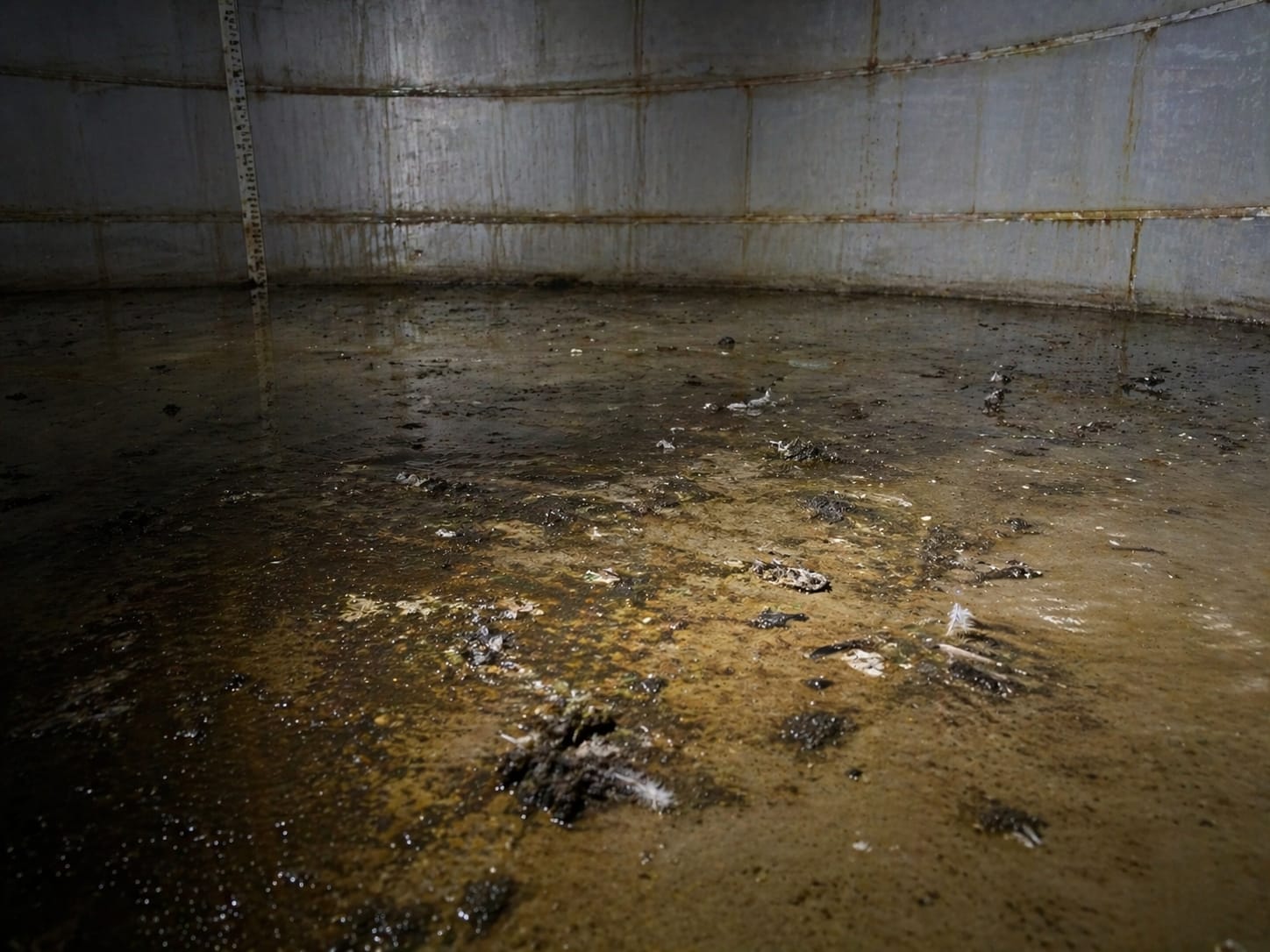
The protective matrix is the whole problem
Biofilm organisms secrete an extracellular polymeric substance — a slime-like matrix — that physically shields them from disinfectant contact and from simple flushing. This is why a chlorine dose that would readily kill free bacteria in open water can leave an established biofilm largely intact; the matrix reduces disinfectant penetration dramatically compared to organisms exposed directly in solution.
It forms wherever conditions allow, not just in visibly dirty areas
Biofilm can establish on surfaces that look clean to a routine visual inspection, particularly in low-flow zones, dead legs, gaskets, valve seats and any area where water sits with reduced turnover. Sediment adds a further complication — a thin sediment layer can itself harbour biofilm and shield it from both disinfectant and mechanical cleaning action that only addresses the visible bulk of deposit.
Physical disruption, not just disinfection
Because the matrix resists chemical penetration, effective biofilm control typically requires physical removal — mechanical cleaning, scrubbing or high-pressure washing of affected surfaces — combined with disinfection, rather than disinfection alone. A tank that is chlorinated but never physically cleaned can carry the same biofilm colony forward indefinitely, with disinfection managing symptoms in the bulk water while the source keeps reseeding it.
Addressing the conditions that let it re-establish
Cleaning alone is a temporary fix if the underlying conditions that favoured biofilm growth are not addressed — persistent low-flow zones, extended water age, nutrient input from an upstream source, or warm water temperature all favour recolonisation after cleaning. A tank that keeps needing the same biofilm-related cleaning cycle at short intervals usually has an operational or design factor worth investigating, not just a cleaning schedule that needs tightening.
A tank that keeps failing the same water quality parameter after cleaning is not necessarily being cleaned badly — it may be growing the problem back faster than the cleaning cycle can keep up with.
| Check | Why it matters |
|---|---|
| Recurring water quality results after cleaning | Strong indicator of an established biofilm rather than a one-off event |
| Low-flow zones, dead legs and fitting geometry | Common locations for biofilm establishment away from visible inspection |
| Sediment condition alongside biofilm assessment | Sediment can shield biofilm from both cleaning and disinfection |
| Water age and turnover rate | Extended residence time and warm temperatures favour biofilm growth |
| Physical cleaning included, not disinfection alone | The protective matrix resists chemical penetration without mechanical disruption |
Can chlorine alone remove biofilm from a water tank?
Not reliably. The protective matrix that biofilm organisms produce significantly reduces disinfectant penetration compared to free-floating bacteria, which is why effective biofilm control generally requires physical cleaning combined with disinfection, not disinfection on its own.
Why does a tank keep failing water quality tests even after cleaning?
If biofilm is present in areas the cleaning did not physically disrupt — low-flow zones, fittings, or beneath sediment — the colony can persist and continue shedding organisms into the stored water, producing recurring results even though the tank was cleaned.
Does biofilm only form in visibly dirty tanks?
No. Biofilm can establish on surfaces that appear visually clean, particularly in low-flow areas, gaskets and valve seats. Visual inspection alone is not a reliable way to rule out biofilm presence.
Dealing with recurring water quality issues in a storage tank? PC Water Infrastructure can assess for biofilm and recommend an effective cleaning and disinfection approach.
Discuss Water Quality