Storing the same volume of water elevated, at ground level, or as a large open reservoir are not interchangeable design choices with the same outcome. Each configuration answers a different combination of pressure, land, and cost questions — and the wrong one can leave a system technically full but practically unable to deliver.
Elevated tanks: pressure without pumping
An elevated tank uses gravity head to maintain distribution pressure without continuous pumping, and can also provide a buffer of pressurised supply during a power outage that would otherwise stop pumps entirely. The trade-off is structural cost and complexity — supporting a full tank's weight at height is a significantly more demanding structural problem than a ground-level footing.
Ground-level tanks: simpler structure, pump-dependent pressure
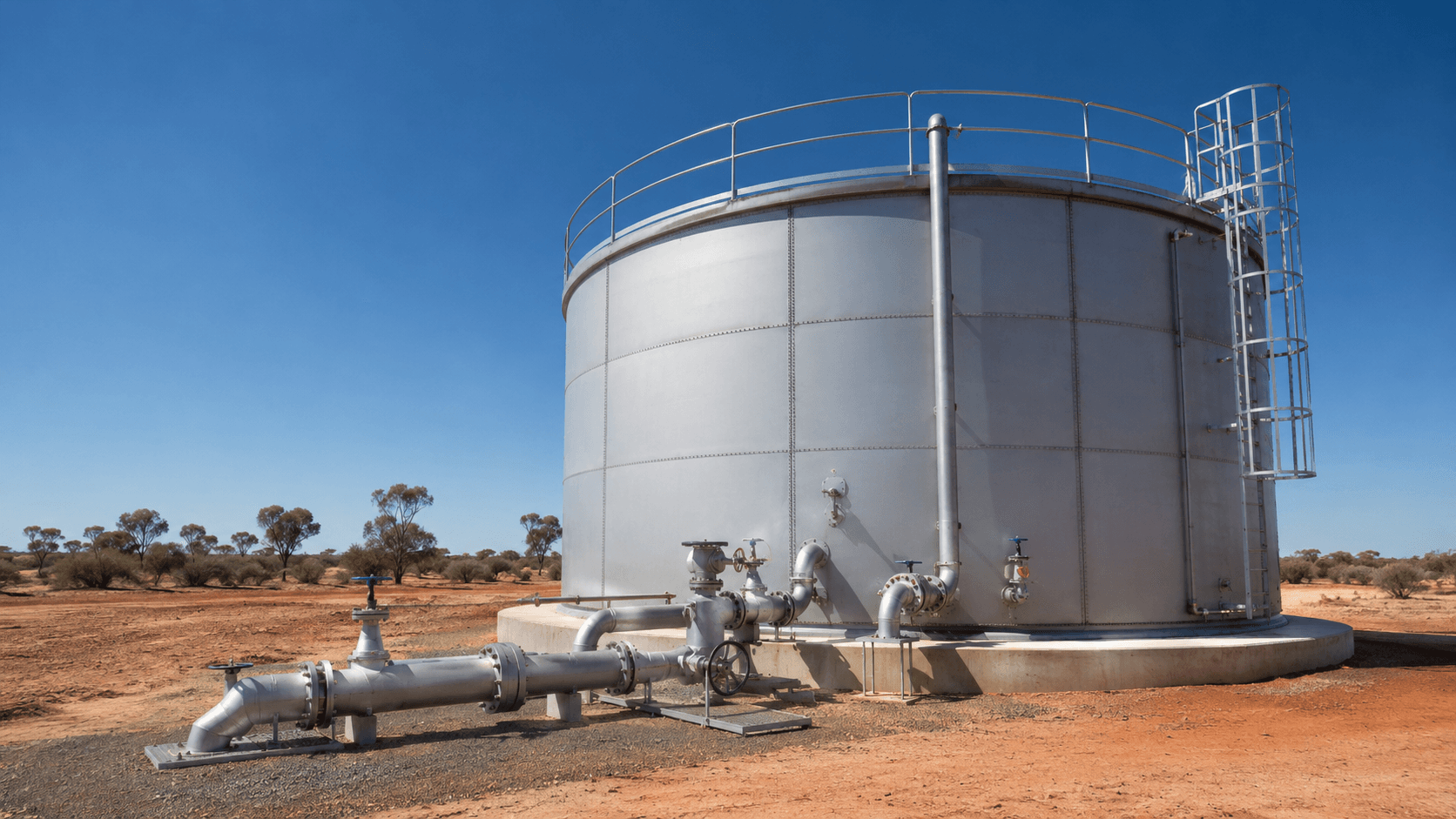
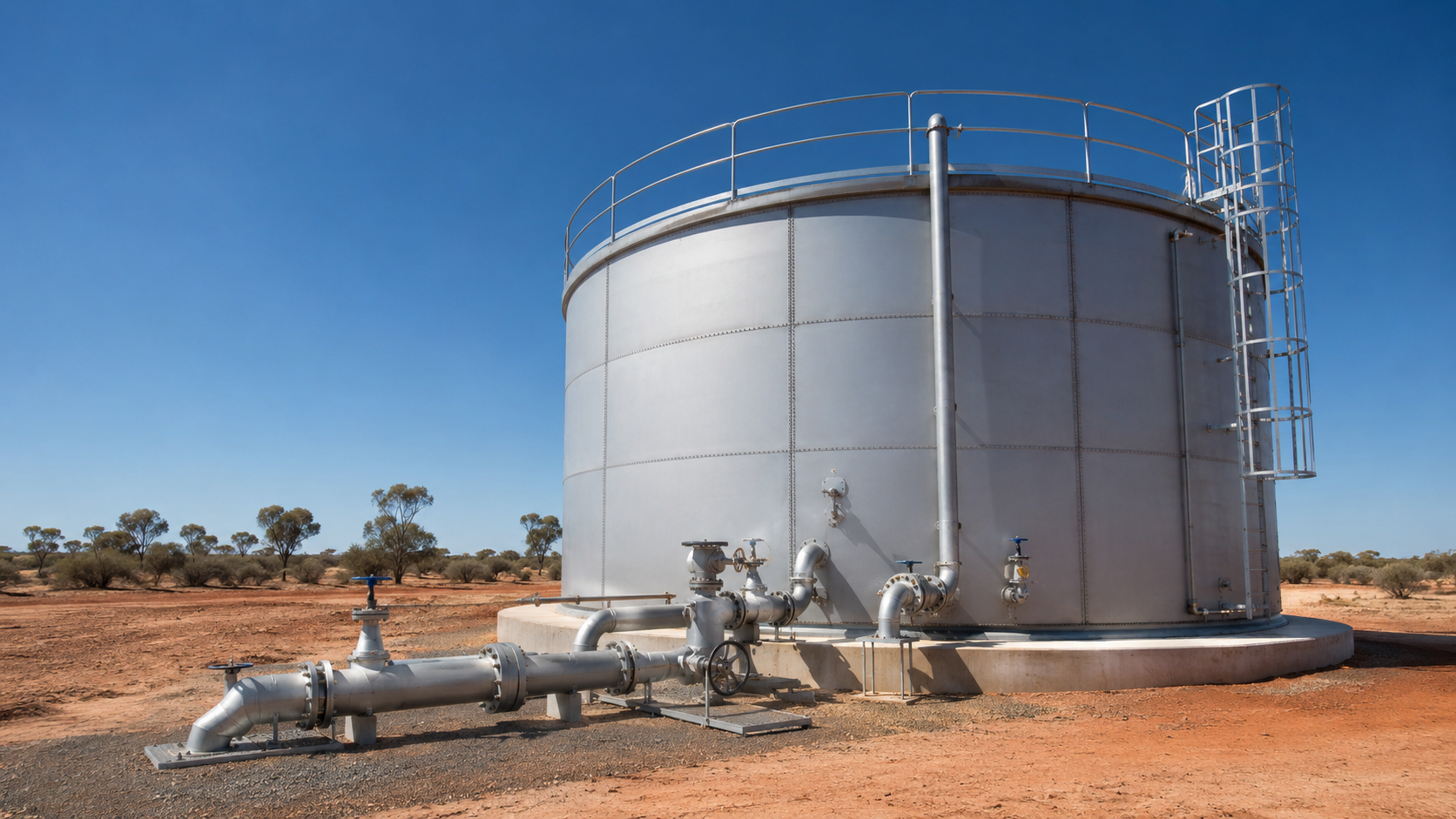
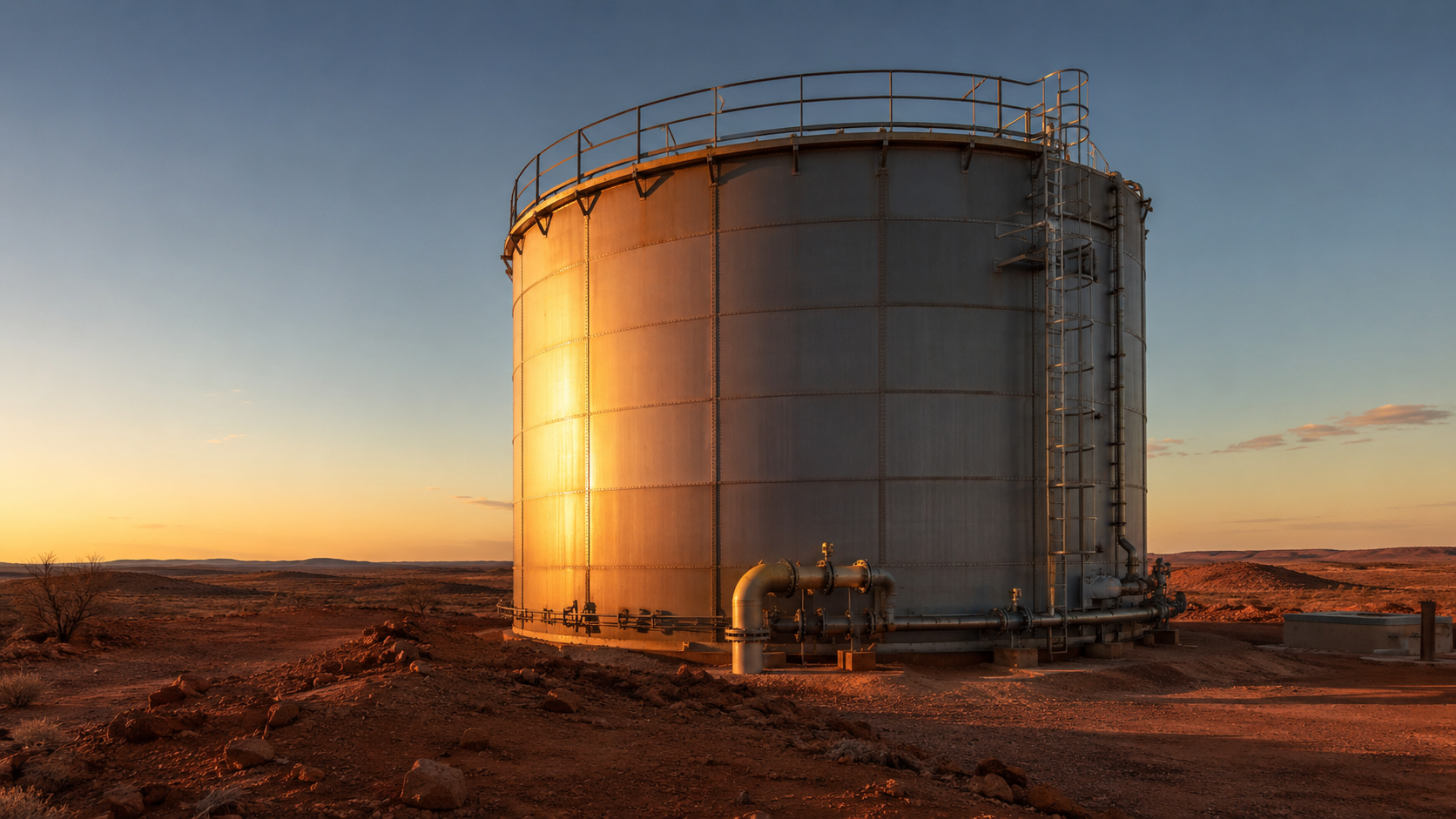
A ground-level tank avoids the elevated structural cost and is generally faster and cheaper to build for a given capacity, but distribution pressure then depends on pumping — meaning pump reliability and backup power become part of the pressure-security question in a way they are not for a gravity-fed elevated system.
Open reservoirs: capacity at the lowest cost per volume, with a contamination trade-off
A large open reservoir is typically the most land-efficient and cost-effective way to store very large volumes, but it exposes the stored water to sunlight, windblown contamination and wildlife access unless properly covered — a genuine trade-off between cost efficiency at scale and the added contamination-control effort a covered structure would otherwise avoid.
The right configuration follows from the site's actual requirements — is continuous pressure during a power outage a genuine requirement, or is reliable backup power for pumping an acceptable substitute? Is land availability and cost a binding constraint, or is site footprint flexible? Is the stored water potable, where contamination control on an open configuration becomes a compliance question rather than just a water-quality preference? Working backward from a preferred configuration, rather than forward from these actual constraints, is how the wrong choice gets made.
There is no universally superior tank configuration — only the one that correctly matches a specific site's pressure requirement, land constraint and water-quality obligation. Choosing based on what worked on a previous project, without re-checking these constraints, is a common and avoidable design mistake.
| Requirement | Likely fit |
|---|---|
| Pressure must be maintained during a power outage | Elevated tank — gravity head does not depend on pump availability |
| Reliable backup power for pumping is already in place | Ground-level tank — avoids elevated structural cost |
| Very large volume, land available, cost-per-volume is critical | Open reservoir — most land- and cost-efficient at scale |
| Stored water is potable and contamination control is mandatory | Ground-level or elevated tank, or a properly covered reservoir |
| Constrained or irregular site footprint | Ground-level or elevated tank, sized and shaped to the available land |
Is an elevated tank always better for pressure reliability?
It provides pressure without depending on active pumping, which is a genuine advantage during a power outage. But it comes with higher structural cost and complexity, so it is the right choice specifically where that outage-resilient pressure is a real requirement, not a default best option for every site.
Can an open reservoir be used for potable water storage?
Yes, provided it is properly covered and managed to control contamination — an uncovered open reservoir is generally not appropriate for potable storage. A geodesic dome or other cover retrofit can convert an open reservoir into a contamination-controlled structure suitable for potable use.
What is the most cost-effective configuration for a given storage volume?
Generally an open reservoir has the lowest cost per unit volume at large scale, followed by a ground-level tank, with an elevated tank typically the most expensive per unit volume due to its structural demands. Cost-effectiveness should still be weighed against the site's actual pressure and contamination-control requirements, not considered in isolation.
Deciding between storage configurations for a new project? The right choice follows from your site's actual pressure, land and water-quality requirements.
Discuss your storage configuration