
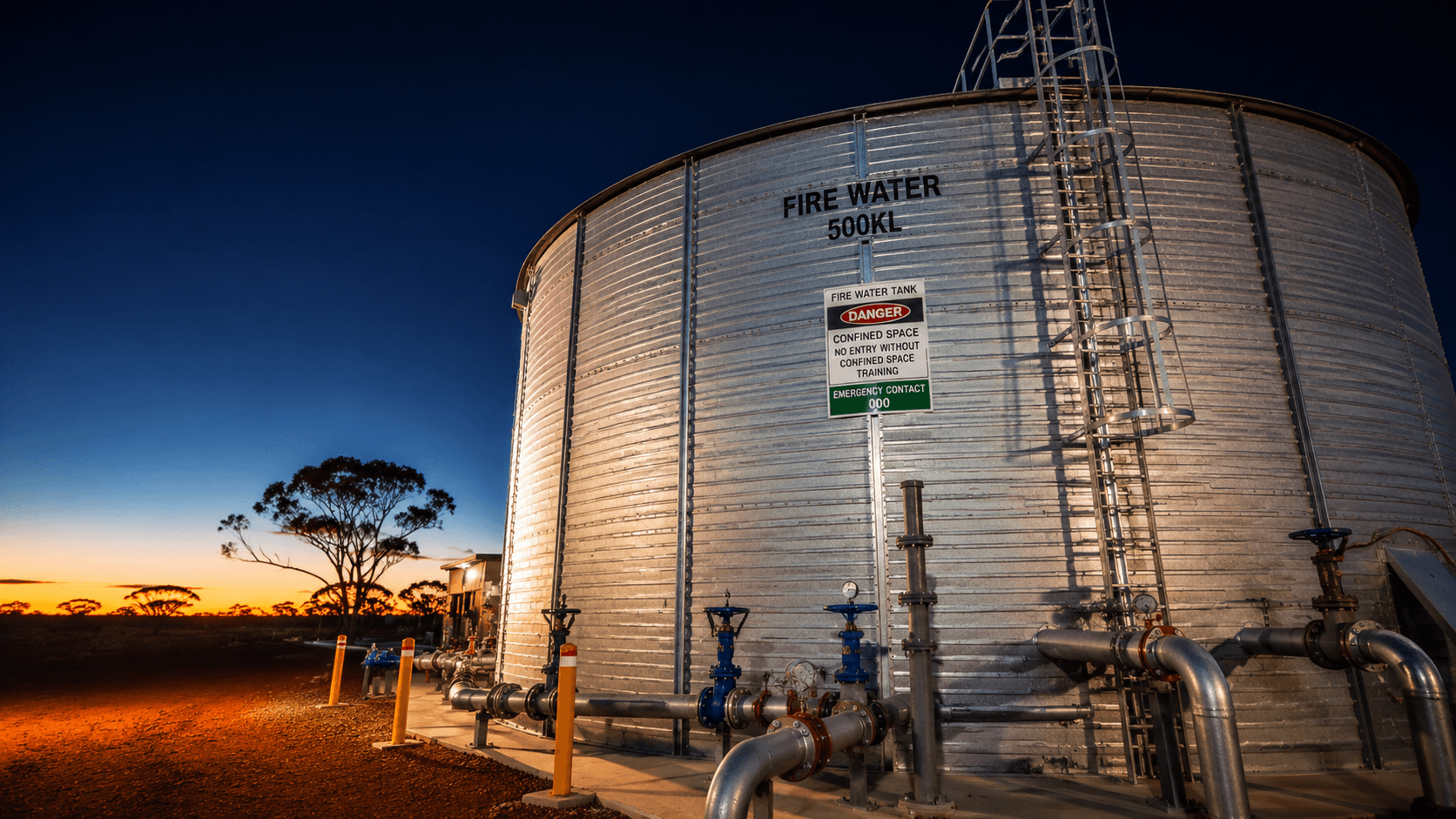
Ask why a sprinkler storage tank is a particular size, and the honest answer should never be "that is roughly what fits on site" or "that is what we always use." Sprinkler storage volume is derived from a specific calculation, and every input in that calculation changes the required capacity.
The core calculation multiplies three things: the design density of water application (litres per minute per square metre, set by the hazard classification of the occupancy), the assumed maximum area of operation (the largest area the sprinkler system is designed to assume will operate simultaneously in a fire event), and the required duration the system must sustain that flow. Get any one of these wrong, and the resulting tank is either uneconomically oversized or genuinely undersized for the risk it is meant to cover.
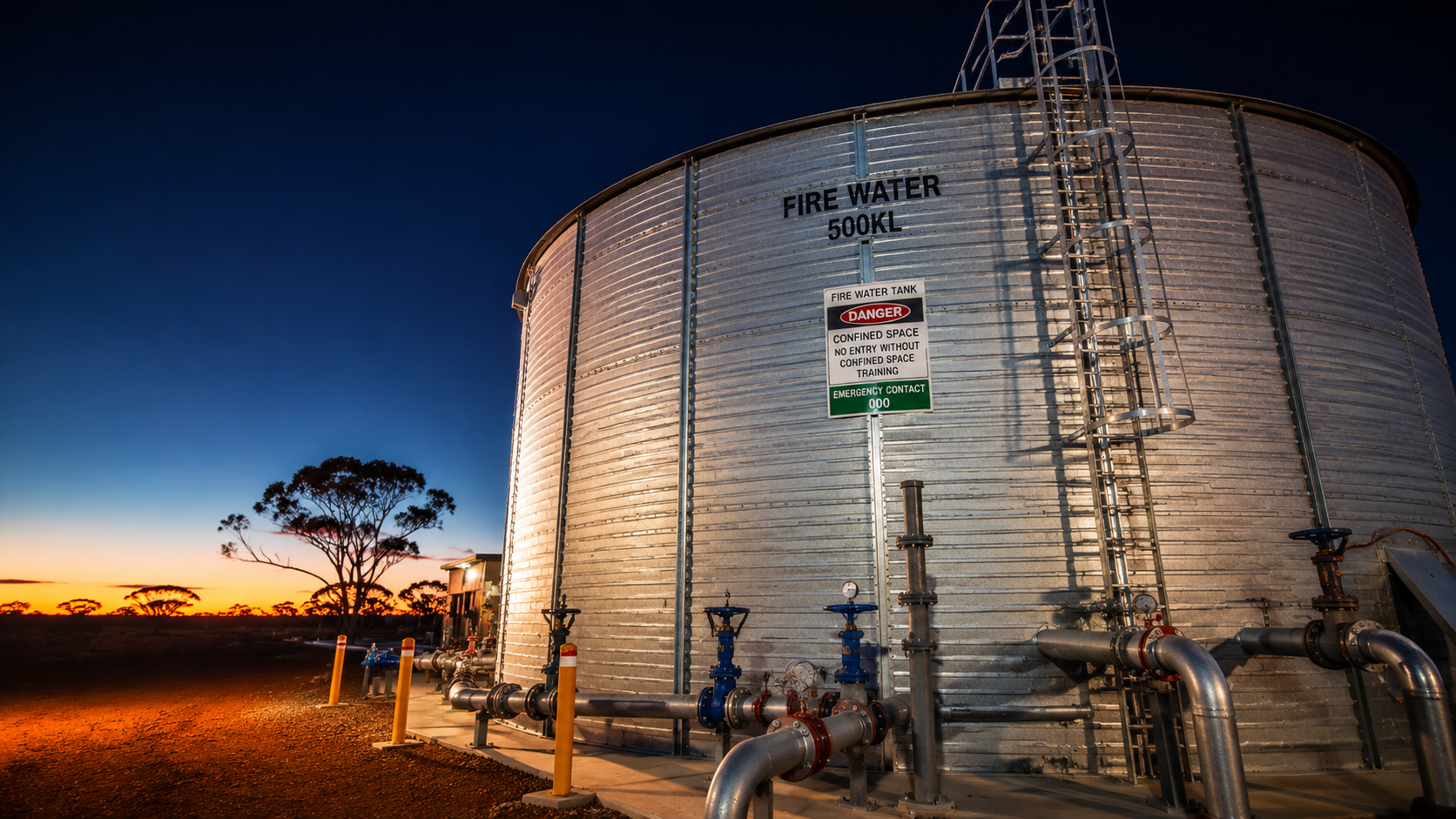
Hazard classification sets the baseline
Occupancies are classified by fire hazard — broadly, light, ordinary and high hazard categories, each with further subdivisions depending on the specific standard applied. A warehouse storing flammable goods and an office building are not remotely comparable in required design density, and using the wrong classification is one of the more consequential errors possible in sprinkler storage sizing, because it changes the calculation at its foundation rather than at the margins.
Assumed maximum area of operation
Rather than assuming every sprinkler head in a building activates simultaneously, the design standard specifies an assumed maximum operating area — a defined floor area within which the design density must be delivered, reflecting how a real fire is expected to spread and how many heads are likely to be operating at once. A larger assumed operating area, driven by hazard classification and building layout, directly increases required flow and therefore required storage volume.
Occupancy changes without a re-check
A building's fire hazard classification is tied to its use, not its shell. A warehouse converted from general storage to a higher-hazard use, or a tenancy fit-out that introduces more combustible stock than the original design assumed, can silently invalidate the original storage sizing without anyone re-running the calculation. This is a genuine and common compliance gap — the tank has not changed, but the risk it was sized for has.
Duration requirements are easy to underestimate
Required sprinkler duration — how long the system must sustain design flow — depends on hazard classification and can range from a relatively short period for light hazard occupancies to well over an hour for higher hazard classifications. Storage sized on an assumed shorter duration than the actual classification requires is undersized regardless of how correctly the flow rate itself was calculated.
Sprinkler storage sizing is a calculation with real inputs, not a rule of thumb — and every one of those inputs should be re-checked whenever the building's use, layout or fire hazard classification changes.
| Check | Why it matters |
|---|---|
| Current, correct hazard classification | The single biggest driver of design density and duration |
| Assumed maximum operating area matches building layout | Directly sets the required flow rate |
| Duration requirement matches hazard category | Undersized duration produces a tank that runs dry before the fire is controlled |
| Re-check after any occupancy or fit-out change | Storage sizing can become non-compliant without any physical change to the tank |
Why do two similar-sized buildings need different sprinkler storage volumes?
Storage volume depends on hazard classification, not building size alone. A building storing higher-hazard goods requires greater design density and often longer duration than a comparably sized building with a lower fire hazard classification, resulting in a significantly larger required storage volume.
Does a change in tenancy affect sprinkler storage requirements?
It can. If the new tenancy's use changes the building's effective fire hazard classification — for example, introducing higher-hazard stock — the original storage sizing may no longer be adequate, even though the tank itself has not changed. This should be checked whenever occupancy or use changes.
Can sprinkler storage be undersized even if the tank passes AS2304 inspection?
Yes. A routine tank inspection confirms the tank's structural and operational condition, not whether its stored volume matches the current fire hazard classification of the building it protects. Storage adequacy needs to be checked against the current fire engineering design, separately from physical tank condition.
Unsure whether existing sprinkler storage still matches your building's current fire hazard classification? PC Water Infrastructure can review the sizing.
Review Fire Storage Sizing