
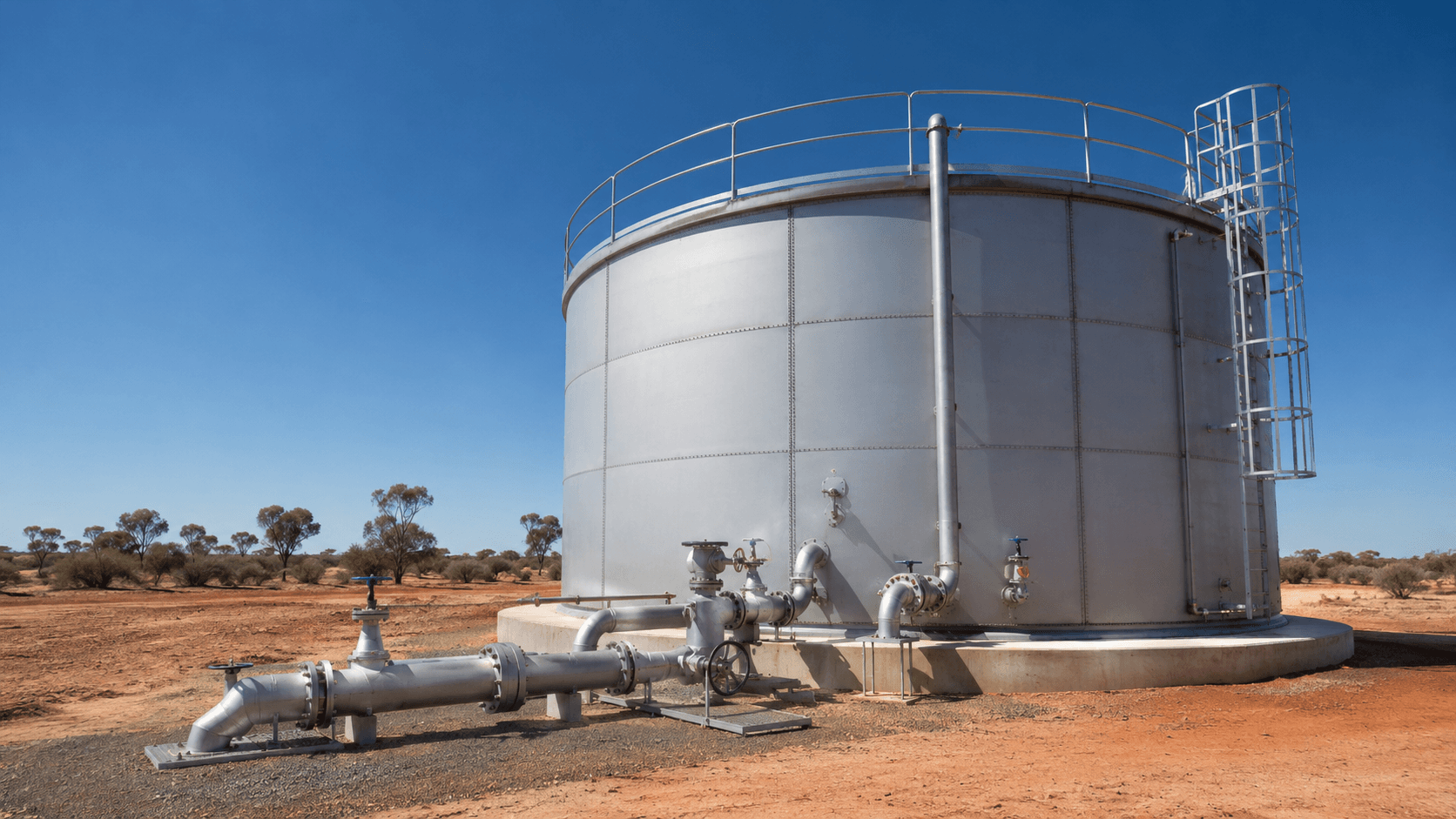
A newly erected tank can look entirely complete — panels bolted or welds finished, coating applied, fittings installed — and still not be proven to hold water safely and without leakage. Hydrostatic testing is the step that turns a visually finished structure into a verified one.
The principle is straightforward: fill the tank with water, typically to its full design capacity, and hold it for a defined period while monitoring for leakage, structural deflection, and any signs of joint or weld distress under real hydraulic load. It is the closest thing to an in-service condition the tank will experience before it is actually commissioned into the system it is meant to supply.
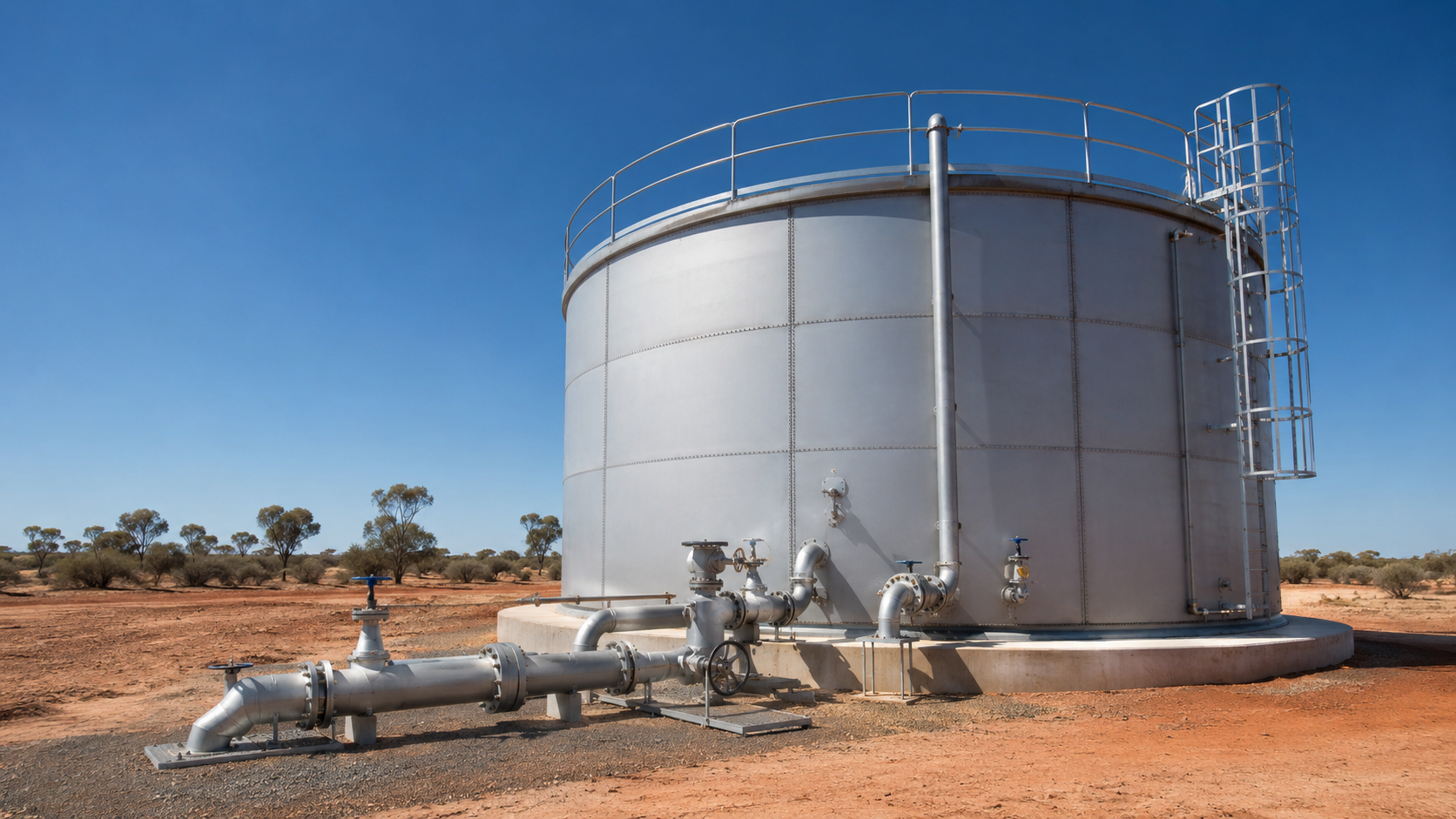
Leakage at joints, welds and penetrations
For bolted tanks, hydrostatic testing is often the first genuine test of the internal or external sealant system across every panel joint — a seal that can look adequate dry and still weep under sustained hydraulic pressure. For welded tanks, the test verifies weld integrity across the full shell under real load, not just the visual and non-destructive testing already completed during fabrication. Fittings, penetrations and roof-to-wall connections are checked with the same scrutiny as the main shell.
Structural behaviour and foundation performance
A full tank places significant load on its foundation, and hydrostatic testing is when any foundation settlement, tilt or bearing issue becomes apparent — before the tank is relied upon operationally. Monitoring during fill and hold periods should include level and plumb checks, not just a leak inspection, since a structurally sound but unevenly settling foundation can create problems that only compound once the tank is in regular service.
Fill rate and hold duration matter
Filling too quickly can itself stress joints and foundations in ways a controlled fill would not, so test procedures typically specify a staged or controlled fill rate rather than filling as fast as supply allows. The hold period needs to be long enough to reveal slow seepage that would not show up in the first hour — a test stopped too early can pass a tank that would have shown a leak given more time under load.
Documentation is part of the test, not an afterthought
A proper hydrostatic test produces records: fill and hold duration, water level readings at defined intervals, any observed leakage locations and the remedial action taken, and final sign-off confirming the tank held its test level without unacceptable loss. This record becomes part of the commissioning file and the asset's baseline condition record — valuable well beyond the test itself if any future dispute or investigation arises.
A tank that has never been tested full of water is, structurally speaking, still an assumption. Hydrostatic testing is what converts that assumption into a verified, documented fact before the asset goes into service.
| Check | Why it matters |
|---|---|
| Controlled, staged fill rate | Rapid filling can itself stress joints and foundation unrepresentatively |
| Adequate hold duration | Slow seepage may not be visible within the first hour of holding |
| Level and plumb monitoring during fill | Reveals foundation settlement issues before operational reliance begins |
| Full documentation of results | Becomes part of the commissioning file and asset baseline record |
Is hydrostatic testing required for every new water tank?
Testing requirements depend on the applicable design standard and project specification, but hydrostatic testing before handover is standard practice for storage tanks to confirm watertightness and structural performance under real load prior to commissioning into service.
How long should a tank hold water during hydrostatic testing?
The specific hold duration depends on tank size and project specification, but it needs to be long enough to reveal slow seepage that would not be apparent within the first hour. Ending the test too early can allow a tank with a genuine slow leak to pass.
What happens if a tank fails hydrostatic testing?
Any leakage or structural concern identified needs to be investigated, remediated — resealing joints, addressing weld defects, or reviewing foundation performance as required — and the tank retested before it proceeds to commissioning. A failed test at this stage is far less costly than discovering the same issue after the tank is in service.
Commissioning a new water storage tank? PC Water Infrastructure manages hydrostatic testing and full documentation as part of project delivery.
Discuss Tank Commissioning