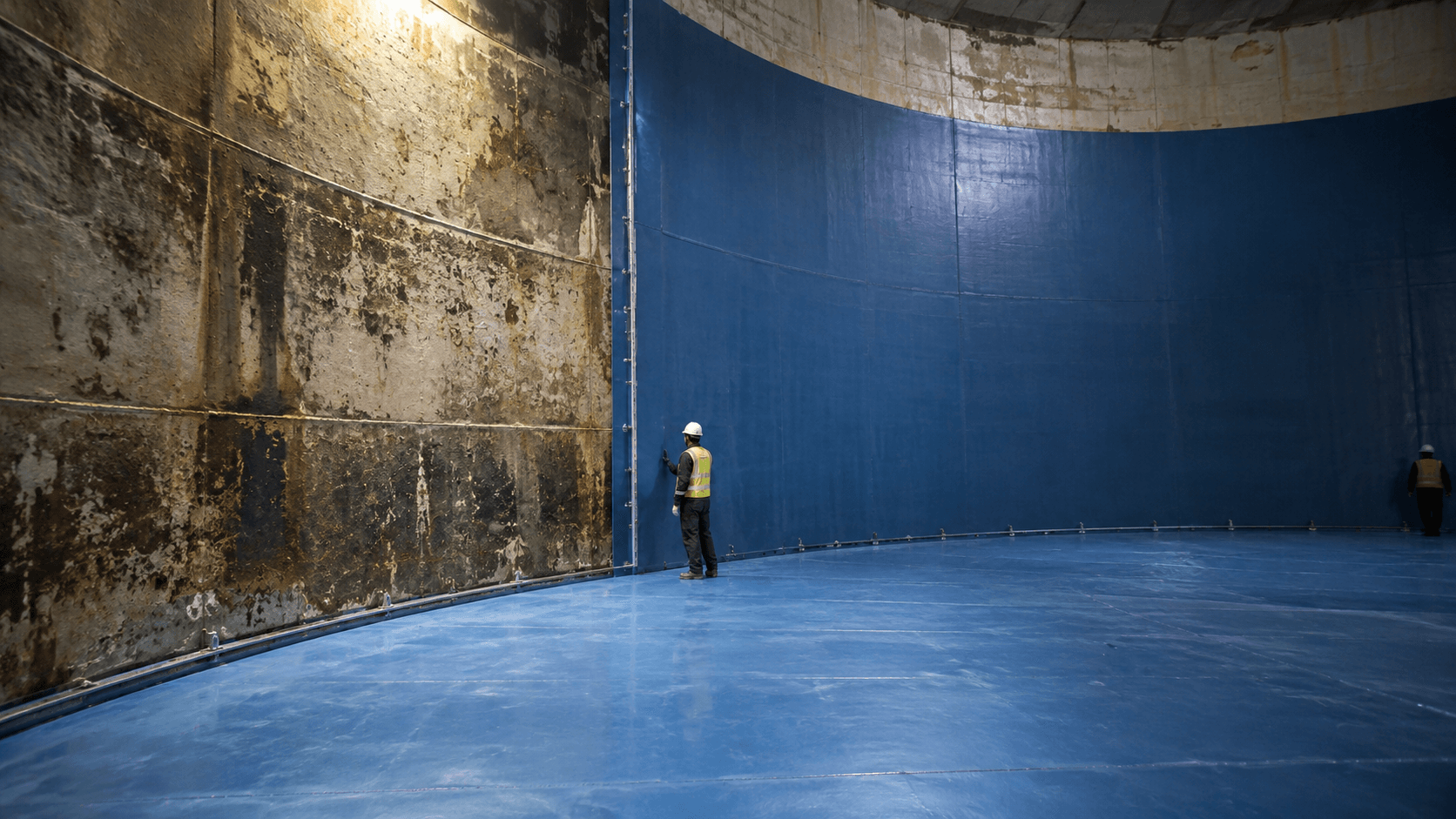
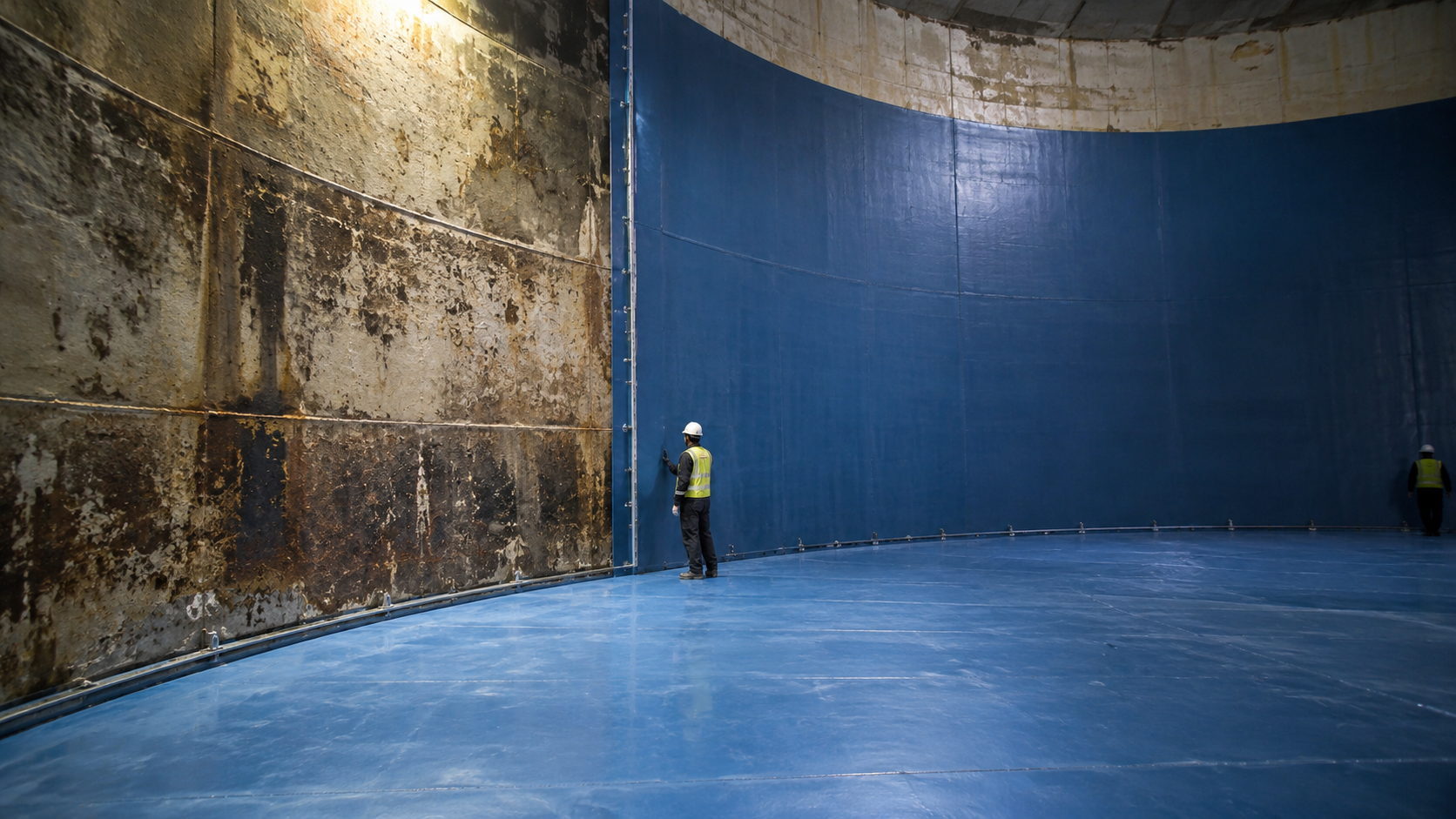
An RPVC liner performs one job: create a continuous, watertight barrier between the tank structure and the stored water. That barrier is only as reliable as its weakest seam, which is why seam testing — not just visual inspection — is a standard and necessary part of a properly installed liner.
Liner panels are welded together, typically using hot-air or hot-wedge welding methods that fuse the material along the seam. A visually acceptable weld line does not guarantee full-depth fusion along its entire length — a weld can look continuous while having small unfused sections, pinholes, or areas of incomplete penetration that would only reveal themselves once the tank is in service and under water pressure.
Spark testing during and after welding
Spark testing uses a high-voltage probe run along the seam, detecting pinholes or breaks in the material by triggering a visible spark where the electrical circuit finds a path through a defect. It is fast, effective for identifying discrete pinhole-type defects, and can be used as an in-progress quality check during welding, not just as a final acceptance test.
Air lance and vacuum box testing
An air lance test directs a concentrated stream of compressed air along the seam edge, listening or feeling for air escaping through any unfused section — a simple, low-cost method suited to accessible seam edges. Vacuum box testing seals a clear box with a soapy solution over a section of seam and draws a vacuum, watching for bubbles that reveal a leak path — a more thorough method for seams where a full-length test is warranted.
Weld defects invisible to a walk-past inspection
Incomplete fusion, contamination trapped in the weld line, or a weld run at incorrect temperature can all produce a seam that looks acceptable but has compromised integrity along part of its length. Systematic testing — not a visual walk of the finished liner — is what actually confirms the seam performs as intended across its full run, rather than assuming a good-looking weld is a sound one.
Documentation ties testing back to accountability
Proper seam testing records which method was used, which seams were tested, any defects found, and the remedial rework carried out before final sign-off. This record matters for warranty purposes and for any future investigation if a leak does eventually develop — it establishes what was actually verified at installation, rather than leaving the question open to assumption.
A liner is not proven watertight because the panels are the right material and the welds look clean. It is proven watertight because the seams were actually tested and the results documented.
| Check | Why it matters |
|---|---|
| Testing method matches the seam type and accessibility | Different methods suit different seam configurations |
| Every seam tested, not a sample selection | A single untested defective seam can compromise the whole liner |
| Defects documented with location and rework performed | Confirms issues were actually resolved, not just noted |
| Final sign-off records testing method and results | Establishes the installation baseline for warranty and future reference |
Why can't a liner weld just be visually inspected?
A weld can look continuous and clean while having small unfused sections or pinholes that are not visible without specific testing. These defects can lead to leaks once the tank is under water pressure, which is why seam testing methods like spark testing or vacuum box testing are used to verify integrity beyond visual appearance.
Should every seam in an RPVC liner be tested, or just a sample?
Best practice is to test every seam, since a single untested defective section can compromise the liner's watertight performance regardless of how sound the rest of the installation is. Sampling-based testing leaves genuine risk in the untested sections.
What happens if a defect is found during seam testing?
The defective section is reworked — typically re-welded or patched using the appropriate method for that defect type — and then retested to confirm the repair is sound before final sign-off. This should be documented as part of the installation record.
Installing or reviewing an RPVC liner and want to confirm seam testing standards? PC Water Infrastructure follows a documented testing process on every liner installation.
Discuss RPVC Liner Systems