

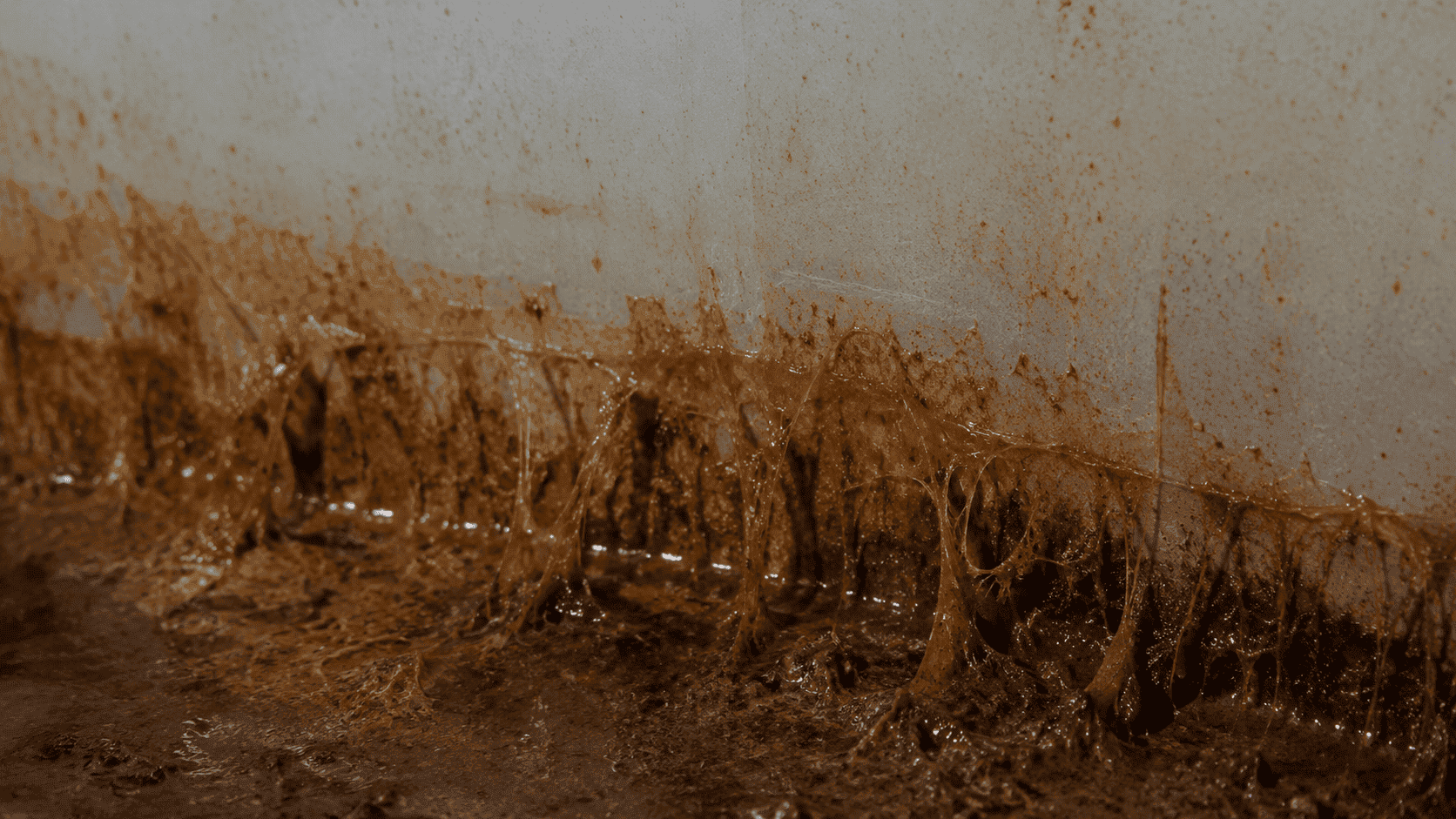
Iron bacteria are not a corrosion product — they are living organisms that feed on dissolved iron and manganese, and the reddish-brown, slimy colonies they form inside a tank do more than look unpleasant. They actively accelerate localised corrosion and taint water quality wherever they establish themselves.
A biological process, not a chemical stain
Iron bacteria metabolise dissolved iron and manganese in water, converting it to a solid, gelatinous deposit as a byproduct of their life cycle. Where iron corrosion products alone form a hard, adherent stain, an active iron bacteria colony forms a slimy, often foul-smelling mass that continues to grow as long as conditions support it.
Why they accelerate corrosion
Iron bacteria colonies create localised conditions beneath the slime — oxygen-depleted pockets and concentrated microbial activity — that promote a specific, aggressive form of corrosion called microbiologically influenced corrosion (MIC). This corrosion is often more localised and can progress faster than general uniform corrosion, precisely because the bacteria concentrate their activity at specific points on the metal surface.
Discolouration and odour
Reddish-brown or black discolouration in the water, along with a musty, swampy or oily odour, are common early signs of an active iron bacteria population — often noticed at the tap well before anyone inspects inside the tank itself.
Clogged fittings and reduced flow
Iron bacteria slime can build up inside fittings, screens and valves, gradually restricting flow and increasing maintenance callouts for what looks like an unrelated mechanical issue.
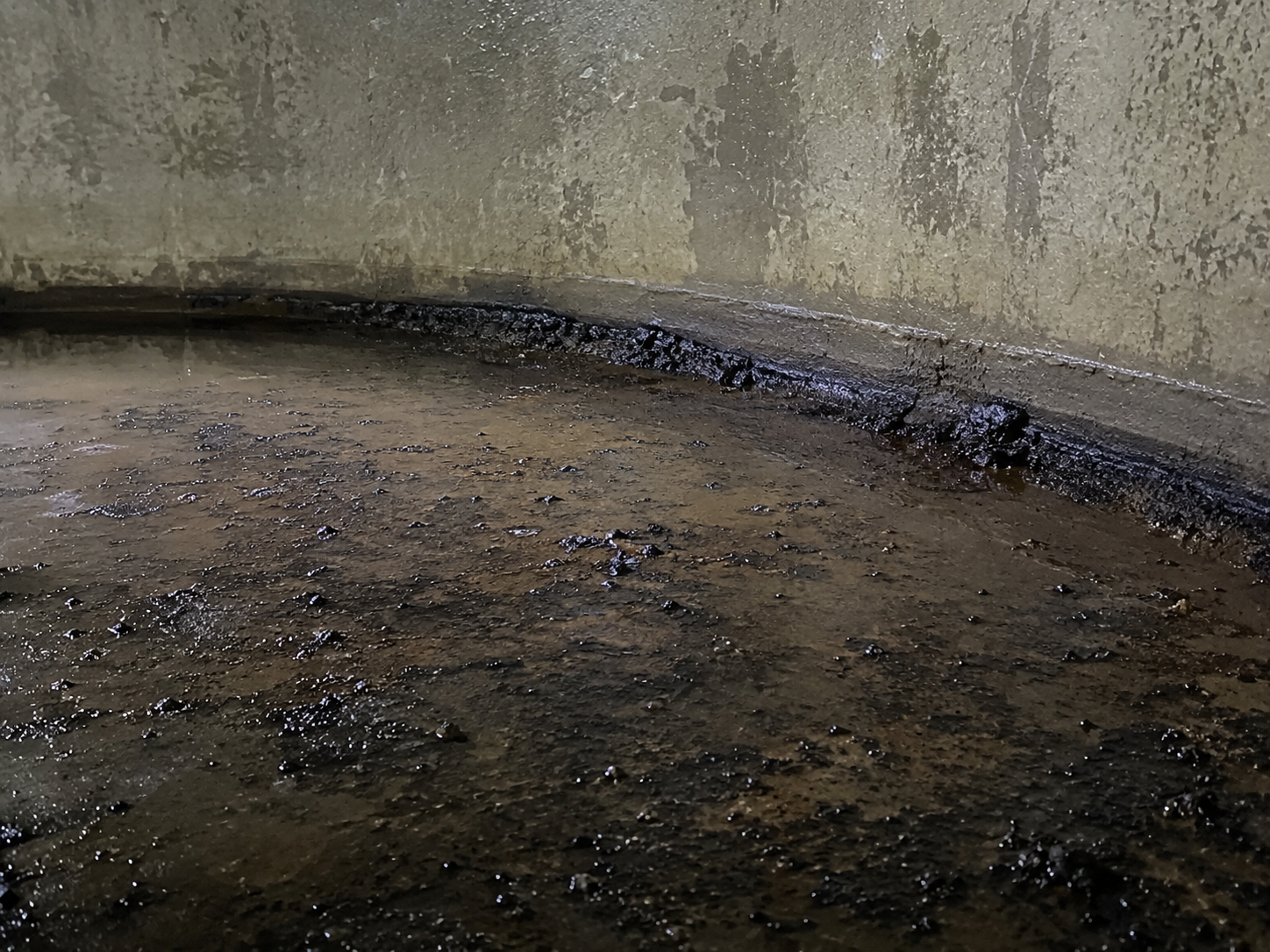
Iron bacteria do not just discolour water — they build a living environment on the tank's metal surfaces that makes corrosion happen faster and more unpredictably than it otherwise would. Treating the discolouration without addressing the colony leaves the corrosion driver in place.
| Check | What it can reveal |
|---|---|
| Colour and odour of water at multiple points in the system | Reddish-brown colour and musty odour are classic early indicators |
| Internal tank surfaces during inspection or cleaning | Confirms whether slime fouling is present versus simple sediment |
| Condition of fittings, screens and valves | Restricted flow can be a downstream symptom of bacterial fouling |
| Localised pitting pattern during corrosion inspection | Distinct pitting concentrated under fouling deposits suggests MIC |
| Source water iron and manganese levels | Higher source levels provide more fuel for bacterial colonisation |
Is iron bacteria fouling a health risk?
Iron bacteria themselves are not typically classified as a direct pathogenic risk, but the conditions that support their growth can also support other undesirable organisms, and the resulting discolouration, odour and taste make the water unacceptable for use even where it may still meet chemical standards. It should be treated as a water quality issue requiring remediation.
Can iron bacteria be removed by a standard tank clean?
Physical removal during cleaning addresses the visible colony, but iron bacteria can recur if the underlying conditions — dissolved iron and manganese levels, and any conducive surface conditions — are not also addressed. Persistent or recurring fouling often needs a water treatment response alongside physical cleaning.
Does iron bacteria fouling mean my tank has a corrosion problem?
Not automatically, but it significantly raises the risk. Because iron bacteria colonies promote localised, accelerated corrosion beneath them, a tank with confirmed iron bacteria fouling should have its internal surfaces inspected for pitting or corrosion at the affected locations.
Seeing discolouration, odour, or slimy deposits in your water storage tank? It is worth confirming whether iron bacteria is involved before it accelerates corrosion further.
Request a water quality and tank inspection