
A tank warranty feels like a straightforward promise at the point of purchase. The gap between that promise and an actual paid claim is usually maintenance records, not fine print — and that gap is invisible until the day a defect shows up and the claim gets tested.
Manufacturer and installer warranties on water tanks are conditional, not unconditional. They cover defects in material and workmanship under normal use and proper maintenance — and it is that last qualifier, proper maintenance, that decides more disputed claims than the defect itself.
Missed or undocumented maintenance
Most tank warranties are conditional on a defined maintenance schedule — inspection intervals, cleaning frequency, coating recoat cycles. A warranty holder who cannot produce records showing that schedule was followed is in a materially weaker position than one who can, regardless of what actually caused the defect.
Unapproved modifications or repairs
Fittings, penetrations or repairs carried out by a party other than the manufacturer or an approved contractor can void warranty on the affected component, and sometimes on the tank as a whole, even where the modification appears unrelated to the eventual defect.
Operating outside specified conditions
A tank operated beyond its specified water chemistry range, temperature range, or structural loading (including sediment loading it was never designed to carry) can have its warranty voided on the basis that the failure occurred outside the conditions the warranty was written for.
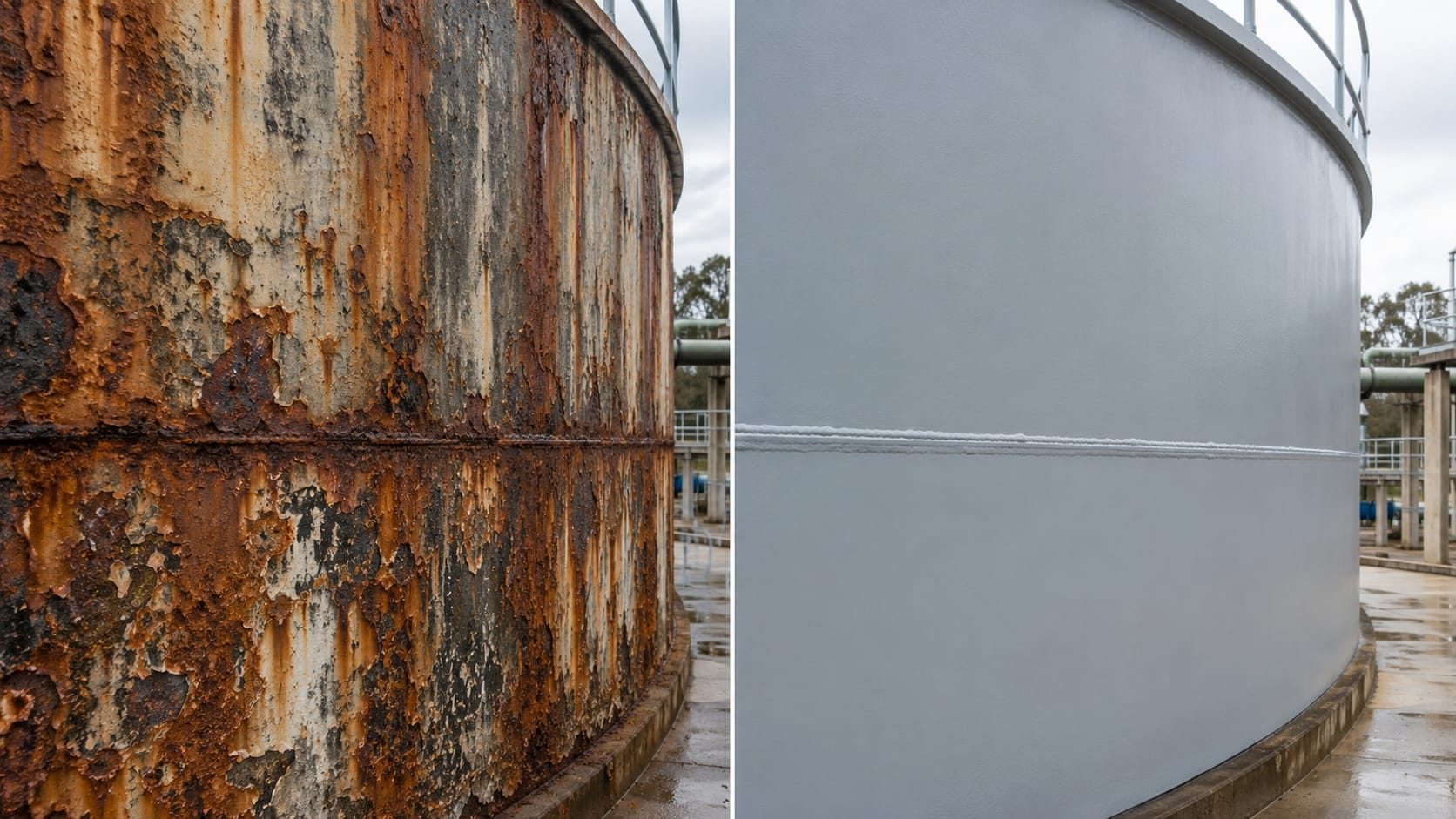
A warranty claim moves faster and succeeds more often when the holder can produce a complete maintenance and inspection history, evidence the tank was operated within its specified conditions, and documentation that any modifications were carried out by an approved party. None of this guarantees a claim succeeds — but its absence is one of the most common reasons a legitimate defect ends up disputed rather than simply repaired.

A warranty is not a guarantee that nothing will go wrong. It is a conditional promise that the condition can be proven — and the proof has to exist before the defect does, not after.
| Practice | Why it matters for a future claim |
|---|---|
| Keep every inspection and maintenance record | The primary evidence a warranty provider will request |
| Use approved contractors for repairs and modifications | Unapproved work is a common, avoidable reason for a voided claim |
| Confirm the tank is operated within its specified conditions | Establishes the failure occurred within warranty scope |
| Read the warranty's maintenance schedule at handover | Confirms exactly what is required to keep cover valid |
| Report suspected defects promptly | Delayed reporting can itself be grounds to dispute a claim |
Does a missed inspection automatically void a warranty?
Not necessarily automatically, but it weakens the claim significantly. Warranty providers assess claims against the maintenance schedule specified in the warranty terms, and a documented gap gives them grounds to argue the defect resulted from inadequate maintenance rather than a covered fault.
Can I use my own contractor for tank maintenance without voiding the warranty?
It depends on the specific warranty terms — some require an approved contractor for the work to count toward warranty compliance, while others simply require the work be documented to a defined standard. Checking this before engaging a contractor is worth the few minutes it takes.
What should I do the moment I suspect a warrantable defect?
Document it — photographs, date, description — and report it to the warranty provider promptly rather than waiting to see if it worsens. Prompt reporting with clear documentation is one of the strongest things a claimant can do to support a smooth claim outcome.
Unsure whether your maintenance history would support a warranty claim if you needed one? Worth confirming before you need to find out.
Review your maintenance records with us