
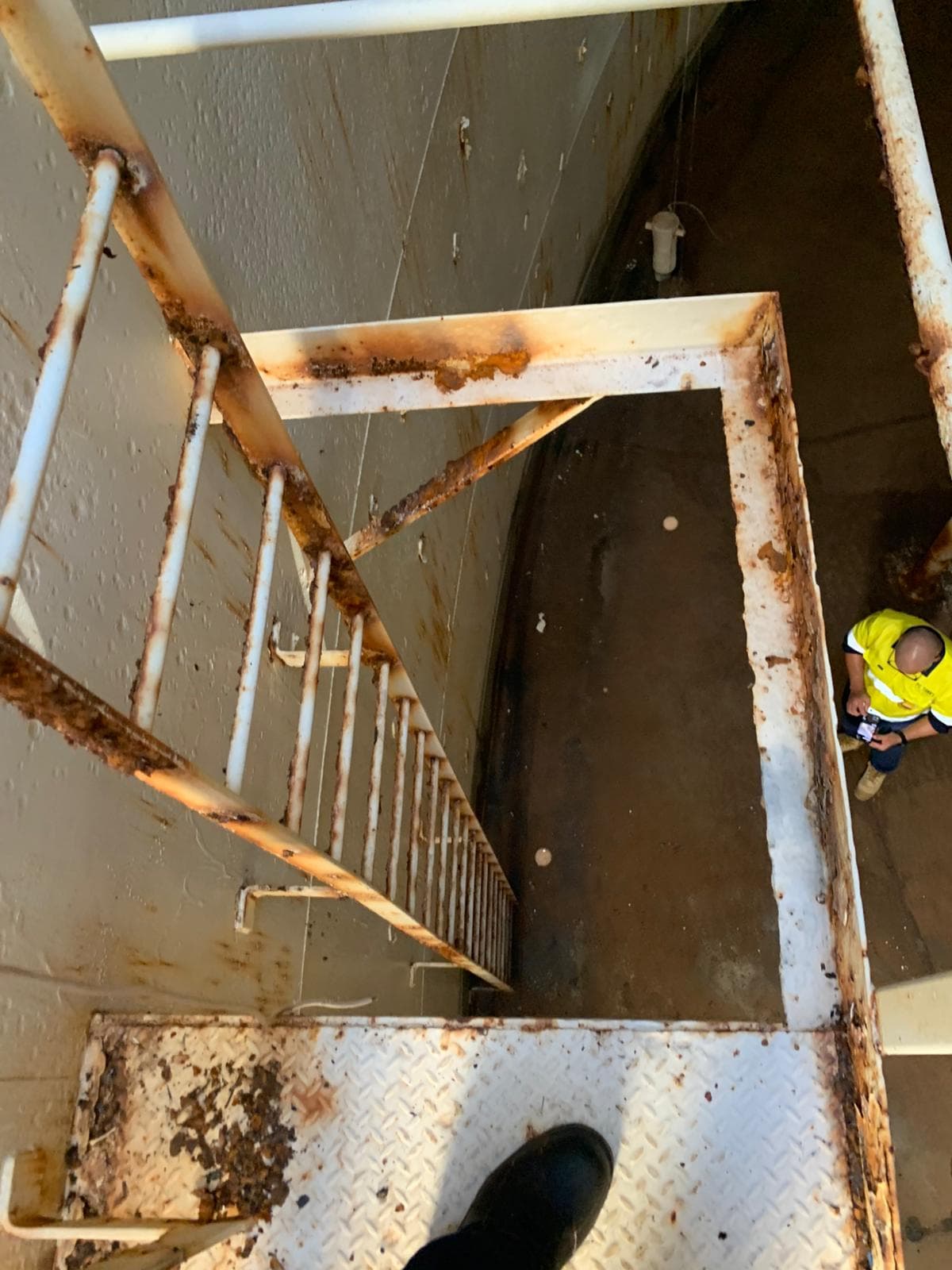
Concrete does not corrode the way steel does — but a concrete reservoir can still fail through corrosion, because the steel reinforcement inside it can. Understanding that distinction is the difference between diagnosing spalling correctly and misreading it as simple concrete deterioration.
Reinforcement corrosion is the real driver
When moisture and chloride or carbonation exposure reach the steel reinforcement inside concrete, that steel corrodes just as any embedded steel would. Corroding steel expands — rust occupies significantly more volume than the metal it replaces — and that expansion cracks and eventually pushes off the surrounding concrete cover. What looks like the concrete "failing" is usually the concrete being forced apart from within by corroding rebar.
Carbonation and chloride ingress
Concrete's natural alkalinity normally protects embedded steel from corrosion. Carbonation — the gradual reaction of atmospheric CO2 with the concrete — and chloride penetration both reduce that protection over time, eventually reaching the reinforcement and allowing corrosion to begin. This process is slow and invisible from the surface until spalling appears.
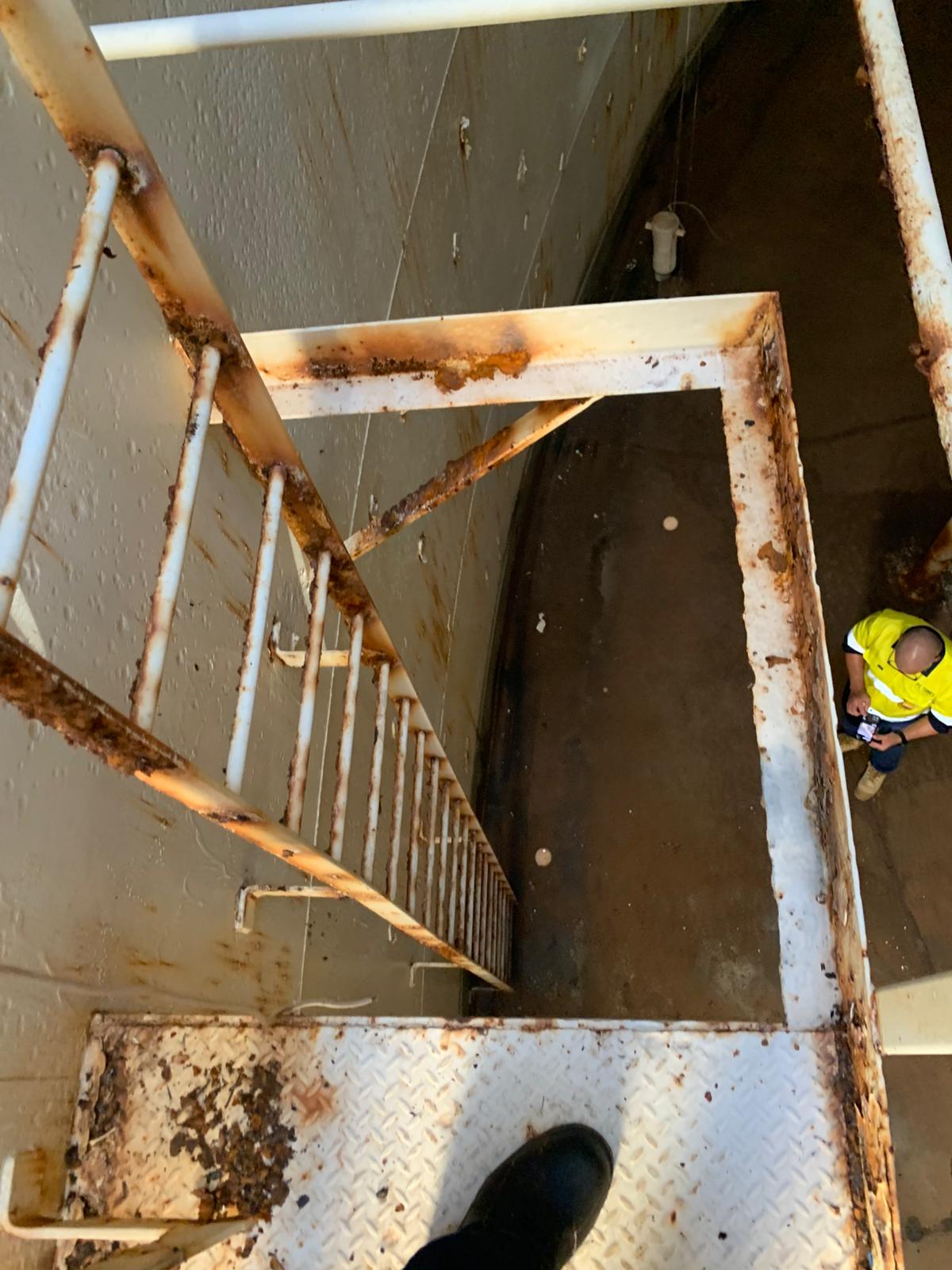
A steel tank's corrosion is addressed by protecting or restoring the steel surface directly — coating, lining, or replacement. A concrete reservoir's spalling requires addressing the reinforcement corrosion driving it, which typically means removing affected concrete, treating or replacing corroded reinforcement, and reinstating cover with an appropriate repair system — a fundamentally different repair discipline to steel tank remediation, even though both are "water tank maintenance."
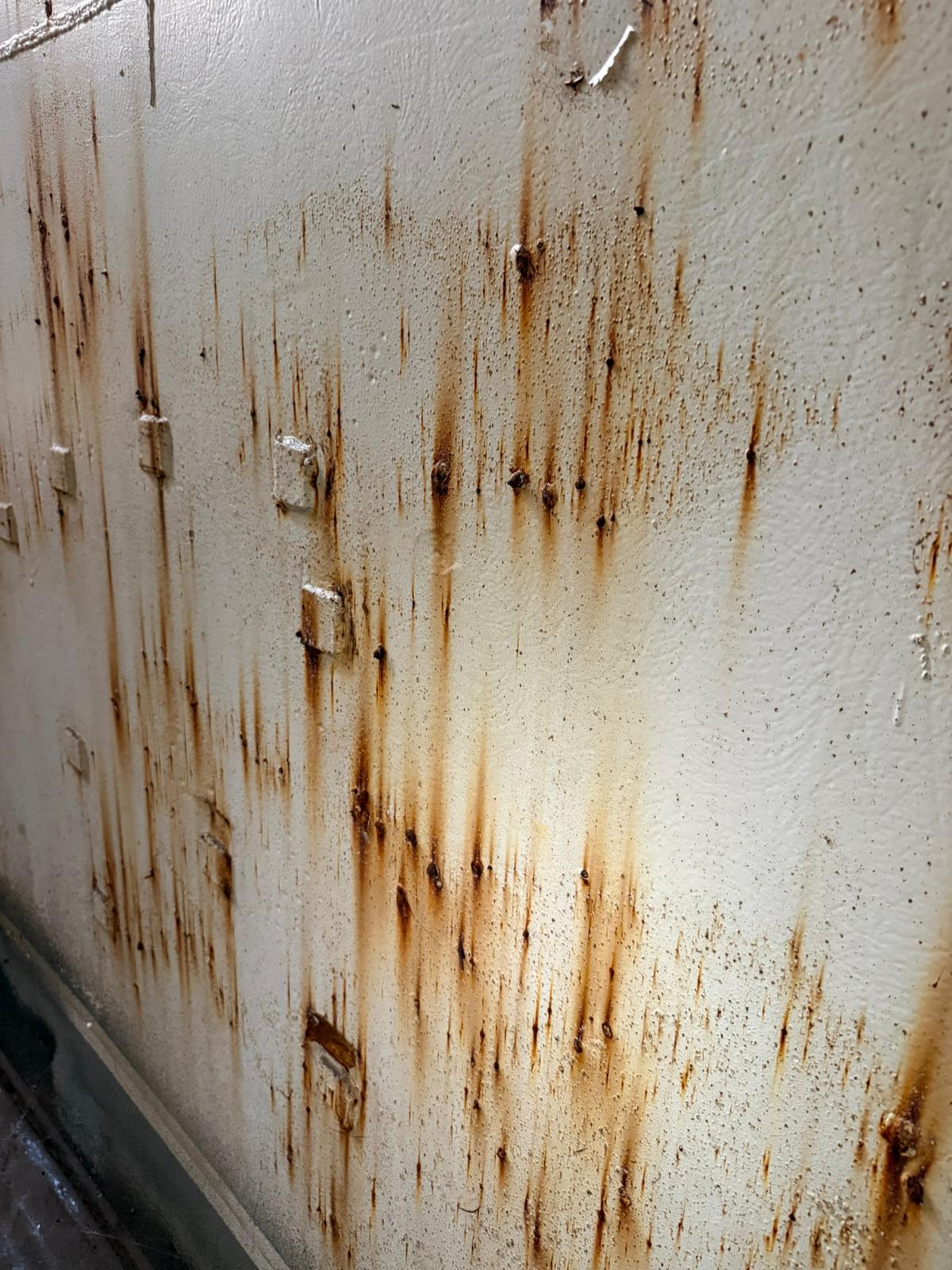
Spalling concrete is not the primary problem — it is a visible symptom of a problem happening to the steel hidden inside it. Repair that only addresses the visible concrete, without addressing the reinforcement corrosion, is treating the symptom and leaving the cause in place.
| Sign | What it can indicate |
|---|---|
| Fine, map-pattern surface cracking | Can indicate early carbonation or chloride-related deterioration |
| Rust staining on the concrete surface | A strong indicator that reinforcement corrosion has already begun |
| Hollow sound when tapped ("delamination") | Concrete has separated from the reinforcement beneath, ahead of visible spalling |
| Localised bulging or surface distortion | Expansive pressure from corroding steel pushing outward |
| Age and exposure history of the structure | Older reservoirs with high chloride or carbonation exposure carry higher risk |
Is spalling the same problem as steel tank corrosion?
No. Spalling is driven by corrosion of the steel reinforcement embedded inside concrete, which expands and cracks the concrete around it. It is a related but mechanically different process to a steel tank's exposed wall or floor corroding directly, and it requires a different diagnostic and repair approach.
Can spalling be repaired without addressing the reinforcement?
A durable repair needs to address the corroded reinforcement — removing affected concrete, treating or replacing the steel, and reinstating proper cover. A surface-only patch over spalled concrete without addressing the underlying reinforcement corrosion typically fails again within a short period.
Can spalling be detected before it becomes visible?
Yes, in many cases. Delamination — where the concrete has separated internally but not yet visibly spalled — can often be detected by sounding the surface (tapping and listening for a hollow response) during a routine inspection, allowing repair before the damage becomes extensive.
Noticing rust staining, cracking or hollow-sounding concrete on a reservoir? Catching reinforcement corrosion early is significantly cheaper than repairing it after spalling.
Request a concrete reservoir inspection