
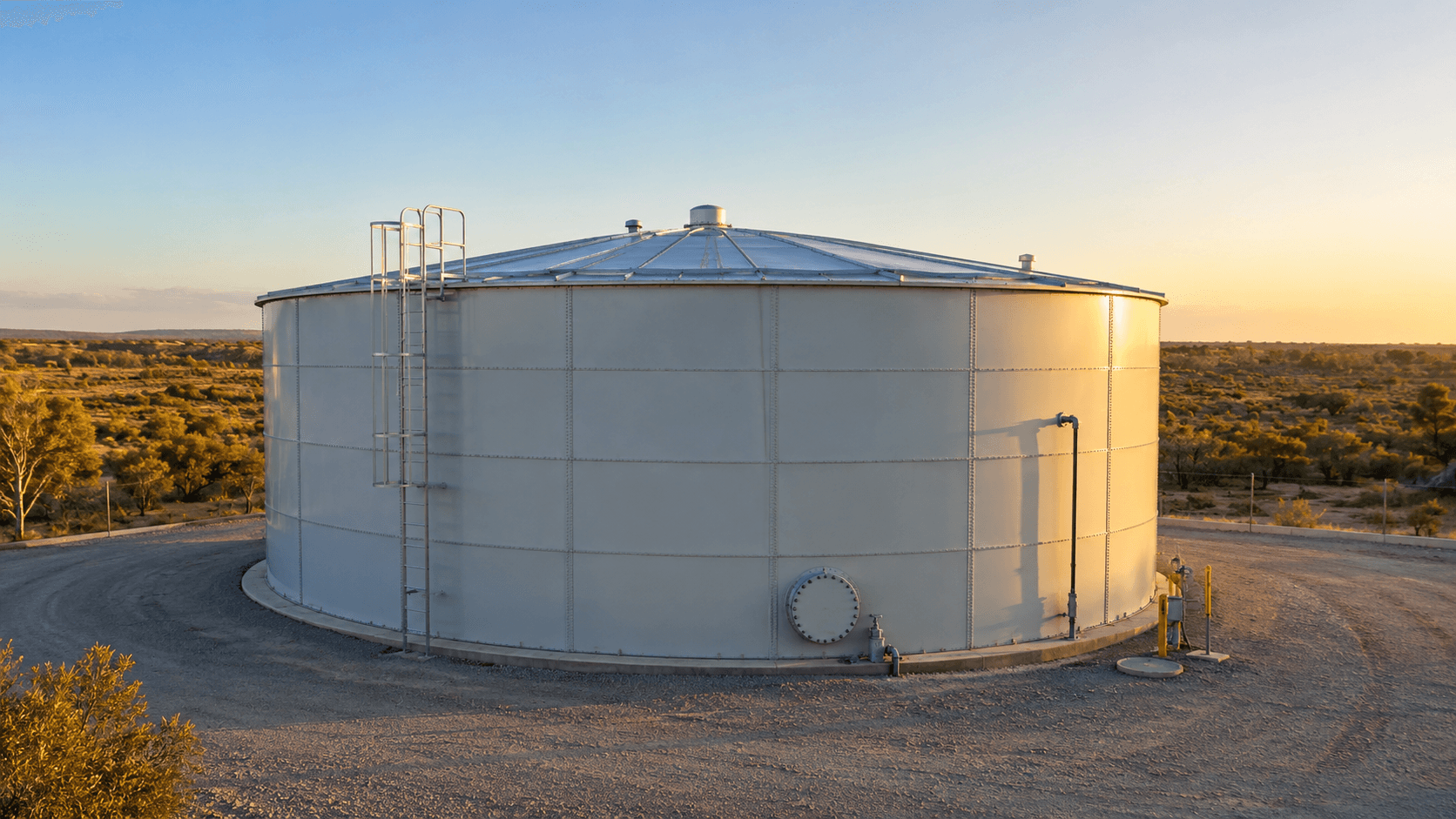
Meat processing is among the most water-intensive sectors in food production, with demand spread across slaughter operations, carcass washing, equipment sanitation, and general facility hygiene maintenance. Storage infrastructure at this scale is not a minor supporting utility - it is core operational infrastructure that the whole facility throughput depends on.
Hygiene standards in meat processing leave very little tolerance for a water supply shortfall. A processing line that runs short of wash water mid-shift is not just a productivity problem - it becomes a food safety compliance problem the moment hygiene procedures cannot be completed as specified.
Peak shift demand, not average daily consumption
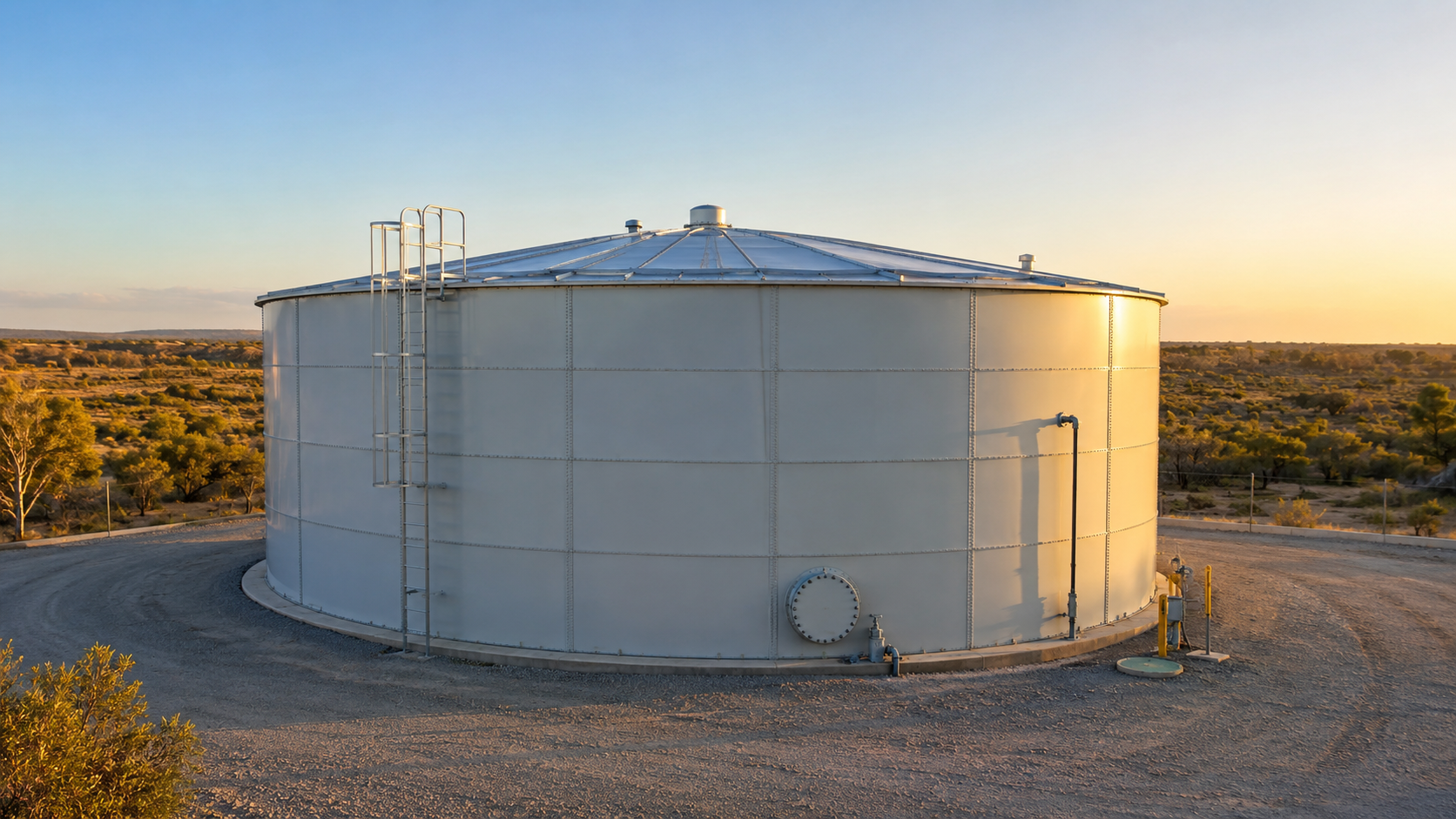
Processing throughput at a meat facility is rarely constant across a shift - kill floor operations, in particular, can create sharp peak demand periods that need to be covered by storage buffer even if average daily consumption figures look more moderate. Sizing against average demand alone risks a shortfall during exactly the periods when supply matters most.
Redundant supply to protect continuous operations
Because a supply interruption during processing has immediate hygiene and food safety implications, redundancy in storage and supply arrangements - rather than relying on a single storage point with no backup - is standard practice for facilities operating at meaningful throughput.
Potable-grade water for product-contact applications
Any water that contacts product directly needs to meet potable water standards, and storage infrastructure serving these applications needs the same material certification and monitoring obligations as any potable tank, with the added scrutiny that comes from operating in a food safety-regulated environment.
Wastewater and effluent management as a linked consideration
High water use in meat processing generates a correspondingly high wastewater volume, and while wastewater treatment sits outside storage infrastructure itself, storage and supply planning benefits from being considered alongside the facility overall water balance, including what happens to water after use.
A meat processing facility cannot simply slow down and wait for water supply to catch up - storage has to be sized for the peak the operation actually needs, not the average it usually runs at.
| Item | Why it matters |
|---|---|
| Storage sized against peak shift demand | Average daily figures can understate actual requirement |
| Redundant supply arrangements | Protects against hygiene compliance risk from any shortfall |
| Potable-grade certification for product-contact water | Same obligations as any potable tank, under food safety scrutiny |
| Storage planning linked to wastewater considerations | Reflects the facility full water balance |
Why does meat processing need more water storage than similar-sized food facilities?
Slaughter, carcass washing and sanitation processes are highly water-intensive, and storage needs to cover peak shift demand rather than just average daily consumption, which is often higher than other food processing sectors.
What happens if a meat processing facility runs short of water mid-shift?
It quickly becomes a food safety compliance issue, not just a productivity one, since hygiene procedures cannot be properly completed without adequate water supply - which is why redundant supply arrangements are standard practice.
Does all water used in meat processing need to be potable grade?
Water contacting product directly needs to meet potable standards. Other uses, such as external wash-down, may not require the same grade, but should still be properly segregated from product-contact supply.
Sizing or reviewing water storage for a meat processing or abattoir facility? PC Water Infrastructure plans for peak demand, not just averages.
Discuss Meat Processing Water Storage