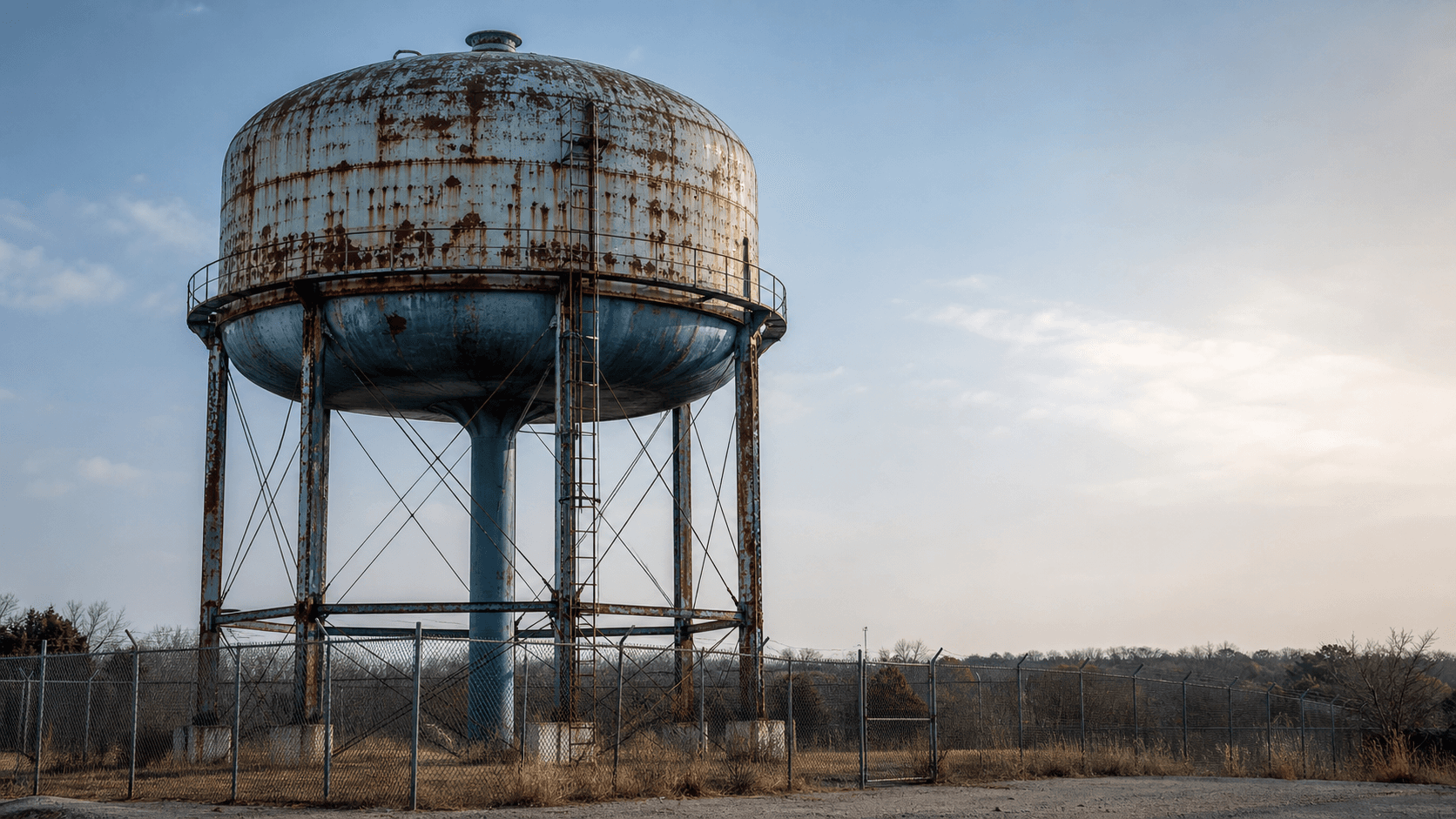
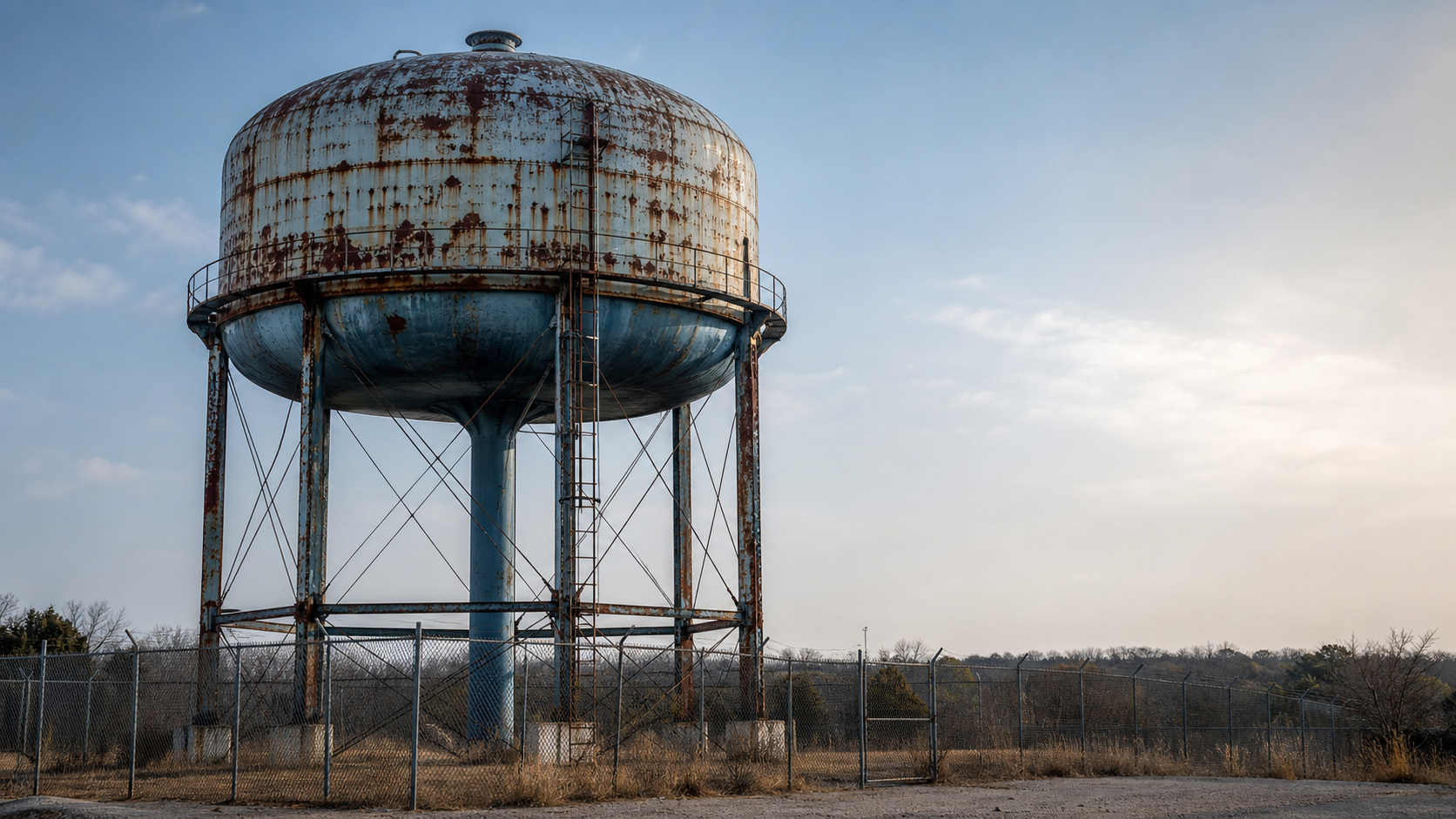
A tank's access provision is easy to overlook at design stage because it does not affect the tank's core function of holding water. It has an outsized effect on everything that happens afterward — because a tank that is difficult or unsafe to access gets inspected less often, not more carefully.
Fixed ladders and platforms, not improvised access
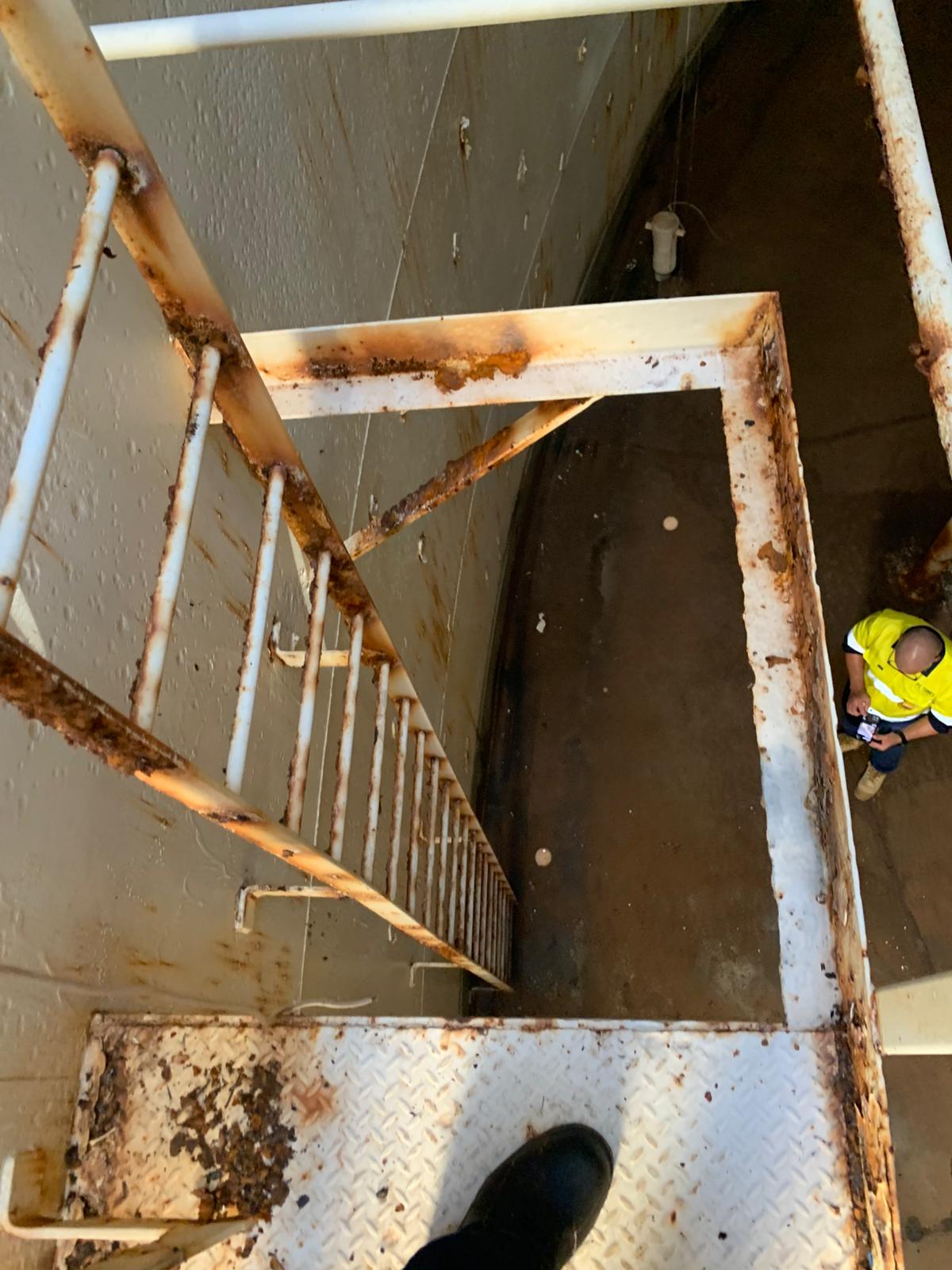
Work health and safety requirements for elevated and confined-space-adjacent work generally require fixed, engineered access — compliant ladders with appropriate cages or fall-arrest provision, and platforms at the hatch and any other work points — rather than temporary or improvised access arrangements like ladders leant against the tank shell.
Fall protection at height
Any work at height on a tank roof or exterior platform needs a fall protection system appropriate to the exposure — this might be engineered handrails and barriers, or a personal fall-arrest system with appropriate anchor points, depending on the specific configuration and the nature of the work being performed.
An inspector or maintenance crew facing a genuinely unsafe or non-compliant access arrangement has two options: refuse the work until access is fixed, or take a shortcut that compromises either safety or thoroughness. Neither outcome serves the asset well. Tanks with well-designed, compliant access are inspected on schedule, by properly equipped crews, without last-minute workarounds — and that consistency compounds into better long-term asset condition.
Access provision is one of the few design decisions that pays a dividend every single time the tank is inspected for the rest of its service life — or, if done badly, costs a small penalty every single time instead.
| Check | Why it matters |
|---|---|
| Fixed, engineered ladder access with appropriate fall protection | Replaces improvised access that compromises safety and compliance |
| Platform provision at the hatch and other work points | Provides a safe, stable working position for inspection and maintenance |
| Condition of existing access structures | Corroded or damaged ladders and platforms are a hazard in their own right |
| Anchor points for personal fall-arrest systems where required | Necessary for work configurations not covered by fixed barriers |
| Access provision reviewed at design stage for new tanks | Retrofitting compliant access later is more difficult and costly |
Can a temporary ladder be used for occasional tank access instead of a fixed one?
Generally this does not meet work health and safety requirements for regular or ongoing access, particularly at height or adjacent to confined space entry points. Fixed, engineered access is the standard expectation for a tank that will be accessed for routine inspection and maintenance over its service life.
Does poor access provision really affect how often a tank gets inspected?
In practice, yes. Difficult or unsafe access creates a genuine disincentive and practical barrier to routine inspection, which can result in tanks being inspected less frequently, or less thoroughly, than their condition and compliance obligations require.
Should access provision be considered at the design stage of a new tank?
Yes — retrofitting compliant fixed access, platforms and fall protection onto an existing tank is generally more difficult and expensive than designing it in from the start, which is why access should be part of the initial design brief, not an afterthought addressed after construction.
Reviewing access provision on an existing tank or planning a new one? Compliant, well-designed access protects both people and the asset's inspection history.
Discuss tank access requirements